admin
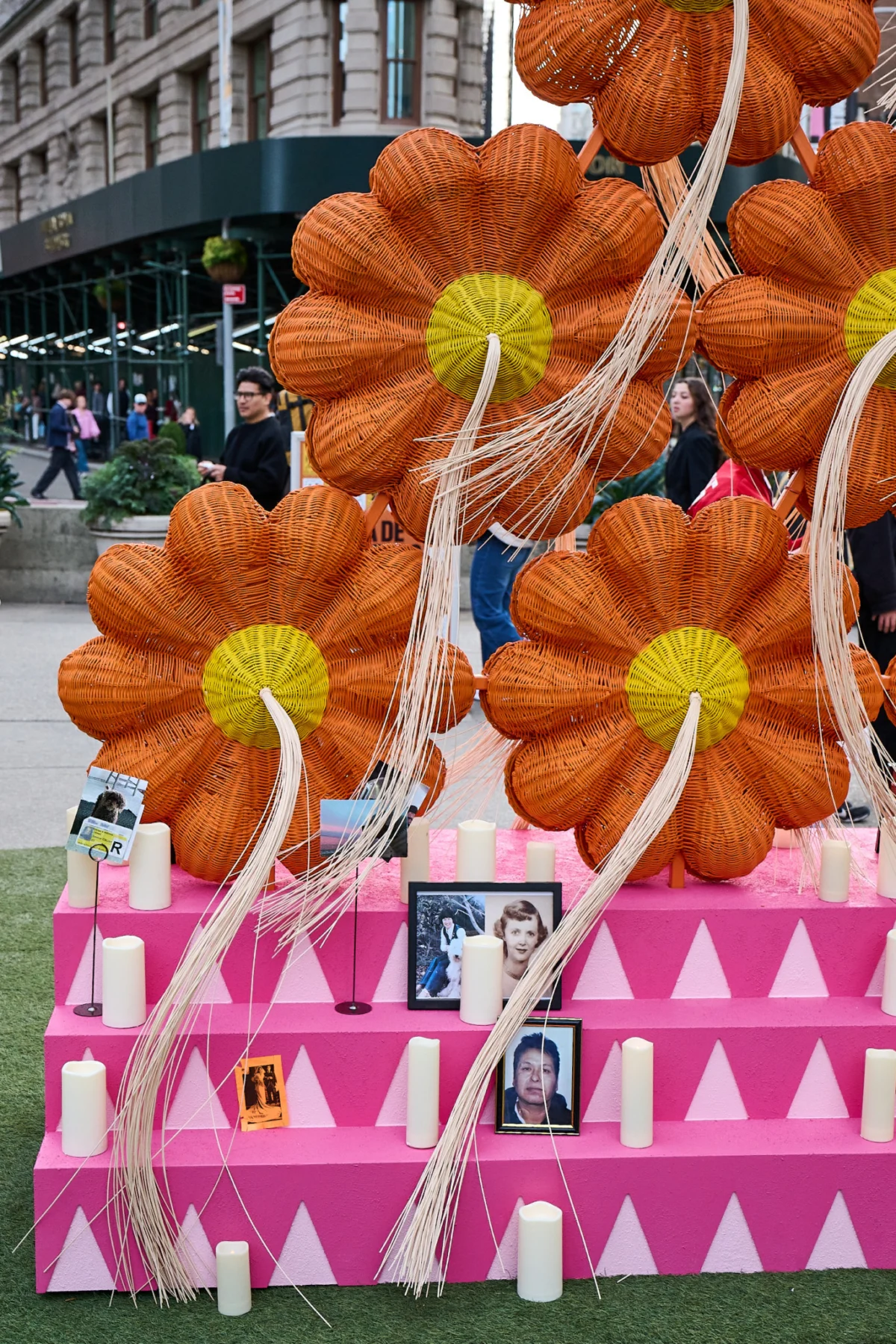
The bustling intersection of Fifth Avenue and Broadway in Manhattan has been transformed into a site of cultural reflection and architectural innovation with the unveiling of Twenty Petal Flower, a monumental Día de Muertos installation. Located in the Flatiron North Plaza, this seven-tier altar, or ofrenda, represents a significant collaboration between Mexican artist and designer Daniel Valero of the design studio Mestiz and the Brooklyn-based fabrication organization Powerhouse Arts. Commissioned by the Flatiron NoMad Partnership, the installation serves as both a traditional tribute to the deceased and a contemporary exploration of the intersection between artisanal craft and urban architecture. On view through November 3, 2026, the project recontextualizes the cempasúchil, or Mexican marigold, as a structural element that invites public participation and communal remembrance in one of New York City’s most iconic districts.
The Cultural Significance of the Cempasúchil
Central to the installation is the cempasúchil flower, a botanical cornerstone of Día de Muertos (Day of the Dead). The installation’s title, Twenty Petal Flower, is a direct translation of the Nahuatl word cempōhualxōchitl, from which the Spanish cempasúchil is derived. In Mexican tradition, the vibrant orange hue and pungent aroma of these flowers are believed to bridge the gap between the worlds of the living and the dead, acting as a sensory guide for spirits returning to their family homes.
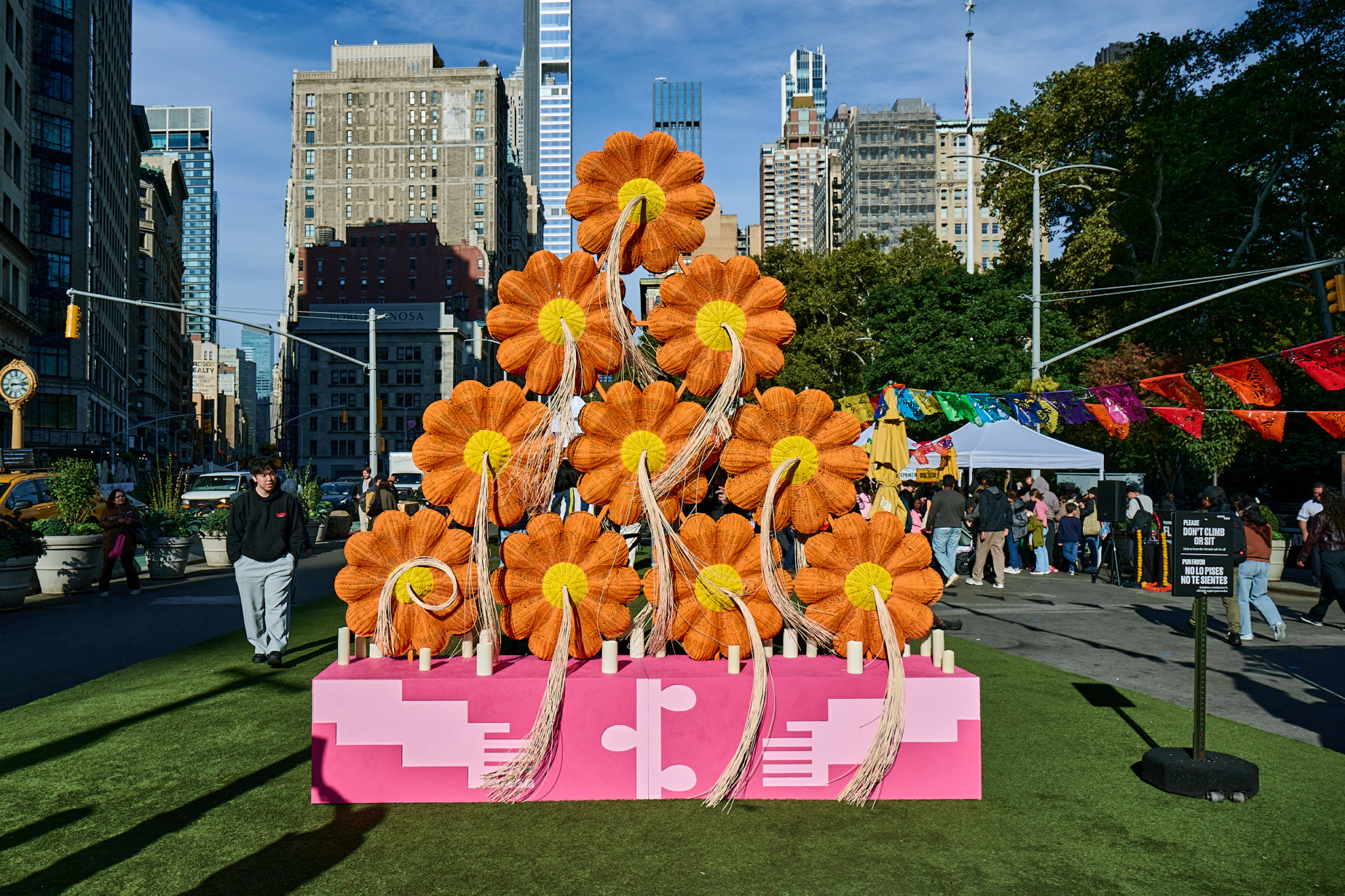
While traditional ofrendas typically utilize fresh marigolds that wilt within days, Valero’s installation seeks to capture the flower’s essence through a more permanent, architectural medium. By scaling the delicate petals into large-scale, handwoven wicker forms, the artist highlights the flower’s journey from the agricultural fields of Michoacán, Mexico, to the hands of artisans who transform them into ceremonial objects. Valero’s vision departs from the standard focus on the deceased, instead choosing to honor the living workers—growers, weavers, and designers—whose labor sustains the continuity of this centuries-old tradition.
Architectural Design and Symbolic Structure
The installation is structured as a seven-tier altar, a design choice rooted in the syncretic traditions of Mexico. In many regional customs, the seven levels of an ofrenda represent the seven steps a soul must take to reach rest, or alternatively, the seven deadly sins or the seven levels of the Aztec underworld, Mictlán. By adopting this verticality, Valero creates a sense of monumental presence that competes with the surrounding skyscrapers of the Flatiron District.
The "flowers" themselves are handcrafted from wicker, utilizing traditional weaving techniques developed at the Mestiz fiber workshop in Tequisquiapan, Mexico. These organic, rounded forms are meticulously arranged across the tiers, creating a dense, textured composition of orange and yellow. The choice of wicker—a material that is both sturdy and flexible—allows for the creation of oversized petals that maintain a sense of lightness and handcrafted intimacy. At night, the installation is illuminated by warm, candle-like lighting, mimicking the glow of the veladoras (votive candles) that typically adorn family altars.

Engineering a Monument for the Urban Environment
Translating a traditional craft into a public art installation in a high-traffic Manhattan plaza required rigorous technical planning and cross-border cooperation. The partnership between Valero’s studio in Mexico and Powerhouse Arts in Brooklyn was essential to ensuring the structure’s durability against the unpredictable autumn weather of New York City.
Powerhouse Arts, a non-profit organization dedicated to large-scale art fabrication, developed a sophisticated internal framework to support the wicker elements. The primary challenge was to provide structural integrity without overshadowing the delicate aesthetic of the weaving. Engineers designed a slim-profile steel frame, which was color-matched to the specific "cempasúchil orange" of the wicker to render the support system nearly invisible to the casual observer.
The construction utilized stainless steel zip ties, chosen for their ability to withstand high wind loads and moisture while remaining unobtrusive. Furthermore, the installation was engineered with a modular design. Recognizing the environmental and economic benefits of longevity, the Flatiron NoMad Partnership and Powerhouse Arts ensured that the system could be disassembled, stored, and reinstalled for future celebrations, moving away from the "single-use" model of many temporary public art projects.

Collaborative Chronology and Project Timeline
The development of Twenty Petal Flower followed a meticulous timeline that spanned several months and involved international logistics:
- Conceptual Phase: Daniel Valero and the Mestiz team developed the initial sketches, focusing on the concept of "flowers as architecture."
- Artisanal Production: Throughout the summer, weavers in Tequisquiapan, Mexico, produced the wicker floral components using sustainable materials and traditional techniques.
- Engineering and Prototyping: Simultaneously, Powerhouse Arts in Brooklyn conducted CNC-cut sampling, texture tests, and paint matching to create the structural base.
- Logistics and Assembly: The woven elements were transported from Mexico to New York, where they were integrated with the steel framework at the Powerhouse Arts facility.
- Installation: The final structure was assembled on-site in the Flatiron North Plaza in late October, timed to coincide with the beginning of the Día de Muertos season.
- Public Exhibition: The installation remains open to the public until November 3, providing a space for both planned programming and spontaneous offerings from passersby.
Public Impact and Urban Revitalization
The placement of Twenty Petal Flower in the Flatiron North Plaza is a strategic effort by the Flatiron NoMad Partnership to enhance the neighborhood’s cultural vitality. According to James Mettham, President of the Flatiron NoMad Partnership, the installation is designed to disrupt the "everyday rhythm" of the city, forcing pedestrians to slow down and engage with their surroundings.
The plaza, situated at a major transit and tourism hub, provides a unique stage for cultural exchange. For New York’s Mexican community—which numbers over 300,000 residents across the five boroughs—the altar serves as a visible affirmation of their heritage in the heart of Manhattan. For the broader public, it acts as an educational gateway, introducing the history and aesthetics of Día de Muertos through a contemporary lens.

The installation encourages interactivity; visitors are invited to leave mementos, photographs, and notes on the altar’s tiers. This participatory element transforms the artwork from a static monument into a living, evolving community archive. By the end of the exhibition period, the altar typically becomes a mosaic of personal histories, reflecting the diverse backgrounds of New Yorkers and visitors alike.
Analysis of Public Art Trends in New York City
Twenty Petal Flower reflects a broader trend in New York City’s approach to public space management, where Business Improvement Districts (BIDs) like the Flatiron NoMad Partnership increasingly act as curators of high-quality, culturally specific art. This shift acknowledges that public art is not merely decorative but is a vital tool for economic development and social cohesion.
Data from similar installations in NYC suggests that high-visibility public art can increase foot traffic in commercial districts by 15% to 25% during the exhibition period. Furthermore, the move toward modular and reusable structures addresses growing concerns regarding the sustainability of temporary installations. By investing in a high-quality, durable framework, the organizers have created a cultural asset that can serve the community for years to come, rather than contributing to the waste stream.

Conclusion and Future Outlook
As the Twenty Petal Flower continues its residency in the Flatiron District, it stands as a testament to the power of cross-cultural collaboration. It successfully bridges the gap between the rural workshops of Mexico and the industrial fabrication spaces of Brooklyn, proving that traditional craft can be elevated to the scale of urban monumentality without losing its soul.
The project concludes its 2026 run on November 3, after which the modular components will be archived. However, the impact of the installation is expected to resonate beyond its physical presence. By honoring the "hands behind the flower," Daniel Valero has redirected the narrative of Día de Muertos toward a celebration of human labor and artisanal resilience. In the shadow of the Flatiron Building, the Twenty Petal Flower offers a vibrant, orange-hued reminder that even in the most fast-paced urban environments, there is a profound need for spaces of quiet reflection, shared memory, and cultural pride.