admin
In a pioneering scientific endeavor described by its lead researcher as "weird" yet quintessential "grassroots science," Dr. Jonathan Lundgren’s 1,000 Farms Initiative is systematically quantifying the transformative impact of regenerative agricultural practices across North America. This ambitious project, now encompassing data collection from approximately 2,000 farms, aims to provide robust scientific validation for the claims of improved soil health, increased biodiversity, enhanced water retention, and significant carbon sequestration made by farmers transitioning away from conventional methods. The initial findings, particularly from a flagship paper published in August, present compelling evidence that regenerative row cropping systems could represent the most potent climate solution currently available, challenging existing paradigms about agriculture’s role in environmental stewardship.
The Genesis of a Grand Experiment: From Farmer Claims to Data-Driven Validation
The journey of the 1,000 Farms Initiative began with a fundamental question: were the remarkable outcomes reported by regenerative farmers truly measurable, scalable, and transferable? Dr. Lundgren, a former entomologist with the U.S. Department of Agriculture (USDA) and founder of the Ecdysis Foundation, recognized a significant gap between anecdotal evidence and rigorous scientific data. Farmers were articulating benefits ranging from reduced input costs to healthier ecosystems on their land, but a comprehensive, multi-faceted study was lacking to substantiate these observations on a large scale. This realization sparked the idea for an unprecedented experiment—a "huge experiment," as Lundgren describes it—designed to study the entire agricultural system and all its regenerative outcomes.
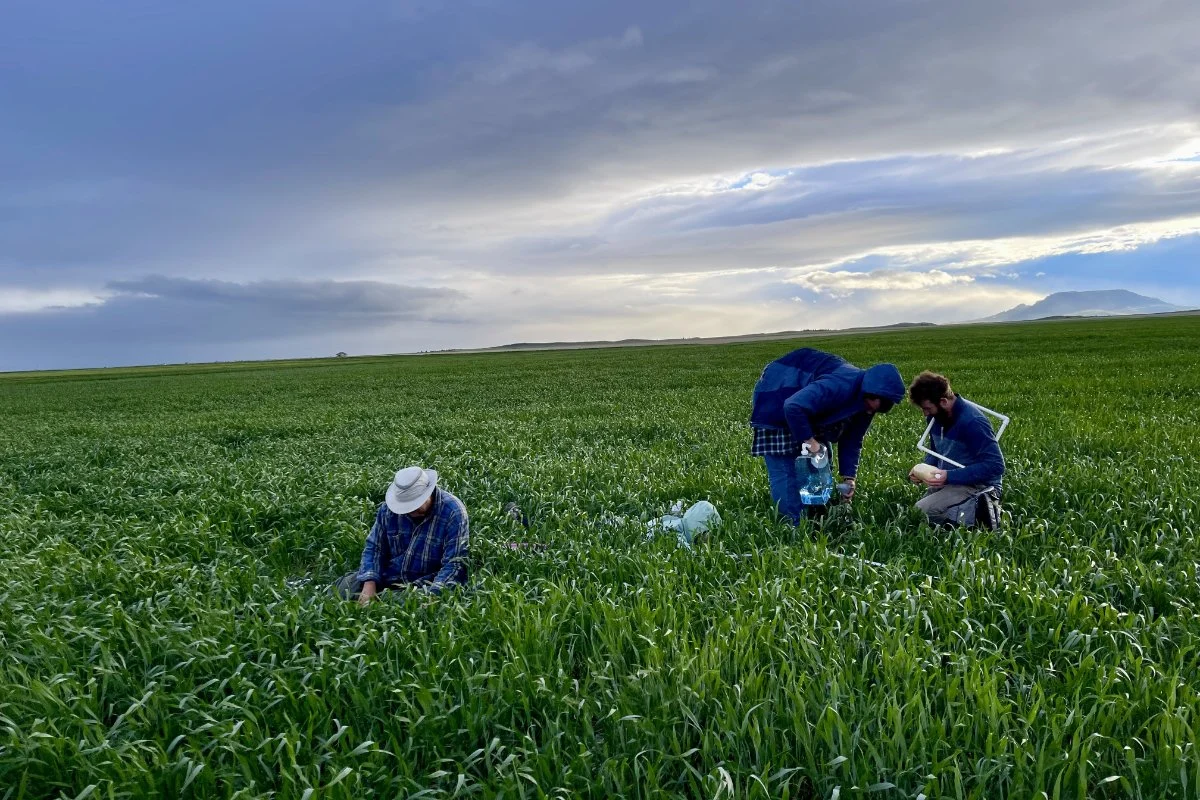
The initiative, which formally launched its data collection phase around 2022, set out to meticulously document a vast array of metrics. This includes carbon capture and storage, biodiversity indices, water infiltration rates, nutritional profiles of crops, reductions in agrichemical use, pollution mitigation, farmer wellness indicators, and economic viability. The sheer scope of the project is staggering: groups of approximately eight scientists have been deployed to gather an astounding 500 data types at each participating operation. This holistic approach ensures that the interconnected benefits of regenerative practices are captured, moving beyond isolated measurements to understand the synergistic effects within complex agroecosystems.
Mobilizing "Grassroots Science": A Network of Engaged Farmers
A distinctive feature of the 1,000 Farms Initiative is its unique, farmer-driven recruitment process, emblematic of its "grassroots science" ethos. Initially, the project engaged farms through targeted email campaigns. However, as the scientific teams began working in various regions, direct interaction fostered strong relationships, leading to a self-organizing phenomenon among farming communities. Dr. Lundgren notes that farmers were often "lining up to join the study" by the time scientists concluded their work in an area. This organic growth transformed the project from a top-down research endeavor into a collaborative scientific movement, where farmers actively participate in the sampling process and engage directly with researchers.
Today, farmer groups across the country are proactively approaching the Ecdysis Foundation, seeking scientific validation for their innovative approaches. This "democratization of science" highlights a significant shift in how agricultural research can be conducted, bridging the gap between academic institutions and the practical realities of farming. The enthusiasm and direct involvement of farmers not only streamline data collection but also ensure that the research remains relevant and responsive to the evolving needs and practices within the regenerative agriculture movement. This collaborative model underscores the initiative’s commitment to producing actionable, real-world data that can inform both agricultural policy and on-farm decision-making.
Flagship Findings: Row Crops as a Climate Solution Powerhouse
The first major scientific publication stemming from the 1,000 Farms Initiative made a significant splash in August. This flagship paper, available through IOPscience, presented a detailed comparison of conventional and regenerative farm outcomes, focusing on data collected in 2022 and 2023 from 200 large-scale farms cultivating corn, soybeans, wheat, and other essential field crops. The choice to prioritize row crops for the initial publication was strategic, as Lundgren explained: "If we could turn row crops into fully regenerative systems, think of the geographic footprint and the implications that that could have." These crops dominate vast swathes of agricultural land in the United States, making their transition to regenerative practices a potential game-changer for national climate goals.
The study’s most striking finding pertains to carbon sequestration: the most advanced regenerative farms analyzed stored nearly 40 percent more carbon in their soils compared to their conventional counterparts. This figure is not merely incremental; its potential impact on a national scale is profound. Dr. Lundgren concluded that if all field crop farms in the U.S. converted to these advanced regenerative systems, the country’s cropland soils could sequester an amount of carbon equivalent to 1.5 years of the nation’s total annual greenhouse gas emissions. This assertion positions regenerative agriculture not just as an environmental improvement, but as a leading climate mitigation strategy, a point Lundgren emphatically reiterated at the Food Solutions Summit during Climate Week in New York City in September: "Life on farms is the answer to the climate crisis."
Beyond Carbon: A Multifaceted Approach to Sustainability
While carbon sequestration has garnered significant attention, the 1,000 Farms Initiative is designed to capture a much broader spectrum of benefits. The initial paper and ongoing research delve into improvements across various environmental and operational parameters. Regenerative practices, typically involving minimal tillage, cover cropping, diverse crop rotations, and integrated livestock grazing, foster healthier soil microbial communities. These communities enhance nutrient cycling, improve soil structure, and increase water infiltration and retention, leading to greater resilience against drought and extreme weather events.

The study is also investigating the impact on biodiversity, examining insect populations, beneficial microorganisms, and wildlife habitats within and around farms. Reductions in agrichemical use, a hallmark of regenerative transitions, directly translate to decreased pollution of waterways and surrounding ecosystems, benefiting both environmental health and farmer safety. Furthermore, the initiative is meticulously tracking changes in food quality and nutritional density, hypothesizing that healthier soils produce more nutrient-rich crops. On the human dimension, the research aims to quantify improvements in farmer wellness—stress levels, mental health, and connection to the land—and the economic viability of these systems, including profitability and reduced input costs. The preliminary data strongly suggests that farmers adopting regenerative practices do not experience a loss in productivity or profitability, directly addressing a common concern regarding the transition.
Debunking the "Carbon Saturation" Myth: Deeper Storage and Soil Generation
Dr. Lundgren’s assertion that regenerative agriculture represents the "best climate solution currently available" is a bold statement, particularly when compared to technology-based solutions like carbon capture and storage. He argues that the potential of the food system far surpasses these alternatives. However, some soil scientists have historically posited that soil has a maximum capacity for carbon storage, suggesting that the benefits might not continue indefinitely. Lundgren’s research directly challenges this notion with compelling data.
The 1,000 Farms Initiative’s measurements extended to a depth of 60 centimeters (nearly two feet), revealing that carbon levels were changing significantly throughout this profile in regenerative fields. This suggests that carbon is not merely accumulating at the surface but is being integrated deeper into the soil profile. Lundgren postulates that this deeper penetration means the observed sequestration is likely an "underestimate" of the total capacity.
Furthermore, the research indicates that regenerative practices are actively building new soil. "It builds on top of itself, such that organic matter and more life on farms ends up generating soil. Pretty profound. That’s how the prairies were made for crying out loud," Lundgren explained. This implies a continuous process of soil genesis, effectively expanding the total volume of soil capable of holding carbon.
A particularly intriguing finding relates to inorganic carbon. While conventional soil science often attributes inorganic carbon forms (like calcium carbonate) solely to parent material (bedrock or limestone) and deems them unaffected by land management, the Ecdysis Foundation’s research contradicts this. Their study clearly shows that inorganic carbon at depth was significantly greater in regenerative fields. Crucially, this increase was correlated with higher levels of fungal biomass and invertebrate life in the soil, strongly suggesting that this inorganic carbon is also a product of biological processes—"soil that comes from life, versus soil that comes from parent material or bedrock." This finding fundamentally redefines our understanding of soil formation and carbon dynamics, highlighting the profound impact of biological activity on both organic and inorganic carbon stocks.
A Philosophy of Management, Not Just a List of Practices
One of the complexities in studying regenerative agriculture lies in its diverse implementation. Farmers adopt various practices—no-till, cover cropping, diverse rotations, integrated livestock—often in unique combinations. To navigate this, the 1,000 Farms Initiative employs a scoring system based on eight yes-or-no questions about specific practices. However, Lundgren cautions against reducing regenerative agriculture to a mere checklist of individual techniques.
He emphasizes that these practice-based questions serve as "indicators" or "proxies of a management philosophy." The true power of regenerative agriculture lies in its holistic approach, where practices are integrated to foster ecological health rather than being applied in isolation. This philosophy prioritizes working with natural systems, enhancing soil biology, and minimizing disruptions, ultimately leading to a resilient and productive agroecosystem. Understanding this underlying philosophy is crucial for effectively scaling regenerative transitions and developing supportive policies.
Policy Implications and the Path Forward
The findings from the 1,000 Farms Initiative carry significant implications for agricultural policy, climate change mitigation strategies, and the broader food system. If regenerative row cropping truly represents the "best climate solution currently available" without compromising farmer profitability or productivity, it necessitates a re-evaluation of national agricultural priorities. Policymakers could leverage these findings to design incentives for farmers to adopt regenerative practices, including carbon credits, conservation programs, and subsidies that support ecological stewardship.
The project’s ongoing publication schedule—with many more studies planned over the next several years—promises to continually enrich the scientific understanding of regenerative agriculture. This steady stream of data will be critical for building further consensus and overcoming lingering skepticism within both the scientific community and conventional agricultural sectors. By demonstrating the tangible benefits across a wide range of metrics, the initiative aims to empower farmers, inform consumers, and guide policymakers toward a more sustainable and resilient food system.
Dr. Lundgren’s vision extends beyond just measuring outcomes; it’s about fundamentally transforming our relationship with the land. His concluding remarks often circle back to the core message: "We don’t need to clear more land to feed humanity. We just need to use the land that we’ve got to grow food." This powerful statement encapsulates the potential of regenerative agriculture to address not only climate change but also food security and ecological restoration, offering a hopeful and scientifically validated path forward for a warming planet. The 1,000 Farms Initiative is not just collecting data; it is charting a course for a regenerative future.