Jia Lissa
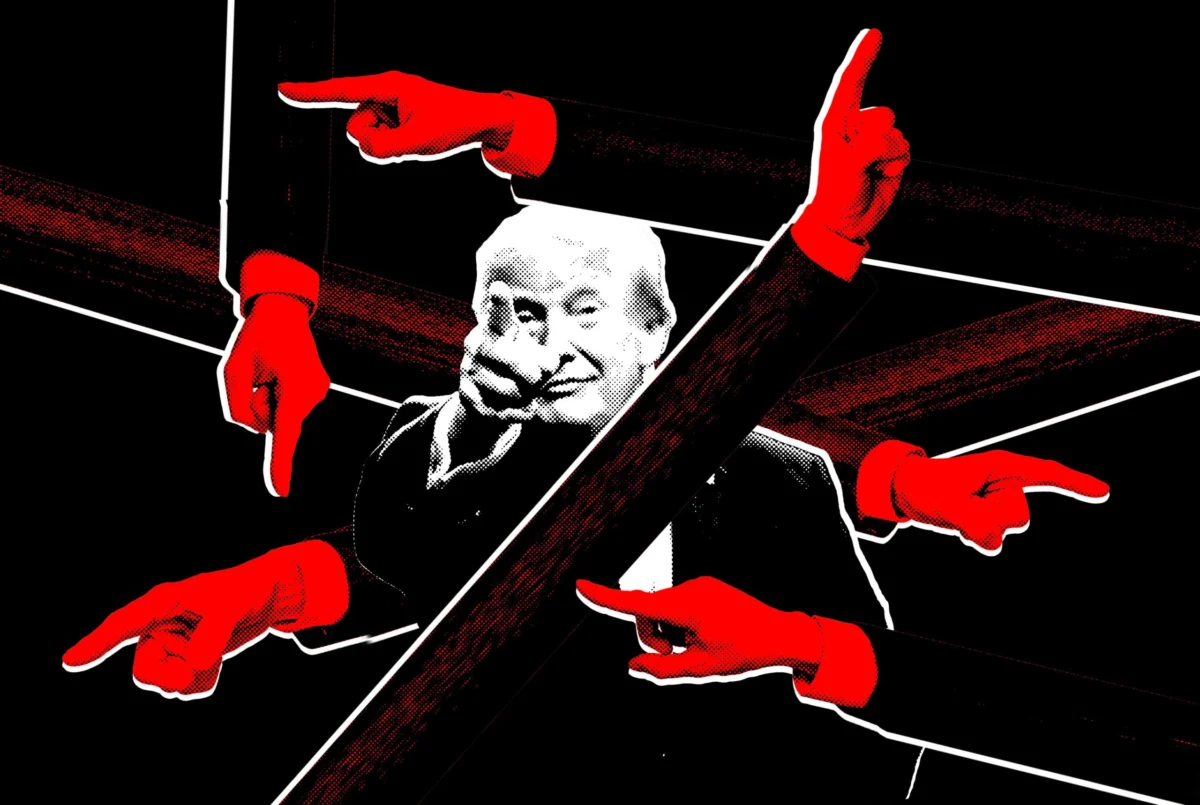
As the political landscape darkens for Republicans heading into the crucial midterm elections, a palpable sense of apprehension has gripped the Trump White House. With brutal predictions forecasting significant losses in key House and Senate races, internal discussions have reportedly shifted towards identifying a scapegoat to present to the former President, sources familiar with the ongoing deliberations reveal. This proactive search for blame underscores the severity of the electoral outlook and the unique dynamics within Trump’s political orbit, where accountability often flows selectively.
Privately, seasoned Republican political operatives point to former President Trump himself as the root cause of the party’s predicament. They specifically cite the initiation of an "Iran war" in an election year as a catastrophic misstep, alleging it triggered a cascade of economic consequences, including widespread higher prices, and consequently ignited a nationwide voter backlash. "Clearly it’s the president’s fault," one operative candidly stated to Inner Loop, encapsulating the private sentiment that diverges sharply from any public narrative. However, the political realities within the White House dictate that such direct attribution of blame to the President, particularly regarding his policy decisions, is an unfeasible strategy. Aides are acutely aware that openly or privately confronting Trump with his own responsibility is simply not an option, especially as they face the daunting prospect of losing not only the House majority but potentially the Senate as well.
This delicate political tightrope has led to an unusually early and concerted effort to pinpoint an alternative figure for blame. Attention, according to sources, has coalesced around James Blair, a deputy chief of staff and political strategist. Blair, who was instrumental in organizing the Trump 2024 campaign’s turnout strategy, reprised a similar role for this midterm cycle, explicitly taking ownership of the House midterm strategy. His prominent position and direct responsibility for a key electoral initiative now place him squarely in the crosshairs.
The Genesis of the Crisis: War, Economy, and Voter Discontent
The specter of an "Iran war" hangs heavily over the current political environment, serving as a primary external factor contributing to Republican anxieties. While details of the conflict’s specific nature remain inferred within the provided context, its presumed impact on global stability and commodity markets is clear. Historically, military engagements, particularly those perceived as costly or without clear objectives, have often been met with public skepticism and can significantly sway voter sentiment in domestic elections. The hypothetical "Iran war" is posited as having triggered a substantial surge in energy prices, notably gasoline, which then rippled through the economy, leading to broader inflationary pressures.
Economic indicators consistently show that consumer confidence and electoral outcomes are deeply intertwined. When households face rising costs for essential goods and services, their economic anxieties often translate into dissatisfaction with the ruling party or the party of the incumbent president. For instance, data from past election cycles frequently correlates spikes in gas prices or inflation with declines in public approval for the administration. A national average gasoline price increase of even a few cents can provoke widespread public outcry, as it directly impacts daily commutes and household budgets. In this scenario, the "Iran war’s" alleged contribution to "higher prices across the board" would naturally foster a "nationwide voter backlash," making it a potent force against Republican candidates. The perceived mismanagement of foreign policy leading to domestic economic hardship forms a classic recipe for electoral discontent, providing a credible, albeit inconvenient, explanation for the GOP’s current predicament.
A History of Blame and Accountability in Trump’s Orbit
Former President Trump’s political career has been characterized by a consistent pattern of externalizing blame for setbacks and failures. From the outcomes of previous elections to policy implementation challenges, his modus operandi has rarely involved public self-critique. This dynamic has cultivated an internal White House culture where aides understand the implicit, and often explicit, necessity of shielding the President from direct responsibility for negative outcomes.
This political reality shapes the current scramble for a scapegoat. The task for Trump’s inner circle is not to identify the actual cause of potential electoral defeat, but rather to find a plausible, digestible explanation that diverts attention from the President himself. This internal calculus is not new; it has been observed throughout various administrations, but it gains particular salience within the unique political ecosystem surrounding Donald Trump, where loyalty and protection of the leader are paramount virtues. The search for a scapegoat, therefore, is less about genuine accountability and more about political survival and narrative control.
James Blair and the Redistricting Gambles
James Blair’s rise to prominence within the White House, culminating in his role as deputy chief of staff and political strategist, positioned him perfectly to lead critical electoral initiatives. His return to the midterm cycle, specifically to orchestrate the House Republican strategy, underscored the faith placed in his abilities. Blair’s signature effort for this election cycle was a marquee plan focused on strategically redrawing congressional maps early in certain states. This ambitious redistricting gambit was designed to yield a significant advantage, projecting an optimistic gain of roughly 10 to 15 House seats for Republicans. The underlying assumption was that the formidable coalition that propelled Trump to victory in 2024 would similarly mobilize to support Republican candidates in 2026.
Redistricting, the process of redrawing electoral district boundaries, is a highly partisan and critical aspect of American politics. Following each decennial census, states undertake this process, which can dramatically alter the political landscape for the next decade. Strategic gerrymandering, the practice of drawing districts to favor one party over another, is a well-established tactic. Blair’s plan aimed to leverage this, with early redrawing efforts intended to lock in Republican advantages.
However, in a remarkable and unexpected turn of events just five months later, election forecasters have discovered that some of these very same redrawn seats, once considered Republican strongholds or clear pickups, now surprisingly favor Democrats. This unprecedented backfire has sent shockwaves through the Republican campaign apparatus.
Specific examples highlight the depth of this strategic miscalculation:
- Florida’s 25th Congressional District: Located just south of Fort Lauderdale, this district, which was redrawn with Republican gains in mind, is now officially characterized as "Lean Democrat" by reputable political analysts like the Cook Political Report. The outlook is so dire that the Congressional Leadership Fund (CLF), a powerful House Republican-aligned super PAC responsible for millions in campaign spending, has reportedly pulled financial support from the race, signaling a loss of confidence.
- Texas’s 15th Congressional District: Even in ruby-red Texas, a state traditionally considered a Republican bastion, maps that were specifically drawn to bolster GOP strength are now revealing vulnerabilities. In the 15th district, where Republican incumbent Monica De La Cruz is seeking re-election, the race has been downgraded to a "tossup" by the Cook Political Report. This shift is particularly alarming as it suggests even incumbent-held seats in reliably Republican areas are now at risk.
The irony of this outcome is stark given earlier events. Blair had expressed a moment of reflection, writing "Lord grant me humility" on X after Virginia’s top court blocked Democrats from redrawing maps in a manner that would have benefited their party. This ruling was initially seen as a win for Republicans, suggesting Blair’s quote might have been a moment of perhaps overconfident reflection on the complex and challenging nature of the redistricting battle, or perhaps an early, almost prescient, acknowledgment of the broader difficulties despite individual victories. The subsequent nationwide backfire of his own redistricting efforts, however, lends a poignant and unforeseen layer of meaning to his earlier pronouncement.
Defense and Dissent: Blair’s Allies and Critics
Inside and outside the West Wing, Blair’s allies are quick to defend him, asserting that the criticism is grossly unfair. They contend that Blair could not have possibly foreseen the compounding effects of an "Iran war" and various scandals involving other Trump officials, which they argue have significantly undermined his meticulously crafted planning. Their argument highlights the complex interplay of internal strategy and unforeseen external factors that can derail even the most well-laid political plans.
Despite the growing external pressure, Blair reportedly retains the confidence of both former President Trump and White House Chief of Staff Susie Wiles. His recent travel on Air Force One to two rallies within the past week is cited as evidence of his continued standing within the inner circle, suggesting that any blame ultimately directed his way might be largely symbolic rather than leading to immediate professional repercussions. This perception is further reinforced by Trump’s previous announcement when Blair temporarily departed the White House earlier in the year to manage the midterm strategy from an external position; the President explicitly stated that Blair’s move was temporary and that he would return after the election, indicating a long-term trust.
Official Responses and Strategic Deflection
In response to the mounting reports and internal discussions, James Blair issued a statement, maintaining a resolute focus on the collective goal: "The President, our partners in the House and Senate, and I remain focused on winning in November. All Republicans should be spending themselves equally in our worthy cause." His statement strategically avoids directly addressing the criticisms or the scapegoat narrative, instead redirecting attention to party unity and the ultimate objective.
White House spokesperson Danielle Alvarez echoed this sentiment, adding a more pointed rebuke of the anonymous sources: "The anonymous ‘sources’ peddling this nonsense are self-serving opportunists focused on themselves. We’re focused on the President and the American people." This response is a classic tactic in political communications, designed to discredit dissenting voices by impugning their motives, thereby attempting to neutralize the narrative before it gains further traction.
Amidst this internal turmoil, Chief of Staff Susie Wiles, despite prior reporting that she has been "under fire," is staunchly defended by sources within Trump’s orbit. They insist that if Wiles were to depart after the midterms, it would be entirely of her own volition, not as a result of internal pressure or blame. This clarification seeks to insulate another key figure from the swirling currents of accountability, reinforcing the tight-knit nature of Trump’s closest advisors.
Broader Implications and The Cycle of Accountability
The current palace intrigue surrounding the search for a scapegoat is, in many ways, acknowledged by Trump aides as preemptive. There’s a recognition that expectations for Republican performance in the midterms are currently so low that even modest achievements, such as merely holding onto the Senate, could paradoxically transform Blair into a "savior." This highlights the often-fluid nature of political narratives and how outcomes, however marginal, can drastically alter perceptions of success or failure. In a political environment defined by binary wins and losses, exceeding minimal expectations can be spun as a triumph.
However, this hopeful counter-narrative does not fully obscure Blair’s current vulnerability. Aides also concede that Blair’s explicit ownership of the House midterm strategy, a decision lauded at the time, has inadvertently made him an easier target. In the high-stakes world of electoral politics, those who explicitly claim responsibility for a particular outcome also bear the brunt of the blame if that outcome falls short. He "may be walked to the gallows with that same rope," as one source grimly observed, underscoring the precarious position of strategists in an unforgiving political landscape.
The implications of this internal blame game extend beyond the immediate fates of individuals like James Blair or Susie Wiles. For former President Trump, the outcome of these midterms will be a critical test of his enduring influence over the Republican Party. Significant losses could weaken his grip, potentially emboldening internal critics or fostering alternative power centers within the GOP. For the Republican Party as a whole, a substantial defeat would necessitate a period of introspection, potentially leading to debates over strategy, leadership, and the party’s future direction, particularly regarding its relationship with Trump’s populist base.
Ultimately, this episode offers a stark illustration of the intense pressure and intricate machinations within high-level political campaigns. It underscores the perpetual quest for accountability, real or manufactured, in the face of impending electoral challenges, and the perennial need for political leaders to shield themselves from perceived failures, even at the expense of their most dedicated lieutenants. The unfolding midterm results will not only determine the legislative balance of power but also the immediate future of key political figures and the ongoing evolution of the Republican Party’s trajectory.