admin
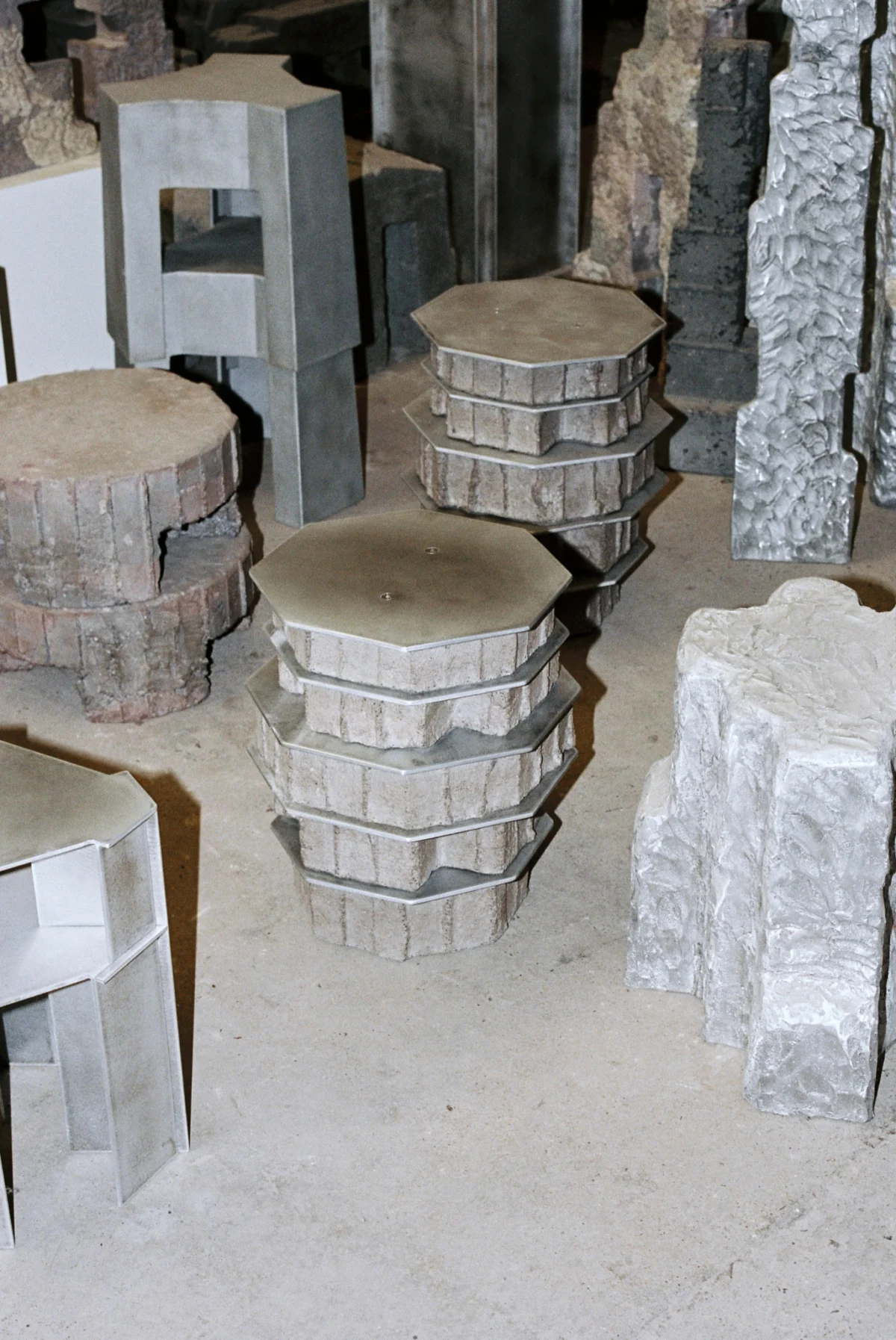
The intersection of functional furniture and high-concept jewelry has found a new benchmark in the collaboration between Belgian designer Bram Vanderbeke and jeweler Lore Van Keer, a partnership that challenges the traditional boundaries of scale, material, and structural rhythm. The centerpiece of this collaboration, the Anthology Side Table/Stool, represents a culmination of Vanderbeke’s career-long exploration of raw materiality and architectural form. Produced in a highly limited edition of eight pieces for the stool and twenty for the accompanying silver necklace, the LVK x BV collection serves as a physical manifesto for "collectible design"—a burgeoning sector of the art market where utility meets the aesthetic rigor of the gallery space. Handcrafted in Vanderbeke’s Belgian atelier, the Anthology stool utilizes a sophisticated layering of cast concrete and aluminum, a process that ensures each iteration is a unique sculptural object. By employing a new mold for every piece, Vanderbeke elevates a traditionally industrial process into a medium for bespoke artistic expression, reflecting a broader trend in contemporary design toward the "monotype" or unique-edition functional object.
A Chronology of Craft: From Construction to the Academy
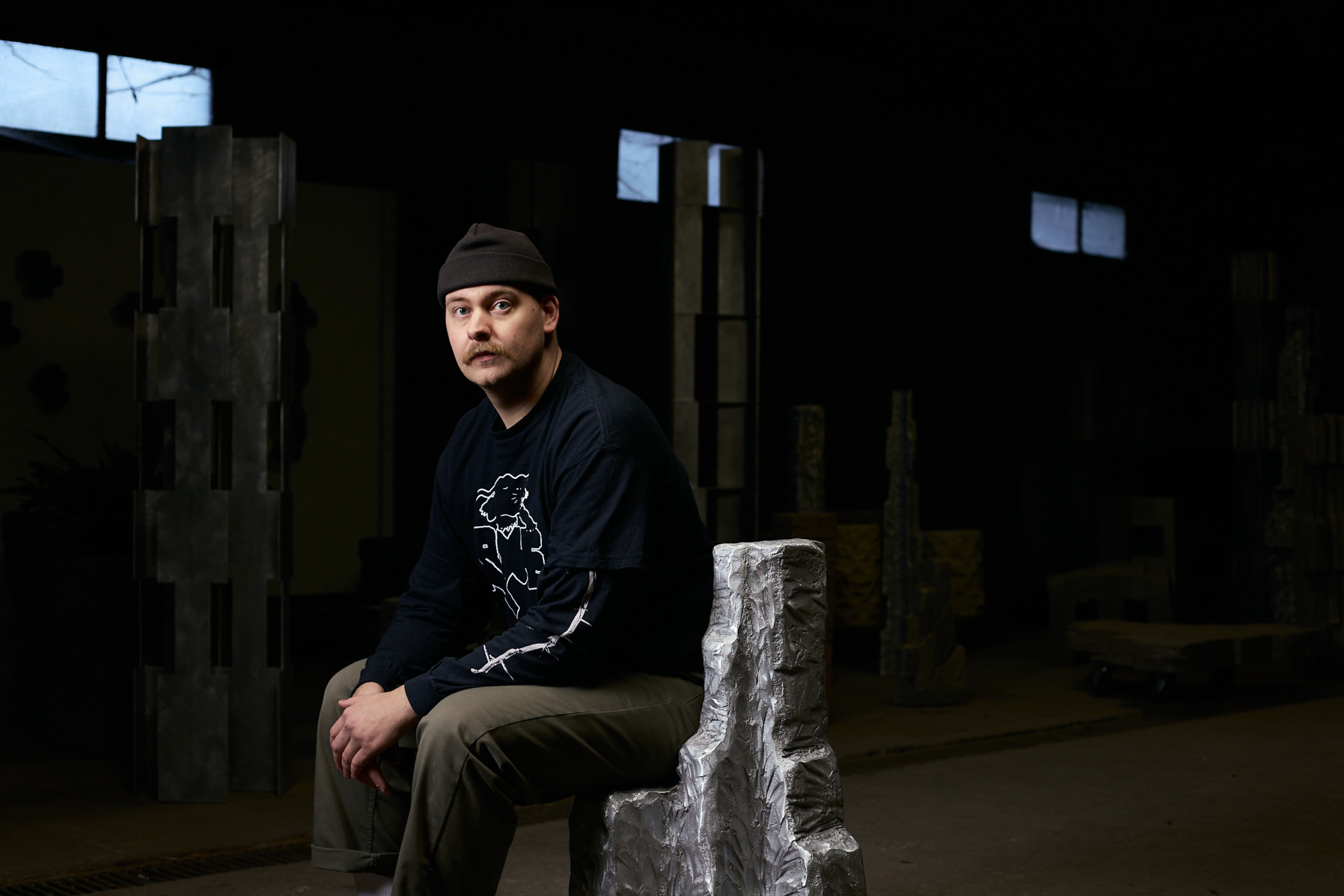
To understand the structural integrity of Vanderbeke’s current portfolio, one must look toward his early formative years and a childhood ambition that deviated from the typical artistic path. Unlike many of his peers who were drawn to fine arts from the outset, Vanderbeke’s initial interest lay in the pragmatic world of masonry. His early education in woodwork and construction provided a foundational understanding of how buildings are assembled, a perspective that continues to inform his design language. This technical grounding was later refined through formal academic training at the Royal Academy of Fine Arts (KASK) in Ghent, followed by a degree from the prestigious Design Academy Eindhoven in the Netherlands. The latter institution is globally recognized for fostering "conceptual design," a movement that prioritizes the narrative and intellectual weight of an object as much as its utility.
Upon graduating, Vanderbeke returned to his hometown in Belgium to establish a practice that sits at the nexus of art, design, and architecture. In 2018, he co-founded the Brut Collective, a Belgian group of designers who share a common interest in the "brutalist" or raw aesthetic. This collective has been instrumental in positioning Belgian design on the international stage, participating in major fairs such as Milan Design Week and Salon Art + Design in New York. The timeline of Vanderbeke’s career shows a rapid ascent from a local maker to a globally recognized designer, culminating in high-profile commissions for luxury houses and renowned interior designers including Bottega Veneta, Kelly Wearstler, and Pieter Mulier.

The Anthology Collection: Translating Jewelry into Architecture
The collaboration with Lore Van Keer originated from a shared fascination with geometric repetition and the "rhythm" of forms. Van Keer, known for her architectural approach to jewelry, invited Vanderbeke to reinterpret her Anthology collection—specifically the "Anthology 10" ring—as a piece of furniture. The challenge lay in translating the delicate, stacked geometry of a silver ring into a robust, load-bearing object. Vanderbeke’s solution was to utilize the "Stacked Geometry" principle, where alternating layers of cast concrete and aluminum create a visual cadence that mimics the structure of the ring.
The technical specifications of the Anthology stool reveal a deep commitment to material contrast. The concrete provides a sense of permanence, weight, and ancient texture, while the aluminum layers introduce a modern, industrial precision and a reflective quality that catches the light. This duality allows the piece to function effectively in both indoor and outdoor environments, bridging the gap between domestic furniture and garden sculpture. By scaling up the proportions of jewelry, Vanderbeke forces the user to interact with the "ornament" on a physical, bodily level, transforming the act of sitting into an engagement with a scaled-up piece of wearable art.

Supporting Data and Material Analysis
The use of cast concrete in contemporary design has seen a resurgence as designers seek materials that offer both sustainability and a "raw" aesthetic. According to market reports in the collectible design sector, there has been a 15% increase in the demand for cementitious and mineral-based furniture over the last five years, driven by a consumer desire for "tactile" and "authentic" materials. Vanderbeke’s choice to pair concrete with aluminum is particularly strategic; aluminum is one of the most recyclable materials in the construction industry, and its inclusion adds a level of structural lightness and durability.
In terms of production data, the LVK x BV collection adheres to the "Limited Edition" model that characterizes the high-end design market. By limiting the stool to eight pieces, the collaborators ensure a high level of scarcity, which in turn drives value within the secondary art market and among private collectors. Each stool is made-to-order, a logistical choice that minimizes waste and allows for a direct relationship between the maker’s atelier and the end user.

Architectural Influences: From Isamu Noguchi to Roman Antiquity
Vanderbeke’s creative process is heavily documented as being research-driven, drawing from a diverse library of historical and architectural references. A primary influence for the Anthology collection is the work of Isamu Noguchi, specifically his 1957 installation for the lobby of 666 Fifth Avenue in New York. Noguchi’s "Waterfall" and "Ceiling" featured undulating louvers of aluminum that created a sense of movement and rhythm within a static architectural space. Although these works were controversially removed in 2020, their legacy lives on in Vanderbeke’s use of aluminum layers to define volume and light.
Furthermore, Vanderbeke cites "Ancient Forms" and "Excavations" as a recurring theme in his work. The rough, stacked shapes of Roman columns found in archaeological ruins provide a template for his "Cast Bricks" collection. This series involves arranging standard bricks in intuitive compositions to create negative spaces, which then serve as the molds for his furniture. This "Building Block" methodology is a direct nod to his childhood interest in bricklaying, effectively closing the loop between his early manual training and his current status as a conceptual artist.

The DIY Ethos and the Hardcore Punk Influence
A unique aspect of Vanderbeke’s professional philosophy is his background in the hardcore punk subculture. This may seem disparate from the refined world of luxury design, but Vanderbeke maintains that the "DIY" (Do-It-Yourself) ethos of the punk scene is the engine behind his career. In the punk subculture, the emphasis is on community-led initiatives, autonomy, and the motivation to create something from nothing.
"I grew up in this subculture, which is built on DIY shows and a very close community," Vanderbeke noted in a recent discussion. This mindset translates into his design practice through a hands-on approach to production. Rather than outsourcing manufacturing to large industrial factories, he retains control over the casting and finishing processes within his own studio. This autonomy allows for a level of experimentation and "happy accidents" that are often lost in mass production, reinforcing the "Brut" aesthetic that defines his work.

Broader Impact and Implications for Contemporary Design
The success of the LVK x BV collaboration and Vanderbeke’s recent exhibition, Cavea—which featured over 70 works by more than 40 designers—signals a shift in the Belgian design landscape. The Cavea exhibition, organized by the Brut Collective and DesignUnDisciplined, highlighted a move toward "un-disciplined" design, where the boundaries between sculpture, architecture, and furniture are intentionally blurred.
This trend has significant implications for the interior design industry. As commercial and residential spaces increasingly seek "hero pieces" that can double as art, designers like Vanderbeke are filling a crucial gap. His work for the newly reopened Design Museum Gent shop and his commissions for global fashion houses like Bottega Veneta suggest that the luxury sector is moving away from standardized furniture in favor of objects that tell a story of material provenance and artistic labor.

Furthermore, Vanderbeke’s work addresses the relationship between the object and its environment. Much like the Insel Hombroich museum in Germany—a site where art and nature merge seamlessly—Vanderbeke’s pieces are designed to be transformed by their surroundings. Whether placed in a minimalist gallery or a changing outdoor landscape, the Anthology stool’s texture and form respond to the shifting light and seasonal variations, making the user’s experience a dynamic one.
Conclusion: The Future of Functional Art
As Bram Vanderbeke continues to expand his practice, his work remains a testament to the power of cross-disciplinary collaboration. By merging the microscopic precision of jewelry with the macroscopic weight of architecture, the Anthology collection provides a blueprint for the future of functional art. The integration of ancient structural motifs with modern industrial materials reflects a design philosophy that is both forward-looking and deeply rooted in the history of human craft.

For collectors and design enthusiasts, the LVK x BV collection is more than a set of furniture and accessories; it is an exploration of how we occupy space and how the objects we surround ourselves with can bridge the gap between the utilitarian and the sublime. As the "New Belgian" design movement continues to gain momentum, Vanderbeke’s role as a co-founder of the Brut Collective and a pioneer of material-focused design ensures that his influence will be felt across the industry for years to come. The Anthology series stands as a definitive moment in this trajectory, proving that the simplest materials—concrete, aluminum, and silver—can, when guided by a clear architectural vision, become extraordinary.