admin
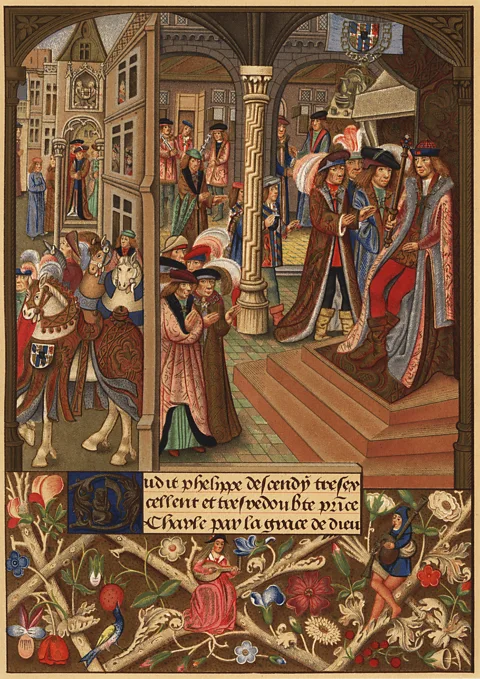
The historical narrative surrounding the legal and social treatment of women in the Middle Ages has long been dominated by themes of systemic oppression, social ostracization, and a perceived lack of judicial agency. However, a meticulous examination of 15th-century court records from the city of Dijon has revealed a far more nuanced reality. The case of Jehanne, a pregnant woman who was the victim of a violent assault in 1472, serves as the centerpiece of historian Sara McDougall’s recent scholarship, Justice for Jehanne. By analyzing over 70 pages of densely inscribed parchment preserved in Dijon’s municipal archives, McDougall challenges long-standing historiographical assumptions, particularly those popularized by Jacques Rossiaud in the late 20th century, regarding the inevitable descent of sexual assault survivors into social ruin.
Historical Context: Burgundy and the Conflict of 1472
To understand the legal proceedings following the assault on Jehanne, one must first consider the volatile political climate of the late 15th century. In 1472, Dijon was a pivotal city within the Duchy of Burgundy, then ruled by Charles the Bold. The Duchy was embroiled in a protracted and existential conflict with King Louis XI of France. As French forces advanced into the Burgundian countryside, Dijon existed in a state of perpetual military readiness, bordering on a siege mentality.

To bolster the city’s defenses, Charles the Bold stationed high numbers of mercenaries around Dijon’s walls. These soldiers, while necessary for defense, frequently operated outside the bounds of local civilian law. The presence of these "wild and lawless men" created a secondary front of internal conflict between the municipal authorities—who sought to maintain order and protect their citizens—and the ducal administration, which prioritized military utility over local governance. Historians note that this period was characterized by "recurrent problems of men at night looking for potential victims to extort or abuse," a situation that frequently pitted the city’s magistrates against the Duke’s commanders.
Chronology of the 1472 Investigation
The events surrounding Jehanne’s case unfolded with a speed that rivals modern criminal investigations, providing a detailed timeline of medieval judicial response:
- January 3, 1472: In the evening, Jehanne and her female host were confronted at their residence by two local men. Upon their refusal to comply with demands to leave the house, one of the men recruited several of the Duke’s mercenaries from a nearby inn. Jehanne was subsequently dragged to a field and subjected to a violent physical and sexual assault.
- January 4, 1472: Jacques Borestel, an investigator for the Dijon municipal authorities, initiated an inquiry immediately upon hearing reports of the incident. He conducted the first interview with Jehanne, who was bedridden and in physical distress.
- January 5, 1472: Despite the trauma of the previous 48 hours, Jehanne gave birth to a daughter.
- January 6–20, 1472: Based on Jehanne’s detailed descriptions, Borestel apprehended the majority of the suspects. The municipal court authorized "extraordinary measures," including torture, to extract confessions after the men initially denied the charges.
- February 1472: The municipal authorities concluded their investigation, finding the men guilty and sentencing them to death. However, the execution was halted by a jurisdictional challenge from the ducal authorities.
- March 1472: A secondary investigation into Jehanne’s personal history was launched to determine her legal standing as a plaintiff. Despite discoveries of her past "sins," the city continued to pursue the case against the mercenaries until the defendants were eventually released under a clerical loophole.
Legal Procedures and the Concept of the "Preudefemme"
The investigation conducted by Jacques Borestel offers a rare look into the mechanics of 15th-century law. Central to the proceedings was the assessment of Jehanne’s status as a preudefemme—a term denoting a respectably married and morally upright woman. In the eyes of the law, the credibility of a witness and the severity of a crime were often tied to social standing and perceived virtue.

Initially, Jehanne presented herself as the "wife of Jehan of Relanges," and her elegant attire—specifically a long hood draped over her hair—served as a visual signifier of her respectable status. However, as Borestel’s investigation widened, it was revealed that Jehanne’s husband had been absent for years and that she had been living as the mistress of a priest, with whom she had fathered children.
Under the prevailing theories of the time, such a revelation should have theoretically invalidated her claim or led to her being cast out. Yet, the Dijon records show the opposite. The municipal authorities, driven by a desire to curb mercenary violence, viewed Jehanne’s personal life as secondary to the crime committed against her. Even after she admitted to "living in sin," the prosecutors maintained their pursuit of the death penalty for her attackers. This suggests that the legal system was capable of a pragmatic separation between a victim’s moral history and their right to protection under the law.
Supporting Data: Challenging the "Brothel Narrative"
A significant portion of McDougall’s research is dedicated to debunking the "brothel narrative" established by Jacques Rossiaud in his 1988 work, Medieval Prostitution. Rossiaud argued that women who suffered sexual violence in the Middle Ages were so thoroughly shamed that they were almost inevitably forced into the municipal brothels. He cited a brief, unnamed reference to a pregnant woman in Dijon as a prime example of this tragic trajectory.

McDougall’s analysis of the full 70-page dossier reveals a different outcome. Rather than being shunned, Jehanne was supported by her community. Neighbors provided her with hiding places when she was threatened by the mercenaries’ associates. She was eventually given employment at a local hospital, an institution that provided both a livelihood and a degree of social protection. The data indicates that while life was undoubtedly difficult, the "inevitable" descent into prostitution was not the universal standard for survivors.
Official Responses and Jurisdictional Friction
The resolution of the case highlights the limits of municipal power when confronted with the interests of the nobility. While the city of Dijon had secured confessions and issued a death sentence, the ducal authorities intervened. They employed a common medieval legal maneuver known as the "benefit of clergy."
The Duke’s representatives claimed that the mercenaries were members of the clergy and therefore could not be tried or executed by a secular municipal court. Despite the fact that the men were armed soldiers—a status technically incompatible with the priesthood—the legal fiction was maintained to protect military assets. After two months of detention, the men were released.

This official response illustrates a complex hierarchy where the pursuit of justice for an individual was often sacrificed at the altar of political and military necessity. The Duke, despite his public proclamations regarding the safety of Dijon’s citizens, chose to shield his soldiers from the consequences of their actions to maintain the integrity of his fighting force.
Broader Impact and Implications for Modern Historiography
The case of Jehanne has profound implications for how modern historians and the public perceive the Middle Ages. It suggests that the "Dark Ages" were not entirely devoid of nuanced justice or social compassion.
- Agency of the Victim: Jehanne’s persistence in repeating her testimony, even when facing her attackers in person and dealing with the aftermath of a traumatic birth, demonstrates a high degree of individual agency. She viewed herself as a person with rights that the state was obligated to uphold.
- Community Resilience: The fact that neighbors and hospital workers rallied around a woman with a "sinful" past to protect her from further violence challenges the trope of the judgmental, monolithically religious medieval society.
- Complexity of Morality: The case reveals a society that tolerated significant contradictions—priests with mistresses, "loose" women who were still considered worthy of legal protection, and a legal system that used torture to find the truth but also allowed for sophisticated jurisdictional appeals.
In conclusion, while Jehanne did not achieve the ultimate justice of seeing her attackers punished, the existence of her case file serves as a testament to a legal system that took her seriously. The investigation by Jacques Borestel and the subsequent scholarship by Sara McDougall provide a vital correction to the historical record, showing that even in war-ravaged 15th-century Burgundy, the voice of a "relative stranger" could command the attention of the highest levels of government. Jehanne’s story remains a critical data point in the ongoing effort to understand the lived experiences of women in the pre-modern world.