admin
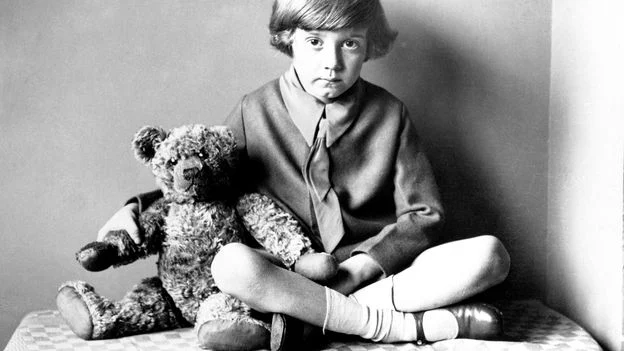
In October 1926, a modest volume of children’s stories was published in London, introducing the world to a "Bear of Very Little Brain" and a collection of stuffed animals residing in a fictionalized version of the English countryside. One hundred years later, Winnie-the-Pooh remains a cornerstone of global literature, a multibillion-dollar franchise, and a symbol of childhood innocence. However, beneath the whimsical tales of honey jars and Heffalumps lies a more somber reality: the lifelong struggle of the real Christopher Robin Milne to reconcile his identity with the fictional character that bore his name. While the world celebrated the centenary of the first Pooh book, the history of its creation serves as a poignant study of the unintended consequences of literary immortality and the complexities of the father-son dynamic in the early 20th century.
The Genesis of a Cultural Phenomenon
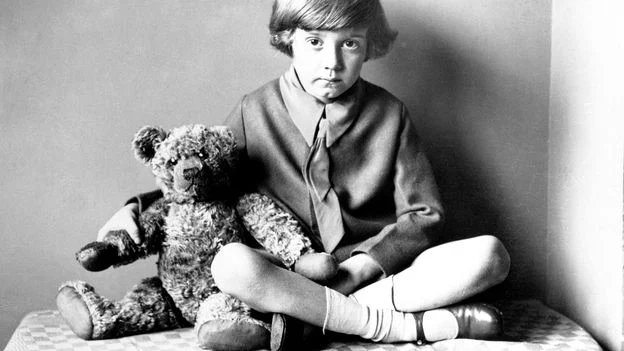
The origins of Winnie-the-Pooh are rooted in the domestic life of Alan Alexander (AA) Milne, a successful playwright and contributor to the satirical magazine Punch. In 1921, for his son Christopher’s first birthday, Milne and his wife, Daphne, purchased a stuffed bear from Harrods department store. Originally named Edward, the bear was later renamed Winnie-the-Pooh—a combination of "Winnie," a black bear the family had seen at the London Zoo, and "Pooh," a name Christopher had given to a swan.
The stories were not initially intended to be a global franchise. Milne began writing poems and short stories inspired by his son’s interactions with his toys, including Piglet, Eeyore, Kanga, Roo, and Tigger. These toys, most of which are now preserved in the New York Public Library, became the blueprint for the residents of the Hundred Acre Wood. The setting itself was a direct reflection of the Five Hundred Acre Wood in Ashdown Forest, East Sussex, where the Milnes purchased Cotchford Farm as a country retreat in 1925.
The publication of Winnie-the-Pooh in 1926 was preceded by the poetry collection When We Were Very Young (1924) and followed by Now We Are Six (1927) and The House at Pooh Corner (1928). The books were an immediate sensation. By the end of the 1920s, Pooh had become a household name, but the sudden fame placed an enormous burden on the young boy who shared the protagonist’s name.
The Nanny-Dominated Childhood of the 1920s
To understand the friction between the real Christopher Robin and his fictional counterpart, one must examine the social structures of the British upper-middle class in the 1920s. As Christopher Milne later recounted in interviews with the BBC and in his own memoirs, his upbringing was typical for his station but lacked the emotional intimacy suggested by his father’s writing.
"People like myself were in those days brought up by nanny," Christopher told the BBC in 1971. "And really all my childhood up to the age of 10 was nanny-dominated." His primary caregiver was Olive Rand, known as "Nou," who provided the stability and affection that his parents, often preoccupied with social and professional obligations, did not. Christopher revealed that he saw his parents only for brief, scheduled periods each day.
This emotional distance created a paradox: AA Milne was writing with profound insight into a child’s psyche and a father’s affection, yet he was not actively participating in the daily play he described. Christopher later observed that his father "wasn’t concerned with me" in a traditional parental sense; rather, he was a creative observer using his son’s world as raw material for his art.
A Timeline of Resentment and Fame
The trajectory of Christopher Milne’s life was irrevocably altered by his father’s success. The following chronology highlights the key stages of this complex relationship:
- 1920: Christopher Robin Milne is born in London.
- 1924–1928: The four Pooh books are published. Christopher is used extensively for publicity, photographed with his bear and participating in public readings.
- 1930s: Christopher is sent to boarding school, where he faces relentless bullying. Peers mocked him by reciting his father’s poems, particularly "Vespers," which ends with the line, "Christopher Robin is saying his prayers."
- 1939–1945: Christopher serves in the Middle East and Italy during World War II. He later remarked that the army provided a rare opportunity to be judged on his own merits rather than his name.
- 1951: Christopher and his wife, Lesley, move to Dartmouth to open the Harbour Bookshop, seeking a quiet life away from the London literary scene.
- 1974: Christopher publishes his first memoir, The Enchanted Places, in which he articulates his struggle with his father’s legacy.
- 1996: Christopher Milne dies at the age of 75, having achieved a measure of peace with his past.
The Financial and Commercial Expansion
While the personal cost to Christopher Milne was high, the commercial success of the Pooh franchise continued to escalate throughout the 20th century. In 1961, Walt Disney Productions licensed certain film and other rights to the characters from Stephen Slesinger, Inc. and the Estate of AA Milne. This marked the beginning of Pooh’s transformation into a global media icon.

Data from the early 2000s suggests that Winnie-the-Pooh characters generate over $5 billion in annual retail sales, rivaling Mickey Mouse in popularity. The books have been translated into over 50 languages, including a 1958 Latin translation, Winnie ille Pu, which became the first foreign-language book to appear on the New York Times Bestseller List.
Despite the wealth generated by the books, Christopher Milne initially felt a sense of jealousy toward his father’s success. In his memoir, he questioned whether his father’s achievements were truly his own: "Hadn’t I come into it somewhere?" He famously refused to accept royalties from the books for many years, only eventually relenting to provide for his daughter, Clare, who was born with cerebral palsy.
Official Responses and Biographer Perspectives
Biographers and literary historians have long debated AA Milne’s intentions. Ann Thwaite, author of the definitive biography AA Milne: The Man Behind Winnie-the-Pooh, noted that the elder Milne was often bewildered by the public’s reaction to his son. When a journalist suggested Milne had a deep love for children, he responded bluntly that he was "not inordinately fond of them."
However, Thwaite and other scholars suggest that the books were Milne’s way of bridging an emotional gap he could not cross in person. Christopher eventually came to this realization later in life. He acknowledged that his father’s "heart remained buttoned up," and that the writing was an outlet for feelings he could not express directly to his son. In this view, characters like the gloomy Eeyore were vessels for the author’s own hidden sadnesses.
The 2017 film Goodbye Christopher Robin brought this narrative to a wider audience, depicting the strain the books put on the family. The film was met with a mixture of critical acclaim and discussion regarding the ethics of using a child’s life for commercial gain.
Broader Impact and Implications for Children’s Literature
The case of Christopher Robin Milne remains a cautionary tale in the world of celebrity and literature. It raises fundamental questions about the "ownership" of a child’s image and experiences. In the modern era of "sharenting"—where parents document their children’s lives on social media for public consumption—the parallels to the 1920s publicity surrounding Christopher Robin are striking.
Furthermore, the longevity of the Pooh stories highlights a shift in children’s literature. Milne was among the first to write for children without a heavy-handed moralizing tone, instead focusing on the internal logic and whimsy of a child’s imagination. This shift paved the way for future authors to explore the complexities of childhood, even if the real-life inspiration for those stories felt "filched" of his good name.
Reconciliation and Preservation
In his final decades, Christopher Milne reached a state of reconciliation. He returned to Ashdown Forest in 1979 to commemorate the preservation of the land, which had been threatened by commercial interests. He worked with the local council to ensure that the woods that inspired the stories would remain open to the public.
He also acknowledged that the books, despite the "empty fame" they brought him, were a gift to the world. He came to see Winnie-the-Pooh not as a rival for his father’s affection, but as a medium through which his father sought a connection that his temperament otherwise prevented.
As the Winnie-the-Pooh franchise enters its second century, the legacy is twofold. On one hand, there is the immortal bear who continues to provide comfort to millions. On the other, there is the memory of a man who fought to reclaim his identity from a shadow cast by his own childhood. Christopher Milne’s journey from resentment to acceptance serves as the final, unwritten chapter of the Pooh stories—one that emphasizes the human cost of becoming a legend.