admin
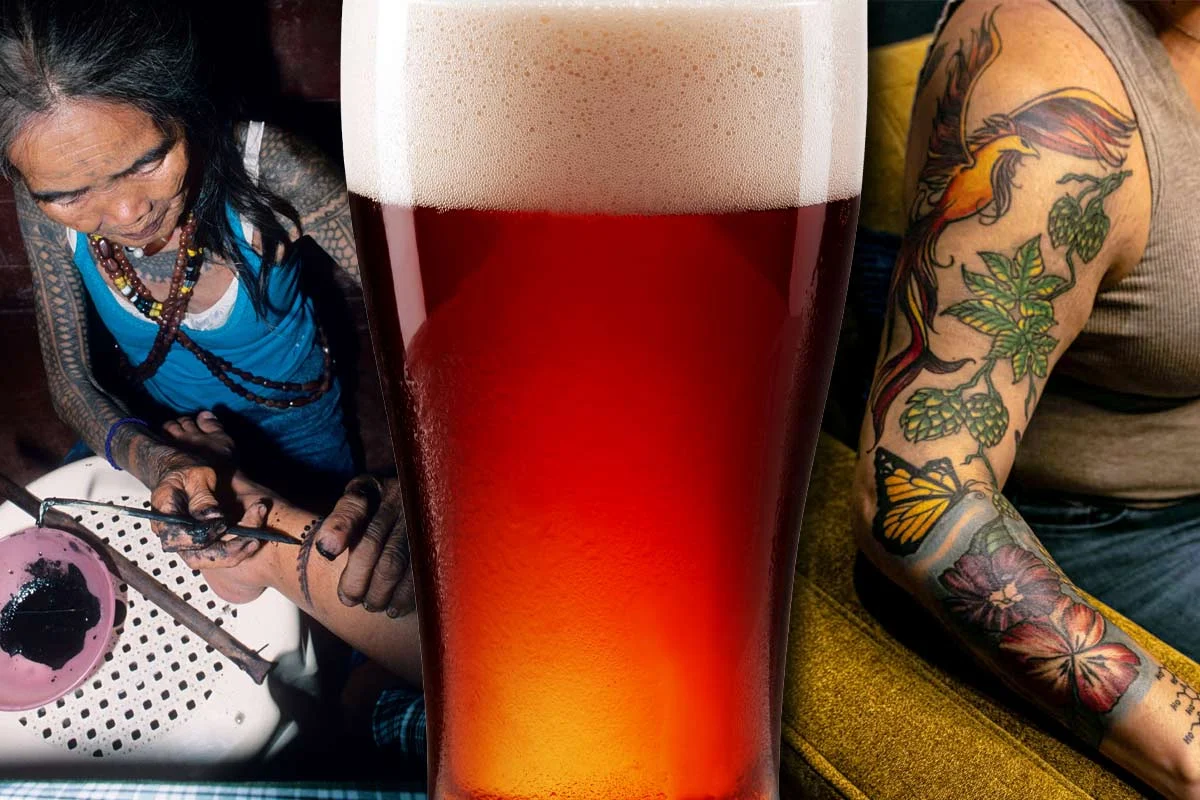
Across the diverse landscape of human history, two seemingly disparate practices—tattooing and fermentation—have emerged as profound technologies of transformation. While one involves the permanent inscription of pigment into the dermis and the other the biological breakdown of sugars into alcohol or acids, they share a deep-seated kinship rooted in the relationship between land, spirit, and community. These crafts represent more than mere aesthetic or culinary choices; they are embodied forms of knowledge passed through generations, serving as vehicles for preserving ancestry, marking life transitions, and maintaining cultural continuity. From the hearths of northern Japan to the highlands of the Philippines and the savannas of Guyana, the "ink and drink" connection reveals a shared grammar of transformation that remains visible on the skin and tangible in the glass.
The Anthropology of Transformation: A Shared Grammar
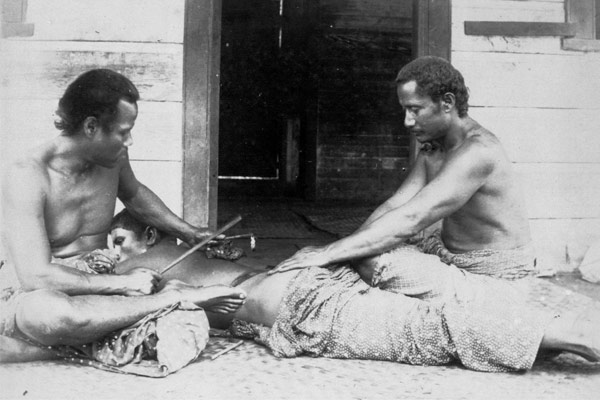
To understand the intersection of tattooing and fermentation, one must first view them through the lens of indigenous epistemology. Anthropologists often categorize these practices as "rituals of change." Fermentation takes raw, often perishable materials—rice, taro, cassava, or grapes—and through the agency of microscopic life, transforms them into substances that offer nourishment, preservation, and spiritual elevation. Similarly, tattooing takes the raw canvas of the human body and, through the application of pigment and pain, transforms an individual into a bearer of lineage, status, or protection.
Historically, these practices have rarely existed in isolation. In many cultures, the tools, ingredients, and spiritual oversight required for both were identical. The hearth, the center of domestic life, served as the laboratory for both the brewer and the tattooist. By examining specific case studies, a pattern emerges: ink and drink operate as dual technologies that allow communities to remain in constant conversation with their ancestors and their environment.
The Ainu of Northern Japan: The Sacred Hearth and Kamuy Fuchi
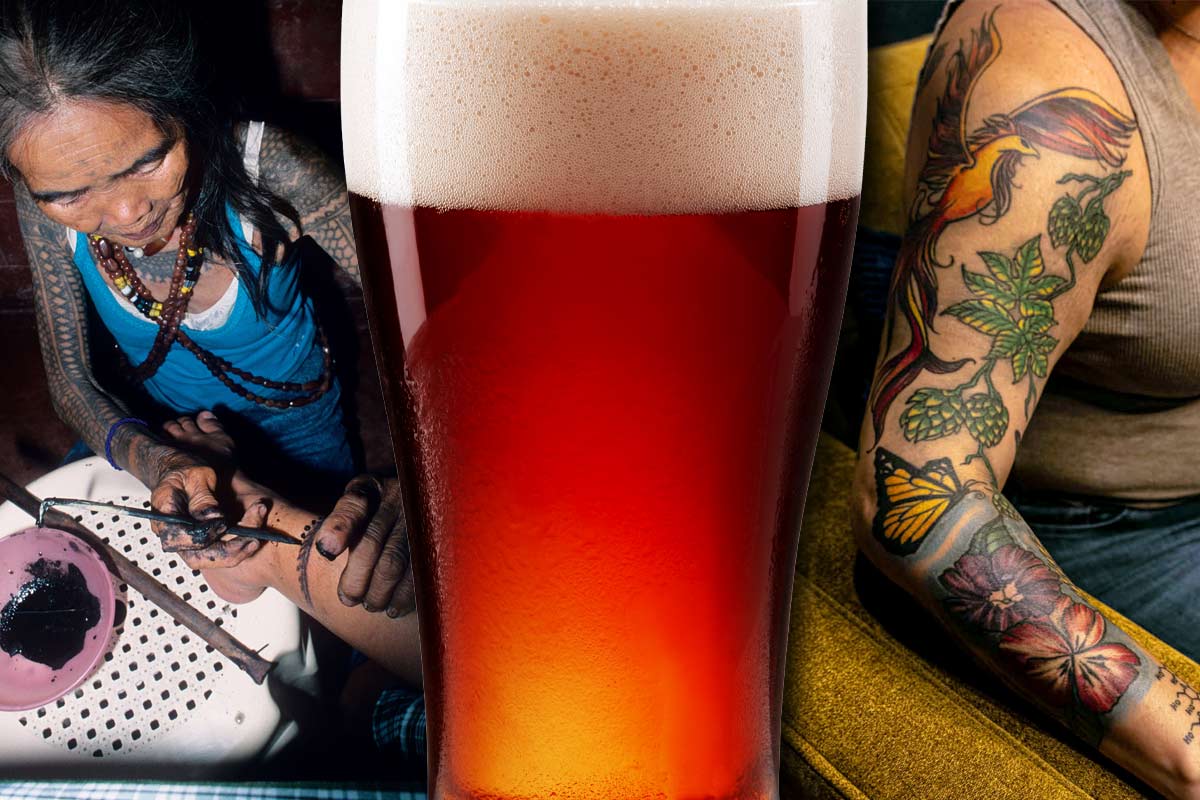
For the Ainu, the Indigenous people of Hokkaido, Sakhalin, and the Kuril Islands, the hearth (ape-oi) is the physical and cosmological center of the universe. Historically, Ainu society was organized around the domestic rituals of the hearth, which were overseen by Kamuy Fuchi, the goddess of the fire.
The connection between tattooing and fermentation among the Ainu was literal. Tattoo ink was derived from the soot collected on the underside of earthenware pots used for brewing and cooking. This soot was mixed with water and steeped with ash tree bark. The process of tattooing, known as sinuye, was a gendered ritual performed almost exclusively on women. Lip tattoos, which were expanded over several years, marked a girl’s transition to womanhood and were believed to please Kamuy Fuchi, ensuring protection in the afterlife.
Simultaneously, women were the primary brewers of tonoto, a traditional beer made from rice and millet. The production of tonoto was a sacred responsibility; the beverage was used as an offering to the kamuy (divine beings) during the iomante (bear sending) ceremony and other pivotal rituals. The suppression of Ainu culture during the Meiji period (1868–1912) saw both practices banned by the Japanese government as part of a forced assimilation policy. The 1899 Hokkaido Aborigine Protection Act specifically targeted these traditions, viewing tattooing as "barbaric." Today, the revival of Ainu tattooing and brewing is a central component of the community’s efforts to reclaim their indigenous identity.
The Kalinga of the Philippines: Fermented Pigments and the Warrior’s Mark
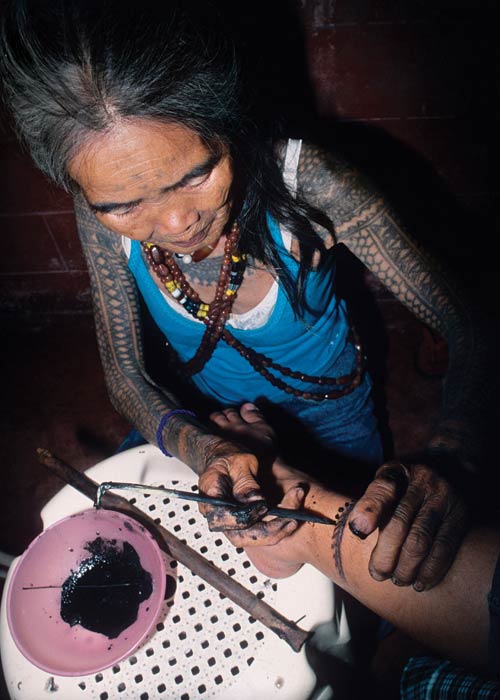
In the Cordillera mountains of the northern Philippines, the Kalinga people have maintained the tradition of batok, or hand-tapped tattooing, for centuries. This practice gained international recognition through Whang-od Oggay, who at over 100 years old is considered the last traditional mambatok (master tattooist) of her generation.
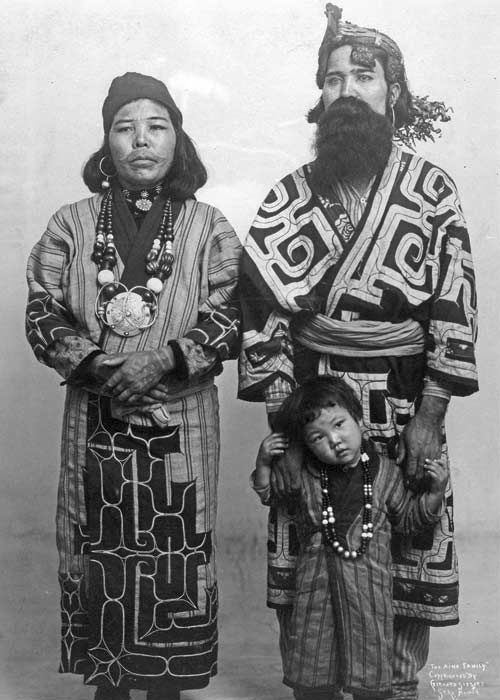
In Kalinga culture, the intersection of ink and fermentation is found within the chemical composition of the pigment itself. Traditionally, tattoo ink was created by mixing soot with water or plant-based liquids. In some regions, sugarcane juice served as the carrier. When sugarcane juice is mixed with soot and allowed to sit, it undergoes a natural fermentation process, turning into a mild alcohol. This fermented mixture was believed to improve the flow and "bite" of the ink as it was tapped into the skin using a thorn from a pomelo tree.
Batok served as a visual language: for men, it was a record of bravery in battle; for women, it was a mark of beauty and fertility. These tattoos were often applied during communal celebrations where fermented beverages like tapuy (rice wine) and basi (sugarcane wine) were consumed. The fermentation of the drink and the fermentation of the ink were part of the same ritual ecosystem, reinforcing the social fabric of the village.
The Makushi of Guyana: Tattoos as Brewing Charms
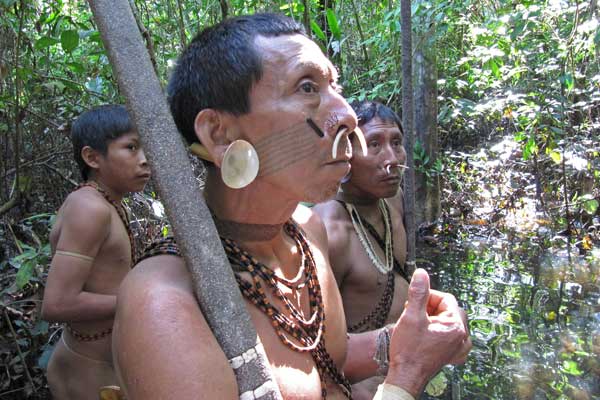
The Makushi people of the Guiana Shield in South America provide perhaps the most direct link between the efficacy of fermentation and the presence of tattoos. Their staple crop, cassava, requires complex processing to remove toxins and transform it into parakari, a sophisticated beer created through dual fermentation involving both mold (Rhizopus) and yeast.
Anthropological records indicate that Makushi women utilized kansku—tattoos specifically designed as brewing charms. These markings, often placed on the arms or jaw, were believed to impart the brewer with the ability to control the quality of the ferment. Motifs depicting bees or scorpions were common; the former was intended to make the brew as sweet as honey, while the latter provided a "sting" or "kick" (yekî).
In Makushi culture, the physical presence of the tattoo was a prerequisite for the labor of brewing. A woman without the proper markings was often considered spiritually ill-equipped to handle the delicate transformation of cassava. This belief system highlights a worldview where the body is not just a vessel but an active participant in the biochemical processes of the kitchen.
Hawaiian Epistemology: Genealogy and the Fermentation of Kalo
In Hawaii, the practices of kākau (hand-tapped tattoo) and the fermentation of poi (mashed taro) are deeply intertwined through the concept of Hāloa. According to Hawaiian cosmology, Kalo (the taro plant) is the elder brother of the Hawaiian people. Feeding on poi is therefore an act of kinship and a literal consumption of ancestry.
Dr. Lindsay Malu Kido, a scholar of Indigenous body sovereignty, notes that kākau serves a similar genealogical function. The patterns inscribed on the skin are not merely decorative; they are "living records" of one’s lineage and responsibilities to the land (’āina). The fermentation of poi—which involves allowing the pounded taro to develop a sour, probiotic-rich profile—mirrors the "ripening" of an individual through the acquisition of traditional tattoos. Both processes require time, patience, and a deep understanding of natural cycles.
A Chronology of Cultural Convergence and Suppression
The history of these two crafts is also a history of resilience against colonial intervention. A timeline of these practices reveals a parallel decline and modern resurgence:
- Pre-Colonial Era: Tattooing and fermentation are central to indigenous governance, health, and spirituality.
- 18th – 19th Century: Missionaries and colonial administrators across the Pacific, Asia, and the Americas begin a systematic campaign against tattooing, labeling it "unchristian" or "unhygienic." Concurrently, indigenous fermentation practices are often replaced by industrial spirits introduced by colonial powers.
- Late 20th Century: The "Indigenous Renaissance" begins. Movements in Hawaii, New Zealand (Māori Moko), and the Philippines see a revival of traditional tattooing.
- 21st Century: The global craft beer and fermentation movement begins to look toward ancestral techniques, leading to a renewed interest in traditional brews like tonoto, parakari, and tapuy.
Contemporary Echoes: The Modern Brewer’s Skin
In the modern era, the relationship between ink and drink has transitioned from indigenous ritual to professional identity. In the contemporary craft brewing industry, tattoos have become a hallmark of the trade. However, unlike the ancestral protocols of the Ainu or Makushi, modern brewing tattoos often serve as personal narratives of craft, recovery, and identity.
Sandra Murphy, owner of Murphy’s Law Brewery in Texas, utilized tattooing as a means of processing grief after the loss of her daughter. Her sleeve, which incorporates the chemical formula for ale yeast cell walls alongside wheat, barley, and butterflies, represents a synthesis of her professional passion and personal history. For Murphy, the tattoo is a permanent reminder of how the brewing industry "saved her life."
Similarly, Rachael Engel, a brewer at Sound2Summit Brewery, views her "hop sleeve" as a marker of her journey and her identity as a transgender woman in the craft beer space. These contemporary examples show that while the specific mythological contexts may have changed, the fundamental logic remains: humans continue to use tattoos to mark significant transformations in their lives, often using the symbols of the fermentation craft to do so.
Analysis of Implications: Embodied Knowledge as Resistance
The intersection of tattooing and fermentation offers a unique perspective on the concept of "embodied knowledge." In a world increasingly dominated by digital interfaces and industrial standardization, these two practices remain stubbornly physical. They require the use of the hands, the endurance of the body, and a relationship with living organisms (yeast and bacteria) or natural elements (carbon and earth).
From a journalistic and sociological standpoint, the revival of these practices constitutes an act of decolonization. By reclaiming the right to mark their bodies and brew their ancestral drinks, indigenous communities are asserting sovereignty over their physical and cultural selves. Furthermore, the scientific community is beginning to recognize the sophistication of these ancient technologies. The "fermented ink" of the Kalinga, for instance, suggests an early understanding of how alcohol can act as a preservative and a solvent, while Makushi brewing charms reflect a sophisticated cultural framework for managing complex microbial ecosystems.
Conclusion: Traces of the Past, Blueprints for the Future
Ink and fermentation are two of humanity’s oldest methods for making sense of the world. One marks the food we consume to sustain our bodies, while the other marks the skin that houses our spirits. Both require a process of "breaking down" to build something stronger—whether it is the breakdown of starch into sugar or the breaking of the skin to insert pigment.
As these traditions continue to evolve, they serve as a reminder that identity is not static. It is something brewed over time, shaped by the hearths of our ancestors and the creative fires of the present. Whether it is a Kalinga elder tapping a centipede design onto a warrior’s leg or a modern brewer marking their arm with a hop vine, the message is the same: we are the products of our transformations, and we carry the history of those changes with us, in our blood and on our skin.