Jia Lissa
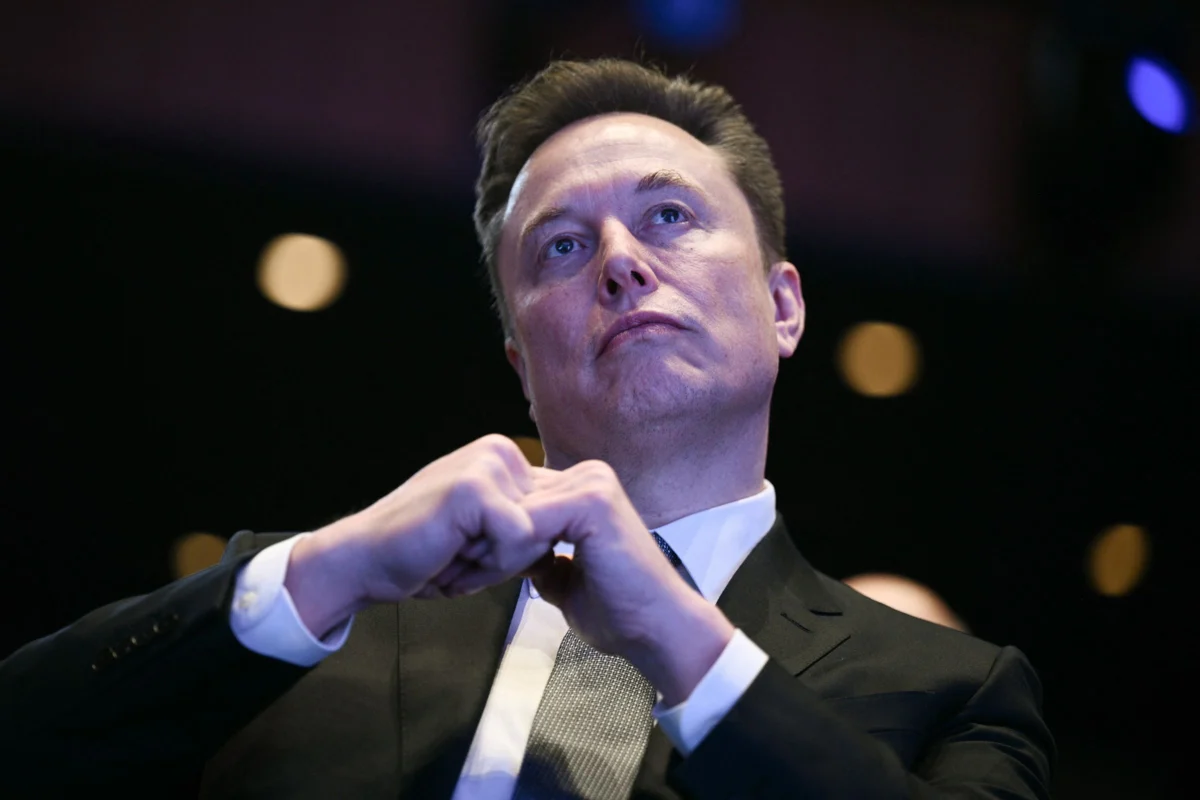
Elon Musk, the billionaire CEO of Tesla and SpaceX, channeled over $76 million into his personal political committee, America PAC, during the first two weeks of October, a move designed to bolster Republican candidates in the critical final stretch of the midterm elections. This substantial contribution, detailed in a pre-election report filed with the Federal Election Commission (FEC) on Thursday evening, underscores Musk’s escalating direct engagement in U.S. political funding, positioning him as an unprecedented individual donor in the current election cycle. The financial influx has disproportionately targeted the Texas Senate race, where Musk’s personal involvement extends beyond monetary support to direct social media attacks on Democratic candidates.
America PAC’s Strategic Deployment of Funds
America PAC, the primary vehicle for Musk’s political expenditures, reported spending nearly $43 million in the first fortnight of October alone. Despite this aggressive outlay, the committee entered the campaign’s concluding phase with a formidable cash reserve of nearly $47 million, signaling its capacity for continued, high-impact spending. This financial maneuverability allows the PAC to strategically deploy resources in races deemed pivotal, often in the form of last-minute advertising blitzes, direct mail campaigns, and digital outreach designed to sway undecided voters. The rapid infusion of funds and subsequent spending underscore a concentrated effort to influence electoral outcomes in key battleground states and races.
The PAC’s spending patterns reveal a clear strategic focus. A significant portion of the newly allocated funds, specifically $15.2 million, was directed towards the contentious Texas Senate race. This amount represents a doubling of the PAC’s expenditure in that particular contest over the entire summer, indicating a heightened prioritization as Election Day draws nearer. Of this substantial sum, $12.4 million was allocated to campaigns explicitly attacking Democratic candidate James Talarico, while $2.8 million was dedicated to promoting his Republican opponent, Ken Paxton. This targeted approach highlights a classic "contrast advertising" strategy, where negative messaging against an opponent is paired with positive messaging for the preferred candidate.
Further daily filings since the initial report have revealed an additional $9.1 million deployed against Talarico, bringing America PAC’s total spending against him this cycle to nearly $28 million. This figure constitutes approximately 40 percent of the PAC’s total expenditures supporting or opposing candidates across all races, underscoring the singular focus on this particular Texas contest. The PAC’s tactical shift towards digital platforms is also noteworthy, with $11.4 million spent on online advertisements in the same two-week period. This digital spend nearly equals the combined expenditure on traditional mailers and text messaging, reflecting a recognition of the growing importance of online engagement in modern political campaigning, particularly among younger demographics and for rapid response messaging.
Musk’s Unprecedented Financial Clout in U.S. Elections
Wired’s analysis of FEC filings indicates that Elon Musk’s total contributions to Republican political groups this election cycle have surpassed $445 million. This colossal sum positions him as the largest known individual donor in the midterms, a figure that dwarfs contributions from other high-net-worth individuals and traditional corporate PACs. Of this staggering amount, more than $165 million has flowed into America PAC since July alone, illustrating the PAC’s central role in his overall political spending strategy.
Musk’s foray into such large-scale political donations represents a significant escalation in the influence of individual wealth on electoral processes. While super PACs are legally permitted to raise and spend unlimited amounts of money to overtly support or oppose political candidates, they are prohibited from coordinating directly with candidate campaigns. However, the sheer volume of funds provided by a single individual like Musk grants immense power to shape the political narrative and ground game in targeted races. America PAC, when contacted for comment regarding its activities and funding, declined to offer a statement, a common practice among political committees seeking to avoid public commentary on their strategies.
The Texas Senate Race: A Microcosm of Musk’s Political Strategy
The Texas Senate race, which has absorbed a significant portion of America PAC’s financial resources, is not merely a financial battleground for Musk. The billionaire, whose companies Tesla and SpaceX have substantial operations and thousands of employees based in Texas, has also personally engaged in the campaign through his influential social media platform, X (formerly Twitter). His direct interventions have added a highly personalized and often controversial dimension to the electoral contest.
On a Wednesday leading up to the report, Musk posted on X, stating, "there is something deeply wrong with Talarico," and subsequently escalated his rhetoric by labeling the Democratic candidate "a creep." He further claimed, without presenting any verifiable evidence, that Talarico "would vote to take away your kids and transition them." Earlier in the month, Musk had amplified a false claim circulating online that Talarico had received treatment at a mental health facility. These accusations, disseminated to Musk’s vast following, injected highly charged and unsubstantiated allegations into the public discourse surrounding the race.
James Talarico, the target of these attacks, swiftly responded on the same day via X, stating, "There is something deeply wrong with a political system that allows one trillionaire to buy his own personal US Senator." Talarico’s counter-statement frames the issue as a broader concern about the integrity of democratic processes when faced with overwhelming financial influence, implicitly criticizing Musk’s attempts to personally shape the outcome of the election. This exchange highlights the dual nature of Musk’s political engagement: financial might combined with direct, often provocative, public commentary.
The Texas race remains highly competitive, indicative of the high stakes and the effectiveness of both campaigns. An Emerson College poll of 1,000 likely Texas voters, conducted from October 17 to 19, showed Talarico at 48 percent support and Paxton at 46 percent. This narrow margin, falling within the poll’s 3-point margin of error, underscores the race’s toss-up status and suggests that every dollar spent and every public statement made could potentially influence the final outcome. The outcome of this race is not only crucial for the individuals involved but also for the broader balance of power within the state and potentially in the U.S. Senate.
Broader Implications: Potential Scrutiny for Musk’s Business Empire
The stakes for Elon Musk extend far beyond the immediate results of the Texas Senate race or the midterm elections themselves. His increasingly overt and massive political expenditures, coupled with his public endorsements and attacks, have drawn the attention and ire of Democratic lawmakers. Should Democrats succeed in gaining control of the House of Representatives, the individuals slated to lead its various committees have signaled a clear intent to initiate investigations into several aspects of Musk’s business dealings and his relationship with the federal government.
Among the potential targets for congressional scrutiny is Musk’s involvement in the Department of Government Efficiency (DOGE), an initiative he has championed. Furthermore, his companies’ extensive federal contracts, particularly those held by SpaceX for various defense and space-related projects, are likely to come under the microscope. Zoe Lofgren, a prominent California Democrat, has publicly characterized what she perceives as an "astounding" number of potential conflicts of interest surrounding Musk’s various ventures and his political activities. Unified Democratic control of both chambers of Congress would create an even more challenging regulatory and oversight environment for Musk and his sprawling business empire.
The concerns of Silicon Valley Democrats escalated further with an additional target identified on Friday: potential restrictions on SpaceX’s Starshield satellite service in Ukraine. Starshield, a national security-focused variant of Starlink, has been critical for Ukrainian communications during the ongoing conflict. In a direct letter to the White House, Representatives Sam Liccardo, Jimmy Panetta, and Ro Khanna demanded an investigation into the service, vowing that the next Congress “will closely scrutinize federal funding awarded to Mr. Musk’s businesses.” This particular line of inquiry suggests a direct link between Musk’s political alignment and the potential for legislative action affecting his companies’ most sensitive and lucrative government contracts.
The Evolution of a Tech Titan’s Political Identity
Elon Musk’s journey from a self-described "moderate" or "centrist" to one of the most significant financial backers of the Republican Party reflects a notable evolution in his public political identity. For years, Musk cultivated an image as an innovator focused on technological advancement and humanitarian goals. However, in recent years, particularly following his acquisition of X, his political commentary has grown increasingly partisan, often aligning with conservative viewpoints and criticizing Democratic policies. This shift has coincided with a substantial increase in his political donations, moving beyond typical corporate lobbying to direct, high-volume contributions to partisan political action committees.
This transformation can be contextualized within a broader trend of tech billionaires becoming more politically active, often driven by concerns over regulation, taxation, or ideological alignment. However, Musk’s scale of financial contribution and his direct, often inflammatory, engagement on social media set him apart. His actions raise fundamental questions about the role of individual wealth in shaping democratic outcomes, the boundaries of free speech on platforms owned by politically active individuals, and the potential for political disagreements to spill over into legislative action affecting major industries.
Campaign Finance Landscape and the Role of Super PACs
Musk’s contributions highlight the continuing impact of the Citizens United v. Federal Election Commission Supreme Court decision (2010), which allowed corporations and unions to spend unlimited amounts of money on political advertising, provided it is not coordinated directly with campaigns. Super PACs, like America PAC, emerged as a direct consequence of this ruling, becoming powerful conduits for large, often anonymous, donations to influence elections. While the PAC must disclose its donors, the sheer volume and rapid deployment of funds by a single individual like Musk underscore the profound influence that vast personal wealth can wield within this legal framework.
Critics of the current campaign finance system argue that such massive individual contributions distort the democratic process, giving disproportionate power to a few wealthy donors and potentially drowning out the voices of ordinary citizens. Proponents, conversely, emphasize free speech rights and the ability of individuals and groups to advocate for their chosen candidates and causes. Musk’s actions, in this context, serve as a potent example of how these legal frameworks translate into real-world political leverage.
Conclusion: A High-Stakes Political Gambit
Elon Musk’s decision to inject tens of millions of dollars into America PAC in the final weeks of the midterms, particularly targeting the Texas Senate race, represents a high-stakes political gambit. His unprecedented financial contributions, coupled with his aggressive social media interventions, illustrate a profound commitment to influencing the composition of the next Congress. While the immediate objective is to secure Republican victories, especially in races critical to his business interests and ideological leanings, the long-term implications for Musk are substantial.
The potential for increased congressional scrutiny from a Democrat-controlled House, encompassing federal contracts, regulatory oversight, and even specific business ventures like Starshield, casts a long shadow over his corporate empire. The ongoing battle for the Texas Senate, now heavily influenced by Musk’s financial and personal involvement, has become a microcosm of the broader national political struggle, where individual wealth, digital influence, and traditional campaign tactics converge. As Election Day approaches, the outcome of these races will not only shape the legislative landscape but also determine the immediate political fate of one of the world’s most influential, and increasingly partisan, billionaires.