admin
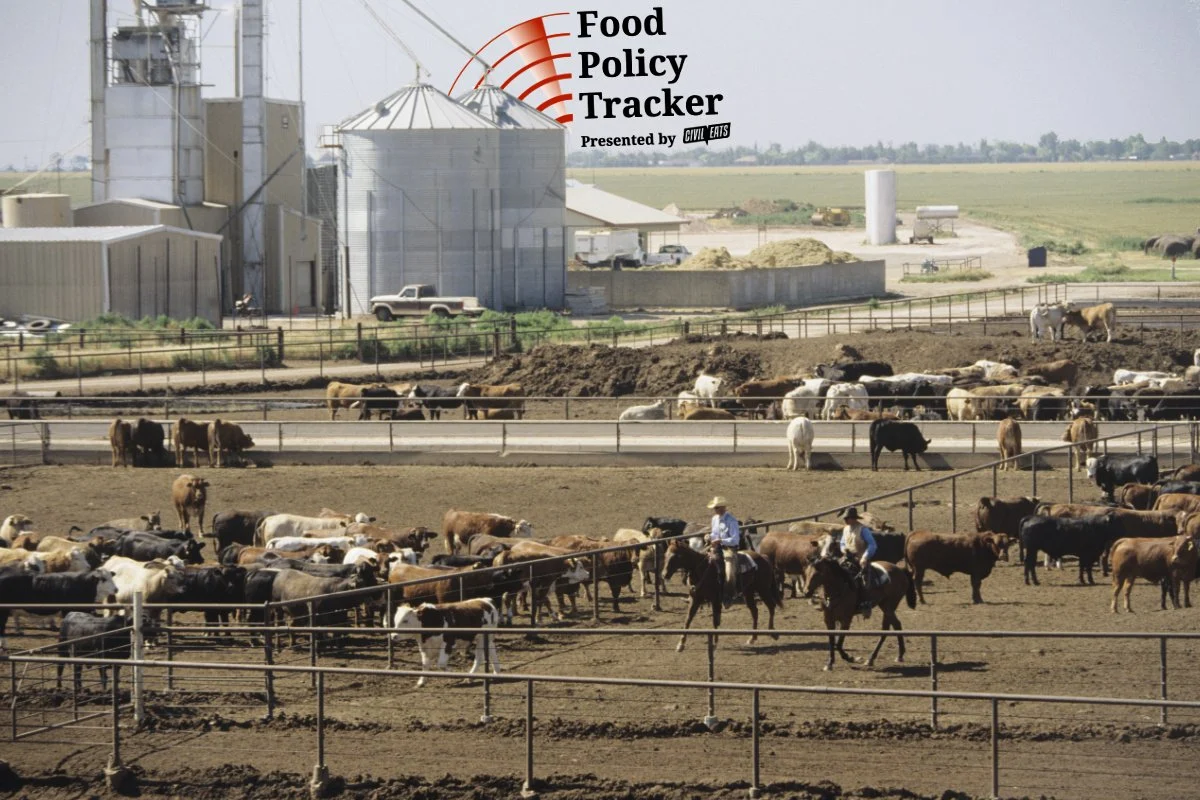
One month after President Donald Trump’s administration initiated a policy to increase ground beef imports, purportedly to lower consumer prices, a new analysis reveals a stark divergence between retail and producer markets. While supermarket ground beef prices saw a marginal decrease of just 2 percent, or 13 cents per pound, the prices paid to American beef producers for cattle destined for the ground beef market plummeted by more than 12 percent. This disparity raises significant questions about the effectiveness of the policy in achieving its stated goals and highlights the persistent economic pressures faced by domestic ranchers.
The Policy’s Genesis: A Response to Inflation
The directive to boost beef imports was a direct response to escalating food inflation and historically high beef prices that had burdened American consumers throughout 2025 and into 2026. On August 21, 2026, President Trump announced a plan to waive tariffs on imported ground beef, specifically targeting a surge of 100,000 tons of foreign beef into the U.S. market. The administration’s rationale was that a temporary increase in supply, particularly from countries like Argentina (as implied by some discussions around potential sources, though not explicitly stated in the initial report), would alleviate price pressures at the grocery store. This move was framed as a consumer relief measure, intended to provide immediate respite while American cattle producers were encouraged to expand the domestic herd, which had been at a multi-decade low. Factors contributing to the reduced U.S. herd included prolonged droughts in key cattle-producing regions, soaring feed costs, and increased processing expenses. The administration contended that the imports would bridge the gap between current supply and consumer demand, thereby stabilizing prices without negatively impacting domestic producers in the long run.
Farm Action’s Analysis Uncovers Market Discrepancy

On October 14, 2026, the farmer advocacy group Farm Action released a comprehensive analysis that scrutinized U.S. Department of Agriculture (USDA) price data for the 30-day period immediately following the commencement of the increased beef imports. The findings presented a troubling picture for domestic producers. According to the analysis, the average retail price of ground beef decreased from $6.92 to $6.79 per pound, a modest reduction of approximately 1.88 percent. This marginal drop stood in stark contrast to the substantial declines observed in prices paid to U.S. beef producers. The report indicated that prices for two distinct categories of cows typically sold into the ground beef market experienced sharp reductions of 12.2 percent and 13.9 percent, respectively.
Sarah Carden, senior director of research and policy at Farm Action, articulated the group’s concerns in a press release accompanying the analysis. "The first 30 days raise serious questions about whether this policy is actually delivering on its promises," Carden stated. "Ranchers are seeing steep declines in the prices they receive, and consumers still haven’t seen clear, meaningful relief at the grocery store." Her statement underscored the perceived disconnect between the policy’s intent and its immediate market outcomes, suggesting that the benefits of cheaper imports were not being equitably distributed across the supply chain.
Economic Perspectives and Supporting Data
The complexities of beef pricing are influenced by a multitude of factors, including seasonal demand, feed prices, weather conditions, processing capacity, and global trade dynamics. While seasonal fluctuations are a known element in cattle markets, the magnitude of the recent price drop for producers appears to exceed typical seasonal patterns. University of Kentucky agricultural economist Kenny Burdine echoed this sentiment in his own analysis, published on October 1, noting that the decline in prices for cattle often destined for ground beef outpaced expected seasonal adjustments. This independent corroboration lends further weight to Farm Action’s conclusions, suggesting that the import policy itself, or at least the market’s reaction to its announcement, played a significant role in the observed price shifts.
The precise mechanism through which the import policy influenced prices remains a subject of ongoing debate among experts. Carden acknowledged that it was unclear whether the initial announcement of the policy itself, or the physical entry of imported beef into the supply chain, was the primary driver of the initial price changes. As of the end of September, less than 40 percent of the initial 100,000-ton batch of imported beef had actually entered the country, limiting the data available for a full assessment of its long-term impacts. However, even the anticipation of a significant influx of cheaper foreign beef can exert downward pressure on domestic commodity prices, as buyers adjust their bids in expectation of increased supply. This phenomenon highlights the psychological aspect of market behavior, where announcements can sometimes have immediate effects before the physical changes fully materialize.

Official Response and Counterarguments
In response to Civil Eats’ inquiry regarding Farm Action’s findings, White House spokeswoman Anna Kelly defended the administration’s policy. Kelly asserted that President Trump was "delivering on his promise to consumers by reducing beef prices while allowing our American beef herd to grow." This statement reiterated the administration’s two-pronged objective: immediate consumer relief and long-term domestic herd expansion.
However, this narrative faces significant skepticism from various stakeholders, particularly within the ranching community and among agricultural economists. Ranchers and industry experts contend that the supply of cattle is no longer directly correlated with retail prices at the grocery store. They argue that the highly consolidated nature of the meatpacking industry, where a few large corporations control a vast majority of processing, allows these entities to exert considerable influence over both producer and consumer prices. In this concentrated market, the benefits of cheaper imports might disproportionately accrue to packers and retailers rather than being passed on to consumers or supporting domestic producers.
Furthermore, the argument that imports will facilitate herd expansion is met with strong counterarguments. Many ranchers and analysts assert that lower prices paid to domestic producers, exacerbated by increased imports, can actually prevent the expansion of the U.S. cattle herd. When ranchers receive less for their animals, their profit margins shrink, making it less economically viable to invest in retaining heifers for breeding, purchasing new stock, or expanding their operations. This creates a disincentive for growth, potentially locking the U.S. into a greater reliance on foreign beef in the future, contrary to the stated long-term goal of domestic self-sufficiency. High input costs, such as feed, fuel, and labor, already squeeze rancher profitability, and a further reduction in cattle prices can push many to the brink, forcing them to liquidate herds rather than expand them.
Stakeholder Reactions and Broader Implications

The ongoing debate surrounding beef imports and prices has taken center stage in agricultural policy discussions, particularly with the rapidly approaching midterm elections. In key cattle-producing states, the economic well-being of ranchers is a significant political issue. Nick Levendofsky, Executive Director of the Kansas Farmers Union, articulated the deep concerns permeating the agricultural community. He noted that Kansas farmers and ranchers are grappling with a confluence of challenges: the persistent burden of high input costs, the adverse effects of tariffs on their products, and the increasing influx of foreign beef.
"I think all of these things compounded have really put farmers in a very difficult situation," Levendofsky remarked, underscoring the cumulative pressure on an already strained industry. He added, "I talk to farmers all the time who are constantly asking, ‘What are we going to do? How are we going to survive this?’" This sentiment reflects a broader anxiety within the agricultural sector about the long-term viability of small and medium-sized ranching operations in the face of volatile markets and evolving trade policies.
For consumers, the limited relief at the grocery store raises questions about the efficacy of government intervention in complex commodity markets. While the intent to lower prices is laudable, the actual impact on household budgets appears minimal thus far. This could lead to public skepticism regarding trade policies designed to address domestic economic issues, especially when the benefits are not clearly perceptible.
The implications of this policy extend beyond immediate price points. It touches upon fundamental questions of food security, the sustainability of domestic agricultural production, and the structure of the U.S. food system. A continued reliance on imports, coupled with depressed domestic producer prices, could accelerate the consolidation of the beef industry, leading to fewer, larger operations and potentially reducing diversity in agricultural practices. It also highlights the tension between consumer demand for affordable food and the need to ensure fair compensation for primary producers.
As the remaining imported beef from the 100,000-ton batch enters the market and more data becomes available, analysts will continue to monitor the situation closely. The initial 30-day period serves as a crucial early indicator, suggesting that while the policy may have had some effect on retail prices, its impact on the domestic beef production sector has been far more pronounced and, for many ranchers, significantly negative. The challenge for policymakers will be to balance the immediate desire for consumer savings with the long-term health and resilience of the American agricultural landscape. The current trajectory suggests a need for re-evaluation and potentially more nuanced strategies to address the complex dynamics of the beef supply chain effectively.