admin
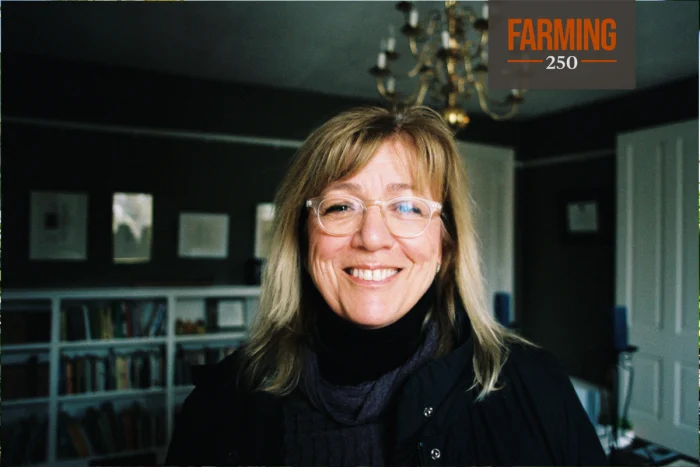
Mary Berry, a lifelong farmer, visionary advocate, and the driving force behind The Berry Center, stands as a pivotal figure in the national discourse on sustainable agriculture and the revitalization of rural America. Her work, deeply rooted in the agrarian philosophy of her esteemed father, Wendell Berry, champions small-scale farming, robust regional food economies, and the inherent value of rural culture against the tide of industrialization and societal neglect. Through The Berry Center, established in 2011, she translates these principles into tangible, replicable programs designed to empower communities and restore ecological balance, embodying a profound commitment to the land and its people.
A Life Forged in the Fields: Mary Berry’s Agrarian Roots
Mary Berry’s understanding of agriculture is not theoretical; it is etched into her very being, stemming from a childhood spent on her parents’ subsistence farm in Henry County, Kentucky. This was a world defined by rotational cropping, natural fertilization with manure, and the rhythmic pace of draft horses tilling the soil—a stark contrast to the burgeoning industrial agricultural model. This foundational experience instilled in her a deep respect for the land and a practical knowledge of diversified, ecological farming practices.
After earning her degree from the University of Kentucky in 1981, Mary immediately dedicated herself to farming full-time. Over the decades, her farm became a living laboratory of diversified agriculture, cultivating tobacco, raising dairy and beef cows, pastured poultry, and organic vegetables. This hands-on experience provided invaluable insights into the economic realities and ecological benefits of varied production systems. Her entrepreneurial spirit was matched by her husband, Steve Smith, who in 1990 pioneered Kentucky’s first Community Supported Agriculture (CSA) program. The CSA model, which originated in Japan and Europe in the 1960s and gained traction in the U.S. in the mid-1980s, offered a direct link between consumers and farmers, providing financial stability for producers and fresh, local food for members. Steve Smith’s initiative was an early example of the innovative, community-focused solutions that would later define Mary’s broader advocacy.
The Tobacco Transition and Its Aftermath
A significant turning point for Kentucky’s agricultural landscape, and for Mary Berry’s personal mission, was the precipitous decline of small-scale farming following the cessation of the federal tobacco price support and quota program in 2004. For generations, tobacco had been the economic backbone of thousands of small farms across the state, providing a reliable income stream. The federal program, initiated during the Great Depression, guaranteed prices and managed supply, offering a crucial safety net for family farmers. Its termination, a consequence of declining tobacco consumption and evolving agricultural policies, pulled the economic rug out from under countless rural communities.
Mary, like her father, deeply mourned this loss, recognizing it not merely as an economic shift but as an erosion of a way of life. The diversified farming practices she knew from childhood had slowly given way to monoculture, heavily reliant on tobacco. When the program ended, many farmers, lacking the infrastructure, knowledge, or capital to transition to other crops, were forced to abandon farming altogether. This created a vacuum, leaving rural economies vulnerable and exacerbating a sense of abandonment among farming communities. It solidified Mary’s fervent belief in the value of regional food economies and the imperative to find "ground-up" solutions for a sustainable future.
The Berry Center: A Blueprint for Regenerative Futures
In response to these challenges and inspired by her father’s enduring legacy, Mary Berry established The Berry Center in New Castle, Kentucky, in 2011. The nonprofit’s mission is explicitly stated: to put Wendell Berry’s profound writings and ideas to work "for the land and the people of Henry County—but with replicable programs that can be used anywhere." This emphasis on replicability underscores a broader vision for national impact, demonstrating that local solutions can offer universal lessons.
The Center serves as a vital hub for agrarian thought and practice. It houses an extensive archive of the writings of Wendell Berry, his uncle, and his grandfather, preserving a rich intellectual heritage that spans generations of deep engagement with land, community, and culture. Beyond archival preservation, The Berry Center actively fosters new generations of farmers and food system leaders through its key initiatives:
- The Farm and Forest Institute: This program offers holistic, human-scale farming classes, emphasizing ecological principles, traditional skills, and sustainable land management. It equips aspiring and existing farmers with the knowledge and tools to cultivate healthy landscapes and economically viable enterprises, promoting diversified, resilient agricultural systems. The curriculum reflects Wendell Berry’s call for a harmonious relationship between humans and the natural world, advocating for farming practices that enrich the soil rather than deplete it.
- Our Home Place Meat: This cooperative is a direct response to the market challenges faced by small-to-midsize grass-fed beef cattle farmers. It creates crucial infrastructure, connecting these farmers to regional markets that value quality, sustainably raised products. By bypassing conventional industrial supply chains, the cooperative ensures fairer prices for producers and provides consumers with transparently sourced, high-quality meat. This initiative directly addresses the issue of market access, which Mary identified as a significant barrier for farmers attempting to diversify after the tobacco program’s end.
Mary often reflects on the "vision that lives in [her] mind and [her] heart," a vision of diversified farming and strong rural culture that "existed in Henry County, Kentucky, and in much of Kentucky when I was growing up." This personal memory fuels her tireless efforts, serving as both an inspiration and a tangible goal for the Center’s work.
Wendell Berry’s Enduring Influence and "The Unsettling of America"
The philosophical bedrock of The Berry Center’s work, and indeed Mary Berry’s entire perspective, is encapsulated in her father Wendell Berry’s seminal 1977 book, The Unsettling of America: Culture and Agriculture. This prophetic work, which will mark its 50th anniversary next year, laid bare the profound dangers of industrial farming, arguing compellingly for the restoration of agrarian culture and a deep, responsible connection to the land. Berry contended that the industrial model, driven by efficiency and profit, inevitably leads to ecological degradation, social disintegration, and the erosion of human dignity. He championed instead a localized, community-based agriculture that fosters stewardship, self-sufficiency, and cultural resilience.

To commemorate the book’s upcoming half-century milestone, Mary Berry has embarked on a nationwide journey, engaging with food system leaders across the country. These conversations, exploring the enduring impact of The Unsettling of America on their work and perspectives, are being collected for a video podcast slated for release early next year. This project underscores the continuing relevance of Wendell Berry’s critique and his vision for a more just and sustainable food system. The interview with Civil Eats, conducted just days before her father’s passing on August 31, 2026, highlighted this profound connection and the urgency of their shared mission.
The Crisis of Rural America: A Question of Value
One of the most profound questions guiding Mary Berry’s work is whether rural America is, in fact, "worth saving." She critically observes a societal tendency to dismiss rural areas, treating them "like a colony or a sacrifice zone." This dismissive attitude, she argues, is not only unjust but also shortsighted, given that "we live from the land of rural America."
Mary challenges common misconceptions about rural life and farming. There’s a prevailing "idea that if a farmer is still farming in Henry County, Kentucky, they must be privileged in some way, or they must be subsidized in some way, or they’re rich." She firmly debunks this, highlighting the reality of young farmers who are "struggling" despite having invested in their farms. The romanticized image often masks the intense economic pressures, market volatility, and lack of systemic support that characterize contemporary small-scale agriculture.
She also acknowledges the political and cultural divides that often alienate rural communities. Working with farmers across the political spectrum, Mary understands "why they feel like they’ve been left behind, taken for granted, or looked down on." The economic shifts, particularly the demise of the tobacco program, left many feeling disenfranchised, creating a fertile ground for resentment and a sense of being ignored by urban-centric policies. Mary’s own experience as a "successful entrepreneurial farmer" alongside her husband, Steve, has taught her that individual success, while laudable, is insufficient to counteract the systemic forces of rural decline. She decries a "culture of competition instead of cooperation," which further fragments communities and undermines collective action.
For Mary, the solution lies in restoring a fundamental fairness. When people are "fairly treated for the good work that they do—that the quality matters, and they’re fairly paid, and there’s some stability from year to year to year—I have seen the greatest kindnesses and generosity across the board." This vision of mutual respect and economic stability is central to her hope for rural revitalization.
Debunking Industrial Agriculture’s "Feed the World" Narrative
The conventional argument for industrial, large-scale farming often centers on its purported necessity to "increase efficiency and produce affordable food to feed an ever-growing global population." Mary Berry unequivocally rejects this premise, labeling it "completely wrong" and "wrong-headed from the start." Her critique is rooted in a fundamental ethical and ecological principle: "You can’t feed people by destroying the world. That’s crazy."
She asserts that industrial agriculture is in its "death throes," a system that is "coming apart and deserves it." Her indictment is stark: industrial agriculture "has served an economy that’s destroying the land and the people. So, it’s a system that makes no sense whatsoever by any standard." This perspective aligns with a growing body of scientific evidence highlighting the detrimental environmental impacts of industrial farming, including soil degradation, water pollution, biodiversity loss, and significant contributions to climate change through greenhouse gas emissions. Furthermore, the social costs, such as the displacement of small farmers, exploitative labor practices, and the erosion of rural communities, are increasingly recognized.
Mary contrasts this with the diversified farming practices of her youth, which prioritized ecological health and community resilience. She recalls the fervent efforts during the lead-up to the end of the tobacco program to encourage farmers to diversify into vegetable production and other markets. However, she laments a critical failure: "What we didn’t do was work out something that farmers could move to that didn’t require them to do everything." Despite packed farm meetings where farmers sought solutions, "there was no shape around that for farmers. We just didn’t do enough to put in some infrastructure." This lack of supportive infrastructure—processing facilities, distribution networks, fair market access—remains a significant hurdle for small and diversified farms attempting to compete with highly subsidized industrial models.
A Future Rooted in Hope and Action
Despite the profound challenges and the grim realities she identifies, Mary Berry remains resolutely optimistic about the future of farming. "Hope comes pretty easily to me," she states, attributing this resilience to the tangible progress seen at The Berry Center. "Work at The Berry Center has helped that, because if you keep the scale right, you can see improvements." This emphasis on appropriate scale is crucial; it suggests that meaningful change is achievable not through massive, top-down initiatives, but through localized, human-scaled efforts that respect ecological limits and community needs.
The implications of Mary Berry’s work extend far beyond Henry County, Kentucky. Her efforts, and those of The Berry Center, offer a practical blueprint for how communities can resist the forces of industrialization, rebuild local economies, and restore a vital connection to the land. By demonstrating the viability of diversified farming, fostering cooperative structures, and advocating for policies that support small producers and regional food systems, she provides a powerful counter-narrative to the dominant agricultural paradigm. Her persistent voice, deeply informed by personal experience and intellectual heritage, continues to call for a reconsideration of our relationship with food, land, and community, urging a collective commitment to cultivating a future that is both ecologically sound and socially just.