admin
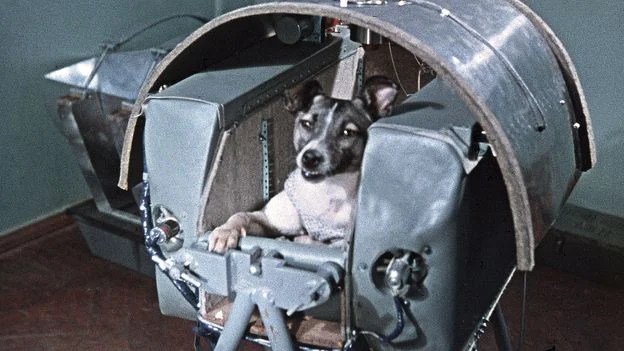
On November 3, 1957, the Soviet Union achieved a milestone that would forever change the course of human history and the ethics of scientific exploration. From the Baikonur Cosmodrome in the Kazakh Soviet Socialist Republic, a modified R-7 ICBM rocket propelled Sputnik 2 into the Earth’s orbit. Inside the cramped, pressurized cabin was a three-year-old stray mongrel named Laika. While she became the first living creature to orbit the planet, her journey was a somber testament to the ruthless pace of the Cold War Space Race. Unlike the missions that would follow, Sputnik 2 was never designed for recovery; Laika was sent on a one-way voyage, a fact the Soviet leadership kept obscured from the global public for decades.
The Geopolitical Pressure of the Space Race
To understand the tragedy of Laika, one must examine the intense political climate of the late 1950s. The "Space Race" was not merely a scientific pursuit but a high-stakes demonstration of ideological and technological superiority between the United States and the Soviet Union. Following the stunning success of Sputnik 1 on October 4, 1957—the world’s first artificial satellite—Soviet Premier Nikita Khrushchev sought to capitalize on the momentum.
With the 40th anniversary of the Bolshevik Revolution approaching on November 7, Khrushchev demanded a "space spectacular" that would once again humiliate the Americans. He summoned Sergei Korolev, the "Chief Designer" of the Soviet space program, and issued a directive: launch something entirely new within a month. This truncated timeline of less than four weeks left Korolev’s team with no time to develop a return system for a biological passenger. The decision to sacrifice a living being was made not out of scientific necessity for her death, but out of the political necessity for speed.
The Selection and Training of the Canine Cosmonauts
The Soviet choice to use dogs differed significantly from the American preference for primates. While U.S. scientists at NASA (and its predecessor agencies) utilized monkeys and chimpanzees due to their biological proximity to humans, Soviet researchers, led by Vladimir Yazdovsky, believed dogs were more temperamentally suited for the rigors of spaceflight. Specifically, they targeted stray dogs from the streets of Moscow.
Scientists reasoned that strays, having survived the harsh Russian winters and the daily struggle for food, possessed a natural resilience and stamina that "refined" pedigree dogs lacked. They selected female dogs exclusively because they were more compliant and because the design of the waste-collection suits was simpler for females.
Laika, a part-Terrier, part-Samoyed mongrel originally named Kudryavka (Little Curly), was chosen for her placid nature and small stature. To prepare for the mission, she and other candidates were subjected to increasingly confined spaces. They were kept in tiny pressurized capsules for periods of up to 20 days to acclimate them to the claustrophobic environment of the spacecraft. They also underwent training in centrifuges to simulate the G-forces of launch and were exposed to high-decibel noises to mimic the roar of rocket engines.

A Final Human Touch: The Yazdovsky Connection
Despite the cold calculations of the mission, those working closely with the animals often developed deep emotional bonds with them. Prof. Viktor Yazdovsky, the son of the program’s medical lead, Vladimir Yazdovsky, recounted decades later how his father attempted to provide Laika with a final moment of domestic normalcy.
Knowing that the dog would never return, Vladimir Yazdovsky took Laika home to play with his children shortly before the launch. "I wanted to do something nice for her: She had so little time left to live," the elder Yazdovsky later wrote in a chronicle of Soviet space medicine. This brief interlude of compassion highlighted the internal conflict faced by the scientists who viewed the dogs as colleagues and companions rather than mere test subjects.
The Technical Reality of Sputnik 2
Sputnik 2 was a significantly more complex craft than its predecessor. Weighing 508 kilograms (1,120 lbs), it contained several compartments for radio transmitters, a telemetry system, a programming unit, and a regeneration system for the cabin’s atmosphere. Laika was housed in a separate, sealed aluminum cylinder.
The dog was secured in place by a harness that allowed her to stand, sit, or lie down, but prevented her from turning around. An oxygen-generation system provided air, while a fan was set to activate whenever the cabin temperature exceeded 15°C (59°F). Her food was provided in a specialized gelatinous form, designed to satisfy both her hunger and thirst in a weightless environment. Electrodes were attached to her body to monitor her heart rate, blood pressure, and respiration, providing the first-ever data on how a vertebrate organism would react to the vacuum of space and sustained microgravity.
The Final Mission: Five Hours of Terror
On the morning of November 3, 1957, Sputnik 2 lifted off. Initial telemetry data indicated that Laika was highly stressed; during the peak of acceleration, her pulse rate rose to 240 beats per minute, nearly three times her resting rate. However, once the craft reached orbit and weightlessness took hold, her heart rate slowly began to decrease.
The mission’s success was short-lived. Due to the haste of the construction, the thermal control system was insufficiently insulated. During the separation of the R-7 sustainer core from the payload, a portion of the thermal insulation was torn away. The temperature inside the capsule began to climb uncontrollably, eventually reaching 40°C (104°F) and beyond.
For decades, the official Soviet narrative maintained that Laika had survived for six or seven days before being humanely euthanized by a poisoned portion of food. It was not until 2002, at the World Space Congress in Houston, Texas, that Dr. Dimitri Malashenkov of the Institute for Biological Problems in Moscow revealed the truth. Laika had died within five to seven hours of launch from a combination of extreme heat, humidity, and panic. By the fourth orbit, the biotelemetry data had gone flat.

International Condemnation and the Soviet Cover-Up
The announcement of the mission sparked a wave of international protest that caught the Soviet Union off guard. In the United Kingdom, the National Canine Defence League called on all dog owners to observe a minute of silence. The Royal Society for the Prevention of Cruelty to Animals (RSPCA) received numerous protests even before the launch was completed. In New York, animal rights activists picketed the United Nations.
The Soviet response was one of confusion and defensive propaganda. Having expected the world to marvel at their technological prowess, they were instead met with accusations of "barbarism." To counter the narrative, Soviet media flooded the public with images of Laika’s "heroic" contribution to science, producing commemorative stamps, matchboxes, and even a brand of cigarettes bearing her likeness.
Ethical Repercussions and the Road to Yuri Gagarin
Despite the tragedy, Laika’s mission provided critical data. It proved that a living organism could survive the launch into orbit and endure a period of weightlessness, paving the way for human spaceflight. However, the ethical backlash forced a fundamental shift in how the Soviet program handled animal subjects.
Following Sputnik 2, Sergei Korolev and his team prioritized the development of recovery systems. The subsequent canine missions, most notably that of Belka and Strelka in August 1960, were designed to return the animals safely to Earth. Belka and Strelka became the first living creatures to orbit the Earth and return alive, a success that directly enabled Yuri Gagarin’s historic flight on April 12, 1961.
In the years following the collapse of the Soviet Union, several scientists involved in the program expressed deep remorse. Oleg Gazenko, one of the leading scientists in the animal space program and Laika’s trainer, spoke candidly in 1998: "Work with animals is a source of suffering to all of us. We treat them like babies who cannot speak. The more time passes, the more I’m sorry about it. We did not learn enough from this mission to justify the death of the dog."
The Modern Memorialization of a Reluctant Hero
Today, Laika is remembered not as a tool of Cold War propaganda, but as a pioneer of the cosmos. In 2008, a monument was unveiled in her honor near the military research facility in Moscow that prepared her for flight. The bronze monument depicts a dog standing atop a rocket that transforms into a human hand.
Laika’s legacy serves as a dual reminder of human ingenuity and the ethical costs of unbridled competition. While her journey opened the "door to the stars," as Viktor Yazdovsky claimed, it also remains a poignant chapter in the history of science—a reminder that the quest for knowledge is often inextricably linked to the sacrifice of those who have no say in their participation. As humanity looks toward Mars and beyond, the story of the stray dog from Moscow continues to inform the dialogue regarding the ethical treatment of animals in the pursuit of the unknown.