admin
It is low tide, just after dawn, and a small group of intrepid individuals has gathered on the rugged Sonoma coast, poised to disturb the tranquil tide pools of a secluded cove in search of sea urchins. Their base for this unique expedition is Sea Ranch, a picturesque locale situated a couple of hours north of San Francisco. Here, the dramatic landscape of fog-kissed hills cascades into the vast expanse of the Pacific Ocean. The intertidal zone, specifically the tide pools of Pebble Beach, is a vibrant tapestry of life, adorned with lush mats of kelp and teeming with an array of fascinating marine creatures. Sea stars, anemones, crabs, and abalone present a dazzling spectacle of luminous colors and improbable forms, a testament to the biodiversity of this coastal ecosystem.
Leading this unconventional foraging foray is Nathan Maxwell Cann, a guide with Flora & Fungi Adventures. With a persona that blends the casual ease of a former bartender with the deep knowledge of a seasoned naturalist, Cann navigates the group through the intricacies of sea urchin gathering. He explains that his own journey into the world of tidal foraging began after years in the Northern California restaurant scene, a path that ultimately led him to embrace his role as a self-proclaimed "kelp guy" with a specialization in urchins.
The Urchin: A Delicacy and an Ecological Threat

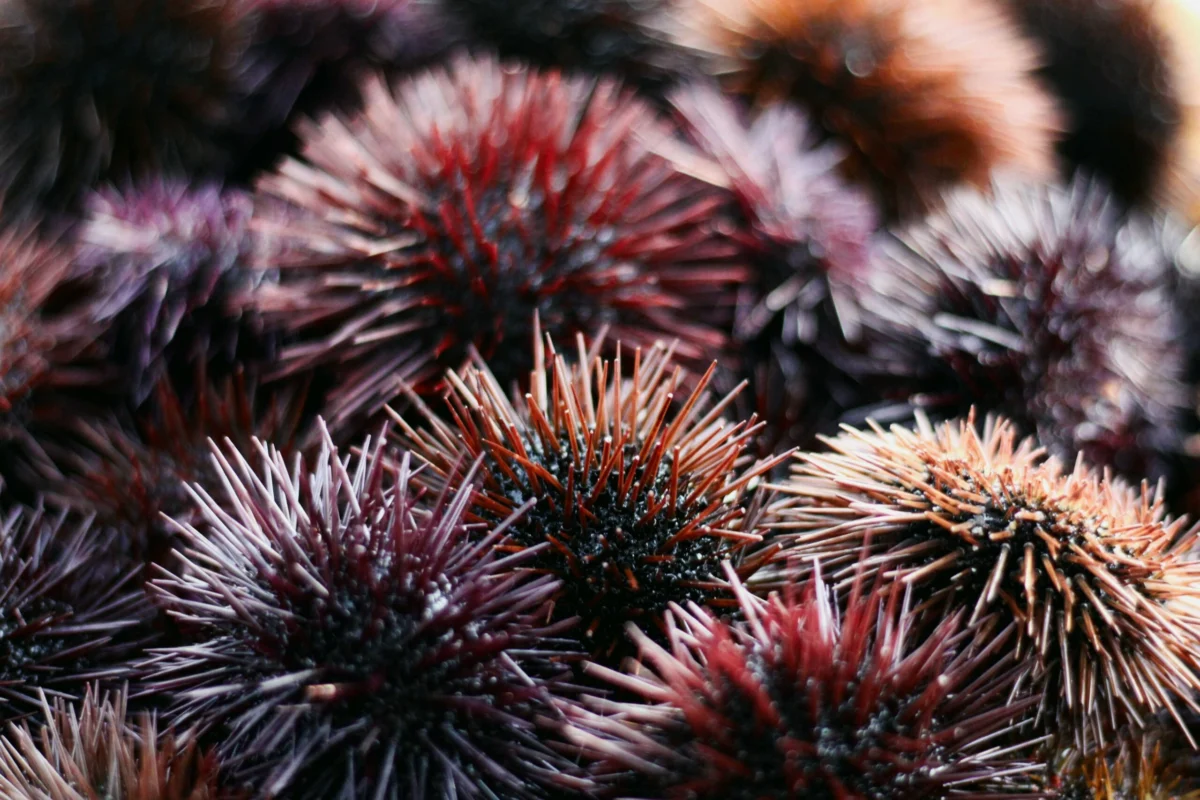
Cann introduces the participants to their quarry: the purple sea urchin. Outside of their aquatic environment, these echinoderms resemble small, spiky hedgehogs, a similarity reflected in their etymology. Their spiny exterior, a formidable defense mechanism, encases a roughly hemispherical shell, known as a test. Typically ranging from the size of a golf ball to a clenched fist, their most prominent feature is a complex, five-toothed jaw designed for efficiently grinding and shearing kelp. In their natural habitat, the urchins’ radiating spines create dark, starburst patterns against the submerged rocks. Initially, only the larger specimens are apparent, but with sustained observation, the tide pools reveal a far greater population, with what initially appear to be shadows resolving into more of these prickly inhabitants.
The sheer abundance of purple sea urchins in this particular cove is striking, a phenomenon mirrored along much of California’s coastline. Vast stretches of the seafloor, once dominated by thriving kelp forests, have been transformed into what are known as "urchin barrens"—barren landscapes populated by thousands of these spiny creatures. Similar ecological shifts have been observed in other marine environments globally, including Alaska, Tasmania, New Zealand, and South Africa. Consequently, sea urchins have emerged as one of the few seafood resources present in a state of overabundance, posing a significant ecological challenge.
A Shift in Perception: From Delicacy to Devastator
For many, the notion of sea urchins as an ecological nuisance is a stark contrast to their former perception as a culinary delicacy. The author recalls a past experience as a commis chef in a London restaurant, where the task of cleaning sea urchins was a laborious and often painful endeavor, involving the extraction of sharp spine fragments from beneath fingernails. In this context, urchins were precious commodities, reserved for discerning gourmands seeking flavors beyond oysters.

However, the author’s subsequent research and writing on the history of California and its relationship with the ocean revealed a more complex narrative. In the historical accounts, sea urchins played a relatively minor role compared to iconic species like sea otters or sardines. Yet, in recent years, the purple sea urchin has ascended to a central role in the unfolding drama of the intertidal zone. While labeling a "brainless shellfish" as a villain might seem anthropomorphic, within the ecological context of the coastal ecosystem, their impact is undeniably destructive.
The Ecological Imbalance: A Cascade of Consequences
The unchecked proliferation of purple sea urchins is leading to the decimation of vital kelp forests. These underwater forests, once vibrant hubs of biodiversity, provided essential shelter and habitat for a vast array of marine life, from minuscule jeweled top sea snails to robust harbor seals. The insatiable appetite of the urchins, however, poses a direct threat to these underwater ecosystems. Uncontrolled grazing on the kelp’s stipes (stems) leads to their detachment and subsequent drift into the open ocean, effectively destroying these critical habitats.
Historically, the populations of sea urchins in California have been kept in check by natural predators. Among the most effective are sea stars and sea otters. Sea stars employ a unique feeding strategy, extruding their stomachs to envelop and digest the urchins, leaving behind empty shells. Sea otters, with their powerful jaws and dexterous paws, are adept at cracking open urchin tests to consume their flesh.

However, a confluence of factors has disrupted this natural balance. For at least 150 years, wild sea otters have been largely absent from the northern stretches of the California coast, including Sonoma. The intensive fur trade of the early 19th century, driven by the immense value of sea otter pelts, led to their near-extinction. Two centuries later, the sea otter’s range remains confined to a limited section of the central California coast, severely limiting their impact on urchin populations further north.
Compounding this issue, sea stars, which previously played a crucial role in controlling urchin numbers, have been decimated by a devastating disease. Known as sea star wasting disease, this affliction, exacerbated by warming ocean temperatures, causes lethargies, lesions, and the disintegration of the sea stars’ limbs. The catastrophic decline in sea star populations has created a vacuum, allowing sea urchins to flourish and consume kelp at an unprecedented rate.
The Foraging Experience: A Hands-On Approach to Conservation
In this ecological predicament, the role of human foragers, such as the group assembled on this Sonoma morning, is to act as surrogate otters. With a grasp of the principles of urchin harvesting, the participants shed their shoes and venture onto the kelp-laden rocks. The act of searching for urchins evokes a similar meditative state to mushroom picking or birdwatching, a focused flow punctuated by moments of discovery. However, compared to other foraging pursuits, urchin gathering is remarkably accessible. Most participants, drawn from the Bay Area and beyond, are novices, yet their coolers and bags soon begin to fill with their spiky bounty. The motivation for this engagement is twofold: for some, the allure lies in the prospect of a fresh, unique meal; for others, it is the immersive experience of connecting with the natural world and actively participating in its preservation.

Once accustomed to spotting the distinctive color and shape of the urchins, they become ubiquitous. With a pair of tongs, the urchins can be gently dislodged from their rocky crevices. The primary challenge and the true test of skill in urchin foraging lie not in the extraction, but in maintaining balance on the slick, seaweed-covered rocks, while the ebb and flow of the ocean and the mesmerizing activity within the tide pools present constant distractions.
As the author’s net bag grows heavy with urchins, a profound sense of absorption takes hold. The experience becomes a tangible connection to the vibrant, dynamic life of the intertidal zone, a world that author John Steinbeck eloquently described as a place of "hurrying, fighting, feeding, breeding animals." The scuttling of a hermit crab, the subtle breathing holes of an abalone, the gentle undulations of anemone tentacles—all contribute to an immersive sensory experience. The excited murmurs and camera clicks of fellow foragers indicate a shared sense of wonder and engagement. As Cann aptly puts it, "urchin gathering is really just a reason for being out in the tide pools." The structured nature of the task provides a compelling rationale for exploring this alien world, fostering a sense of purpose and encouraging a deeper appreciation for its inhabitants.
From the Tide Pool to the Plate: The Taste of Place
The reward for this tactile exploration is not merely the experience itself, but also the unique culinary prize. Back on dry land, armed with kitchen shears, the foragers carefully extract the urchins’ spiky exteriors. A quick rinse in seawater and the delicate, star-shaped roe, known as uni, is revealed. The taste is a revelation: rich, buttery, and evolving from a savory, briny initial note to a subtle sweetness. Consumed at 8:15 in the morning, this bracing delicacy powerfully evokes its origin. Cann explains that the complex umami flavor is a direct consequence of the kelp the urchins have consumed. This connection to place is further highlighted by local chefs like Ryan Seal at the Sea Ranch Lodge, who incorporates local sea urchin into dishes such as a zabaglione base for carbonara, introducing guests to this delicacy while celebrating the distinctive flavors of Sonoma.

Conservation Efforts: Beyond Individual Foraging
Despite the collective efforts of the foraging group, their impact on the cove’s urchin population is, as Cann acknowledges, akin to "a drop in the bucket." The sheer scale of the urchin problem necessitates more significant interventions. The Giant Giant Kelp Restoration Project in Monterey employs a large submarine vacuum to remove urchins from barren areas. In Northern California, divers utilize hammers to crush them. Entrepreneurs along the West Coast are developing innovative solutions, including urchin ranching operations where underweight urchins are fattened on sustainably harvested kelp before being sold to restaurants. Another company in Mendocino, Marblis, is repurposing urchin shells into "urchinite," a material proposed as a sustainable alternative to marble countertops.
While the morning’s foraging workshop offers a tangible connection to the problem and a delicious reward, its primary significance lies in its educational and consciousness-raising potential. The act of wading through the tide pools, feeling the kelp, and tasting uni harvested moments before, imbues the abstract concept of ocean conservation with a profound sense of personal relevance. Such activities foster virtues of generosity and curiosity, as participants share their bounty and their newfound knowledge, extending the ripple effect of their experience.
As John Steinbeck advised, one should observe "from the tide pool to the stars and back to the tide pool again." This sentiment encapsulates the essence of foraging. By focusing on a single organism, it opens one’s eyes to its intricate connections within the broader ecosystem. It allows for a visceral understanding of the relationship between humans, the urchins, and the entire tide pool world, enabling one to literally taste the health of the kelp forest in the uni. The sea urchin, once perceived as a mere pest or a precious delicacy, is now understood as a critical indicator of the delicate balance within the marine environment. It is through direct engagement, like planting one’s feet in its rocky habitat and partaking in its bounty, that a true appreciation for its place in the world is attained.