Jia Lissa
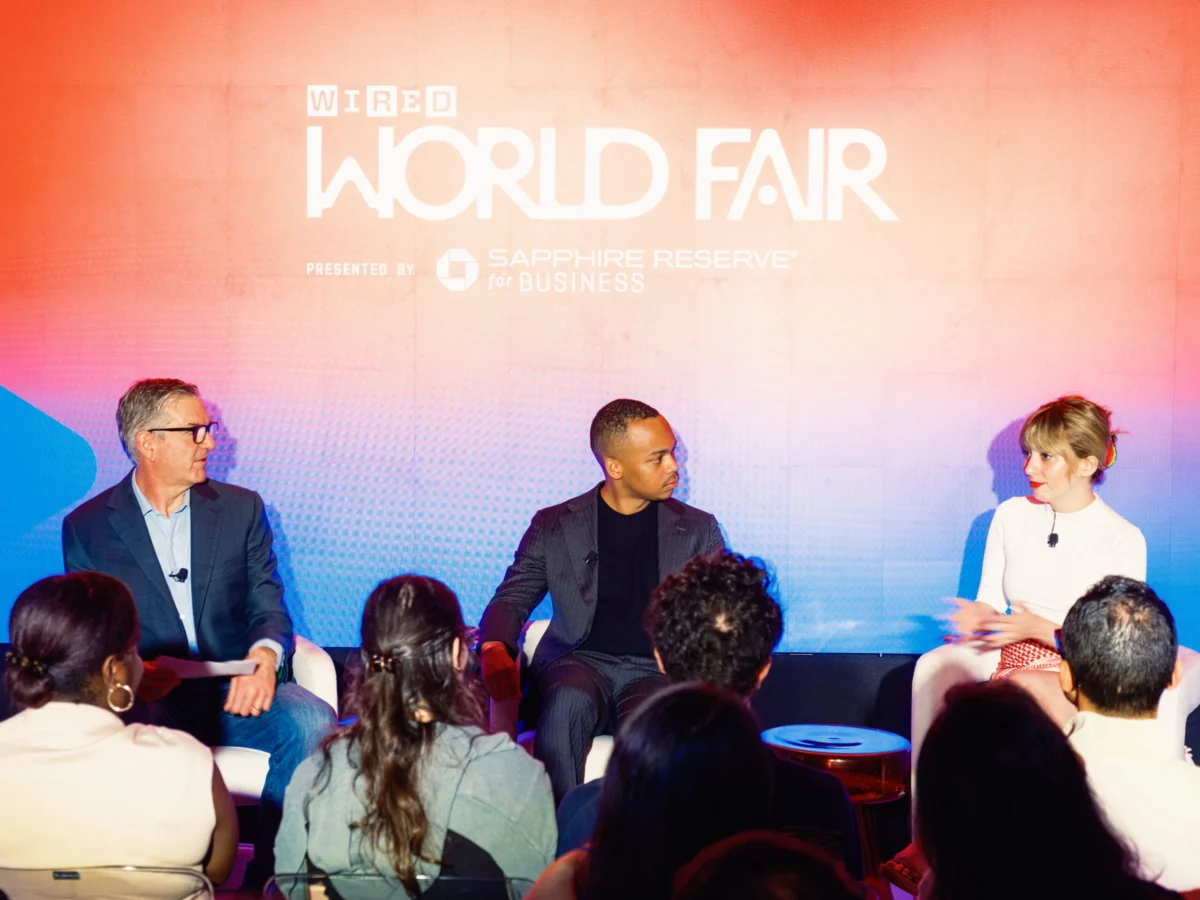
The modern American electorate, particularly its younger demographics, is increasingly turning to digital influencers rather than traditional news outlets for political information, a trend profoundly reshaping the nation’s civic discourse. A recent YouGov survey revealed that nearly 65 percent of 2,000 adults polled acquire their political insights from online creators. This figure escalates dramatically to 77 percent when focusing solely on Generation Z, indicating a fundamental and likely irreversible shift in how citizens engage with politics. This evolving media consumption pattern was a central topic at the WIRED World Fair in Miami, where Democratic congressional candidate Kat Abughazaleh and Republican strategist CJ Pearson offered contrasting yet convergent views on the future implications of algorithms and digital influence.
The Rise of the Digital Gatekeepers: Influencers in Political Discourse
The phenomenon of digital influencers eclipsing traditional news as primary information sources marks a significant inflection point in media history. For decades, established journalistic institutions served as the gatekeepers of information, shaping public understanding and setting political agendas. However, the advent of social media platforms, coupled with a growing distrust in mainstream media, has paved the way for a new breed of political communicators: the digital creator. These individuals, often operating outside conventional journalistic frameworks, leverage personal brands, relatable content, and direct engagement to build loyal audiences.
The YouGov survey’s findings are not isolated. Numerous studies corroborate a consistent decline in traditional news consumption, particularly among younger demographics, who are native to digital environments. A 2023 Reuters Institute report, for instance, highlighted that social media is now the main source of news for 18-24 year olds across many countries, often surpassing traditional television and print. This demographic gravitates towards platforms like TikTok, YouTube, Instagram, and X (formerly Twitter), where content is often delivered in short-form, highly visual, and emotionally resonant formats designed for maximum engagement. Influencers on these platforms often provide commentary, analysis, or direct reporting on political events, frequently injecting their personal perspectives, which can foster a deeper sense of connection and trust with their followers than perceived objective, but often impersonal, news anchors or reporters.
This shift was acutely felt in the wake of a significant electoral event, such as the recent "historic Democratic wave" that saw Democrats capturing both the House and Senate on a Tuesday night. While traditional media covered the election extensively, a substantial portion of the electorate, particularly younger voters, likely processed and understood these outcomes through the lens of their preferred online personalities. This dynamic introduces new complexities for political campaigns, voter education efforts, and the overall health of democratic processes, as the information landscape becomes increasingly fragmented and personalized.
Political Playbooks Evolve: Government Embraces Digital Creators
Recognizing this seismic shift, political administrations have begun to adapt their communication strategies, with some embracing digital influencers directly. The Trump administration, in particular, adopted an aggressive approach to integrating right-wing creators into its media outreach. Former press secretary Karoline Leavitt notably opened formal White House press briefings to digital creators and hosted exclusive "influencer-specific briefings" during her tenure. This move represented a strategic departure from long-standing protocols that prioritized credentialed journalists from established news organizations.
Leavitt’s initiative, while lauded by some as a modern approach to communication, drew substantial criticism from traditional media outlets and watchdog groups. Critics argued that by favoring digital creators—many of whom were aligned with the administration’s ideology and less likely to pose challenging questions—the White House was effectively bypassing critical scrutiny and creating a more controlled information environment. This perception was exacerbated by the administration’s simultaneous efforts to restrict access or challenge the credibility of traditional journalists, further widening the perceived divide between "official" and "alternative" information channels.

CJ Pearson, a Republican strategist who previously served on the RNC’s Youth Advisory Council, has been directly involved in these efforts and articulated the rationale behind this strategy at the WIRED World Fair. He posits that engaging with digital creators is simply "the cost of getting people’s attention in the digital age." Pearson observed that multiple federal agencies are now emulating the White House’s playbook, indicating a broader institutional recognition of the necessity to meet audiences where they are. "It’s a very chronically online administration," Pearson stated, underscoring the contemporary political landscape’s immersion in digital culture. He emphasized that in an era of diminishing attention spans, content must be made "interesting" to capture and retain public engagement.
However, even within the administration’s own circles, not all digital engagement efforts were universally praised. Pearson himself deemed the administration’s decision to distribute portions of the Epstein files to 15 right-wing creators as "a misstep." This internal disagreement highlights the ongoing experimentation and lack of a fully refined strategy in navigating the nascent relationship between government and digital influence. The line between information dissemination and partisan amplification remains fluid and contentious.
A Chilling Critique: Concerns Over Content, Cruelty, and Control
On the opposite side of the political spectrum, Kat Abughazaleh, a former Media Matters reporter who ran for an Illinois House seat as a Democrat, offered a starkly critical perspective on the administration’s embrace of the internet. For Abughazaleh, this integration signals something far more insidious than mere adaptation to new media trends; she views it as a deliberate strategy to manipulate public discourse and attention.
Abughazaleh cited the Department of Education’s recent use of the "Malfoid" meme—a gender-bent Harry Potter fascist figurehead—as an example of what she described as content promoted for a "too-online audience of ‘incels.’" Her concern stems from the belief that such niche, potentially radicalizing content, when disseminated by government agencies, serves to normalize extreme viewpoints and target vulnerable populations. This practice, she argued, fosters a distorted reality and undermines the educational mission of government institutions.
Furthermore, Abughazaleh condemned the White House’s alleged embrace of "AI slop and brutality," particularly visible in advertisements related to ICE actions. She contended that such content transforms "cruelty into content," shifting the focus from informing the public about policy to generating viral, emotionally charged narratives that desensitize audiences and justify harsh measures. "They’re trying to ruin your attention span," Abughazaleh asserted, suggesting a deliberate effort to fragment critical thinking and foster a state of perpetual distraction, making citizens more susceptible to simplistic, propagandistic messages.
The WIRED forum itself underscored the deep ideological chasm between Abughazaleh and Pearson. Their exchanges were often testy, particularly regarding highly charged terms such as Abughazaleh’s consistent use of "concentration camps" to describe ICE facilities—a term she employed following her own arrest for protesting outside an ICE facility (charges later dropped due to alleged prosecutorial misconduct). The two also clashed over Pearson’s assertion that Elon Musk had transformed X into a "bastion of free speech," reflecting fundamental disagreements on the nature of online platforms and the boundaries of expression. These debates highlight not only the polarized political environment but also the struggle to establish a shared factual framework in an age where information is so easily contested and reframed.
Divided Yet United: The Peril of Algorithmic Echo Chambers
Despite their profound political differences and contentious exchanges, Abughazaleh and Pearson found common ground on one critical point: the pervasive and potentially damaging influence of algorithms in creating echo chambers among young Americans across the political spectrum. Both agreed that the reliance on algorithmic content curation is increasingly isolating individuals within their own ideological bubbles.

Pearson articulated this concern, stating, "Algorithms show us what you want to see." He shared anecdotal evidence of his friends on the left sending him articles on political topics he had simply never encountered through his own algorithmic feeds. This personal observation underscores the core problem: algorithms, designed to maximize engagement by delivering content tailored to individual preferences, inadvertently filter out dissenting or alternative viewpoints. While this creates a highly personalized and often satisfying user experience, it simultaneously limits exposure to diverse perspectives, fostering intellectual isolation. "The deeper question is, is that good for society or for democracy?" Pearson pondered, acknowledging the profound societal implications of this technological reality.
Abughazaleh echoed this sentiment unequivocally. "We have no shared reality," she declared, capturing the essence of the algorithmic dilemma. When individuals are constantly fed information that confirms their existing biases and rarely exposed to counter-arguments or different interpretations of facts, the very foundation of a shared public discourse erodes. This fragmentation of reality makes it increasingly difficult for citizens to engage in constructive dialogue, find common ground, or even agree on fundamental truths necessary for collective decision-making in a democratic society.
Beyond the Booth: Implications for Democracy and Shared Reality
The implications of this shift from traditional news to digital influencers, amplified by powerful algorithms, extend far beyond individual media consumption habits. For democratic societies, the fragmentation of information poses significant challenges. A healthy democracy relies on an informed citizenry capable of critically evaluating diverse viewpoints and engaging in robust public debate. When citizens inhabit separate informational universes, fueled by highly personalized and often emotionally charged content, the ability to achieve consensus or even mutual understanding becomes severely hampered.
The rise of influencers also introduces new questions about accountability and journalistic ethics. While traditional news organizations operate under a framework of editorial standards, fact-checking, and professional responsibility, digital creators often do not. The lines between opinion, entertainment, and factual reporting can blur, leading to the rapid spread of misinformation and disinformation, which algorithms are often designed to amplify due to their engagement potential. This presents a complex challenge for media literacy, requiring citizens to develop sophisticated skills to discern credible information from propaganda or biased content.
Government agencies and political parties, as evidenced by the Trump administration’s strategy and the subsequent imitation by other federal entities, are actively experimenting with how to navigate and exploit this new landscape. While some see it as a necessary adaptation to reach modern audiences, critics warn of the potential for increased polarization, the weaponization of niche content, and the erosion of trust in public institutions. The "chronically online" nature of contemporary politics demands not just adaptation, but also a critical examination of the ethical responsibilities and long-term societal consequences of these new communication paradigms.
Ultimately, the dialogue between Abughazaleh and Pearson, despite their disagreements, converged on a shared anxiety about the future of a society where a "shared reality" is increasingly elusive. As algorithms continue to shape what individuals see and believe, the challenge for educators, policymakers, and citizens alike will be to foster environments that encourage critical thinking, expose individuals to diverse perspectives, and rebuild the common informational ground necessary for a cohesive and functional democracy. The digital age has undeniably brought new avenues for engagement, but it has also unveiled profound vulnerabilities that threaten the very fabric of collective understanding.