admin
admin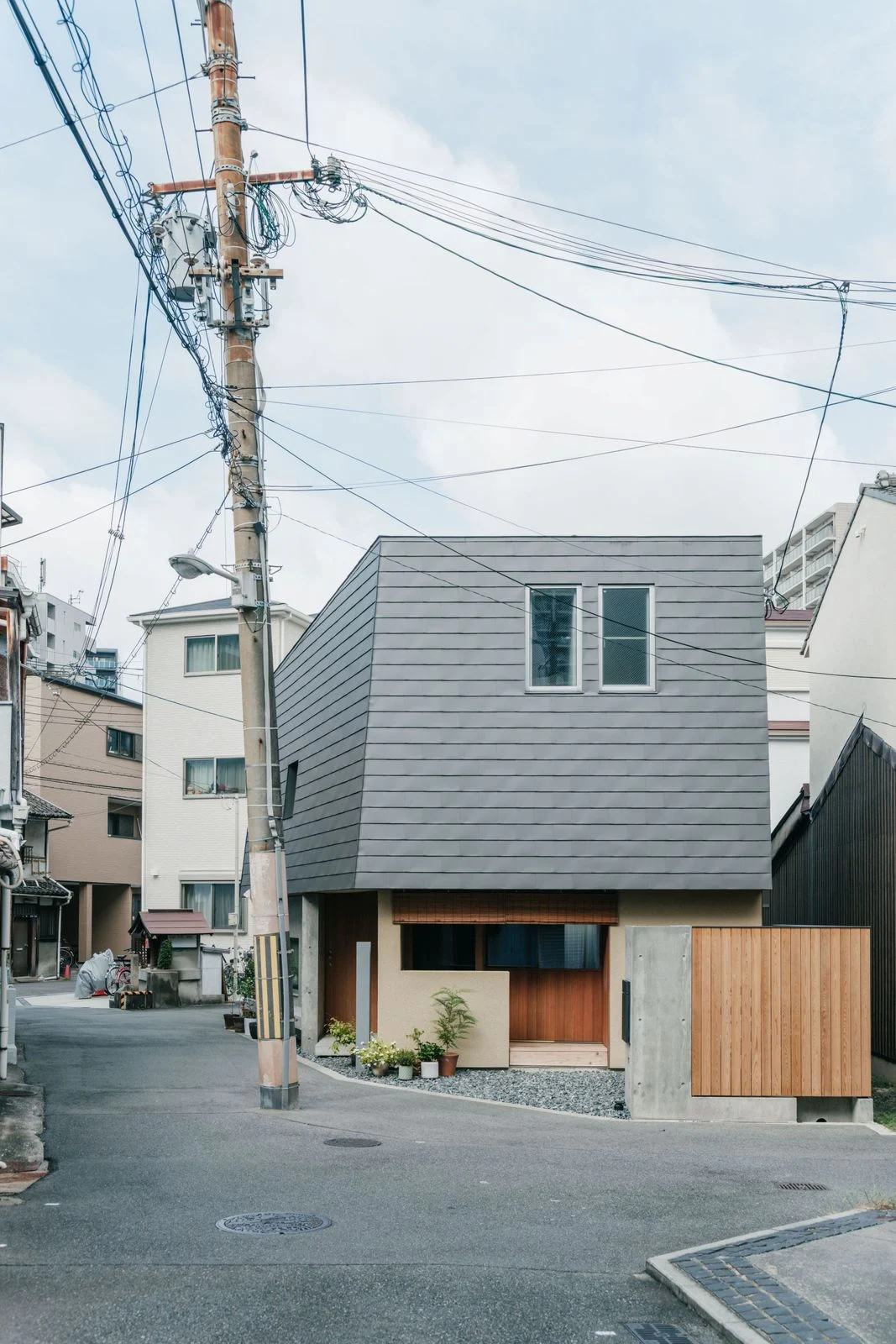
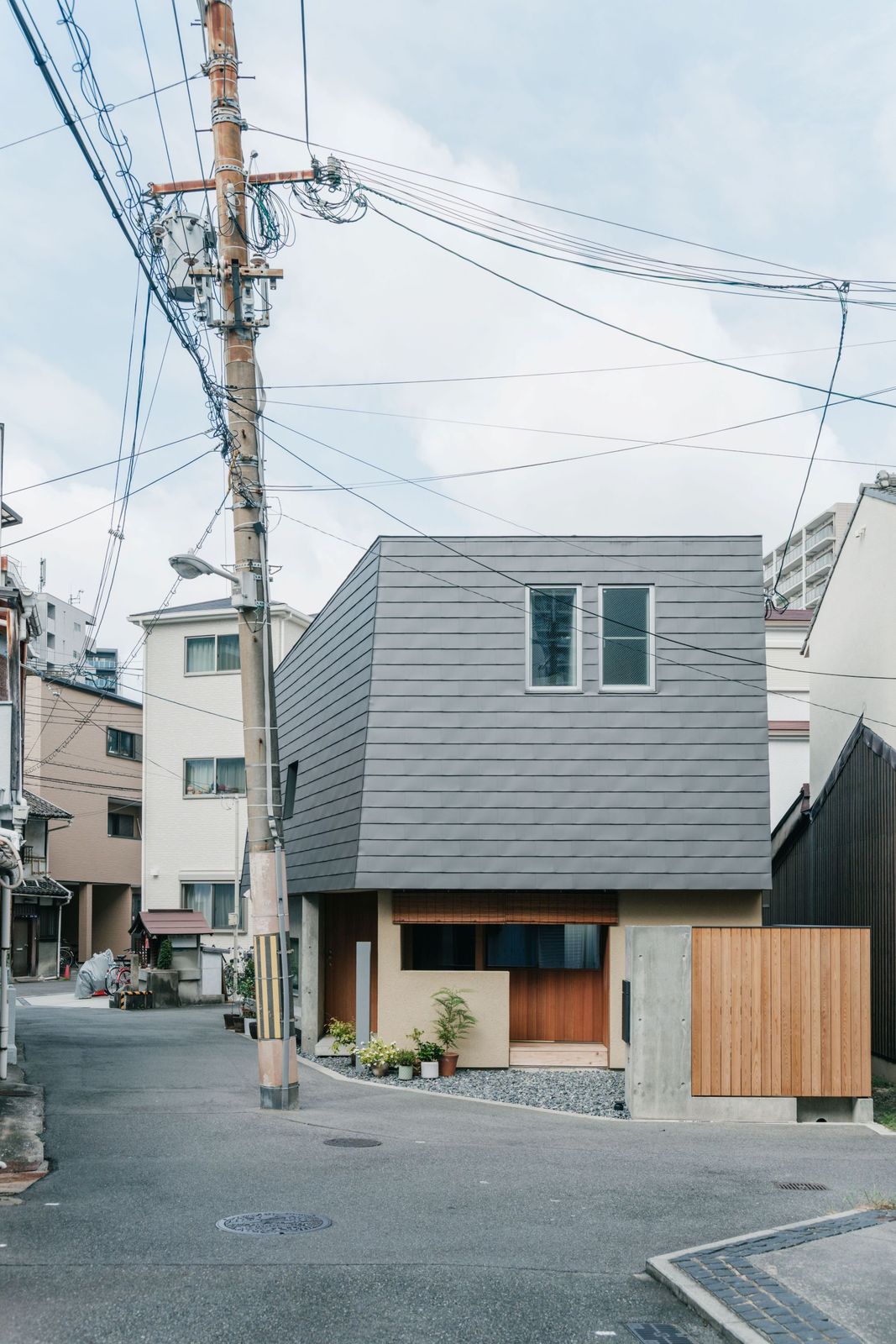
The Jonoya Private Residence, situated in a bustling central district of Osaka, Japan, stands as a remarkable testament to architectural design that prioritizes contextual harmony and an evolving relationship between its inhabitants, the structure itself, and the vibrant urban environment. Designed by Masakazu Tsujibayashi Architects, with structural engineering by Toshimitsu Miyake and meticulously captured by photographer Yosuke Ohtake, this project challenges conventional notions of privacy in dense urban settings, offering a nuanced approach to dwelling that actively invites dialogue with its surroundings. Rather than imposing a stark boundary, the residence is conceived as a living entity that "settles naturally" into its locale, fostering a sense of belonging and community through thoughtful design choices.
The Urban Tapestry of Central Osaka: A Rich Context for Innovation
Osaka, Japan’s second-largest metropolitan area, presents a unique backdrop for contemporary architecture. Its central districts, characterized by an intricate web of informal streets, narrow lanes, and a heterogeneous mix of traditional machiya (wooden townhouses), modern residences, small businesses, and historic temples, retain a distinct "down-to-earth atmosphere rooted in its older character." This rich, layered urban fabric, while charming, also poses significant challenges for architects. Sites are often irregularly shaped, small, and bordered by multiple public thoroughfares, demanding creative solutions to maximize space, ensure privacy, and integrate seamlessly into the existing streetscape without disrupting the delicate balance of the neighborhood.
Japanese urban planning, particularly in older city centers, often prioritizes efficient land use, leading to compact residential plots. This historical precedent has fostered a tradition of ingenious small-scale architecture that maximizes verticality and internal spatial complexity. Architects in Japan are frequently tasked with designing homes that navigate strict building codes while responding to unique site conditions, often balancing the desire for natural light and ventilation with the necessity of maintaining privacy from close neighbors and public view. The Jonoya Private Residence is a prime example of this architectural ingenuity, facing an irregular plot bordered by roads on three sides – a condition that both restricts and inspires its distinctive form and function. Data from the Osaka City Planning Bureau often highlights the prevalence of such challenging, multi-faceted urban plots, underscoring the need for adaptive architectural strategies that respect both the physical and social dimensions of the environment.
Architectural Philosophy: The Elusive Art of "Settling In"
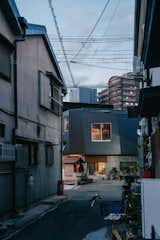
Masakazu Tsujibayashi Architects embarked on the Jonoya Private Residence project with a profound philosophical inquiry: "What does it mean for architecture to ‘settle in’?" The architect articulated this concept as involving "layers of naturalness, time, subjectivity, and objectivity—elements that are difficult to define logically." This acknowledgment of the inherent instability and emotional resonance in how a building interacts with its context became the guiding principle for the design. In a dense urban setting where the public and private realms inevitably overlap, this relationship is further complicated, demanding a design that allows for continuous renegotiation as human emotions and daily life unfold over time.
This approach deviates from a purely static or monumental architectural statement. Instead, it embraces dynamism, recognizing that a home is not merely an object placed within a city, but an active participant in its evolving narrative. The architect’s vision was to create a space where the residents, the architecture itself, and the city could engage in an ongoing dialogue, adapting and shifting together. This intuitive design process, as described by the architect, allowed the plan to "evolve day by day," with each adjustment made not as a restart, but as a visible continuation of earlier revisions. This iterative methodology imbues the building with a sense of organic growth, mirroring the natural processes of a community developing over time.
Navigating Public and Private Realms: A Calibrated Boundary
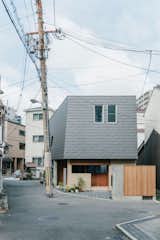
The first critical step in realizing this philosophy was to meticulously consider the house’s relationship with the street. Given the irregular site’s three-sided road frontage, the building was strategically placed close to the property lines. This decision, while maximizing the required floor area for the residents, also brought the structure into immediate and intimate proximity with the city. The challenge then became the careful calibration of the boundary between public and private, ensuring a harmonious interface rather than an abrupt division.
To achieve this delicate balance, the architects employed several key strategies. Firstly, they selected materials known to "age gracefully," suggesting a palette of natural or robust elements that would acquire a patina over time, embedding the house deeper into its historical context. While specific materials are not detailed in the architect’s statement, accompanying photographs often suggest the use of exposed concrete, natural wood, and subtle metal accents—materials celebrated in Japanese architecture for their longevity and aesthetic evolution. This choice reflects a commitment to architectural permanence and a rejection of ephemeral trends, allowing the building to gather character and resonate with the passage of time, much like the traditional structures in the neighborhood.
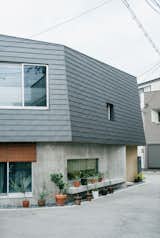
Secondly, the design adopted a "scale that feels familiar to people," consciously avoiding any sense of architectural imposition. This human-centric scaling helps the building recede into the streetscape, becoming an approachable and non-intimidating presence. This is further exemplified by the inclusion of welcoming benches integrated into the exterior, directly engaging passersby. These benches, a subtle yet powerful design element, transform a private facade into a semi-public amenity, inviting rest and informal interaction, thereby blurring the lines between the resident’s domain and the public sphere. This detail, often seen in traditional Japanese homes and shops, fosters a sense of shared space and community spirit.
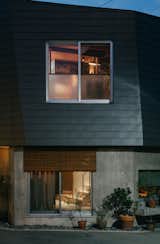
Crucially, the positioning and sizing of openings—windows, doors, and other apertures—were meticulously planned by "reading the conditions of each street edge." This context-sensitive approach ensures that privacy is maintained for the inhabitants, even as "subtle traces of daily life" are allowed to filter outward. This might manifest as strategically placed translucent screens, deep-set windows that offer glimpses without full exposure, or openings oriented to capture specific views while shielding others. This nuanced control over visual connections and disconnections is fundamental to achieving a comfortable coexistence in a high-density urban setting. The structural integrity for such intricate fenestration and wall placement on an irregular, multi-frontage site would have required precise calculations and innovative solutions from structural engineer Toshimitsu Miyake, ensuring both safety and aesthetic realization.
A Dialogue of Contrasts: Interior and Exterior Dynamics
Building upon this foundation of contextual sensitivity, the internal and external elements of the Jonoya Private Residence were placed "intuitively, as if in ongoing dialogue with the environment and people." This intuitive process allowed for the incorporation of "a variety of contrasting elements" that contribute to a "balanced spatial rhythm."
On the exterior, this is evident in the interplay between "large windows and the deep eaves that conceal them." The deep eaves, a hallmark of traditional Japanese architecture, serve multiple practical purposes—providing shade, protection from rain, and reducing solar gain—while also creating a sense of enclosure and depth. Paired with expansive windows, they allow for ample natural light while mitigating direct views into the private interior, further emphasizing the calibrated public-private boundary. Similarly, the contrast between "robust concrete walls and welcoming benches" speaks to the dual nature of the building: a solid, protective shell that simultaneously extends an inviting gesture to the community. The juxtaposition of "transparent and opaque railings" adds another layer of visual complexity, controlling views and light penetration while maintaining safety and a refined aesthetic.
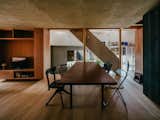
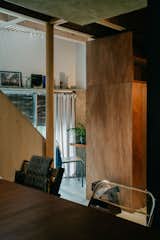
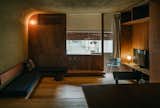
These layered relationships extend seamlessly into the interior, where the architects have orchestrated a dynamic and engaging living experience. Varying "ceiling heights, floor levels, and spatial scales connect in sequence," creating a fluid, non-monotonous environment. This manipulation of vertical and horizontal planes breaks down the rigidity often associated with urban housing, offering diverse perspectives and experiences within a relatively compact footprint. This spatial choreography guides movement and offers distinct zones for different activities, encouraging residents to interact with their home in a multifaceted way.
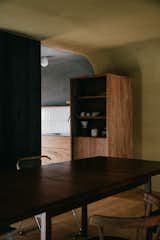
The selection of "carefully selected materials and details" further enhances this internal dialogue, creating a "gentle tension that guides movement and offers places of rest." Rather than dominating the space, these elements are chosen for their inherent qualities, allowing their textures, colors, and forms to "emerge" naturally. This subtle approach to materiality contributes to a lively and enjoyable atmosphere, where each element feels "almost conversational" with the others. For example, a polished concrete floor might transition to warm wooden planks, or a minimalist wall might feature a carefully crafted built-in shelf, each detail contributing to the overall sensory experience. This attention to detail and material honesty is a hallmark of high-quality Japanese design, aiming for timelessness over fleeting trends.
Implications for Contemporary Urban Living and Sustainable Design
The Jonoya Private Residence offers significant implications for contemporary urban living and the broader discourse on sustainable architectural practices.
Community Building: By deliberately integrating elements like public benches and carefully calibrated openings, the residence actively fosters a sense of community engagement. In an era where urban density often leads to social isolation, this design provides a model for how private dwellings can contribute to the public realm, encouraging informal interactions and strengthening neighborhood ties. This is particularly relevant in Japan, where traditional neighborhood relationships (often symbolized by shared public spaces and communal events) are highly valued but increasingly challenged by modern development.
Sustainable Design: The architect’s emphasis on "materials that age gracefully" and a design intended to adapt over time speaks directly to principles of longevity and environmental responsibility. Buildings that are designed to last, to weather gracefully, and to evolve with their inhabitants reduce the need for frequent renovations or replacements, minimizing waste and resource consumption. This philosophy of enduring design, coupled with a deep respect for the existing urban context, represents a form of cultural and environmental sustainability. It suggests that true sustainability extends beyond energy efficiency to encompass a building’s ability to integrate culturally and physically into its environment for generations.
Responding to Urban Density: The project serves as a compelling case study for maximizing utility and liveability on challenging, small urban plots. Its intelligent use of space, both horizontally and vertically, demonstrates how innovative design can overcome the constraints of limited land, offering high-quality living environments even in the most congested areas. This is a critical lesson for rapidly urbanizing regions worldwide grappling with similar challenges of land scarcity and population growth.
Future of Japanese Residential Architecture: The Jonoya Private Residence contributes to the ongoing evolution of Japanese residential architecture, which continually seeks to balance traditional values—such as a deep connection to nature, spatial efficiency, and respect for context—with the demands of modern urban life. It showcases how architects can create homes that are both deeply personal and outwardly welcoming, fostering a symbiotic relationship between the individual dwelling and the collective city. This project aligns with a growing movement in Japanese architecture that seeks to re-establish a human scale and social dimension in urban development, moving beyond purely functional or aesthetically driven designs.
In conclusion, the Jonoya Private Residence transcends the mere function of shelter, embodying a profound architectural philosophy that seeks to seamlessly weave a private home into the intricate social and physical fabric of Osaka’s central district. Through a deliberate process of contextual analysis, intuitive design, and the thoughtful calibration of public and private interfaces, Masakazu Tsujibayashi Architects have crafted a residence that not only provides a comfortable and dynamic living space but also acts as a quiet catalyst for community interaction. By allowing the building to "settle in" over time, embracing the layers of naturalness and human emotion, this project offers a compelling blueprint for how contemporary urban architecture can foster deeper connections between people, their homes, and the cities they inhabit. It is a powerful example of how sensitive, thoughtful design can enrich the experience of urban living, one meticulously crafted detail at a time.