
 admin
admin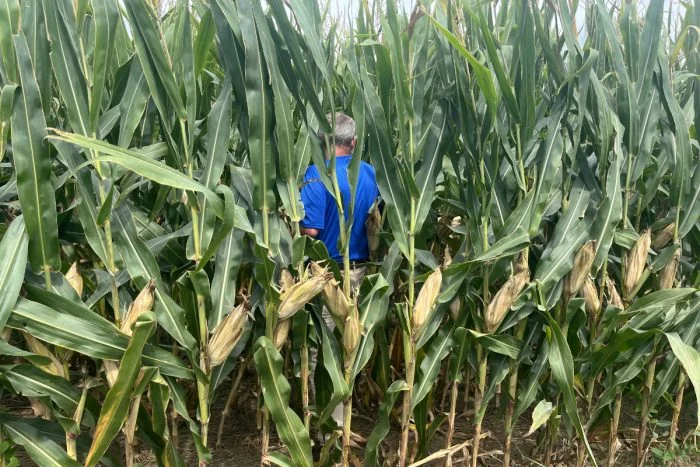
From Maryland’s diverse small farms to vast commodity operations, the adoption of regenerative agricultural practices is redefining land stewardship, albeit through a spectrum of approaches. As the urgency of climate change and environmental degradation intensifies, "regenerative agriculture" has emerged as a pivotal concept, yet its precise definition remains fluid, accommodating a wide array of farming systems and philosophies. This flexibility, while fostering widespread adoption, also fuels debate over what truly qualifies as regenerative.
The term encapsulates a holistic approach to farming that aims to reverse environmental degradation by restoring soil health, enhancing biodiversity, and sequestering carbon. However, its implementation varies dramatically, as exemplified by two Maryland farms on opposite shores of the Chesapeake Bay: Third Way Farm, a 60-acre diversified operation, and Harborview Farms, a 3,000-acre commodity row crop enterprise. Both embrace the regenerative ethos, yet their methodologies underscore the broad interpretations and practical complexities inherent in this agricultural revolution.
The Imperative for Regenerative Practices
The modern agricultural landscape has been shaped by decades of intensive farming, driven by the need for increased yields and efficiency. Practices such as aggressive tilling, monocropping, and heavy reliance on synthetic fertilizers and pesticides, while boosting productivity, have inadvertently led to severe soil degradation, nutrient runoff, and a significant decline in agricultural biodiversity. Globally, an estimated one-third of the planet’s soil is already degraded, contributing to reduced fertility, increased erosion, and diminished water retention capabilities.
In the United States, concerns over soil health and water quality, particularly in vital ecosystems like the Chesapeake Bay, have brought the issue to the forefront. The Bay, the largest estuary in the U.S., has suffered from eutrophication caused by excess nitrogen and phosphorus runoff from agricultural lands. This environmental crisis has prompted state and federal initiatives, including incentives for practices like cover cropping, which play a crucial role in mitigating pollution and rebuilding soil integrity.
Regenerative agriculture seeks to address these systemic issues by focusing on foundational principles: minimizing soil disturbance (no-till or reduced-till), maximizing soil cover, fostering living roots year-round, integrating biodiversity (both above and below ground), and incorporating livestock. The goal is to create resilient, self-sustaining ecosystems within the farm, capable of producing nutritious food while actively regenerating natural resources.
Third Way Farm: A Holistic, Diversified Ecosystem
On the western shore of the Chesapeake Bay, Tommy and Michelle Shireman’s Third Way Farm embodies a vision of regenerative agriculture rooted in deep ecological principles and faith-based stewardship. Established in 2015, this 60-acre diversified operation cultivates vegetables, fruits, and meats, distributed directly to consumers through Community Supported Agriculture (CSA) programs, farmers’ markets, and local restaurants. For Tommy Shireman, "regenerative really means to bring life back or to add life to something," emphasizing the enhancement of life from microbes in the soil to the plants and animals above ground.
Diversity is the cornerstone of Third Way Farm’s approach. Fields burst with a variety of vegetables interspersed with cut flowers, berries, and an array of fruit and nut trees—pear, plum, fig, jujube, elderberry, mulberry, and hazelnut. This polyculture system not only enhances biodiversity but also creates a robust ecosystem less susceptible to pests and diseases, reducing the need for external inputs. The farm eschews synthetic pesticides and fertilizers, relying instead on natural methods for pest control (netting, beneficial insects) and nutrient cycling (on-farm vermicomposting, imported compost).

Soil health is paramount, with an "obsession with keeping the soil covered and undisturbed." Shireman employs tarps as a "tiller," suppressing weeds and preparing beds for new crops without mechanical disturbance. After mowing down previous plant residues, tarps are laid for approximately two weeks, creating a clean, weed-free seedbed. This method, combined with year-round cover cropping using diverse mixes, ensures that living roots are always present, anchoring soil, retaining moisture, and feeding the subterranean microbial community.
Integrated livestock management forms another critical component of Third Way Farm’s regenerative strategy. Heritage crossbreed pigs forage in wooded areas, disturbing soil in a beneficial way and contributing organic matter. Red Devon cattle are managed through intensive rotational grazing, moving to fresh pastures daily. This adaptive grazing model mimics natural herbivore patterns, allowing pastures to recover and thrive. Following the cattle, chickens are introduced to consume pests and weed seeds, further fertilizing the land and stimulating new forage growth. This intricate dance between species enhances soil fertility, breaks pest cycles, and promotes a dynamic, healthy pasture ecosystem.
Shireman’s pride in a section of pasture, transformed from degraded hayland into a vibrant silvopasture system, underscores the long-term benefits of these practices. By burying woody debris, seeding with perennial grasses, and implementing regenerative grazing for three years, the land now supports shoulder-height grasses and young trees, demonstrating significant improvements in soil structure, carbon sequestration, and overall ecological resilience. This multi-faceted approach, encompassing agroforestry and silvopasture, aligns with broader "climate-smart" farming initiatives, showcasing how diversified farms can lead the way in ecological restoration.
Harborview Farms: Scaling Regenerative Practices in Commodity Agriculture
Across the Chesapeake Bay, on Maryland’s Eastern Shore, Trey Hill’s Harborview Farms represents a different, yet equally vital, facet of the regenerative movement. As a third-generation farmer managing 3,000 acres of commodity corn and soybeans, Hill operates within the economic realities of large-scale production, primarily supplying chicken feed to the region’s industrial poultry industry. His journey into regenerative practices, spanning over two decades, illustrates how conventional farms can adapt to environmental imperatives while maintaining economic viability.
Historically, Harborview Farms followed the trajectory of consolidation and yield maximization common in U.S. commodity agriculture. However, about 20 years ago, Hill began to deviate from conventional methods, initially motivated by state incentives to plant cover crops to mitigate nutrient runoff into the Chesapeake Bay. This early adoption proved to be a pivotal moment. The observed benefits—reduced erosion, improved soil structure, and increased biodiversity—prompted Hill to explore further.
By 2016, Hill had fully implemented a "planting green" no-till system across all his fields. Unlike conventional commodity farmers who leave fields bare in winter and till before spring planting, Hill plants his cash crops (corn, soybeans, wheat) directly into living winter cover crops. After planting, a combination of herbicides and a roller crimper is used to terminate the cover crops, creating a mulch layer that conserves moisture, suppresses weeds, and slowly releases nutrients. This system maximizes the regenerative principle of maintaining "living roots" in the soil year-round, a critical factor for soil health and carbon sequestration.
While Hill maintains a no-till system, his approach differs significantly from Third Way Farm’s in its reliance on certain chemical inputs. He uses herbicides to manage cover crops and weeds, albeit in significantly reduced quantities. Through the adoption of a "see and spray" sprayer, which targets individual weeds, Hill has cut herbicide use by more than half. He also uses insecticide-treated seeds, citing persistent pest pressures in the Mid-Atlantic climate, though he continuously experiments with eliminating all chemical use in dedicated test fields.
Hill acknowledges the ongoing debate surrounding the use of synthetic chemicals within a "regenerative" framework. He explains that switching entirely to organic production would likely necessitate increased tillage to control weeds, a trade-off he views as more detrimental to soil health than his current, reduced-chemical approach. His primary focus remains on continuous improvement: increasing ecological diversity, enhancing soil organic matter, and improving water quality. "I do think that I offer a benefit to society," Hill states, pointing to increased bird and insect populations and cleaner water leaving his fields. His commitment to preventing soil degradation, regardless of how "regenerative" is ultimately defined, underscores a shared objective with diversified farms.
The Broader Discourse: Defining and Standardizing Regenerative Agriculture

The experiences of Third Way and Harborview Farms vividly illustrate the inherent challenge in defining "regenerative agriculture." The term’s broad appeal stems from its promise of environmental restoration, yet its lack of a universal, legally binding definition creates both opportunity and ambiguity.
Corporate Engagement and "Greenwashing": Major food corporations have increasingly embraced "regenerative agriculture" in their sustainability commitments, often investing in supply chain initiatives to encourage farmers to adopt specific practices. While this corporate interest brings significant resources and scale, it also raises concerns about "greenwashing"—the practice of making unsubstantiated or misleading claims about the environmental benefits of a product, service, or company. Critics argue that some corporate definitions are too lenient, allowing for continued use of certain synthetic inputs or failing to mandate holistic system changes, thereby diluting the term’s meaning.
Advocacy for Strict Definitions: Environmental organizations and some farmer groups advocate for stricter definitions that align more closely with agroecological principles, emphasizing biodiversity, elimination of synthetic inputs, and holistic livestock management. They argue that a clear standard is necessary to ensure genuine environmental benefits and to prevent consumer confusion. Various certification programs, such as the Regenerative Organic Certified (ROC) standard, have emerged to provide a third-party verified framework, typically building upon existing organic standards and adding requirements for soil health, animal welfare, and social fairness.
The "Continuum" Approach: Conversely, proponents of a more flexible definition argue that regenerative agriculture should be viewed as a continuum, acknowledging that every step a farmer takes towards improving soil health and environmental outcomes is valuable. This approach emphasizes progress over perfection, aiming to encourage broader adoption across diverse farm types and scales, including large commodity operations where incremental changes can have significant environmental impact. Trey Hill’s journey at Harborview Farms exemplifies this "continuum" perspective, where reduced chemical use and no-till planting represent substantial shifts from conventional practices, even if not fully organic.
Economic Implications: The economic implications of transitioning to regenerative agriculture are complex. Diversified operations like Third Way Farm often benefit from direct-to-consumer sales, allowing them to capture higher value for their products and build strong community ties. However, the labor-intensive nature of such systems can be a barrier. For commodity farmers like Hill, the challenge lies in adopting regenerative practices within a market that typically rewards volume over ecological stewardship. While regenerative practices can lead to long-term cost savings (e.g., reduced fertilizer, pesticide, and fuel use due to less tillage), initial investments in new equipment or knowledge acquisition can be significant. The potential for premium pricing for "regeneratively grown" commodities is still developing but could offer a vital incentive.
Policy and Research: Government agencies, including the USDA, are increasingly investing in research and incentive programs to support regenerative agriculture. The "climate-smart" agriculture initiatives, for instance, aim to provide financial and technical assistance to farmers adopting practices that reduce greenhouse gas emissions and enhance carbon sequestration. However, the design and implementation of these programs, particularly regarding their inclusiveness of small-scale and diversified farms versus large commodity operations, remain subjects of ongoing debate. Scientific research continues to quantify the benefits of regenerative practices in terms of carbon sequestration, water retention, nutrient cycling, and biodiversity enhancement, providing the data necessary to inform policy and encourage adoption.
The Path Forward
As the global food system grapples with the challenges of feeding a growing population while safeguarding the planet, regenerative agriculture offers a promising pathway. The contrasting yet complementary approaches of Third Way Farm and Harborview Farms underscore that there is no single blueprint for regeneration. Instead, it is a dynamic process of continuous learning, adaptation, and improvement, tailored to specific ecological, economic, and social contexts.
The ongoing dialogue around defining and standardizing regenerative agriculture is critical for building trust with consumers, enabling effective policy support, and ensuring genuine environmental outcomes. Whether through comprehensive certifications or a recognition of incremental progress, the ultimate goal remains the same: to foster agricultural systems that not only produce food but actively restore and enhance the natural resources upon which all life depends. The diverse efforts of farmers like Shireman and Hill, each striving to improve their land year over year, represent the foundational work in this evolving and vital movement.








