admin
admin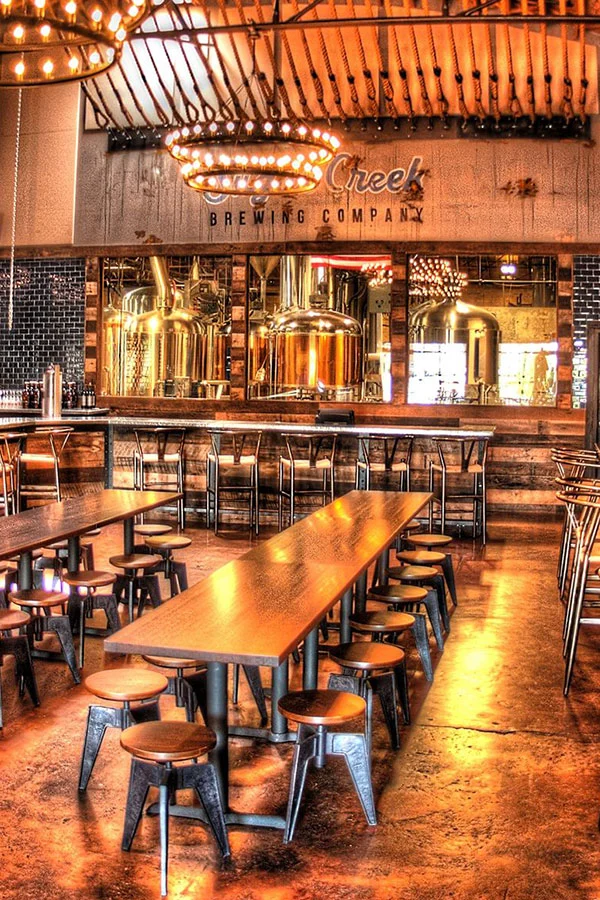
The integration of artificial intelligence into the global economy has transitioned from a speculative futuristic concept to a foundational operational reality. While much of the public discourse surrounding AI focuses on its impact on white-collar sectors, such as finance, law, and software development, the technology has permeated traditional manufacturing and artisanal trades. Among these, the American craft beer industry—a sector historically defined by manual labor, sensory intuition, and "old-world" techniques—is undergoing a significant digital transformation. From the precision-heavy environments of quality control to the experimental frontiers of recipe formulation, AI is no longer a novelty; it is becoming a critical tool for competitive survival in a crowded marketplace.
As of 2024, the United States is home to over 9,500 craft breweries, according to the Brewers Association. In an industry characterized by tight margins and high consumer demand for novelty, the adoption of AI represents a strategic pivot toward both efficiency and radical innovation. This shift is exemplified by a growing cohort of breweries that are utilizing large language models (LLMs), machine learning (ML), and the Internet of Things (IoT) to push the boundaries of what can be brewed and how profitably it can be brought to market.
Operational Precision: AI in the Production Line
The first wave of AI adoption in brewing focused primarily on the "unsexy" but essential aspects of production: logistics and quality assurance. Sugar Creek Brewing Company, based in Charlotte, North Carolina, has emerged as a pioneer in this space. By deploying a network of IoT sensors and AI-driven analytics, the brewery monitors the granular details of its packaging process.
The system tracks variables such as temperature, fill levels, and foam consistency in real-time. In traditional brewing environments, excessive foaming during the bottling or canning process—often referred to as "breakout"—can lead to significant product loss and oxygen ingress, which ruins the beer’s shelf life. By using AI to analyze pressure and temperature fluctuations, Sugar Creek can predict and prevent these issues before they result in wasted inventory. This data-driven approach allows small-scale operations to achieve a level of consistency that was previously the exclusive domain of multinational macro-breweries with multi-million dollar laboratory budgets.
The Chronology of the AI-Generated Recipe
The transition from using AI as a monitor to using it as a creator began in earnest around 2022, coinciding with the public release of advanced LLMs like OpenAI’s ChatGPT. Early experiments were often marketing-driven, but they quickly evolved into serious inquiries into flavor chemistry.
- Early 2023: Several breweries, including Asbury Park Brewery in New Jersey and Atwater Brewing in Detroit, released "AI-IPAs." These were among the first commercially available beers where the ingredient ratios and hop schedules were dictated by algorithms.
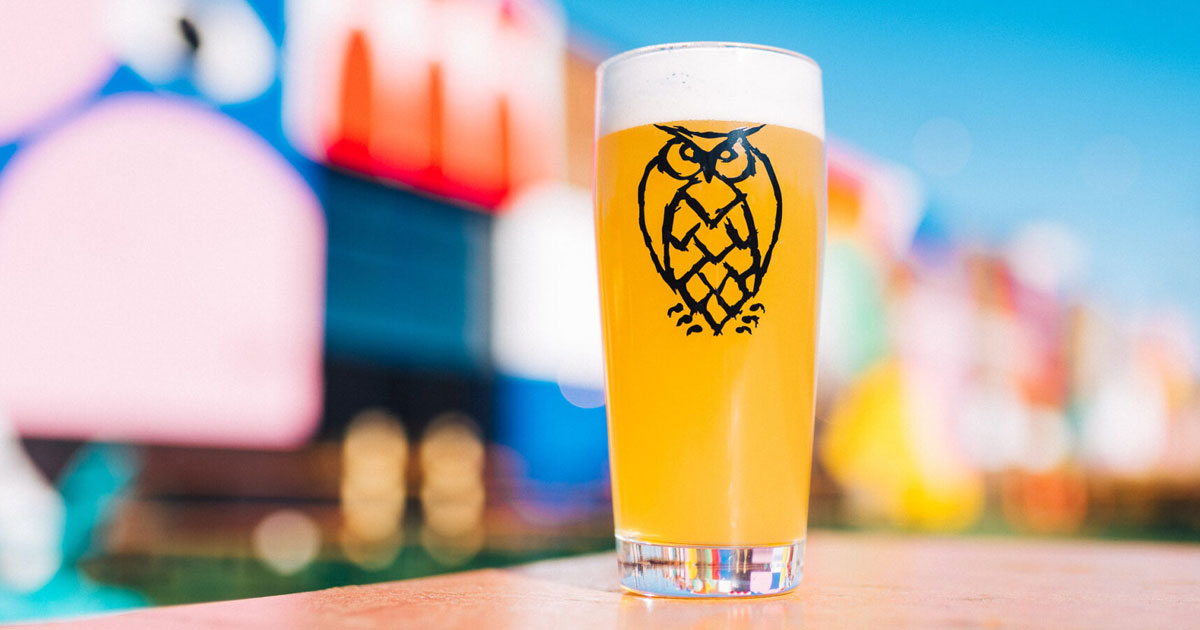
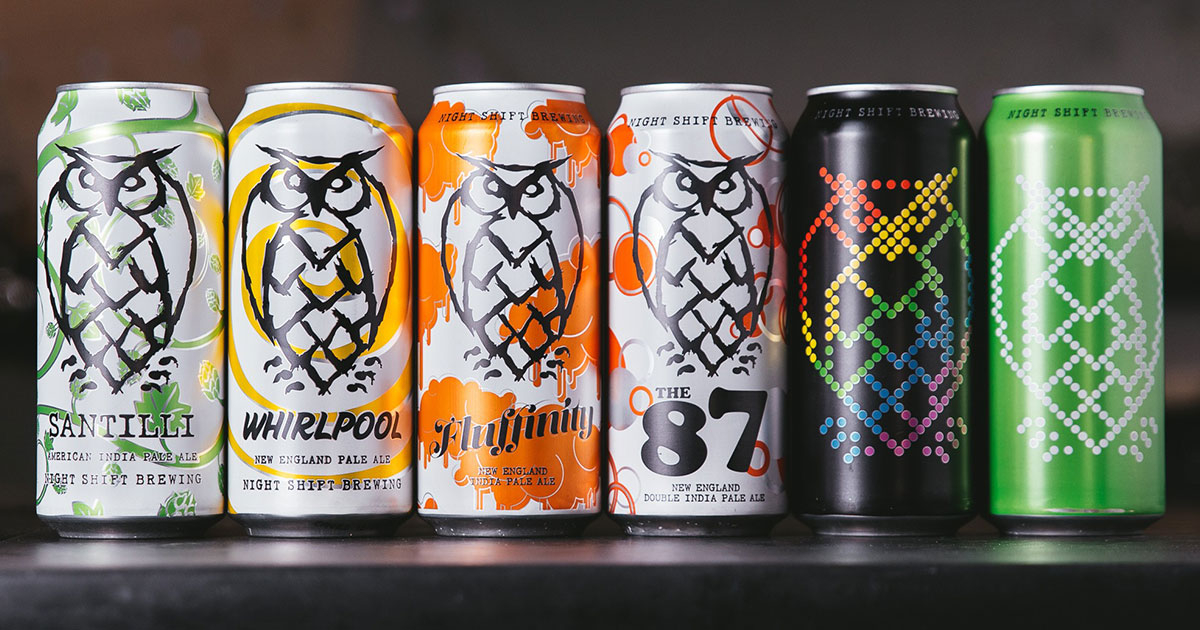
- Mid-2023: Night Shift Brewing in Boston utilized ChatGPT to develop a Hazy IPA. The success of this project highlighted a key benefit: speed. Michael Oxton, co-founder of Night Shift, noted that the AI generated a complex water profile—a process involving the precise balance of minerals like calcium sulfate and magnesium—in minutes. Historically, such a profile would require weeks of research and trial-and-batch testing.
- Late 2023 to 2024: The emergence of specialized brewing AI. Rather than using general-purpose models, some brewers began building proprietary models trained specifically on brewing datasets, including yeast attenuation rates and hop oil compositions.
The result of the Night Shift experiment, dubbed "AI-PA," yielded a flavor profile featuring notes of mango, watermelon, and citrus. The brewery reported that the beer was not only a technical success but a commercial one, resonating with consumers interested in the intersection of technology and craft.
Machine Learning and the "Silicon Species"
While many breweries used off-the-shelf AI, the Species X Beer Project represented the most sophisticated application of the technology to date. Founded by Beau Warren, who possesses a background in both microbiology and data analytics, the project was built on a dual-track philosophy: "Carbon Species" (beers designed by humans) and "Silicon Species" (beers designed by AI).
Warren developed seven distinct machine-learning models using a combination of regression analysis and neural networks. These models were trained on proprietary data, including historical recipe performance, water chemistry, and consumer feedback. Unlike a general LLM, which might suggest a recipe based on common internet data, Warren’s models were designed to "think" like a brewer, understanding the physical limitations of the equipment and the chemical interactions of the ingredients.
One of the project’s most notable outputs was an amber lager made with 100% Maris Otter malt. In traditional brewing, Maris Otter is almost exclusively used for ales, porters, and stouts due to its rich, biscuity profile. An AI suggestion to use it for a clean, crisp lager was considered counterintuitive by human standards. However, the resulting beer was well-balanced and highly rated by customers, proving that AI could identify "blind spots" in human tradition.
Another model, named "Beh3moth," was designed with minimal parameters to encourage maximum creativity. It produced an imperial pastry Baltic porter that included three types of fruit, coffee, vanilla, 12 types of malt, lactose, and marshmallows, finished with a dry-hop schedule typical of a New England IPA. Warren described the result as "literally unlike anything I have ever had," emphasizing that the AI’s lack of adherence to "style guidelines" allowed it to discover flavor combinations that a human might dismiss as illogical.
Microbiology and the "Yeast Buddy" Assistant
The impact of AI extends beyond the brewery floor and into the laboratories that supply the industry’s raw materials. Propagate Lab, a Colorado-based yeast propagation facility, introduced "Yeast Buddy," an AI chatbot designed to help brewers navigate the complexities of fermentation.
Yeast is arguably the most volatile variable in brewing, responsible for producing the esters, phenols, and alcohols that define a beer’s character. With hundreds of strains available, choosing the right one for a specific sugar profile or temperature range is a daunting task. Matthew Peetz, founder of Propagate Lab, compared the AI tool to a modern library catalog that replaces the "Dewey Decimal System" of manual research.
By inputting desired flavor outcomes and technical constraints, brewers can use AI to identify obscure yeast strains that they might otherwise overlook in favor of "standard" industry workhorses like US-05 or S-04. This democratization of specialized knowledge allows smaller breweries to experiment with complex styles like Belgian Saisons or Norwegian Kveiks with a higher degree of confidence.
Industry Analysis: Implications and Challenges
Despite the technical triumphs, the integration of AI in craft beer is not without its hurdles. The recent closure of the Species X Beer Project, cited as being due to broader economic constraints rather than technical failure, serves as a reminder that technology cannot fully insulate a business from the realities of the hospitality market, including rising rent, labor costs, and changing consumer habits.
The Human-in-the-Loop Necessity
A consensus among industry leaders is that AI serves as a "creativity enhancer" rather than a replacement for human expertise. Michael Oxton of Night Shift Brewing emphasized that while ChatGPT provided a solid foundation, human brewers had to adjust the recipe for "practicality and preference," ensuring that the ingredients were actually obtainable and that the brew day was manageable.
The "Calculator" Analogy
Matthew Peetz of Propagate Lab offers a grounded perspective, likening AI to a calculator. The tool is only as effective as the data provided. If a brewer inputs incorrect parameters regarding their equipment’s efficiency or water chemistry, the AI will produce a flawed recipe. This reinforces the idea that AI "makes humans superhumans" by handling the heavy computational lifting, but the human must still provide the "guardrails."
Economic and Ethical Considerations
There is also the looming question of job security. However, in the context of craft brewing, the labor is largely physical. AI cannot clean a fermentation tank, mill grain, or manage the taproom experience. Instead, the "threat" is more of a shift in the required skillset; the head brewer of the future may need to be as comfortable with data sets as they are with a mash paddle.
The Future of Digital Brewing
The future of AI in the craft beer industry likely lies in hyper-personalization and hyper-efficiency. We are approaching an era where a brewery could, in theory, analyze the social media trends and local flavor preferences of a specific neighborhood to design a "hyper-local" beer that is mathematically optimized for that demographic’s palate.
Furthermore, as climate change affects the yield and alpha-acid content of hops and the protein levels in barley, AI will become essential for "recipe re-balancing." If a specific hop variety is unavailable or its flavor profile changes due to a poor harvest, AI can quickly suggest substitutions that maintain the core flavor of a flagship brand.
In conclusion, while the "soul" of craft beer remains rooted in the physical and sensory world, its "brain" is increasingly digital. The successful breweries of the next decade will likely be those that view AI not as a threat to tradition, but as a new ingredient—one that, when used with care, can produce results that are both "insane" and "delicious." The "Digital Fermentation" is well underway, and for the American craft brewer, the algorithm is becoming as vital as the grain.