admin
admin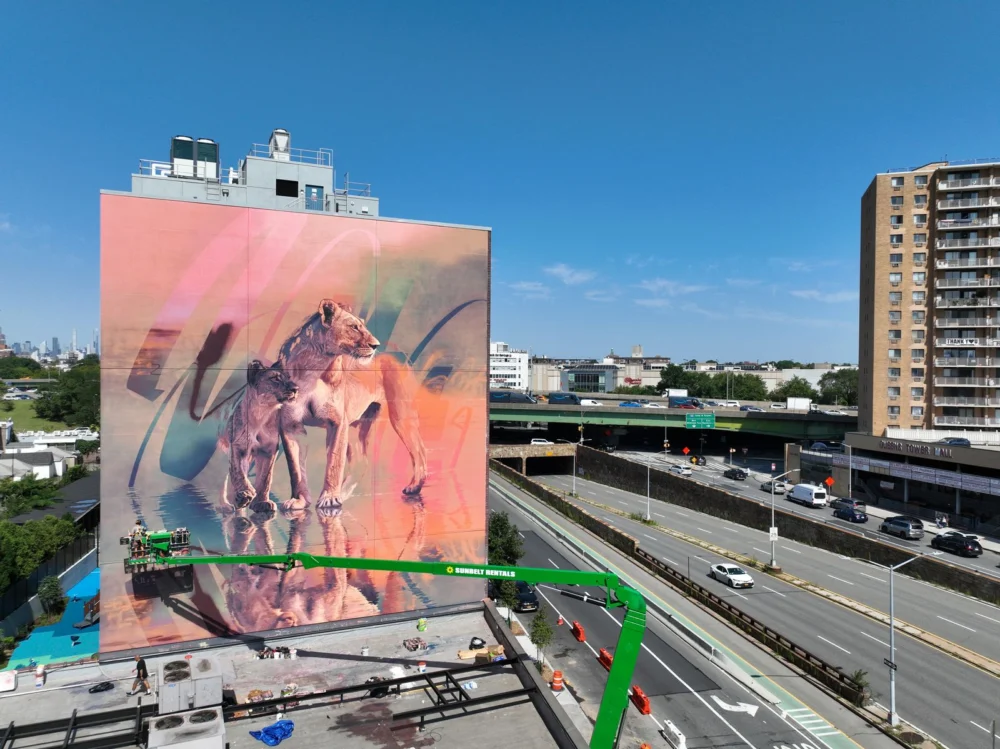
During a July observation along Interstate 25 through Denver, the city’s evolving skyline revealed a proliferation of new mid-rise residences and substantial multi-family structures. These new developments often share a remarkably consistent aesthetic: a palette dominated by taupe, brown, beige, and sandstone hues, occasionally punctuated by grays and burnt siennas for visual variation. This architectural uniformity has been colloquially described as giving the buildings a desiccated appearance under the high desert sun, yet they offer much-needed housing amidst a national shortage. From a distance, these structures, while seemingly humane, present a stark, almost monolithic comfort.
The Urban Canvas: Denver’s Transformation
Beyond the freeway’s grim vista, a different narrative unfolds within Denver’s streets. The city has emerged as a significant hub for muralists, a transformation actively supported by both government initiatives and private development. As Denver’s population has surged in recent decades—experiencing a growth rate significantly higher than the national average, attracting new residents drawn by its strong job market and quality of life—new tax revenues have been channeled into crucial infrastructure improvements. These investments include renovated libraries, expanded transit lines, and enhanced public shelters, all contributing to the city’s broader urban revitalization efforts.
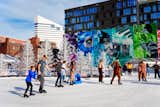
A key driver of this artistic proliferation is Denver’s robust public art program. A municipal ordinance mandates that one percent of the budget for city-funded capital projects exceeding $1 million must be allocated to public art. This policy has not only fostered a vibrant public art scene but has also inspired private developers to follow suit. As new multi-family buildings rise and existing ones undergo renovation, large-scale murals are increasingly adorning what would otherwise be blank walls or utilitarian parking garages. This integrated approach serves multiple strategic objectives: it acts as a marketing tool, a branding element, an aesthetic enhancement, a potential driver for real estate returns, and a contribution to the public art landscape, all rolled into one cohesive strategy.
The Aesthetics of Development: Form and Function
This trend extends far beyond Denver, with murals becoming a common feature in new housing developments across the United States. This widespread adoption has ignited a contentious debate within communities. Critics often view new developments as a threat, fearing rising property taxes, increased traffic, and potential displacement. They frequently label the use of cultural projects, such as public art, as "artwashing"—a tactic to obscure or legitimize the process of gentrification. The argument posits that vibrant murals can soften the visual impact of new, often architecturally uninspired, structures, thereby making neighborhood change more palatable to existing residents and attracting new, often wealthier, ones.
However, many artists and arts organizations offer a contrasting perspective. They argue that as developers address critical housing shortages in urban areas, commissioning public art provides an opportunity to inject visual interest and unique character into what might otherwise be "boring extruded boxes." In an era dominated by value-engineered development, where architectural distinction and local cultural nuances are often sacrificed for cost-efficiency and speed, public art can serve as a vital avenue for civic identity-making. It counters the visual monotony of ubiquitous brown or beige structures, offering moments of beauty and community connection.
Artist Spotlight: Sandra Fettingis and the Developer’s Brush
Among the artists contributing to Denver’s vibrant mural scene is Sandra Fettingis, a local resident whose work stands in sharp contrast to the often-bland modern architecture surrounding her. Fettingis’s murals are characterized by brightly colored, angular, and sharp patterns that evoke a natural geometry. Her journey from working at the front desk of the Museum of Contemporary Art Denver in 2011 to becoming a renowned full-time artist underscores the impact of public art initiatives. Her career trajectory accelerated significantly after she secured a major commission to create a massive installation in the Colorado Convention Center’s atrium, a project funded through the city’s public arts program.
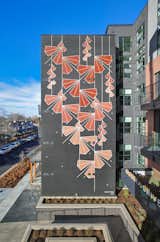
Since that pivotal commission, Fettingis’s distinctive work has become ubiquitous across the Denver area. Her art can be found on railway station windscreens, as suspended installations in college atriums, and even adorning private residences. To date, she has completed over 90 murals and installations, including 22 for new rental apartment and condominium projects. One of her most recent collaborations, in 2024, involved a commission from Mill Creek, a prominent U.S. developer specializing in upscale apartments. Mill Creek engaged Fettingis to design a mural for a new building near the University of Denver. This project typifies the modern "developer special": a five-story structure featuring studios, one-bedroom, and two-bedroom units, situated in a neighborhood previously dominated by single-family homes. The building’s exterior combines a charcoal gray amenity tower with burnt sienna and tan cladding, reflecting the common contemporary design trends. Fettingis’s mural, strategically placed near the entryway and visible from the amenity deck and some balconies, serves as a focal point.
Crucially, Fettingis was granted complete creative freedom for this project, a welcome departure from commissions that often require adherence to past work. She designed a sprawling 60-by-25-foot mural featuring umber tones that harmonize with the building’s muted color scheme. Her signature geometric botanicals cascade down the wall, transforming an otherwise standard building into a distinctive landmark for both residents and passersby. Residents frequently engage with Fettingis during her work, expressing how her art brings "life and joy" to their environment.
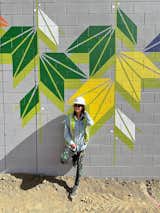
Fettingis reflects on the subconscious impact of such art: "I think there’s a lot of things that take place even on a subconscious level… I think there’s a level of pride if your building has something rad on it." She further emphasizes the community-level benefit, suggesting that such commissions signal a developer’s genuine investment in the neighborhood, rather than merely "dumping a building and leaving and going on to the next one." Gina Harris, regional design manager at Mill Creek, corroborates this sentiment, stating that the company actively partners with local artists across its national portfolio. "We believe art adds lasting value by giving a building personality and emotional resonance. It helps residents feel proud of where they live and signals that we care deeply about the communities we develop," Harris shared with Dwell, emphasizing that "those details matter."
The National Trend: Murals Beyond Denver
The integration of murals into new developments is not a new phenomenon, though its modern context differs. Historically, public art has roots in initiatives like the 1930s New Deal commissions, which aimed to adorn public buildings and stimulate the economy during the Great Depression. However, the perception of street art has evolved significantly. For much of the 20th century, graffiti and street art were often associated with illicit activity and urban blight. In recent decades, this perception has shifted dramatically, with many cities, including Denver, embracing programs to support and integrate street art as a tool for urban beautification and cultural expression.
This shift has seen street art increasingly enter the private sphere. In 2015, The Washington Post highlighted JBG Cos., a prominent D.C.-area developer, which launched an extensive mural campaign to decorate parking garages, blank walls, and other features across its vast property portfolio. The campaign, involving approximately 30 murals, elicited mixed reactions. While some viewed it as a genuine community contribution, others saw it as a calculated marketing ploy. One muralist hired by JBG described a "divided" feeling, acknowledging the murals’ role in making urban areas "sexy" to "millennials who want to buy into a growing real estate neighborhood that is predominantly poor, or inner city, or minority or whatever term you want to use."
Artwashing or Urban Renewal? The Core Debate
The arrival of new development often triggers significant anxiety over neighborhood change, bringing concerns about rising rents, increased noise and traffic, and potential displacement of long-term residents. In this context, commissioning murals for new developments has become a highly charged issue, fueling concerns that street art is being co-opted to make these transformative changes more palatable. This phenomenon, often termed "artwashing," suggests that the cultural veneer provided by murals serves to mask or distract from the harsher economic and social consequences of gentrification.
A 2025 study led by Hyesun Jeong, an assistant professor of urban design at the University of Cincinnati’s School of Planning, investigated the relationship between murals and neighborhood change. By geo-locating murals across Cincinnati using a database from ArtWorks, a local public art nonprofit, and analyzing various public data at each site, the study revealed significant correlations. Neighborhood blocks featuring murals showed "significant increases in pedestrian activity, household income, rents, and housing values." These findings indicate a complex dual effect: while murals are associated with neighborhood revitalization, they also serve as indicators of gentrification, embodying both improvement and displacement.
Data and Impact: Quantifying the Value of Public Art
Despite the ethical complexities, the commercial benefits for developers appear substantial. Jordan Giha, CEO and founder of WXLLSPACE, an organization that has facilitated over 140 mural projects connecting developers with artists, has conducted extensive research into this relationship. Drawing on his background as a real estate professional, Giha analyzed thousands of real estate transactions over a five-year period. Working with data scientists, his research indicated that properties adorned with murals experienced an increase of over 30 percent in value compared to those without. Furthermore, surveys conducted by WXLLSPACE with leasing offices and property management companies consistently found that murals "have added a huge attraction to renters," directly influencing occupancy rates and rental premiums.
However, this perceived value can also be a double-edged sword, signaling to existing residents that displacement may be imminent. Artists have historically played a role in the gentrification process; when creatives, often seeking more affordable rents, move into distressed or disinvested neighborhoods, they frequently become catalysts for new development and subsequent "improvement." Urban planners and city governments have, in recent history, actively sought to attract creative workers. Richard Florida’s influential 2002 book, The Rise of the Creative Class, argued for cities to court a diverse group of creatives—including tech workers, artists, designers, and writers—as a strategy for economic development. A 2014 working paper published by the National Endowment for the Arts further elaborated on how city governments and developers have specifically targeted "arts industries to generate place-based redevelopment."
The NEA paper made an interesting distinction: "commercial" arts industries (such as film, design, and music) were more closely associated with indicators of gentrification, while "fine arts" (visual art, museums) were linked more with revitalization. Developer-led murals, blurring the lines between fine art and commercial enterprise, have been absorbed into this commercial process. They function simultaneously as art, branding, "placemaking," and even, as author Martha Rosler suggests in Culture Class, a "minor government apparatus." The concept of "artwashing," then, transcends merely distracting from post-improvement displacement; it encompasses the broader, often unintended, consequences of neighborhood betterment initiatives championed by city leaders themselves.
Policy and Practice: Towards Equitable Art Integration
To mitigate the potential negative effects of art-driven development, the University of Cincinnati researchers recommend that policymakers actively "link mural initiatives with affordable housing and long-term employment strategies to support inclusive growth and community stability." This integrated approach aims to ensure that cultural enrichment benefits all residents, not just newcomers.
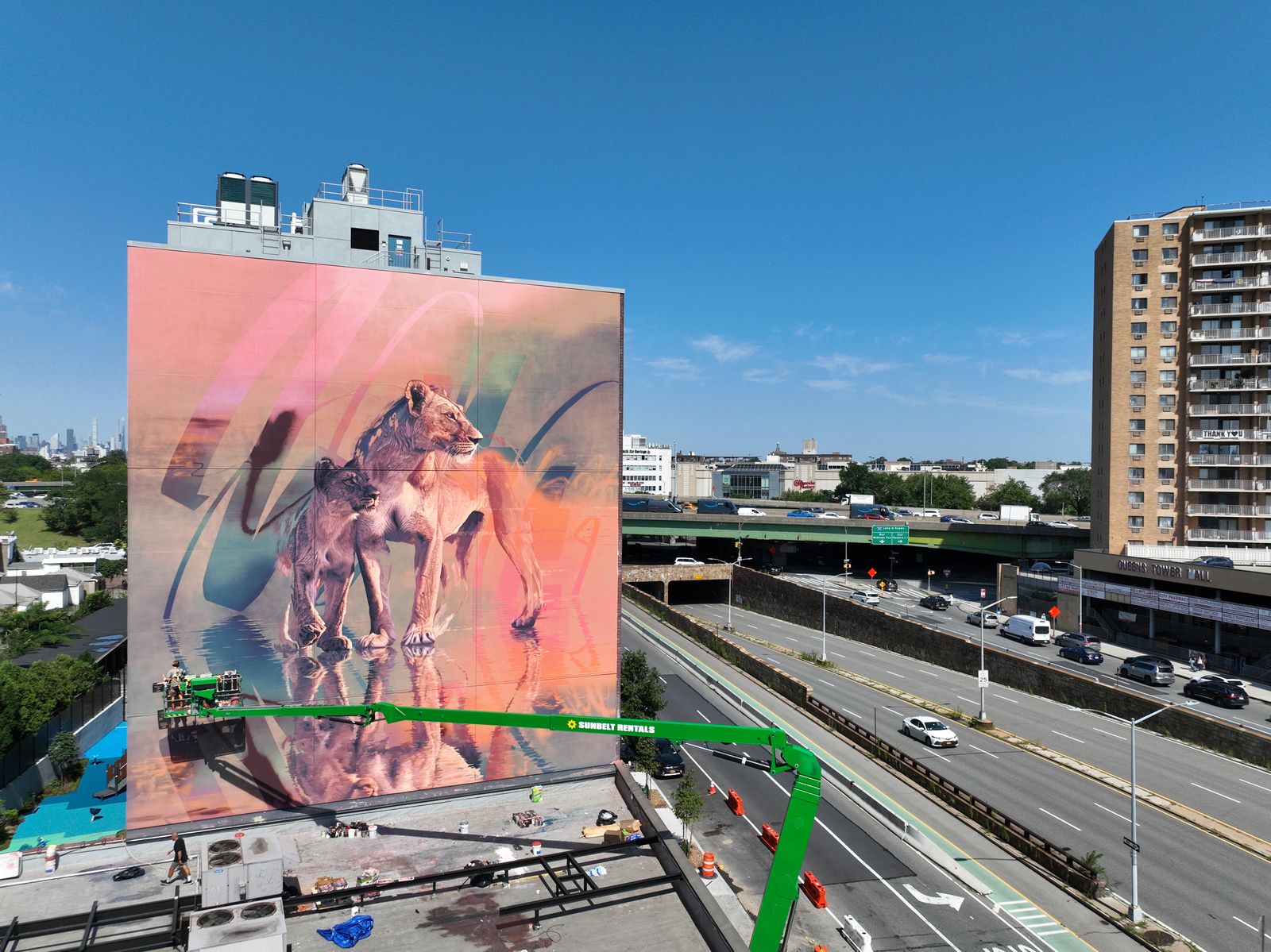
An exemplary case of this approach can be found in Rego Park, Queens. In 2024, Slate Property Group developed an eight-story, 88-unit affordable housing complex specifically designed for individuals transitioning out of homelessness. Recognizing the opportunity to instill a sense of hope and belonging, the developers sought an artwork that would symbolize care. Giha’s WXLLSPACE facilitated the connection with South Africa-raised artist Sonny Sundancer, who designed a striking 65-foot-tall, multicolored pastel mural depicting a lioness and her cub. Giha explains the symbolism: "It is a great representation of care—they’re the hunters, they’re also the gatherers and the caretakers of their prides."
The installation of this massive mural presented unique logistical challenges, including coordinating work hours around prayer times at an adjacent mosque and employing specialized boom lifts. Despite these complexities, the project proved immensely successful. "It has been shared a bunch of times on the internet. We get so much love," Giha notes, highlighting the community’s overwhelmingly positive reception. The mural’s impact was so profound that the building itself was subsequently named "The Lionheart" by its owners, a testament to the artwork’s power in shaping identity and fostering pride.
Redefining Public Art: A New Paradigm
It is tempting for some to dismiss developer-commissioned murals as merely "corporate art" or a "selling out" of street art’s subversive roots. However, such criticisms often hinge on rigid definitions and linguistic boundaries. Perhaps these works should be considered a distinct category, operating within a new paradigm where commercial interests and artistic expression converge. Architecture itself, as an art form, is inherently beholden to developer clients and economic realities. Does this inherent commercial constraint diminish the "artfulness" of architectural design? While it certainly places limitations on material choices and ornamental elements due to cost considerations, this is precisely where artists can make a profound contribution.
Public art, particularly murals, can inject the visual interest and unique character often "value-engineered" out of contemporary residential boxes. More importantly, it provides essential financial support for artists within communities undergoing significant transformation. In many cities, skyrocketing housing costs over the past decade have pushed working artists, including those who originated from "redeveloped" neighborhoods, to the margins. By providing paid commissions, developers and city initiatives ensure that a city’s cultural sphere continues to flourish, preventing the exodus of the very creatives who contribute to its unique identity.
The Future of Urban Identity: Art, Development, and Community
Sandra Fettingis acknowledges her past struggles with the notion that public art on housing projects might inadvertently contribute to gentrification. However, she has found peace with her role, recognizing the prevalent "land of brown boxes" she inhabits. "While I was grappling with that, I was also starting to think about, Okay, well, there were buildings being built prior in all sorts of neighborhoods that did not have any art, and how do we feel about that?" she poses. "You know, we still see them, and they’re just blasé—gray, beige, meh, no life, no soul."
This sentiment encapsulates a crucial lesson that urban planners, architects, and even developers are increasingly internalizing: it is possible to build quickly, affordably, and abundantly without sacrificing the soul and distinct identity of urban environments. By thoughtfully integrating public art, particularly through collaborations with local artists, new developments can transcend mere functionality, becoming vibrant, engaging, and pride-inducing elements of the cityscape. This nuanced approach recognizes the economic imperatives of urban growth while simultaneously affirming the intrinsic value of art in fostering community, identity, and an enriched public realm. The developer mural, therefore, stands as a complex symbol of modern urbanism, navigating the delicate balance between progress, profit, and cultural preservation.