admin
admin
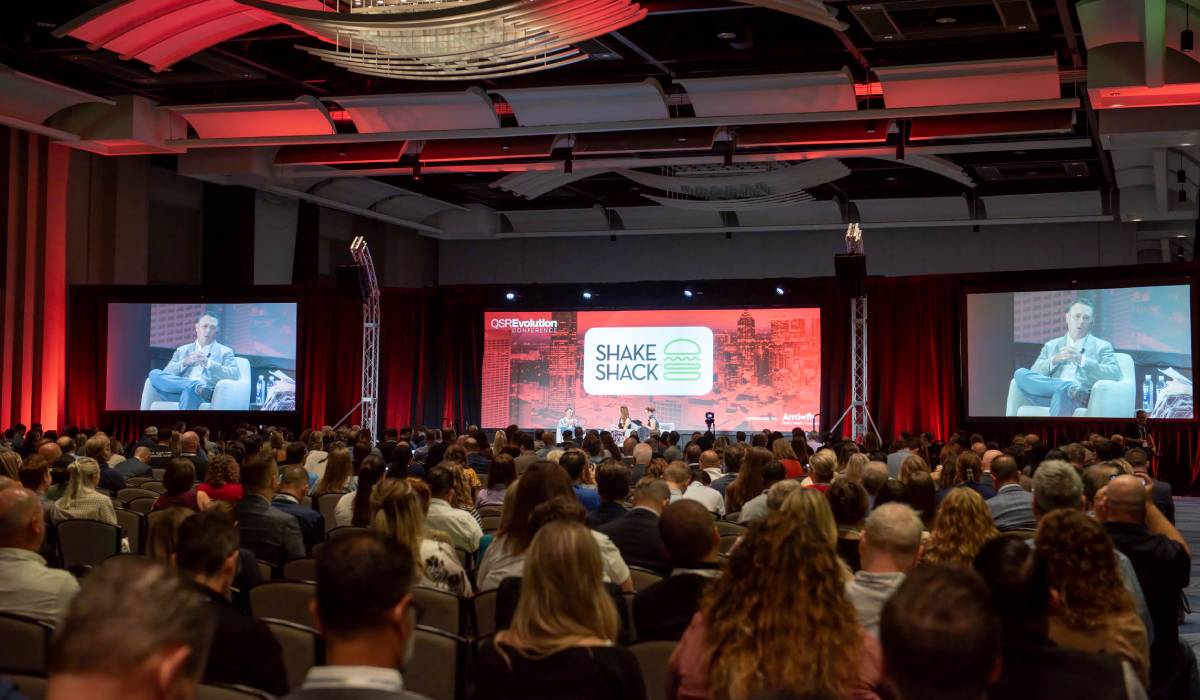
The restaurant industry stands at a critical juncture where the traditional boundaries between quick-service (QSR) and full-service (FSR) dining are blurring, driven by rapid technological adoption, significant capital restructuring, and a fundamental reassessment of labor dynamics. At the recent QSR Evolution Conference in Atlanta, held in partnership with the FSR NextGen Restaurant Summit, industry executives, franchisees, and operational experts gathered to dissect the current state of hospitality. The proceedings revealed a stark contrast between corporate strategy and frontline reality, emphasizing that the next decade of restaurant success will be defined less by high-level vision and more by the granular execution of culture and operational simplicity.
The Architecture of the Atlanta Summit
The dual-track event served as a high-level forum for the nation’s leading restaurant brands. Unlike traditional trade shows focused on equipment or menu innovation, this summit prioritized the "human engine" of the business. The agenda was dominated by the complexities of multi-unit management, the integration of artificial intelligence, and the evolving relationship between franchisors and franchisees.
Moderators and panelists engaged in a series of closed-door and public sessions that moved beyond standard talking points. The data emerging from these discussions suggests that while the industry has recovered from the volume shocks of 2020-2022, it is now grappling with a deeper, more systemic crisis of identity and operational friction.
Redefining Labor Stability: The 19-Year Benchmark
One of the most significant data points emerged during a session featuring Lisa Ingram, CEO of White Castle. In an industry where the Bureau of Labor Statistics consistently reports annual turnover rates exceeding 100% for limited-service restaurants, Ingram revealed that the average tenure for a White Castle general manager is 19 years.
This statistic challenged the prevailing industry narrative that high turnover is an unavoidable "weather pattern" inherent to the sector. The White Castle model, a fourth-generation family-owned business, suggests that long-term retention is a product of deliberate cultural investment rather than market conditions. Analysts at the conference noted that the cost of replacing a single restaurant manager can range from $15,000 to $50,000 when accounting for recruitment, training, and lost productivity. Consequently, White Castle’s retention rate represents a massive competitive advantage in operational continuity and bottom-line savings.
Operational Friction vs. The Nature of Work
A recurring theme across multiple panels was the distinction between the inherent difficulty of restaurant work and the "artificial friction" imposed by corporate systems. Five major operators, including representatives from diverse segments, reached a consensus: employees are not leaving because the work is hard; they are leaving because the work is unnecessarily complicated by poor design.
The friction identified by frontline leaders includes:
- Incongruent Layouts: Kitchen and service flows designed by architects or corporate planners who have not worked a shift in the specific environment.
- Static Prep Flows: Legacy systems that have not been updated to account for the surge in third-party delivery orders, which now account for up to 30% of revenue for many brands.
- Technological Overload: Scheduling and inventory systems that require excessive administrative time, pulling managers away from the floor.
- Contextless Rollouts: New menu items or marketing promotions launched without adequate lead time or operational training.
The consensus among participants was that "easy to work in" does not mean "easy work." The goal for the next generation of operators is to strip away the administrative and systemic hurdles that prevent team members from performing their primary function: hospitality.
The Economics of Training and the Cost of Ignorance
Paul Mangiamele, CEO of Legendary Restaurant Brands, provided a sharp critique of current training budgets. His assertion—"If you think training is expensive, you have not put a pencil to ignorance"—resonated throughout the FSR panels.
This perspective shifts the view of training from a line-item expense to a risk-mitigation strategy. The "cost of ignorance" manifests in food waste, guest dissatisfaction, safety violations, and, most critically, turnover. Data suggests that employees who feel incompetent in their roles are significantly more likely to quit within the first 90 days. Therefore, turnover is often a symptom of a failure in the repeatable processes of the restaurant.
Capital Shifts and the Rise of the Mega-Franchisee
The conference took place against a backdrop of significant institutional moves in the restaurant capital space. The industry is currently witnessing a transition where the power dynamic between franchisors and franchisees is being upended.
Notable recent transactions discussed in the hallways included:
- Denny’s transition toward private ownership.
- RaceTrac’s acquisition of Potbelly, signaling a merger of convenience retail and fast-casual dining.
- Yum! Brands’ strategic sale of Pizza Hut units.
- Roark Capital’s majority stake in Dave’s Hot Chicken, valued north of $1 billion.
- Sun Holdings, a massive franchise group, acquiring brands like Uncle Julio’s and Bar Louie outright.
The acquisition of franchisors by their own franchisees marks a "maturation of the operator." These "mega-franchisees" are no longer just service providers; they are becoming the primary stakeholders in the brand’s intellectual property. This shift raises questions about brand identity and whether private equity’s focus on short-term KPIs will dilute the long-term hospitality missions of these organizations.
The AI Conversation: Moving from Pilot to Network
Artificial Intelligence was a dominant topic, but the conversation has matured from speculative hype to practical skepticism. The primary challenge identified by executives is the "pilot-to-network gap."
While many brands have successfully piloted AI for voice ordering, predictive scheduling, or inventory management in a handful of corporate-owned stores, scaling these solutions across a fragmented franchise network remains a hurdle. Issues such as disparate Point of Sale (POS) systems, varying data integration capabilities, and the financial burden of tech stack upgrades on franchisees often stall innovation. The consensus in Atlanta was that technology must remain a tool for enhancing the human experience rather than a "sacred" end in itself.
The "Cost" of Purpose and Brand Identity
The final day of the summit focused on the concept of "brand purpose." In a panel featuring Graham Humphreys, Marita Swift, and Steve Palmer, the discussion turned to the validity of mission statements. The panel argued that a purpose is only real if it has cost the company money or growth opportunities.
Examples of "costly purpose" included:
- Limited Operating Hours: Brands that close early to ensure work-life balance for staff, sacrificing late-night revenue.
- Wage Leadership: Operators who pay significantly above market rate, refusing to adhere to standard labor-cost percentages.
- Strategic Growth Refusal: Turning down expansion capital that would require a compromise in ingredient quality or service standards.
The term "founder cosplay" was used to describe brands that use the language of values and hospitality in marketing but fail to implement them when they conflict with quarterly profit goals.
Implications for the Future of the Industry
The insights from the Atlanta summit suggest that the restaurant industry is entering a period of "operational Darwinism." The brands that thrive will not necessarily be the most high-tech or the fastest-growing, but those that can bridge the gap between corporate strategy and the "Tuesday morning shift."
The role of the "coach" or multi-unit manager is becoming the most vital link in the chain. This role is responsible for turning the high-level insights from conferences into repeatable behaviors on the restaurant floor. As the capital structure of the industry continues to lean toward private equity and massive franchise conglomerates, the preservation of "the vibe" and the guest experience will depend on whether these organizations can maintain clarity of purpose amidst rapid expansion.
The "Coaching Question" posed at the conclusion of the event serves as a directive for the industry: Which lesson, if applied, would change the team’s operation next week, and what institutional inertia is preventing that change? For the leaders in Atlanta, the answer lies in listening more, simplifying the work, and being willing to pay the price for a genuine brand culture.