Jia Lissa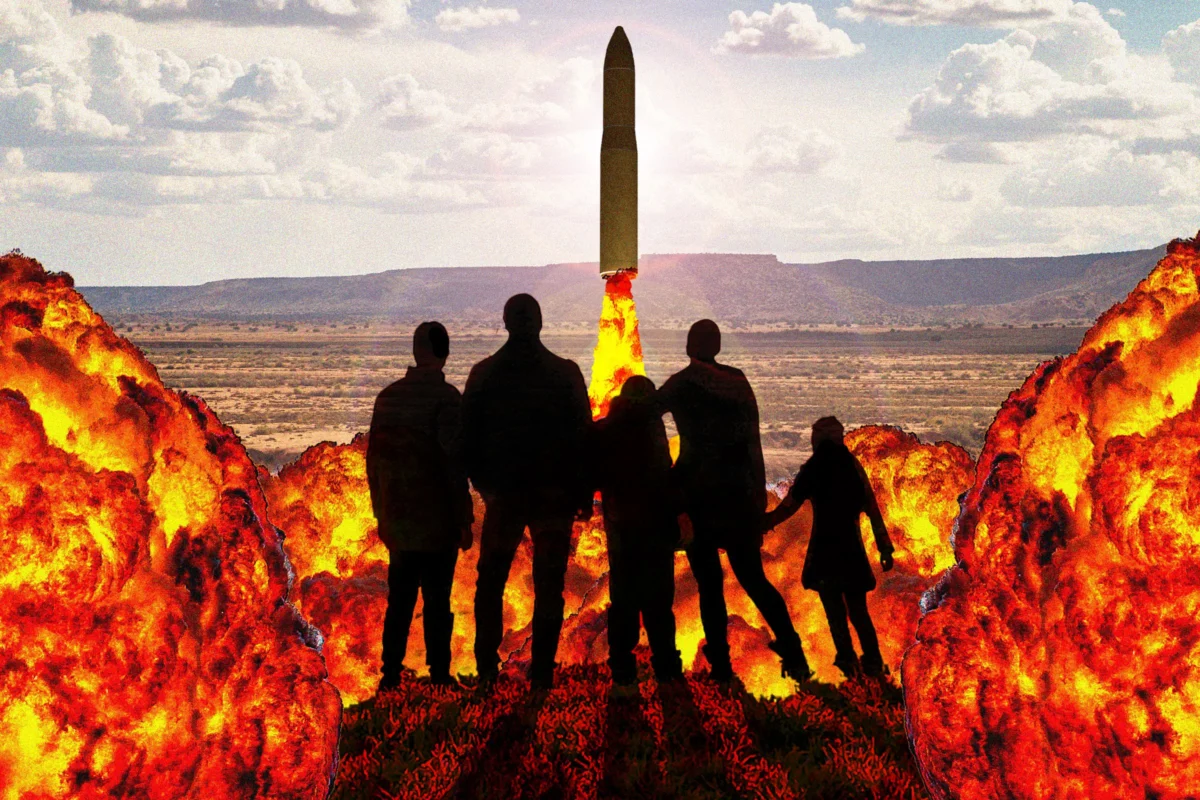
Sally Schultz believed she had found her sanctuary, a slice of affordable land in Rio Rancho Estates, New Mexico, where she could cultivate a new life for herself and her four children after a difficult divorce. For $3,500, this single mother secured a half-acre plot in the unincorporated, census-designated community, drawn by its rural charm, proximity to schools and parks, and the promise of stability. Her modest trailer quickly became a home, and the arid soil yielded a surprising bounty of corn, squash, and green chile. This cheap land wasn’t just property; it was a haven, offering a crucial second chance. But that hard-won peace is now shattered, replaced by an unsettling uncertainty, as a burgeoning hypersonic missile company, Castelion, has established its massive manufacturing facility mere yards from her doorstep, casting a long shadow of fear and potential danger over the community. "We’ve already been through so much," Schultz laments, "and now we have to leave. It is the unknowing that is scariest."
The Unwelcome Neighbor: Castelion’s Arrival in Rio Rancho Estates
Castelion, a startup founded in November 2022 by three former SpaceX executives, is rapidly constructing what it terms "America’s largest dedicated hypersonic manufacturing production facility," known as Project Ranger. With completion targeted by the end of the year, this mega-campus is, in some instances, positioned barely 1,000 yards from approximately 450 residential properties within Rio Rancho Estates, including Sally Schultz’s homestead. This alarming proximity places hundreds of homes squarely within a perilous danger zone, should the explosive chemicals stored and processed on-site ever ignite.
The unfolding situation raises profound questions about public safety, regulatory oversight, and the balance between economic development and community well-being. Despite a year into its relationship with the state of New Mexico, Castelion—which declined requests for comment for this report—has yet to adequately address fundamental safety concerns. A critical hazard assessment, conducted by Sandia National Laboratories, starkly revealed that in the event of a fire, many of the facility’s buildings would simply be allowed to burn, releasing highly corrosive hydrochloric acid gas into the surrounding environment. Furthermore, internal communications between Castelion and Rio Rancho officials, reviewed by journalists, indicate that crucial fire safety standards were still being negotiated long after construction had already commenced, a revelation that has further exacerbated resident anxieties. "I live next door to where World War III will be manufactured," stated Laura Lundberg, another local resident, encapsulating the pervasive sense of dread.
Castelion’s Meteoric Rise and Hypersonic Ambitions
Castelion has swiftly emerged as a prominent player within the burgeoning defense tech sector, capitalizing on the increasing global emphasis on advanced weaponry. The company’s valuation has soared to an impressive $13 billion, quadrupling its Series B valuation of $2.8 billion from the previous year. This rapid growth is underpinned by over $500 million in US military contracts secured in just 18 months, solidifying its position as a key supplier in the nation’s "Arsenal of Freedom."
The company’s primary focus is the mass production of hypersonic missiles—weapons capable of flying at speeds exceeding Mach 5. These advanced missiles represent a significant strategic priority for the United States, as global powers, including Russia and China, are also investing heavily in similar technologies. The US Army’s Dark Eagle, currently the most mature domestic hypersonic weapon, carries an estimated cost of $41 million per missile, according to a 2023 Congressional Budget Office study. Castelion initially touted its main product, Blackbeard, a solid-rocket-powered missile, with an advertised unit cost of just $384,000, promising a significant cost-reduction advantage over competitors.
However, the initial promise of affordability has proven elusive. Castelion’s contracts reveal a rapidly escalating price point for its Blackbeard missiles. The year began with a nearly $50 million Navy contract for full-scale prototypes. By June, this was expanded by an additional $23.4 million for the first 50 operational prototypes. Another $90 million contract in August for manufacturing services for the same 50 Blackbeards pushed the total cost to $163.4 million for 50 units, effectively raising the per-unit cost to $3.3 million. Most recently, in September, the Navy awarded Castelion its largest contract to date, worth up to $200 million. While Castelion recently released the first photo of its Blackbeard hypersonic strike missile, concrete performance figures and test data verifying its efficacy remain undisclosed, raising further questions amidst the escalating costs and public safety concerns. Project Ranger, the 1,000-acre facility in New Mexico, is designed to be Castelion’s largest manufacturing and testing hub, with mass production slated to begin as early as next year, underscoring the urgency and scale of this controversial development.
A Troubling Chronology: From Nevada to New Mexico
The genesis of Project Ranger in New Mexico is marked by a series of events that have fueled local residents’ distrust and allegations of a lack of transparency. The facility was not initially planned for the Land of Enchantment. In August 2023, Castelion, operating under the pseudonym "Pallas Industrials," applied to establish a rocket factory in Churchill County, Nevada. Andrew Kreitz, Castelion’s Chief Financial Officer, signed a special use application outlining plans for rocket motor manufacturing and ground-testing up to eight days per month.
Churchill County officials, demonstrating rigorous due diligence, responded with an eight-page staff analysis that mandated specific testing conditions and safety protocols. Shortly thereafter, Pallas Industrials withdrew its application from Nevada, re-emerging under the name Castelion. Just a few months later, soil-probing trucks began appearing in western Rio Rancho, a precursor to the New Mexico development. Rio Rancho Estates residents report that by the spring of 2025, when these activities became noticeable, Castelion was already engaged in advanced discussions with New Mexico officials regarding the use of the land for its missile factory. This chronological sequence suggests that New Mexico may have presented a more amenable regulatory environment compared to Nevada, prompting the strategic relocation.
Unveiling the Hazards: The Sandia Report’s Damning Revelations
A pivotal moment in the unfolding controversy came in June 2025, when Sandia National Laboratories, under the auspices of the New Mexico Small Business Assistance Program, delivered a hazard report concerning Castelion’s proposed operations. This program, designed to provide local businesses with cost-free access to the expertise of national laboratories like Sandia and Los Alamos, inadvertently became the source of critical revelations.
Initially, Sandia released a heavily redacted version of the report in response to a Freedom of Information Act (FOIA) request. However, due to a technical oversight, the redactions were merely black ink highlights over black text, leaving the full, unredacted report accessible through simple copy-and-paste functions. The unredacted document unequivocally alleges that Castelion’s plans for building and operating the missile factory present significant and inherent risks to the surrounding community.
The report identifies a "massive storage facility fire" as the worst-case scenario. Castelion plans to store colossal stockpiles of propellants on the Project Ranger site, including at least one heat-sensitive chemical oxidizer, ammonium perchlorate. According to the Sandia report, up to 250,000 pounds of this material are slated for storage within covered magazines and bunkers. Critically, outside these bunkers, the company is permitted to keep up to 81,000 pounds of active explosive material at any given time within the hazardous integration facilities during the assembly process.

Sandia’s analysis details the catastrophic potential: a detonation of the facility’s largest allowed stockpile would necessitate a buffer zone of nearly nine football fields from the nearest inhabited building. A worst-case explosion could shatter large windows almost four miles away and carry a 3.2 percent chance of causing minor eardrum damage to individuals located 400 yards from the detonation site. Sandia National Laboratories declined to comment on the report, and one of its authors, Meg Davidson, has since joined Castelion as a senior manager of strategic partnerships, a fact that further fuels public suspicion.
Beyond detonation risks, the report highlights a fire at the test stand as "the most probable foreseeable hazardous event." Such a chemical fire would unleash a toxic haze containing byproducts like hydrogen chloride and chlorine. In gaseous form, both are highly corrosive and capable of inflicting severe burns to the eyes, skin, and respiratory tract. Even short-term inhalation at high concentrations can lead to chemical lung damage and asphyxiation, posing an immediate and grave threat to anyone downwind of the facility.
Emails obtained through public records requests further underscore the dire safety concerns. The Rio Rancho Fire Department concluded that 17 of the 26 buildings at the Project Ranger site would be left to burn in the event of a chemical fire due to the extreme risks posed to first responders. Firefighters would be explicitly barred from entering these high-risk facilities, effectively leaving the community vulnerable to uncontrolled chemical blazes.
These warnings are not without precedent. A recent incident at Anduril’s Mississippi facility in June, where a test run of an ammonium perchlorate-based rocket motor ended in an explosion, underscored the inherent technical risks of scaling solid propellant production. While that blast caused no casualties, it served as a stark reminder of the volatile nature of these materials. Similarly, in May, an overheating storage tank holding 7,000 gallons of methyl methacrylate—a flammable liquid used in military and commercial aircraft manufacturing—at a GKN Aerospace plant in Garden Grove, California, necessitated the evacuation of over 40,000 residents, illustrating the widespread impact industrial chemical incidents can have on civilian populations.
Regulatory Gaps and Political Expediency
Despite the alarming findings of the Sandia report and the real-world examples of industrial accidents, internal emails reveal that Castelion was still negotiating critical fire-response requirements between March and May, even as construction on the Project Ranger facility was already underway. Bryce Barlow, Castelion’s site developer, informed the city on March 23 that the company had not yet finalized its fire-flow response, offering to discuss the matter telephonically or in person.
Weeks later, instead of concrete requirements, city manager Matt Geisel replaced the hard numbers with a statement that these details would be incorporated into plans at a later date. Castelion merely needed a signed memorandum of understanding, backed by the governing body’s resolution and a serviceability letter, to proceed. "Great news! Saves all of us both legal bills and headaches," CFO Andrew Kreitz enthusiastically responded, a statement that has since drawn sharp criticism from residents and safety advocates who question the prioritization of expediency over comprehensive safety planning.
The political machinery behind Project Ranger’s approval in New Mexico has also drawn scrutiny. In August 2025, prior to Castelion’s formal announcement of its selection of New Mexico, Republican state senator Jay Block, whose district now includes Rio Rancho, publicly advocated for financing Project Ranger before the Sandoval County Commission. Block, a former county commissioner himself, highlighted Rio Rancho and Sandoval County’s workforce, infrastructure, and "defense heritage" as ideal fits for Castelion.
The county proceeded to approve $125 million in industrial revenue bonds and passed a resolution granting itself control over the state land designated for the site. Crucially, commissioners granted Castelion an astonishing 95 percent discount on property taxes and agreed to abate compensating taxes on out-of-state equipment, significantly lowering the upfront costs for the incoming missile manufacturer. These substantial financial incentives, combined with expedited approvals, paint a picture of a state eager to attract high-tech defense industries, potentially at the expense of thorough local vetting and community engagement.
Local Voices and Broader Implications
Castelion held its first public information meeting on Project Ranger in October 2025, but for many residents, this was too little, too late. "All of this happened behind the scenes. By the time it was public, it was already a done deal," stated Zachary Darden, a Rio Rancho resident who mounted an unsuccessful mayoral bid on a platform opposing the development. This sentiment of being excluded from critical decisions that directly impact their lives is widespread.
In November, emails show Alberto Solís, Rio Rancho’s economic development manager, coordinated CFO Kreitz’s four-day trip to New Mexico as part of the state’s required outreach process. Kreitz’s itinerary included attending a Chamber of Commerce "Jingle Mingle" mixer and an event with the Sandoval Economic Alliance, a local nonprofit dedicated to recruiting new businesses. More than a month after this networking trip, Castelion held its groundbreaking ceremony. Local residents, the very people most affected, were not invited. Instead, the event was a high-profile affair, attended by many of New Mexico’s most prominent political and business figures, including Senator Jay Block, US Senator Martin Heinrich, then-Mayor Gregg Hull, and Governor Michelle Lujan Grisham, alongside various county and state economic development officials.
Rob Black, New Mexico’s secretary of economic development, lauded the project, telling journalists, "Castelion’s Project Ranger shows what a strong public-private partnership can deliver for a local community." While state officials emphasize the economic benefits, including potential job creation and diversification of the local economy, the residents living adjacent to the site are left grappling with an uncertain future. For many in Rio Rancho Estates, a predominantly low-income neighborhood, the economic implications are particularly severe. The costs of relocation are prohibitive, trapping them between an escalating perceived danger and their inability to leave. "This land is affordable for people who need it," explained community member Jason Clifford. "We were sold out by our local officials."
The Future of Rio Rancho Estates: A Community on Edge
The situation in Rio Rancho Estates presents a stark microcosm of the broader challenges faced by communities situated near industrial developments, particularly those involving hazardous materials and national security interests. The controversy surrounding Project Ranger underscores the delicate balance between fostering economic growth and safeguarding public health and safety. The perceived lack of transparency, the rapid pace of approvals, and the significant financial incentives offered to Castelion have eroded public trust in local governance.
For residents like Sally Schultz, the dream of a stable homestead has been replaced by a pervasive sense of vulnerability. The potential for a chemical fire or explosion, the limitations of emergency response, and the looming presence of a hypersonic missile factory have transformed their haven into a source of constant anxiety. As Castelion pushes towards mass production of its Blackbeard missiles, the people of Rio Rancho Estates remain on edge, questioning whether their concerns will ever truly be addressed, or if they will continue to bear the hidden costs of a national defense priority that has settled uncomfortably close to home. The long-term environmental impacts, the effects on property values, and the mental health toll on a community living within a designated danger zone represent profound implications that extend far beyond the economic calculus celebrated by state officials. The story of Rio Rancho Estates is a poignant reminder that progress, when pursued without adequate community engagement and robust safety protocols, can leave a trail of profound human cost.