Jia Lissa
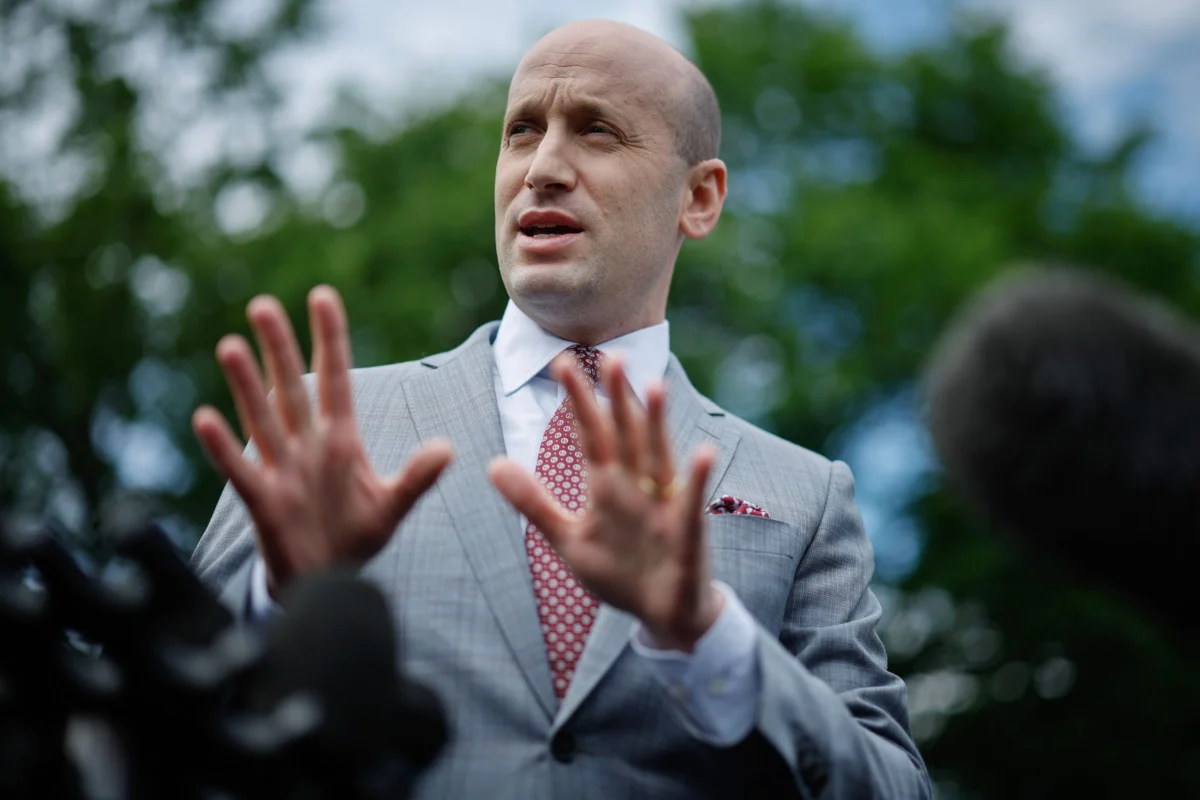
Last week, President Donald Trump officially appointed Stephen Miller, his longtime senior advisor and the principal architect of the administration’s highly controversial immigration policies, as his new White House Chief of Staff. This significant promotion elevates Miller, previously holding titles such as Deputy Chief of Staff for Policy and Homeland Security Adviser, to one of the most powerful unelected positions in the U.S. government, particularly notable in the wake of midterm elections that saw Democrats gain control of both the Senate and the House of Representatives. His new role is poised to be pivotal in shaping the White House’s agenda and strategy for the remaining two years of the administration, especially as it navigates a newly divided Congress.
A Controversial Ascendant: Miller’s Trajectory
Stephen Miller’s ascent to Chief of Staff marks the culmination of a political career characterized by a consistent and hardline conservative ideology, particularly on immigration. Before joining the Trump campaign in 2016, Miller served as communications director for then-Senator Jeff Sessions, where he was instrumental in shaping Sessions’s tough stance on immigration. His influence expanded dramatically upon joining the Trump campaign, where he quickly became a key policy advisor and speechwriter, crafting the "America First" nationalist rhetoric that defined much of Trump’s political appeal.
During the first Trump administration, Miller was widely recognized as the driving force behind many of the administration’s most contentious immigration policies. These included the "travel ban" targeting several Muslim-majority countries, the "zero tolerance" policy at the U southern border that led to family separations, and the "Remain in Mexico" policy (officially the Migrant Protection Protocols), which required asylum seekers to wait in Mexico while their cases proceeded. These policies garnered widespread criticism from human rights organizations, international bodies, and Democratic lawmakers, and faced numerous legal challenges. For instance, the American Civil Liberties Union (ACLU) reported that thousands of children were separated from their parents under the "zero tolerance" policy, leading to lasting psychological trauma documented by medical professionals. Public opinion polls consistently showed a majority of Americans disapproving of policies like family separation, with a 2018 Associated Press-NORC Center for Public Affairs Research poll finding 66% of Americans opposed to the practice.
White House spokesperson Lauren Bis, in a statement following Miller’s appointment, lauded his contributions. "Stephen Miller has been a key player in delivering on President Trump’s America First agenda including spearheading the administration’s crime crackdown including in D.C. and Memphis, record-setting deregulation, unleashing American energy, dismantling drug cartels, and securing our border," Bis stated. "In his new role, he will continue to deliver historic successes for the American people." This official endorsement underscores the administration’s view of Miller as an effective and indispensable executor of its core policy priorities.
The Political Climate: Post-Midterm Shift
Miller’s promotion comes at a critical juncture for the Trump administration. The recent midterm elections delivered a significant blow to the Republican Party, with Democrats securing majorities in both the Senate and the House of Representatives. This outcome fundamentally alters the political landscape, moving from a period of Republican trifecta control to one of divided government. The Democratic takeover of Congress means that the administration will face increased scrutiny, legislative opposition, and potential investigations into its policies and actions.
In this new environment, the role of Chief of Staff becomes even more crucial. The Chief of Staff is responsible for managing the White House staff, controlling access to the President, and orchestrating the administration’s legislative and policy agenda. With a hostile Congress, the Chief of Staff will be instrumental in developing strategies to advance the President’s priorities, often through executive action, and to counter congressional oversight and legislative initiatives. This shift in power suggests that President Trump is consolidating his inner circle around his most trusted and ideologically aligned advisors as he prepares for a potentially combative two years.
Expert Insight: Unpacking Miller’s Ideology
To understand the potential implications of Miller’s new role, many observers turn to those who have closely studied his background and ideology. Journalist Jean Guerrero, author of the 2020 biography Hatemonger: Stephen Miller, Donald Trump, and the White Nationalist Agenda, offers unique insights into Miller’s motivations and potential future actions. Guerrero, who grew up in the same Southern California milieu as Miller—a diverse, largely liberal environment—became fascinated by how a man whose family immigrated to the U.S. fleeing antisemitic pogroms could become such a staunch proponent of anti-immigrant policies and align himself with white supremacist views.
- Miller’s Enduring Influence and Ambition
Guerrero notes that Miller has always wielded a "disproportionate amount of power" within Trump’s orbit, consistently expanding the scope of any role he has held. "He’s been so instrumental in so much of what Trump has done, starting from the first campaign to today," Guerrero explained. "Regardless of the role that Stephen Miller’s had, he always somehow turns that role into something more than it has been historically." His appointment as Chief of Staff, while the most powerful position he has occupied, was not surprising to Guerrero. She suspected it was coming, viewing him as "the most effective sycophant in Trump’s orbit, and has been his longest-lasting and most trusted adviser." This assessment suggests Miller’s promotion is a reward for unwavering loyalty and perceived effectiveness in advancing the President’s agenda.
- Strategic Timing and Public Perception
The timing of Miller’s appointment, just days after a challenging midterm election for Republicans, raises questions about the administration’s strategic thinking. Guerrero suggests that President Trump is likely hoping Miller can "somehow get him out of this mess" by employing familiar tactics. "In the past, when he has been in trouble, he has turned to Stephen Miller and his expertise on anti-immigrant scapegoating to distract people and rally his base, and it has worked," she observed. However, Guerrero expresses skepticism about the efficacy of this strategy moving forward. "I suspect that this time it’s not going to work, because the American people are so horrified by where Stephen Miller has already taken this war on immigrants." This sentiment reflects a growing public awareness and disapproval of the more extreme elements of the administration’s immigration policies, as evidenced by declining approval ratings for such measures.
Anticipated Policy Trajectories: A Double Down?
With Miller now at the helm of the White House staff, the focus shifts to what his promotion portends for future policy. Guerrero anticipates a definite "double down" on the hardline approach, rather than a moderation. "He’s always been driven by a desire to inflame and antagonize and horrify, from the time that he was a teenager to today," she stated.
Guerrero predicts a potential shift in the "performative nature of the cruelty," moving from overtly violent acts by agencies like ICE, which have proven unpopular, towards a more insidious targeting of "citizen allies" of immigrants and social justice advocates. "I think that is the war that Stephen Miller has been dying to fight for a very long time," she suggested. This could involve characterizing individuals and groups fighting for marginalized communities as "domestic terrorists," thereby attempting to delegitimize their efforts and silence dissent.
Furthermore, Guerrero anticipates this strategy will involve collaboration with "surveillance companies and the tech billionaires that he and Trump have decided to align themselves with." This alliance could lead to increased attacks on the rights to privacy and free speech, leveraging technology to monitor and suppress opposition. Miller’s long-standing pursuit of "creative ways to target and terrorize and torture the communities that he despises," including immigrants and their allies, suggests a future where digital surveillance and legal pressure become primary tools of enforcement.
Guerrero also highlights Miller’s historical influence from the white supremacist, dystopian French novel The Camp of the Saints. This book, which she describes as illuminating, casts brown immigrants approaching by boat as an existential threat to "white civilization" and portrays their citizen allies as villains. This ideological blueprint, if applied, could profoundly shape the administration’s rhetoric and policy, reinforcing a narrative of existential threat and justifying extreme measures against both immigrants and those who support them.
An Evolving Understanding: From White Nationalist to Class Supremacist
Guerrero’s understanding of Stephen Miller has evolved since writing her biography during the first Trump administration. Initially, she viewed him "fundamentally as a white nationalist," but now sees him "more as a class supremacist and as a case study in oligarchic capture." This re-evaluation stems from observing the administration’s foreign policy decisions, such as interference in Venezuela or Honduran elections, which paradoxically contribute to the instability and migration flows that Miller’s domestic policies aim to combat.
Miller’s candid statement to CNN’s Jake Tapper—"You can talk all you want about international niceties and everything else. But we live in a world, in the real world, Jake, that is governed by strength, that is governed by force, that is governed by power"—provided a crucial clue for Guerrero. She connected this worldview to Miller’s documented past behavior, such as demanding custodial staff pick up his trash in high school and college, and protesting any requests to clean up after himself. "When he was a teenager, he was really motivated by a desire to keep everybody in what he saw as their place," Guerrero explained. "He didn’t mind having immigrants around so long as they stayed ‘in their place,’ where they were quietly serving him and picking up the trash that he was throwing on the floor or leaving on the cafeteria tables." This pattern, she concluded, revealed a foundational hatred for "poor people" and those "less well-off than him, because he thought they were inferior to him."
This reinterpretation suggests that Miller’s anti-immigrant stance is not solely driven by racial animus but by a deeper class-based prejudice. By criminalizing and marginalizing one sector of the population, it makes it impossible for them to "link arms with other workers to demand to live with dignity." In this framework, the "war on immigrants" serves as a distraction from the broader objective: to create a "servant class, not a working class," thereby consolidating power and wealth at the top. This analysis provides a more complex lens through which to view the administration’s actions, suggesting a systematic effort to maintain social hierarchies.
Reactions Across the Spectrum
Miller’s appointment has been met with a predictable range of reactions. From the White House, the move is framed as a strategic consolidation of power, ensuring loyalty and aggressive pursuit of the "America First" agenda. Many Republican allies of the President are likely to view it as a reaffirmation of the administration’s commitment to its base and its core promises. However, some more moderate Republicans, especially those who faced electoral setbacks in the midterms, might privately express concerns that doubling down on highly polarizing policies could further alienate crucial swing voters.
Conversely, Democrats and civil rights organizations have swiftly condemned the appointment. Democratic leaders are expected to interpret Miller’s promotion as a clear signal of continued hostility towards immigration and a hardening of executive branch policies, potentially leading to increased legislative gridlock. Advocacy groups, such as the ACLU and the Southern Poverty Law Center (SPLC), are anticipated to issue strong warnings about human rights abuses and to redouble their efforts to challenge administration policies in court and through public advocacy. They will likely emphasize the need for robust congressional oversight, given the new Democratic majority, to scrutinize Miller’s actions and limit the scope of executive power. International bodies, such as the United Nations Human Rights Office, may also voice concerns if future policies are perceived to violate international human rights norms.
Broader Implications: Governance in a Divided Era
Stephen Miller’s elevation to Chief of Staff in a divided government carries profound implications for the remainder of President Trump’s term. His known propensity for aggressive executive action and his foundational role in controversial policies suggest that the administration is preparing for a period of intense policy battles and continued reliance on presidential power to circumvent congressional opposition.
The legislative agenda is likely to face severe gridlock, as a Democratic-controlled Congress will almost certainly resist initiatives aligned with Miller’s hardline views. This could push the administration to pursue more executive orders, regulations, and administrative actions, leading to an increase in legal challenges and protracted court battles. The judiciary, therefore, will continue to play a crucial role as a check on executive power.
Moreover, Miller’s prominent position is expected to further exacerbate political polarization. His ideology and past actions are deeply divisive, and his appointment will likely galvanize both supporters and opponents, making bipartisan cooperation on key issues even more challenging. The "war" against perceived "citizen allies" of immigrants, as predicted by Guerrero, could also lead to a chilling effect on free speech and advocacy, with potential implications for civil liberties.
In essence, Stephen Miller’s new role as Chief of Staff signals an uncompromising stance from the Trump administration. It suggests a strategic decision to maintain an aggressive, nationalist agenda, particularly on immigration, even in the face of a newly empowered opposition in Congress. The coming two years are poised to be defined by intense political confrontation, legal challenges, and a continued focus on the cultural and ideological battles that have characterized the Trump presidency.