Jia Lissa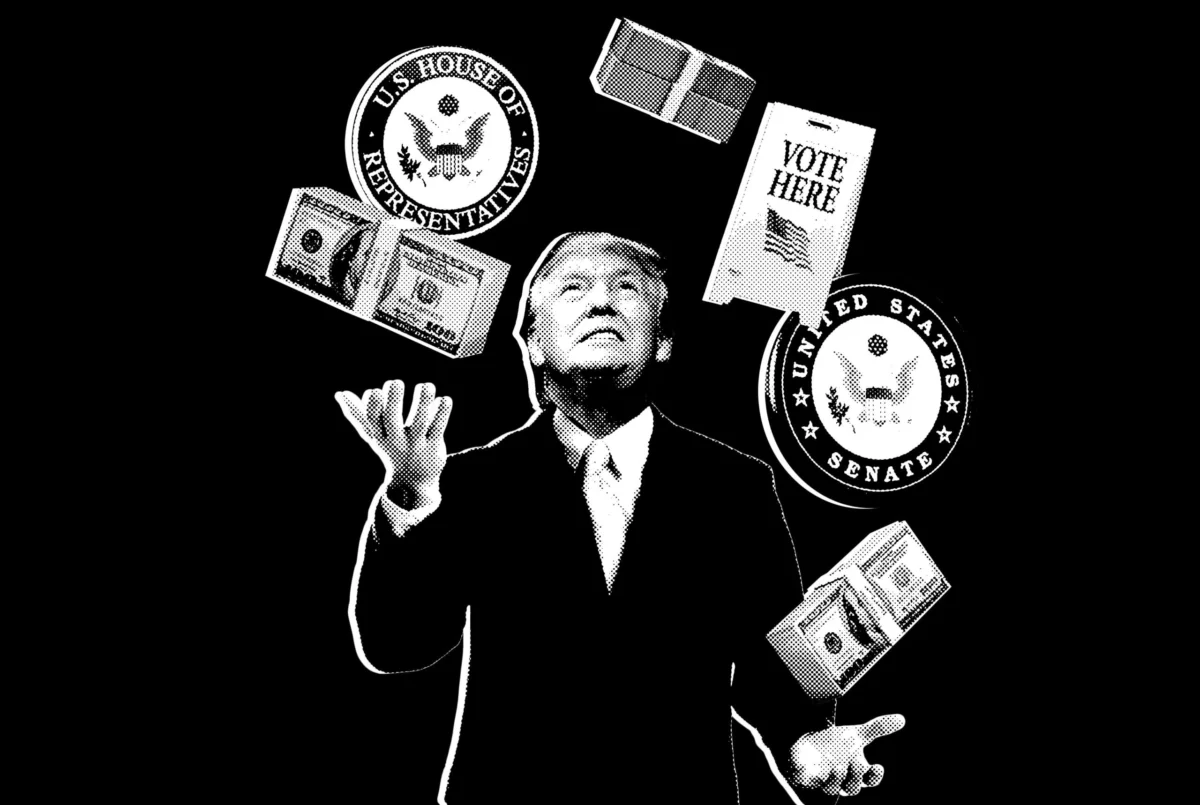
The Trump White House has reportedly reached a sobering conclusion regarding the upcoming midterm elections: the path to retaining control of the House of Representatives is all but closed. Consequently, administration aides have redirected their strategic focus, intensifying efforts to preserve the Republican majority in the Senate, a chamber deemed more salvageable despite its own formidable challenges. This significant strategic pivot, confirmed by multiple sources familiar with recent discussions between White House officials and GOP group leaders, marks a critical turning point in the final weeks of a volatile election cycle.
The shift comes as the White House enters a distinct damage-control phase, a reaction to the unprecedented realization earlier this month that Republicans faced the real prospect of losing both chambers of Congress. This scenario, initially unthinkable to many within the party, has now spurred a frantic reprioritization of resources and messaging, particularly in light of persistent economic anxieties and a challenging political landscape.
The Fading Hope for the House: A Strategic Retreat
For months, Republican strategists harbored ambitions of not only holding the House but potentially expanding their majority. Early projections identified a slate of Democratic-held districts as vulnerable, offering targets to offset anticipated losses elsewhere. However, these aspirations have now largely evaporated. Internal assessments and public polling have painted an increasingly bleak picture, leading to a stark re-evaluation of winnable races.
Concrete evidence of this retreat emerged through the actions of major Republican campaign committees. The Congressional Leadership Fund (CLF), the super PAC closely associated with Speaker Mike Johnson, has initiated a series of significant ad pullbacks. Once-promising Democratic districts in Michigan and Ohio, where the GOP had hoped to flip seats, have seen advertising campaigns halted. Furthermore, the CLF has ceased ad buys in Nebraska for the Republican-held seat being vacated by the retiring Don Bacon, signaling a concession of even ostensibly safe territory. More critically, the fund has also canceled remaining ad reservations in two House races where incumbent Republicans in New Jersey and Iowa were seeking reelection, indicating a withdrawal of support from their own members in competitive contests. These decisions underscore a stark reality: resources are being concentrated on fewer, more viable races, even if it means abandoning previously targeted or even incumbent-held seats.
The decision to concede the House, while painful, reflects a pragmatic assessment of the political headwinds. Historical precedent heavily favors the opposition party in midterm elections, particularly when a president’s approval ratings are low. With the sitting president’s popularity consistently registering among the worst on record, the traditional "six-year itch" or "midterm penalty" effect appears to be amplified. National sentiment, driven by a complex interplay of economic concerns, foreign policy anxieties, and domestic issues, has increasingly tilted against the party in power.
The Senate as the Last Stand: A Calculated Defense
With the House now largely considered a lost cause, the Republican Party’s collective gaze has firmly fixed on the Senate. While also facing significant challenges, White House aides and GOP strategists view the Senate majority as still "in play," albeit problematic. This assessment is bolstered by specific data points, particularly strong early returns for mail ballots in key battleground states. These early voting figures, reportedly comparable to those seen in the 2024 presidential election, suggest a resilient base turnout in critical Senate contests, offering a glimmer of hope that the traditional midterm enthusiasm gap might be mitigated.
Internal discussions within MAGA Inc., a prominent pro-Trump political action committee, have coalesced around the concept of a "firewall" strategy for the Senate. This strategy identifies specific states – Alaska, Iowa, and Ohio – where a combination of victories could significantly complicate the Democratic Party’s path to seizing control of the upper chamber.
In Alaska, incumbent Republican Senator Dan Sullivan has found himself in a unexpectedly tight race against Democrat Mary Peltola. Trump’s recent visit to Wasilla, a symbolic location given its association with former Vice Presidential nominee Sarah Palin, aimed to energize the Republican base and provide a crucial boost to Sullivan, whose polling numbers have shown him trailing.
Ohio presents another critical battleground. Democratic candidate Sherrod Brown, a long-serving incumbent known for his populist appeal, has consistently polled ahead of Republican Jon Husted. Husted’s campaign has faced headwinds, including negative advertising that has sought to brand him as "the face of data centers," a narrative that may resonate negatively with voters concerned about economic shifts and local development. Trump’s presence on the campaign trail in Ohio at the start of the week was a direct intervention aimed at shoring up Husted’s position and mobilizing the conservative base.
Iowa, too, is central to the firewall strategy. While Republican candidate Ashley Hinson is on the ballot, the state has seen an interesting dynamic unfold. Hinson has notably begun to distance herself from the president on certain issues, particularly calling for measures to help end the ongoing "Iran war." This divergence highlights the delicate balancing act many Republican candidates face: appealing to the Trump base while also trying to broaden their appeal to more moderate or swing voters who may be fatigued by political polarization.
However, even the Senate strategy is not without its concessions. White House officials appear to have privately conceded the North Carolina Senate race, a significant retreat given the state’s historical importance in national elections. This conclusion is underscored by the Senate Republicans’ campaign arm pausing ad spending in North Carolina since the beginning of October, a move mirrored by other influential outside groups. The state of play in North Carolina, where Michael Whatley, a former Republican National Committee chair, is on the ballot, would have been considered unthinkable just a few months prior, illustrating the depth of the Republican Party’s challenges.
The Torrid Political Climate: Economic Headwinds and Voter Frustration
The broader political climate for Republicans heading into the final stretch of the midterm cycle is described as "torrid," and appears to be worsening week by week. A primary driver of voter dissatisfaction is the persistent issue of high gas and living prices, which remain "sticky" in voters’ minds. This economic malaise is directly attributed, in part, to the ongoing "Iran war," a conflict whose geopolitical repercussions have reverberated through global energy markets, contributing to inflationary pressures at home.
The conflict in Iran, while geographically distant for many American voters, has a tangible impact on their daily lives. Disruptions to oil supply, heightened shipping costs, and increased geopolitical instability often translate into higher prices at the pump and for everyday goods. For an electorate already grappling with inflation and economic uncertainty, the perception of an expensive and prolonged foreign engagement adds another layer of frustration. This confluence of domestic economic hardship and international conflict creates a particularly challenging environment for the incumbent party, making it difficult to shift public sentiment.
Beyond the economic sphere, the Republican Party faces the challenge of a highly polarized electorate. While the party’s base remains energized, there is little evidence of significant movement among crucial swing voters towards Republican candidates. Polling models and prediction markets consistently reflect this trend, indicating that undecided voters are not breaking for the GOP in sufficient numbers to alter the overall trajectory of the elections.
Trump’s Midterm Blitz: A Test of Enduring Influence
With just 20 days remaining until the election, Trump officials are laser-focused on one primary objective: maximizing turnout from the deeply loyal MAGA base in November. This strategy explicitly eschews efforts to court swing voters, a segment of the electorate that polls consistently show is not breaking for Republicans. This "base-first" approach relies heavily on the president’s unique ability to galvanize his most ardent supporters.
The effort has manifested in a direct, high-intensity voter outreach play, with President Trump embarking on a rigorous schedule of crisscrossing the country. His itinerary includes rallies in states like Ohio, Alaska, Arizona, and Kentucky – locations where Republican candidates face stiff competition or where the party seeks to reinforce its base. On Tuesday, following his Ohio appearance, the president flew to Wasilla, Alaska, to campaign for Senator Dan Sullivan. Later in the week, after stumping in Arizona and Kentucky, Trump is scheduled to host a high-stakes $1 million-per-plate fundraiser dinner for MAGA Inc. at his Mar-a-Lago club, an event crucial for replenishing a war chest that is being rapidly depleted in the final sprint.
A person familiar with his thinking confirms that Trump remains steadfast in his belief that he can single-handedly drive his supporters to the polls, a conviction forged by his successful presidential campaigns in 2016 and 2024. He views his direct engagement with the base as the most potent tool in the Republican arsenal, capable of defying conventional midterm trends.
However, this strategy is not without its complications. Despite his unwavering confidence, Trump’s personal approval ratings continue to be among the worst on record for any president, a fact that can prove to be a double-edged sword. While his rallies electrify his base, they can also alienate moderate voters and, in some instances, even prove unwelcome to certain Republican candidates. A notable example is Iowa’s Ashley Hinson, who has recently begun to publicly buck the president, particularly on foreign policy, and has not hosted him for a rally. This indicates a growing recognition among some Republican candidates that aligning too closely with a historically unpopular president might be detrimental in their specific races. The internal dynamics within the Republican Party, particularly the tension between unwavering loyalty to Trump and the pragmatic need to appeal to a broader electorate, are becoming increasingly apparent as election day approaches.
Official Responses and Underlying Tensions
Amidst the strategic recalibration, official statements from Republican leadership maintain a veneer of confidence. Liz Huston, a White House spokesperson, affirmed, "President Trump is committed to maintaining Republican majorities in both the House and Senate." Similarly, Republican National Committee spokesperson Natalie Baldassare stated, "Republicans remain laser focused on winning and protecting and expanding President Trump’s majorities. We’re thinking outside the box to fight the typical midterm precedent."
These statements, while projecting resolve, subtly acknowledge the extraordinary challenges facing the party. The phrase "thinking outside the box to fight the typical midterm precedent" is an implicit admission that the party recognizes the unfavorable historical context and the need for unconventional strategies to overcome it. The direct voter outreach play, focusing exclusively on the base, is precisely one such "outside the box" approach, designed to counteract the traditional enthusiasm gap that often afflicts the president’s party in midterms.
However, the internal discussions and strategic shifts reported by sources paint a more nuanced picture than the public pronouncements. The cancellation of ad buys, the concession of specific races, and the laser-like focus on the Senate demonstrate a deep-seated concern that extends beyond mere strategic adjustments. It reflects a grim reality for the Republican Party: the national political environment is overwhelmingly unfavorable, and the party is now fighting a defensive battle to mitigate what many fear could be significant losses.
Broader Implications and a Pivotal Juncture
The implications of these developments are far-reaching, potentially reshaping the political landscape for years to come. A Democratic takeover of the House would immediately install Speaker Hakeem Jeffries, fundamentally altering the legislative agenda. Key legislative priorities for the Biden administration, currently stalled by Republican opposition, could be revived. Conversely, a Republican-controlled Senate, even with a Democratic House, would still provide a crucial check on presidential appointments and judicial nominees, maintaining a degree of leverage for the GOP.
For President Trump, the outcome of these midterms will be a critical test of his enduring influence within the Republican Party and on the broader electorate. A significant loss of either chamber would undoubtedly spark internal recriminations and raise questions about the efficacy of his "base-only" strategy and his role as the party’s de facto leader. Conversely, a strong performance, particularly in the Senate, could bolster his claims of kingmaker status and reinforce his grip on the party apparatus.
The Republican Party stands at a pivotal juncture. The strategic retreat from the House, coupled with the all-out defense of the Senate, marks a moment of profound introspection and adaptation. With just over two weeks remaining, the outcome of this high-stakes election will not only determine the balance of power in Washington but also offer a potent indicator of the nation’s political trajectory and the future of American partisan politics.