Jia Lissa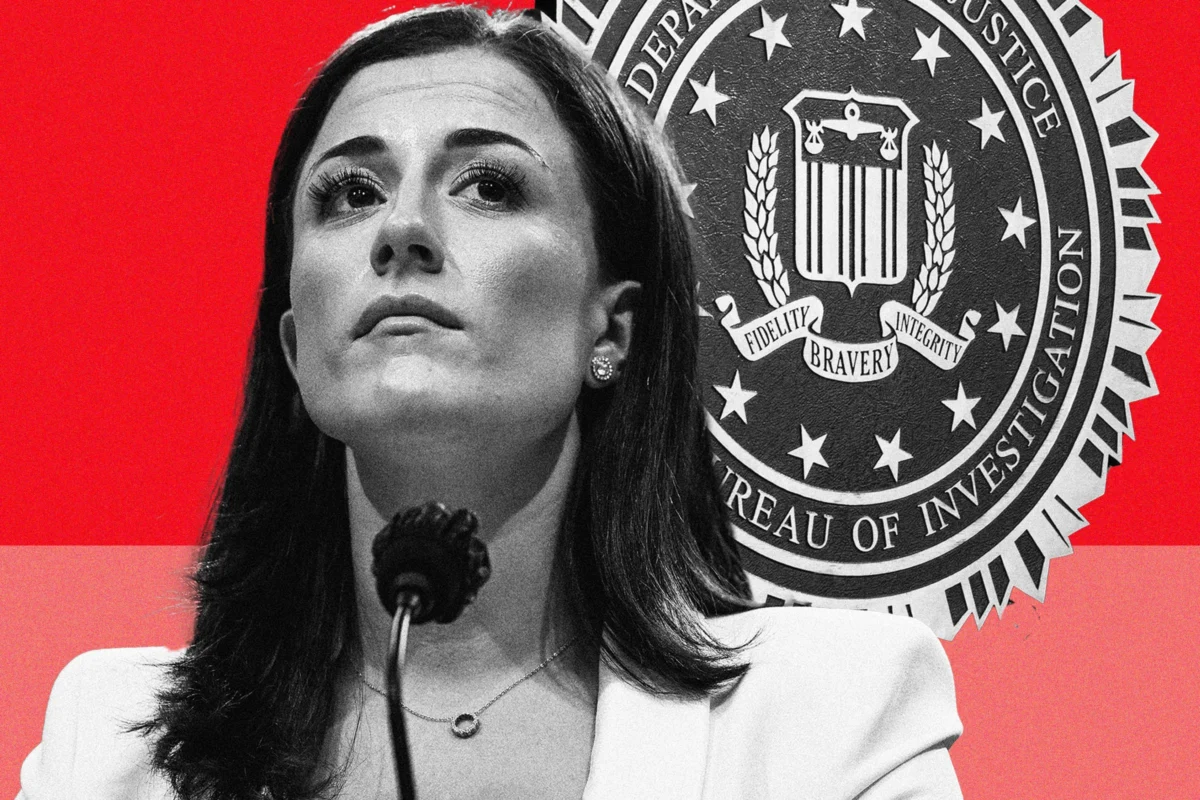
Federal prosecutors are actively considering a significant perjury and obstruction-of-justice case against Cassidy Hutchinson, the former White House aide whose dramatic testimony provided some of the most memorable and controversial moments during the congressional investigation into the January 6, 2021, Capitol riot. This development, confirmed by two sources with direct knowledge of the ongoing deliberations, signals a serious intent by the Justice Department to scrutinize the veracity of statements made by a central figure in the post-insurrection narrative. While the Justice Department has advanced its efforts, sources indicate that prosecutors are not anticipated to present an indictment to a federal grand jury in Washington until at least after the upcoming midterm elections, a timeline that could carry political implications for the high-profile case.
Hutchinson’s Pivotal Role in the January 6 Investigation
Cassidy Hutchinson, then a 25-year-old special assistant to President Donald Trump and aide to White House chief of staff Mark Meadows, emerged as a star witness for the House Select Committee investigating the attack on the U.S. Capitol. Her public testimony in June 2022 captivated a national audience, offering an unprecedented, insider’s view of the chaotic final weeks and hours of the Trump administration. She recounted a series of alarming events and conversations, painting a vivid picture of a president seemingly unconcerned by the violence unfolding and actively encouraging his supporters to march to the Capitol, even after being informed that many were armed.
Among her most explosive claims was an account of President Trump’s alleged physical altercation with a Secret Service agent on January 6. Hutchinson testified that she heard Trump became enraged and "lunged" at his Secret Service detail in the presidential limousine, nicknamed "the Beast," after being told he could not join his supporters at the Capitol. She also detailed her recollection of Trump’s awareness of the potential for violence, stating that Meadows had informed her of concerns about weapons among the crowd. Her testimony, delivered with a calm demeanor under oath, instantly became a cornerstone of the committee’s narrative, shaping public perception of Trump’s actions and culpability.
In addition to the public hearing, Hutchinson participated in several closed-door interviews with the House Select Committee, providing extensive details that formed a critical part of the committee’s final report. Her willingness to testify, despite potential political and personal repercussions, positioned her as a symbol of courage for some, while others questioned her credibility. She subsequently published a memoir in 2023 titled Enough, further detailing her experiences within the Trump administration and during the tumultuous period surrounding January 6. Since the book’s release, Hutchinson, now 29, has largely maintained a low profile, refraining from extensive public appearances.
DOJ’s Scrutiny: Discrepancies and Lack of Corroboration
The Justice Department’s current investigation into Hutchinson stems from significant discrepancies that have surfaced when comparing her various accounts, particularly those given to the House Select Committee versus those provided to the Special Counsel, Jack Smith, who was appointed to investigate matters related to January 6 and the handling of classified documents. Prosecutors have been meticulously comparing transcripts from Hutchinson’s multiple interviews with the House committee against her statements to Smith’s team, aiming to identify material inconsistencies that could form the basis of a perjury case.
A key point of focus for prosecutors has been the fact that much of Hutchinson’s more sensational testimony, especially regarding the alleged limousine incident, has not been corroborated by other sources investigated by Special Counsel Jack Smith. The U.S. Secret Service, whose agents would have been directly involved in such an altercation, has repeatedly and publicly denied that any such physical confrontation occurred. These denials directly contradict Hutchinson’s account and raise serious questions about the accuracy of her statements under oath. The absence of corroborating testimony from other individuals present or involved in the events she described has further fueled the DOJ’s inquiry.
Another specific claim drawing prosecutorial interest involves a notecard. Hutchinson testified that she personally penned a statement for President Trump to release during the Capitol riot, urging his supporters to leave. However, this claim has been directly disputed by Eric Herschmann, a former Trump White House counsel. Herschmann has publicly stated that he was the one who wrote the note, not Hutchinson, creating another direct contradiction regarding a factual detail of the events of January 6. Such a dispute, if deemed a material falsehood made knowingly, could contribute to a perjury charge.
The High Bar for Perjury and Obstruction Charges
Successfully prosecuting perjury and obstruction of justice charges presents a significant legal challenge, as acknowledged by some Justice Department officials who have expressed skepticism about the viability of a criminal case against Hutchinson. Former U.S. Attorney Joyce Vance, speaking to WIRED, underscored the stringent requirements for a perjury conviction. Prosecutors must prove beyond a reasonable doubt not only that the witness lied, but also that they did so knowingly and that the falsehood materially impacted the investigation. This "materiality" element is crucial; a minor inaccuracy or a lapse in memory, while undesirable, typically does not meet the standard for perjury unless it significantly altered the course or conclusions of an investigation.
Obstruction of justice charges, similarly, require demonstrating intent to impede, influence, or obstruct an official proceeding. If Hutchinson’s alleged misstatements or changes in testimony are interpreted as an attempt to mislead investigators or the public, rather than simply a recollection error, they could potentially fall under this umbrella. However, proving this specific intent beyond a reasonable doubt adds another layer of complexity to the prosecution’s task. The difficulty in meeting this high legal bar is a primary reason why perjury charges, despite being frequently alleged, are not always pursued or successfully prosecuted.
Unorthodox Referral and Political Undercurrents
The grand jury investigation into Cassidy Hutchinson did not originate in the typical fashion for cases involving potential false testimony to Congress. Instead, it became a priority for the Justice Department following a criminal referral by Representative Barry Loudermilk, a Georgia Republican. Loudermilk has been a vocal and long-standing critic of the January 6th House Select Committee, often disputing its findings and the narratives presented by its witnesses. He had previously sought to depose Hutchinson himself but was reportedly blocked by House Speaker Mike Johnson, who expressed concerns that such a deposition could inadvertently surface damaging text messages of a sexual nature between Hutchinson and various lawmakers.
Adding another unusual layer to the unfolding situation, Loudermilk’s criminal referral was assigned to the Civil Rights Division at the Justice Department. This is a highly unorthodox move, as cases involving alleged perjury or public corruption typically fall under the jurisdiction of the U.S. Attorney for the District of Columbia or the Criminal Division. The Civil Rights Division’s mandate, under Justice Department guidelines, is to pursue cases with a clear nexus to a civil rights violation.
The leadership of the Civil Rights Division also introduces a political dimension. It is currently led by Harmeet Dhillon, a prominent Trump loyalist and a reliable advocate for the Trump administration’s prosecutorial agenda. Critics suggest that assigning the case to this division, particularly given its leader’s political leanings, could be interpreted as an attempt to target a perceived political adversary of former President Trump, rather than a straightforward application of legal protocols. This raises questions about the motivations behind the referral’s placement and the potential for politicization of a sensitive legal matter.
Broader Implications and Political Landscape
The investigation into Cassidy Hutchinson unfolds within a broader political context marked by intense partisan divisions and ongoing legal battles stemming from the January 6 Capitol riot. This grand jury investigation is seen by some as the latest example of the Justice Department pursuing criminal cases against individuals perceived as political enemies of Donald Trump. Sources familiar with the matter have previously indicated that Trump, during his presidency, exerted pressure on the Justice Department to initiate such cases, even firing former U.S. Attorney General Pam Bondi in part for moving too slowly to bring what he considered politically motivated prosecutions.
The timing of a potential indictment, explicitly stated as "after the midterm elections," could also be politically calculated. Such a high-profile indictment before a significant election could be perceived as interfering with the political process or unduly influencing public opinion. Delaying it, however, does not diminish its potential impact.
The implications of this case extend beyond Hutchinson herself. For those who view her as a whistleblower, a prosecution could be seen as a deterrent to future government employees coming forward with information about alleged wrongdoing. It could create a "chilling effect" on potential witnesses, making them hesitant to cooperate with congressional investigations for fear of facing legal repercussions if their testimony is later challenged. Conversely, if discrepancies in her testimony are indeed found to be intentional falsehoods, a prosecution could be framed as upholding the integrity of the justice system and the importance of truthful testimony under oath, regardless of the witness’s political alignment or perceived heroism.
The Justice Department has not responded to requests for comment on the ongoing investigation, nor have Hutchinson or her lawyer provided statements to inquiries. The initial report regarding the Justice Department’s interest in charging Hutchinson was first published by Punchbowl News. As the investigation continues, the legal and political communities will be watching closely to see whether prosecutors ultimately decide to pursue charges, and what precedent such a decision might set for future high-stakes congressional testimony. The outcome of this case could significantly impact the narrative surrounding January 6, the role of former White House aides, and the delicate balance between political accountability and legal veracity.