admin
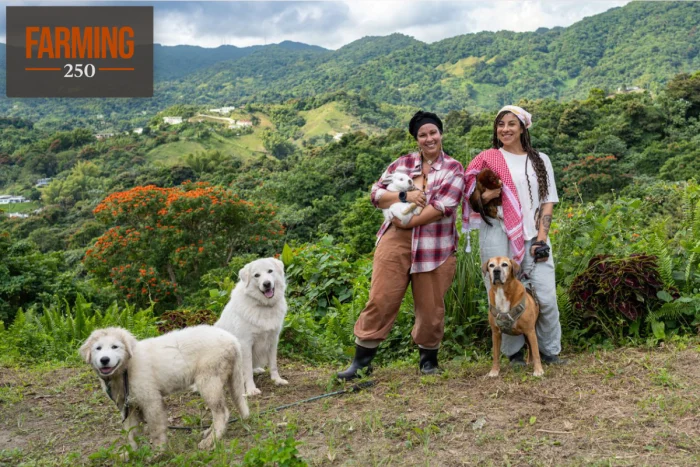
A transformative movement is taking root across Puerto Rico, as an increasing number of food and farming operations collaborate to deliver healthy, locally grown food directly to their communities. This burgeoning network of direct-to-consumer models offers a vital alternative in an island economy heavily reliant on imports, seeking to enhance food accessibility, affordability, and ultimately, sovereignty. From bustling monthly markets to innovative honor-system stores and curated farm box programs, these initiatives are not merely transactional points but powerful engines for community building, economic resilience, and a profound reclamation of cultural heritage.
Puerto Rico’s Precarious Food System: A Legacy of Imports
Puerto Rico faces a critical challenge in its food system, with more than 80 percent of its food currently imported. This staggering dependency leaves the island highly vulnerable to global supply chain disruptions, escalating prices, and the devastating impacts of climate change. The economic burden is immense, as significant capital flows out of the local economy to pay for imported goods. This situation exacerbates an already dire reality where over 40 percent of Puerto Ricans live below the poverty line, and a similar percentage rely on the Nutrition Assistance Program (PAN) benefits to feed their families. Data from a 2025 Taller Salud survey highlighted significant economic and geographic barriers to accessing healthy food, noting that only 20 percent of participants purchased food from fruit and vegetable stands, compared to 93 percent from supermarkets. Despite these challenges, a 2026 consumer insights study indicated a growing interest among Puerto Ricans in the quality of fresh fruits and vegetables when making grocery choices, even as the cost of living continues to soar, forcing families to tighten their belts.

The roots of this dependency run deep, tracing back to mid-20th-century policies that fundamentally reshaped Puerto Rico’s economic and agricultural landscape. In the late 1940s, Operation Bootstrap, a joint initiative by Puerto Rico and the U.S. government, aimed to transition the economy from an agricultural base to an industrial one through corporate tax breaks and market-oriented reforms. This shift led to a significant decline in rural jobs, prompting widespread migration from the countryside to urban centers in Puerto Rico and the U.S. mainland. Consequently, the amount of land dedicated to farming steadily decreased, severing traditional ties to agricultural production.
Further altering food consumption patterns, the introduction of the Food Stamp Program (later replaced by PAN) in the 1970s cemented the reliance on external food sources. As one researcher explained, "local food consumption became increasingly disengaged from local agricultural production, as imports and processed foods took over the increased food demand." Katia Avilés-Vázquez, director of the Institute for Agroecology Research and Action in Puerto Rico (IALA), describes this period as a deliberate effort to establish the Caribbean as a "consumption appendage" of the U.S. mainland. She recounts instances where nutritionists and agronomists actively discouraged the consumption of traditional staple foods like breadfruit, falsely claiming they caused parasites, in favor of imported potatoes. School lunch programs, for example, would serve apples—a crop that does not grow in Puerto Rico—further assimilating local tastes to imported produce. Avilés-Vázquez emphasizes, "There’s a huge process of unlearning that type of education we were force fed, literally and figuratively. Our tastes buds, our palettes, were assimilated." This historical trajectory contributed to the decline of vibrant market squares, or plazas de mercado, as consumers increasingly opted for the perceived convenience and savings offered by large retailers.
The vulnerabilities inherent in this import-dependent system were starkly exposed in 2017 with Hurricane Maria. The catastrophic storm wiped out an estimated 80 percent of Puerto Rico’s crop value, crippling local food supplies. Widespread infrastructure damage paralyzed shipping, and prolonged electricity outages led to massive food spoilage in homes and stores alike. The antiquated Jones Act, a maritime shipping law that mandates goods transported between U.S. ports be carried on U.S.-flagged vessels, only briefly waived after Maria, further compounded disaster response efforts, making relief slow and expensive. In the years since, pressures on agricultural land have intensified, with speculators and outside investors increasingly buying up property, threatening the future of local farming.
Grassroots Innovation: Building Direct Food Networks

In the face of these systemic challenges, a constellation of direct-to-consumer initiatives has emerged, demonstrating remarkable resilience and ingenuity. These efforts prioritize direct relationships between producers and consumers, cutting out intermediaries, fostering community, and providing access to fresh, healthy food at fair prices.
Súper Solidario: A Community-Driven Food Cooperative
Launched in late 2020, Súper Solidario exemplifies a community-driven approach to food distribution. Once a month, Marisel Robles arrives at 6 a.m. to set up the market in Caguas, Puerto Rico. Two hours before opening, a line of eager customers already forms, a testament to the market’s popularity and necessity. This local food market offers products from over 15 small-scale local farms, featuring an array of fruits like guanabana, mango, pineapple, and papaya; vegetables, leafy greens, and herbs; and Caribbean tubers such as yautía, batata, and ñame. Locally made coffee, honey, and baked, canned, and dried goods are also available. A unique "solidarity shelf" allows any visitor to select items at no cost, embodying the cooperative’s core ethos.
Robles, a founding member of Súper Solidario, explains, "The idea is for it to be a supermarket where anyone can access good quality food at a reasonable price. For us, the most important solution to hunger is to have a direct network between producers and consumers." The cooperative’s 41 members run the operation, exchanging their labor for access to goods at cost. After market day, a "processing brigade" transforms any leftover produce into items like sofrito or freezes it for fresh juices the following month, minimizing waste. In the past year, Súper Solidario welcomed over 2,000 visitors, with nearly a quarter being first-time customers and over two-thirds utilizing the solidarity shelf. The market also directly purchased 40 different crops from 22 farmers, enabling them to reach consumers without diverting time from their land or incurring losses from unsold goods.
Tiendita Soberana: Empowering Producers and Educating Consumers
The devastating impact of Hurricane Maria in Yabucoa, where it made landfall, spurred Omar García to action. His family had generations of history working the land, and post-Maria, he began planting crops, quickly providing fresh food to his community amidst the crisis. This mutual aid effort laid the groundwork for future initiatives. In 2021, García launched Finca Aurora, focusing on fruits, vegetables, and seed saving. Recognizing the need for a reliable market outlet, he and a small group of producers developed a collective space.

This alternative market, Tiendita Soberana, officially launched in January 2026 in San Lorenzo. Operating from a small storefront, it serves as a fixed location for its eight founding members and a wider network of 16 farms and 17 local makers to sell their goods directly, free from intermediaries. While Tiendita Soberana attracts a diverse clientele, including older adults and a younger generation influenced by the agroecology movement, it faces challenges in making its products accessible to all. García highlights the difficulty of competing with supermarket prices, where a tropical sweet potato (batata) might cost 65 cents a pound, while local producers need to charge $2 to cover their costs. "In Puerto Rico, it’s very difficult to commercialize local products," he states. "It’s very difficult to compete with market prices." The Tiendita also faces hurdles in getting approved to accept PAN benefits, a process complicated by the limitations of existing government programs like Mercados Familiares (launched in 2013), which often exclude small-scale producers due to stringent vendor requirements and logistical issues. Despite these challenges, customers recognize the superior nutritional value and freshness, understanding that the higher price reflects the quality and direct connection to the farmer. García also supplies crops to Súper Solidario and conventional plazas de mercado, demonstrating a collaborative spirit within the emerging local food ecosystem.
Nodo Alimentario: The Honor-System Market of Camposofía
In the central mountains of Utuado, the Nodo Alimentario, an honor-system market, opened its doors in July 2025. This initiative grew out of informal exchanges among families at the Camposofía alternative school, featuring foods from their farms, yards, and kitchens, such as breadfruit, tubers, and banana bread made from homegrown fruit. With support from the Alliance for Agriculture and space from Camposofía, Nodo Alimentario established a physical location with refrigeration, inviting the wider community to participate.
Natalí Gaskins, a mother in the Camposofía community and a Nodo volunteer, praises the market: "It’s an experience of nutrition and access to food at prices and quality you can’t find anywhere else." For Gaskins, the Nodo is a game-changer; her closest supermarket is 50 minutes away, and Costco, her preferred option for organic and bulk items, is over an hour and 20 minutes. The Nodo, however, is just an eight-minute drive. "I’ll never go without eggs again, and they’re always eggs from happy hens," she exclaims. "The Nodo has changed our lives." Between September 2025 and March 2026, the Nodo sold 306 unique products supplied by 28 regular producers and dozens more occasional participants. For producers, the Nodo offers a reliable weekly income and saves invaluable time by eliminating long trips to market, complex logistics, negotiations with intermediaries, or the need to staff a stall all day. The initiative also plays a crucial role in re-educating consumers about local foods, with Gaskins recalling a producer who, seeing a cucumber, asked, "How do you eat that?"
Finca Güakia’s Farm Box Program: Simplicity and Stability
Finca Güakia, an agroecological farm nestled in the mountains of San Lorenzo, champions the slogan: "Eating local can be simple." Marissa Reyes, co-founder of Güakia, which has been producing in San Lorenzo since 2024 (relocating from Dorado), explains, "The campaign seeks to show people that it doesn’t have to be so complicated. Though it may be difficult to find [local food] in the supermarket, if you communicate with farmers, it can be very simple."

In April 2026, Güakia launched its farm box program, distributing fresh fruits, vegetables, and "value-added" products like turmeric salt, pesto, and baked goods, along with items from neighboring producers, to eight to ten clients every two weeks, with plans for expansion. While food box programs are not entirely new to Puerto Rico—the Departamento de la Comida successfully ran a Community Supported Agriculture (CSA) box program from 2010 to 2012, distributing food from about 10 farms to 150 clients weekly—the model has seen renewed traction among agroecological farms, particularly during the Covid-19 pandemic. Reyes observes that while supermarkets generally offer cheaper prices, local agroecological produce tends to maintain more stable prices during global upheavals and inflation, such as recent wars. "For us as small farmers, it’s much more difficult to break in and meet market demand [compared to supermarkets]," she notes. "But we can meet small-scale, regional demand because we’re spread out across the country." Finca Güakia actively collaborates with other initiatives, occasionally supplying Súper Solidario and maintaining a supportive relationship with Tiendita Soberana, aspiring to increase its participation as production grows.
Analysis and Implications: Reshaping Puerto Rico’s Food Future
These direct food networks are more than just market alternatives; they represent a fundamental rethinking of Puerto Rico’s relationship with land, food, and community. Their collective impact extends across economic, social, cultural, and environmental spheres.
Beyond Transaction: The Pillars of a New Food Economy
Economically, these initiatives foster local circulation of wealth by ensuring fairer compensation for farmers, who no longer contend with intermediaries taking a significant cut. This, in turn, can lead to more stable and potentially more affordable prices for consumers in the long run, especially when compared to the volatility of imported goods. Socially and culturally, these networks are vital for rebuilding community ties and reclaiming a lost food heritage. They promote food literacy, encouraging consumers to reconnect with local produce and traditional preparation methods, thereby countering decades of cultural assimilation towards imported diets. The mutual aid spirit, particularly evident in Súper Solidario and the origins of Tiendita Soberana, strengthens community bonds and local self-reliance. Environmentally, the emphasis on agroecological practices, as demonstrated by Finca Güakia and the broader movement, signifies a commitment to sustainable farming, biodiversity, and climate resilience. As Reyes articulates, "Supporting local isn’t just about supporting farmers and eating healthy, but about healing, about cooling the planet. The reality is urgent."

Policy Hurdles and the Call for Systemic Change
Despite their success, these grassroots efforts operate within a challenging policy landscape. The difficulty for small-scale markets to integrate with federal programs like PAN, due to rigid vendor requirements and bureaucratic complexities, limits their reach to a significant portion of the population that needs affordable food the most. Critics argue that the existing federal food aid structure, while providing essential support, inadvertently perpetuates the island’s dependency on the U.S. mainland by channeling funds back into the import economy. The ongoing debate surrounding the Jones Act continues to highlight its role in inflating food prices and hindering rapid, cost-effective disaster relief, further underscoring the need for policy reform.
Advocates for food access and sovereignty within Puerto Rico’s food system consistently call for massive systemic changes. These include improving access to land for local farmers, implementing widespread agroecological practices across the island, and establishing policies that genuinely support small producers rather than inadvertently disadvantaging them. The movement for food sovereignty in Puerto Rico is not merely about alternative markets; it is a political statement, an act of resistance against a colonial food system, and a profound process of unlearning and rebuilding. The growing interest in local food, as evidenced by recent consumer studies and the increasing popularity of these direct networks, suggests a readiness within the population for this shift.
In conclusion, the direct food distribution networks flourishing across Puerto Rico – Súper Solidario, Tiendita Soberana, Nodo Alimentario, and Finca Güakia – are powerful examples of community-led innovation. By fostering direct connections between producers and consumers, these initiatives are not only expanding access to fresh, healthy, and affordable food but also rebuilding local economies, strengthening community bonds, and championing environmentally sustainable practices. They represent a tangible, evolving alternative to a precarious, import-dependent system, offering a resilient pathway toward true food sovereignty for the island. The momentum behind these grassroots efforts underscores a collective commitment to healing the land, nourishing the people, and reclaiming Puerto Rico’s agricultural future.