admin
admin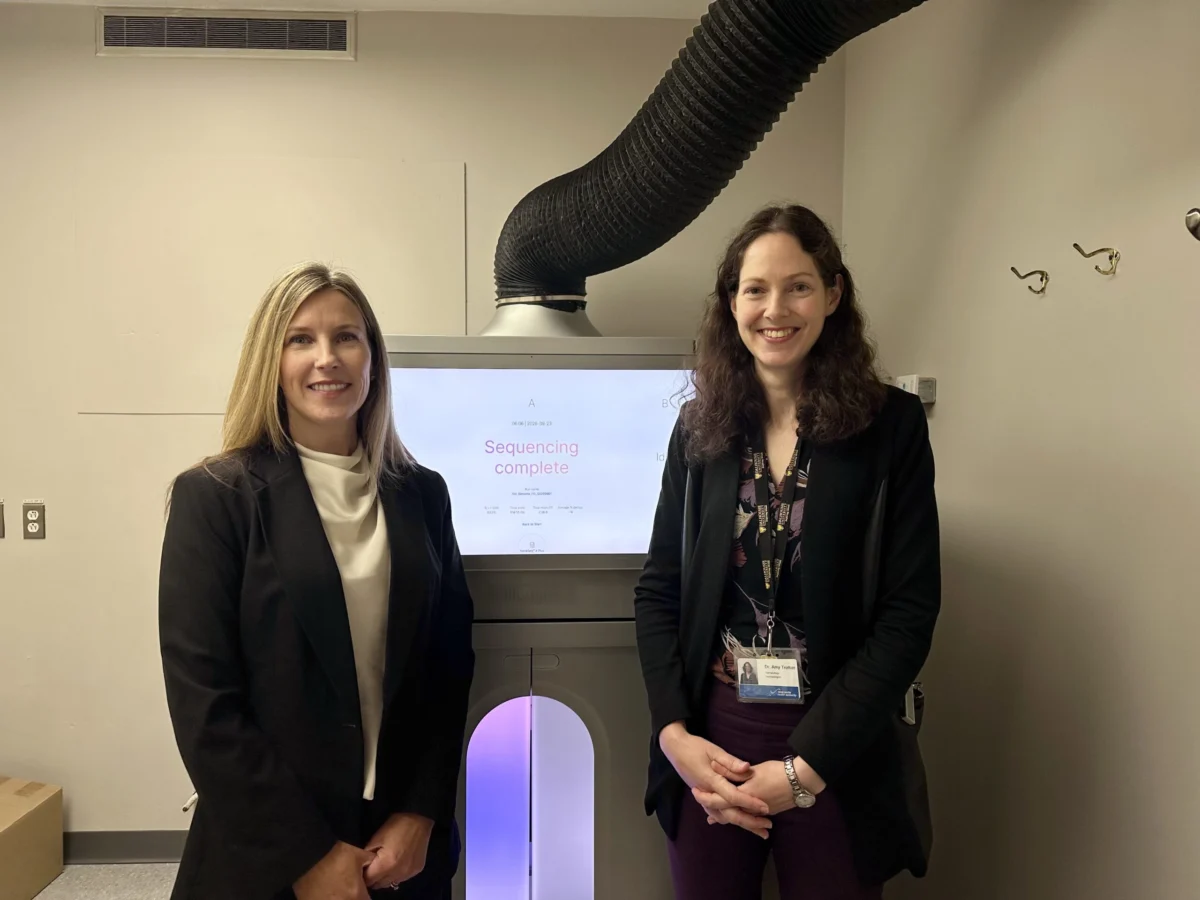
A groundbreaking genetic testing program, developed and spearheaded in the Maritimes, is fundamentally reshaping the landscape of cancer care in Canada by enabling the precise identification and exclusion of stem-cell donors who carry a genetic predisposition to leukemia. This innovative approach, championed by the IWK Maritime Centre for Precision Medicine in Halifax, has proven life-saving for patients like Ryan White, whose harrowing battle with acute myeloid leukemia (AML) underscored the critical need for such advanced diagnostics. The program marks a significant leap forward in personalized medicine, ensuring that bone marrow transplants are not only successful in the short term but also mitigate the risk of disease recurrence stemming from a genetically compromised donor.
The Genesis of a Life-Saving Innovation
The genesis of this transformative program lies in the complex and often challenging journey of individuals facing aggressive blood cancers. Acute myeloid leukemia (AML), a rapidly progressing cancer of the blood and bone marrow, demands swift and often intensive treatment. For many patients, a bone marrow transplant represents the best, and sometimes only, hope for a long-term cure. However, the success of such transplants hinges on a multitude of factors, chief among them the compatibility and health of the donor. Traditionally, donor matching focuses on human leukocyte antigen (HLA) compatibility, a crucial but not exhaustive measure of suitability. The IWK’s program introduces a vital new layer of scrutiny: genetic screening for hereditary myeloid malignancies, which can predispose individuals – including potential donors – to developing leukemia.
This pioneering initiative was developed by Dr. Amy Trottier, a distinguished hematologist, as part of Canada’s inaugural clinical program dedicated to hereditary myeloid malignancies. Her foresight recognized a critical gap in conventional transplant protocols: the potential for a donor, seemingly a perfect HLA match, to harbor a latent genetic risk that could undermine the recipient’s long-term remission. The program’s core objective is to identify these hereditary predispositions not only in patients, guiding their treatment, but crucially in potential donors, thereby preventing the transfer of a genetic liability that could lead to relapse or even donor-derived leukemia in the recipient.
Ryan White’s Ordeal: A Testament to Precision Medicine
The profound impact of this program is perhaps best illustrated through the personal odyssey of Ryan White, a patient whose life was irrevocably altered by its intervention. In 2020, White, then experiencing alarming symptoms of shortness of breath and debilitating low energy, sought medical attention. The subsequent diagnosis was grim: a rare and aggressive form of acute myeloid leukemia, a blood cancer known for its rapid progression if not promptly addressed. "It’s a disease called acute myeloid leukemia, so it’s a blood cancer. It’s (a) very quick progression if it’s not caught in time," White recounted, reflecting on the urgency of his initial diagnosis.

His initial treatment, commencing in May 2020, involved intensive chemotherapy, which successfully induced remission. However, the reprieve was tragically short-lived. By December of the same year, the cancer had returned, casting a dark shadow over the holiday season. "I was home for a few weeks and then found out. It was an unfortunate Christmas present that I came out of remission in December and then had to go back for a second round of testing," White recalled, detailing the devastating news. The relapse necessitated a more aggressive intervention: a bone marrow transplant. "That first trial didn’t work, (so) we went straight to that level three. And they prepared me for a bone marrow transplant, so more chemotherapy and then ultimately leading up into a bone-marrow transplant."
It was during this critical juncture, as White prepared for his life-saving transplant, that the IWK’s hereditary genetic testing program entered his treatment plan. The tests, conducted as part of Dr. Trottier’s groundbreaking initiative, revealed a startling and crucial detail: White possessed a hereditary predisposition for leukemia. This genetic alteration, though not the immediate cause of his initial cancer, explained its aggressive return. "And that was the reason why it came back – because although his leukemia was cured, he still had that genetic change that would just keep making leukemia happen," Dr. Trottier explained, highlighting the insidious nature of such hereditary factors.
The implications of this discovery were immediate and profound, particularly concerning donor selection. White’s own sibling had been identified as a "perfect match" based on standard HLA typing, and was initially slated to be his donor. However, armed with the new genetic information, a critical re-evaluation occurred. "Originally, when he was being worked up for transplant before we actually had this genetic test result back (…) one of his siblings was found to be a perfect match," Dr. Trottier stated. "And they were going to be the planned donor. Fortunately, we got this result back in time." The revelation that White’s sibling also carried the same hereditary predisposition for leukemia meant that using them as a donor would have been catastrophic, potentially reintroducing the very genetic flaw that caused White’s relapse. This pivotal moment underscores the program’s unparalleled value: preventing a transplant that, while initially appearing successful, would have carried a high risk of long-term failure or even secondary leukemia in the recipient.
With this newfound understanding, an alternative, genetically screened donor was identified, and White’s entire treatment regimen was meticulously tailored to his unique genetic profile. "Based on that overall genetic disposition, they were really able to hone down the pathway (for the) types of chemotherapy, how long, how many doses I need," White affirmed, emphasizing the bespoke nature of his revised plan. "And then what the follow-up plan looked like and then ultimately leading into my bone marrow transplant." This personalized approach, guided by cutting-edge genetic insights, not only ensured a safer transplant but also optimized the subsequent chemotherapy and long-term monitoring, significantly improving his chances of sustained remission.
The Broader Impact: Reshaping Canadian Cancer Care
The IWK Maritime Centre for Precision Medicine stands as one of only two facilities in Canada offering this highly specialized genetic testing, cementing its status as a vital national referral center for hereditary myeloid malignancies. This distinction is particularly noteworthy given the IWK’s traditional association with women’s and children’s health. Lee Anne Boutilier, the director of Precision Medicine at the IWK, clarified this broader mandate: "People often think of IWK as a women’s and children’s hospital. What people sometimes don’t realize is that our genetics and genomics teams here actually treat people across the lifespan, so not only women and children." This expanded scope highlights the universal applicability and critical importance of advanced genetic diagnostics in modern medicine, transcending age and demographic boundaries.
The program’s implications for cancer care in Canada are far-reaching. Acute myeloid leukemia, while relatively rare, accounts for approximately 1.5% of all cancer cases in adults, with an estimated 2,000 new diagnoses in Canada annually. The incidence of hereditary myeloid malignancies, while a smaller subset, is increasingly recognized as a significant factor in disease progression and relapse. Studies indicate that up to 10-15% of AML cases may have an underlying hereditary predisposition, a figure that underscores the necessity of comprehensive genetic screening. Prior to such programs, these hereditary factors might go undetected, leading to suboptimal treatment strategies and increased rates of relapse or secondary cancers.

By integrating hereditary genetic testing into the standard of care for AML and other myeloid malignancies, the IWK program contributes to several key advancements:
- Enhanced Donor Selection: The ability to screen potential donors for genetic predispositions to leukemia is revolutionary. It moves beyond mere HLA compatibility to ensure a "genetically clean" transplant, significantly reducing the risk of disease recurrence attributed to donor factors. This could lead to a re-evaluation of current donor registry protocols, potentially adding genetic screening as a standard step for certain high-risk recipients.
- Personalized Treatment Protocols: Identifying a patient’s hereditary predisposition allows clinicians to tailor chemotherapy regimens, conditioning protocols for transplant, and post-transplant surveillance with unprecedented precision. This optimizes efficacy while minimizing toxicity, improving both survival rates and quality of life.
- Improved Relapse Prevention: For patients like Ryan White, whose leukemia was driven by an underlying genetic flaw, conventional treatments might initially achieve remission but fail to address the root cause, leading to inevitable relapse. Precision medicine, by targeting these hereditary factors, offers a more durable solution.
- Family Screening and Genetic Counseling: The identification of a hereditary predisposition in a patient often necessitates genetic counseling and screening for family members. This proactive approach can identify at-risk individuals before disease manifestation, allowing for early intervention, surveillance, or even preventive measures, thereby saving lives across generations.
- National Referral and Knowledge Dissemination: The IWK’s role as a national referral center ensures that patients from across Canada can access this specialized testing. Furthermore, it facilitates the dissemination of best practices and knowledge, potentially leading to the establishment of similar programs in other major cancer centers, thereby elevating the standard of care nationwide.
A New Chapter for Ryan White and Future Patients
For Ryan White, the path to recovery was arduous, marked by physical challenges and profound emotional introspection. "Once I had the bone marrow transplant, I was home, I started to process things. There was a depression trying to figure out why me, why this had to happen," he openly shared, describing the psychological toll of his illness. Yet, through this adversity, he gleaned invaluable life lessons. He learned to "recognize that life is short" and to "just stop and smell the roses and experience things." This newfound appreciation manifested in a renewed focus on personal well-being and connection: "Just enjoy the people around me, my wife, my mother, my father, and my sister, and focus in on the positives within my life. So, ironically, getting back to going to the gym, getting out gardening, going mountain biking."
His journey stands as a powerful testament to the transformative power of precision medicine. On April 8th, White celebrated a monumental milestone: his fifth-year anniversary of being in remission. "It was a tough journey, but my health has been great over the last several years. April the 8th was my fifth-year anniversary of being in remission, essentially and I really credit the Centre for Precision Medicine with saving my life," he affirmed, expressing profound gratitude to the IWK team. His continued health and vibrant life serve as a beacon of hope for countless others who will benefit from the pioneering work undertaken in the Maritimes.
The IWK Maritime Centre for Precision Medicine’s program is more than just a diagnostic tool; it is a paradigm shift in the approach to complex blood cancers. By meticulously integrating advanced genetic insights into patient care and donor selection, it offers a new frontier in the fight against leukemia, promising more effective treatments, reduced relapse rates, and ultimately, more lives saved. As genetic technologies continue to evolve, programs like this will undoubtedly pave the way for an era where cancer care is not merely reactive but profoundly personalized, predictive, and preventive.