admin
admin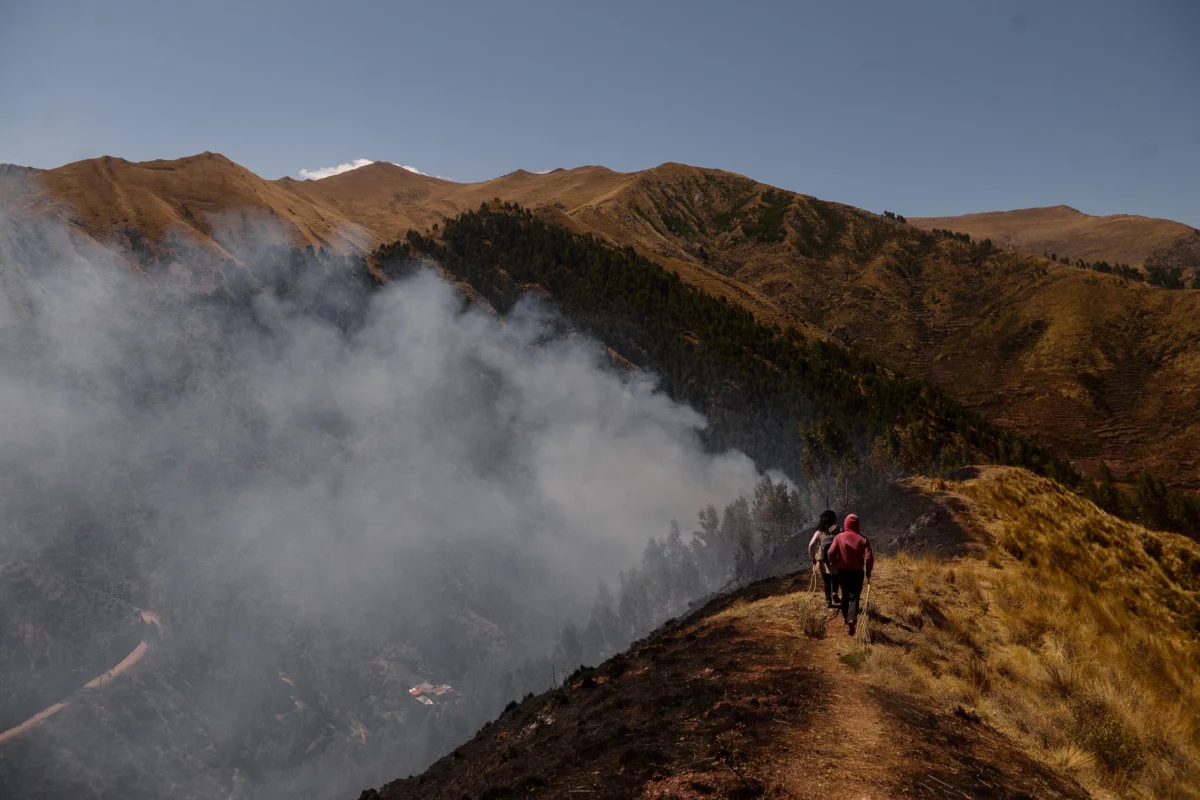
Dozens of wildfires have raged across Peru’s mountainous southern region in recent weeks, scorching tens of thousands of acres of vital land and tragically claiming at least five lives. While seasonal fires are a recurring concern in this agriculturally active area, the blazes this fall have escalated in intensity and danger, prompting widespread concern and a significant response from authorities.
The fires, primarily concentrated in the Cusco region, are a complex issue exacerbated by a confluence of environmental factors and traditional land management practices. "Wildfires in the Cusco region occur regularly when farmers clear their land in preparation for the next planting season and strong winds cause the fires to spread beyond control," explains Pedro Barraza, managing director of South America at andBeyond. This year, however, the situation has been amplified by climatic anomalies.
Escalating Fire Season Fueled by El Niño’s Influence
The current wildfire crisis is intrinsically linked to the prevailing El Niño phenomenon. Higher-than-normal temperatures and significantly drier conditions in Peru’s Andean highlands, a direct consequence of El Niño’s impact, have fundamentally altered the behavior of seasonal wildfires. "El Niño has shifted the timing and behavior of seasonal wildfires," notes Barraza, "making them more difficult to control than usual." This climatic disruption has created a tinderbox environment, where even routine land management fires can rapidly spiral into uncontrollable infernos.
The altered weather patterns have not only increased the frequency and intensity of the fires but also their unpredictability. Remote areas, often lacking immediate access to firefighting resources, have borne the brunt of these devastating blazes. The accumulation of dry vegetation, a common occurrence in the Andean dry season, has provided ample fuel for the fires to spread with alarming speed.
Timeline of the Crisis and Emergency Response
The intensification of the wildfire situation appears to have begun in early September, coinciding with the typical land-clearing period for agricultural purposes. Reports of escalating fires and their uncontrolled spread emerged throughout September and into October. Initial responses, while initiated, have been criticized by some local residents and social media users as being too slow to address the burgeoning crisis.
In response to the escalating threat, Peru’s agricultural minister announced on X (formerly Twitter) that local authorities are deploying significant resources to the affected regions. This deployment includes dedicated firefighters, army personnel, and a specialized water plane, all aimed at containing the rapidly spreading flames. However, the sheer scale of the fires and the challenging terrain of the Andean highlands present formidable obstacles to containment efforts.
Assessing the Impact on Tourist Sites and Traveler Safety
The Cusco region is world-renowned for its rich cultural heritage and breathtaking natural landscapes, most notably as the gateway to Machu Picchu and the Sacred Valley. A crucial concern for the international tourism industry and potential visitors is the impact of these fires on major tourist attractions.
Marisol Mosquera, founder of Aracari, a prominent travel company specializing in Peru, has provided reassuring insights: "There have been significant fires in the region over the past month, and there have been casualties in remote areas. However, no tourists or tourist sites have been affected." This includes iconic destinations like Machu Picchu. While the Cocalmayo hot springs in Santa Teresa, a popular stop for trekkers, are currently closed due to precautionary road shutdowns, this is a logistical measure rather than a direct impact from the fires.
Barraza further emphasizes the vastness of the Cusco region and the localized nature of the current blazes. "Cusco is a vast region, and the presence of a wildfire in a particular area does not necessarily mean that nearby tourist destinations have been directly affected." The fires have, for the most part, been contained to more remote highland areas, away from the well-trodden tourist circuits.
"The fires have not spread to Machu Picchu or to any tourist sites in the Sacred Valley," Mosquera confirms. While there have been fires in the Sacred Valley, they have occurred in higher mountainous areas, distant from hotels and attractions. Currently, there is a reported active fire in the Calca area and another in La Convención, both of which are geographically distant from primary tourist hubs.
Guidance for Travelers: Navigating Peru Amidst Wildfires
Despite the concerning news, local tourism experts and operators are advising travelers against canceling their plans, provided they exercise due diligence and adhere to safety guidelines. Access to the Cusco region remains open for tourists, and "tourism activities are running normally," according to Mosquera.
For travelers planning treks or visits to the area, a few precautions are recommended: "Stick to the traditional tourist circuit in Cusco, avoid exploring the higher areas of the Sacred Valley, and keep an eye on updates from your local operator," advises Mosquera. This prudent approach ensures that travelers can continue to experience the wonders of Peru while minimizing any potential risks.
Air quality in parts of Cusco has been reported as "poor" by Accuweather, indicating that the air could be unhealthy for sensitive groups. Individuals experiencing symptoms such as difficulty breathing or throat irritation are advised to reduce their time spent outdoors. Travelers belonging to sensitive groups who have active trips booked are encouraged to communicate any concerns with their travel providers to make informed decisions.
Almario, another local tourism expert, reiterates that "At this time, there is no reason to change travel plans solely because of these localized fires, provided conditions remain as they are." He stresses the importance of staying informed through hotel concierges, travel specialists, tour operators, and reputable local news outlets like El Comercio, which provides on-the-ground updates for the Cusco region.
Community Impact and Traveler Support
While major tourist sites remain unaffected, the impact on local communities living in the vicinity of the fires is profound and immediate. Firefighting efforts have been ongoing for weeks, battling persistent and spreading blazes. The local community is demonstrating remarkable resilience and solidarity.
"Local authorities and volunteer firefighters are actively working to contain the fires," says Almario. "The local community is also coming together to support those working on the ground, with many residents donating food and essential supplies for the volunteers directly involved in firefighting efforts. It is a challenging situation for the communities closest to the fires, and we are grateful to everyone working to protect the region and its people."
Organizations such as Peru Pendiente are facilitating monetary donations for relief efforts, while the Servicio Nacional Forestal y de Fauna Silvestre (SERFOR) is actively collecting essential items like clothing, unopened hygiene products, and non-perishable food in both Lima and Cusco. Travelers seeking to assist can find information on donation points and hours through social media channels or by inquiring with their hotel concierges.
Beyond direct aid, responsible tourism itself plays a crucial role in supporting the affected communities. "Tourism plays a vital role in the local economy, supporting thousands of families, small businesses, guides, drivers, artisans, and hospitality providers throughout the Cusco region," Barraza explains. "When conditions allow, responsible travel can continue to provide meaningful economic support to these communities." By continuing their planned trips, travelers can contribute to the economic recovery and sustenance of these communities, demonstrating solidarity and providing vital financial lifelines.
Analysis of Broader Implications
The current wildfire crisis in Peru’s southern highlands serves as a stark reminder of the growing vulnerability of natural landscapes and communities to the impacts of climate change. The amplified intensity and altered behavior of these fires, directly linked to El Niño-induced climatic shifts, underscore the need for enhanced climate resilience strategies.
The event highlights the delicate balance between traditional land management practices and the need for adaptation in the face of a changing climate. While the annual clearing of land for agriculture is a time-honored practice, the increased risk of fires necessitates a re-evaluation of these methods, potentially incorporating more controlled burning techniques, improved firebreaks, and greater public awareness campaigns.
Furthermore, the response to the crisis raises questions about the adequacy of existing emergency response infrastructure and protocols in remote mountainous regions. The perceived slowness of the response, though understandable given the scale and complexity of the fires, points to a need for ongoing investment in firefighting resources, training, and early warning systems.
The economic implications for Peru’s vital tourism sector are also a significant consideration. While major sites remain unaffected, sustained or worsening wildfire activity could deter international visitors, impacting livelihoods and the broader economy. Proactive communication, clear safety guidelines, and demonstrated efforts to manage the situation are crucial for maintaining traveler confidence.
In conclusion, the wildfires in Peru’s southern region are a multifaceted challenge, demanding a coordinated response from governmental agencies, local communities, and the international tourism industry. While the immediate threat to major tourist attractions has been mitigated, the long-term implications for the environment, local communities, and the tourism economy necessitate ongoing vigilance, adaptation, and support.