admin
admin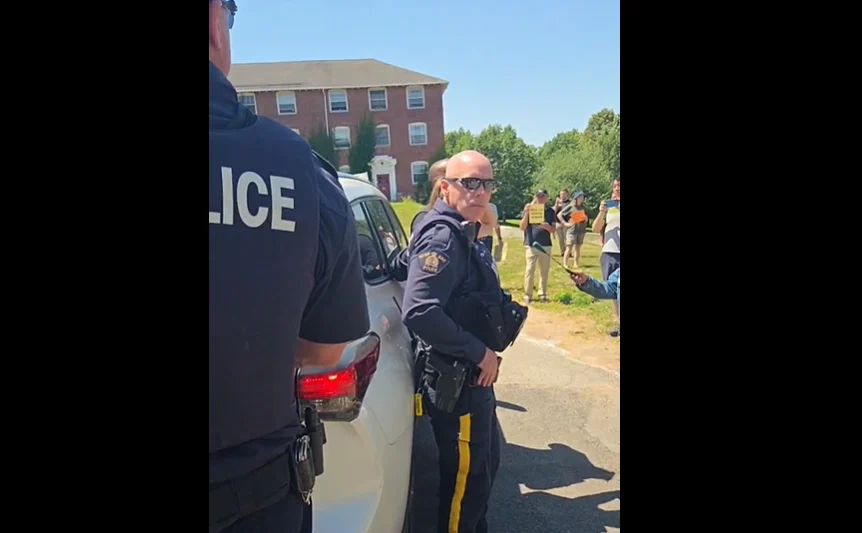
Nova Scotia Premier Tim Houston required an escort from the Royal Canadian Mounted Police (RCMP) on Wednesday after his official vehicle was reportedly "swarmed by rioters" who allegedly climbed onto the car and smashed its windshield. The incident unfolded at Acadia University in Wolfville, Nova Scotia, following an engagement with the Annapolis Valley Chamber of Commerce, marking a significant escalation in public demonstrations against the provincial government’s recent policies.
The Premier’s office issued a forceful statement describing the event as a violent turn by an "extreme faction amongst a group of protesters." According to their account, as the Premier’s convoy attempted to depart the venue, his vehicle and those of his staff were "swarmed by rioters," effectively blocking their exit. The statement further detailed that "these criminals blocked them in, were pushing law enforcement, climbing onto the car the Premier was in and smashed the windshield with the Premier in the car." The Premier’s office expressed gratitude to the RCMP for their "swift response in what was a very volatile situation," emphasizing that while the Premier is committed to respectful dialogue, "bad actors" who engage in property damage and endanger lives "do nothing to advance constructive dialogue."
The RCMP confirmed their response to a report of "concerns for safety" at the university. Their account stated that the Premier and "members of his party" returned to the building from their vehicles while officers "managed the situation." Police reported no injuries and confirmed that one man was arrested but subsequently released without charges, with an investigation into the incident currently underway.
However, the narrative of the event is contested by some of the protesters. Joey Brooks, an individual who filmed the confrontation, offered a differing perspective, alleging that the Premier was "not in any manner of danger (today)" and was merely "denying access for us to talk." Brooks also disputed the RCMP’s assertion of no injuries, claiming that two protesters sustained injuries – one during an arrest by police and another allegedly by the Premier’s vehicle.
Chronology of a Volatile Encounter
The incident occurred on Wednesday afternoon as Premier Houston was concluding an event with the Annapolis Valley Chamber of Commerce, part of a broader series of meetings with chambers of commerce and business owners scheduled throughout July and August across the province. Wolfville represented the initial stop in this provincial outreach initiative, designed to foster dialogue with the business community.
Eyewitness accounts and official statements paint a picture of a rapidly escalating situation. As the Premier’s vehicle attempted to exit the university grounds, it was met by a group of demonstrators. The Premier’s office described the sudden surge of protesters as a deliberate and aggressive act to obstruct their departure. The alleged actions, including individuals climbing on the vehicle and the reported smashing of the windshield, transformed a peaceful protest into a direct confrontation. The presence of law enforcement, initially managing the protest, quickly shifted to protecting the Premier and his staff, ultimately leading to the Premier’s temporary retreat back into the building. The immediate response by the RCMP, including the brief arrest of one individual, underscored the seriousness with which authorities viewed the events. The ongoing investigation suggests that a comprehensive review of the circumstances and actions of all parties involved is underway, potentially drawing on eyewitness testimony, video footage, and official reports.
Deep-Seated Grievances Fueling Public Discontent

The protesters’ actions, while condemned by officials for their alleged violence, stemmed from a range of deeply felt grievances concerning recent provincial government policies. These issues have been simmering within Nova Scotian communities, particularly in recent months, and coalesce around budget allocations, environmental stewardship, and Indigenous rights.
Budget Cuts to the Arts and Culture Sector: Nova Scotia’s arts and culture sector, a vital component of the province’s identity and economy, has faced significant financial strain. The provincial budget, unveiled earlier this year, included various austerity measures that have been perceived by many as detrimental to cultural institutions and individual artists. Advocates argue that these cuts not only jeopardize livelihoods but also diminish the province’s cultural vibrancy and its appeal as a tourist destination. Organizations reliant on provincial funding have voiced concerns about their ability to maintain programming, retain staff, and support local talent, leading to widespread disappointment and a sense of neglect among the artistic community.
Impending Library Closures: One of the most contentious issues highlighted by protesters was the threat of impending library closures in the region. Public libraries, particularly in rural and smaller communities like those in the Annapolis Valley, serve as crucial hubs for education, community engagement, and access to information and technology. The prospect of closures or reduced services has sparked considerable alarm among residents, who view libraries as indispensable public services. While the article notes that some closures were "delayed," the initial announcement and ongoing uncertainty have fueled public anxiety and mobilization. Community groups and local politicians have actively campaigned against these measures, emphasizing the irreplaceable role libraries play in fostering literacy, supporting lifelong learning, and bridging digital divides. The emotional connection many Nova Scotians have to their local libraries transforms budget decisions into deeply personal and communal issues.
Environmental Concerns and Resource Development: Environmental policy and resource management have consistently been flashpoints for activism in Nova Scotia. Protesters cited broad "environmental concerns," specifically mentioning "mining projects" and "Indigenous rights" as intertwined issues. Nova Scotia, rich in natural resources, faces ongoing debates over the balance between economic development and environmental protection. Controversial mining operations, forestry practices, and proposed industrial projects often draw the ire of environmental groups and local communities concerned about habitat destruction, water quality, and climate change impacts. The Houston government’s stance on these issues, perceived by some as favoring industry over conservation, has generated significant opposition. The province’s climate change targets and strategies are also under scrutiny, with activists pushing for more ambitious and rapid transitions away from fossil fuels and towards sustainable practices.
Indigenous Rights and Treaty Obligations: Joey Brooks, a protester, explicitly articulated concerns about Indigenous rights, stating, "We, as people who are Treaty, people are wanting to stand for the Treaty right and wanting to have our voice for democracy and have our chance to be heard because all these legislations or policies that are being put forward are not allowing the actual true voices of our people." This highlights the complex and often fraught relationship between the provincial government and Indigenous communities, particularly the Mi’kmaq people, whose rights are enshrined in Treaties. Issues such as land use, resource co-management, and self-governance continue to be areas of contention. Many Indigenous communities feel their voices are not adequately heard or respected in policy-making processes that directly affect their traditional territories and ways of life. The reference to "Treaty rights" underscores the historical and legal context of these grievances, linking them to foundational agreements that predate the Canadian confederation.
Official Reactions and Political Commentary
The incident quickly drew reactions from various political figures, underscoring the gravity of the situation and the divided opinions on public protest.
Premier’s Office Stance: Beyond condemning the actions, the Premier’s office statement served to draw a clear line between legitimate protest and what they termed "criminal" behaviour. By distinguishing "extreme faction" and "bad actors" from general protesters, the government sought to validate the right to protest while unequivocally rejecting violence and property damage. This framing aims to reinforce the rule of law and the safety of public officials, which are fundamental tenets of democratic governance.
RCMP’s Measured Response: The RCMP’s statement was notably cautious and factual, confirming the incident, their response, the lack of reported injuries (from their perspective), and the arrest and subsequent release of one individual. Their ongoing investigation suggests a thorough process, avoiding premature conclusions while upholding their role in maintaining public order and safety. The discrepancy between the RCMP’s "no injuries" report and Brooks’ claims highlights the challenge of reconciling differing accounts in the immediate aftermath of a volatile event.

NDP Leader Claudia Chender’s Perspective: Nova Scotia NDP Leader Claudia Chender issued a statement that walked a careful line, acknowledging the underlying public discontent while condemning the violent aspects of the protest. Chender affirmed that "Nova Scotians have significant and valid concerns" with the government’s budget and decision-making, thereby validating the legitimacy of the protesters’ grievances. However, she firmly stated that "destruction of property and threats are never the best way forward," and advocated for democratic participation through "clarity and strength in a safe and respectful way." This position reflects a common stance among opposition parties, supporting the right to protest unpopular policies but upholding the principles of peaceful demonstration.
Broader Implications and the Future of Democratic Dialogue
The confrontation in Wolfville carries significant implications for the political landscape of Nova Scotia, touching upon issues of public safety, the boundaries of protest, and the health of democratic dialogue.
Security for Public Officials: The incident raises serious questions about the security protocols for public officials, particularly in less controlled environments like university campuses during public engagements. While premiers and other high-ranking politicians regularly interact with the public, an event where a vehicle is allegedly climbed upon and damaged with the Premier inside signals a potential breach in traditional security measures. This could lead to a review of security arrangements for future public appearances, potentially creating a greater distance between elected officials and the electorate, which runs counter to principles of accessibility and open governance.
The Evolving Nature of Protest: The event underscores the escalating tensions in political discourse and the shifting dynamics of public protest. While peaceful assembly is a cornerstone of democracy, the alleged actions of a "faction" highlight the fine line between expressing dissent and engaging in unlawful, potentially dangerous, behavior. The incident will likely spark debate on what constitutes acceptable forms of protest and the responsibilities of both demonstrators and authorities in managing such events. It forces a conversation about whether frustration with government policies is increasingly manifesting in more aggressive forms, and what this means for the future of civil disobedience.
Impact on Government Engagement: Premier Houston’s office has stated its commitment to "listen and engage during respectful conversations." However, an incident of this nature could inevitably influence how the government approaches future public consultations and engagements. While the Premier’s schedule of meetings with chambers of commerce and the upcoming fall engagement process for the 2027-28 budget are planned to proceed, the Wolfville incident might lead to more controlled environments or heightened security for these events. This could inadvertently create a barrier between the government and the public, particularly those with critical perspectives, making genuine, unscripted dialogue more challenging.
Political Climate and Polarization: The incident reflects a broader trend of increased polarization and public dissatisfaction that can be observed across various jurisdictions. The strong language used by the Premier’s office ("rioters," "criminals," "bad actors") and the equally strong accusations from some protesters (denial of access, alleged injuries) illustrate a significant chasm in understanding and trust. Such events can exacerbate political divisions, making it harder for different segments of society to find common ground or engage in constructive policy debates.
The Role of Eyewitness Media: In an age of ubiquitous smartphones, eyewitness accounts and video footage, such as that filmed by Joey Brooks, play an immediate and powerful role in shaping public perception. These raw, unfiltered perspectives often offer an alternative narrative to official statements, challenging or corroborating details and influencing public opinion before formal investigations conclude. This highlights the complex media landscape surrounding such events, where multiple, sometimes conflicting, truths vie for public acceptance.
As the investigation continues and the province moves forward with its scheduled engagements, the Wolfville incident serves as a stark reminder of the intensity of political divisions in Nova Scotia. It calls for a deeper reflection on how governments and citizens can navigate challenging policy debates while upholding the safety of individuals and the integrity of democratic processes. The path forward will require a renewed commitment to respectful dialogue, even amidst profound disagreements, to ensure that voices are heard without resorting to actions that threaten public order or personal safety.