admin
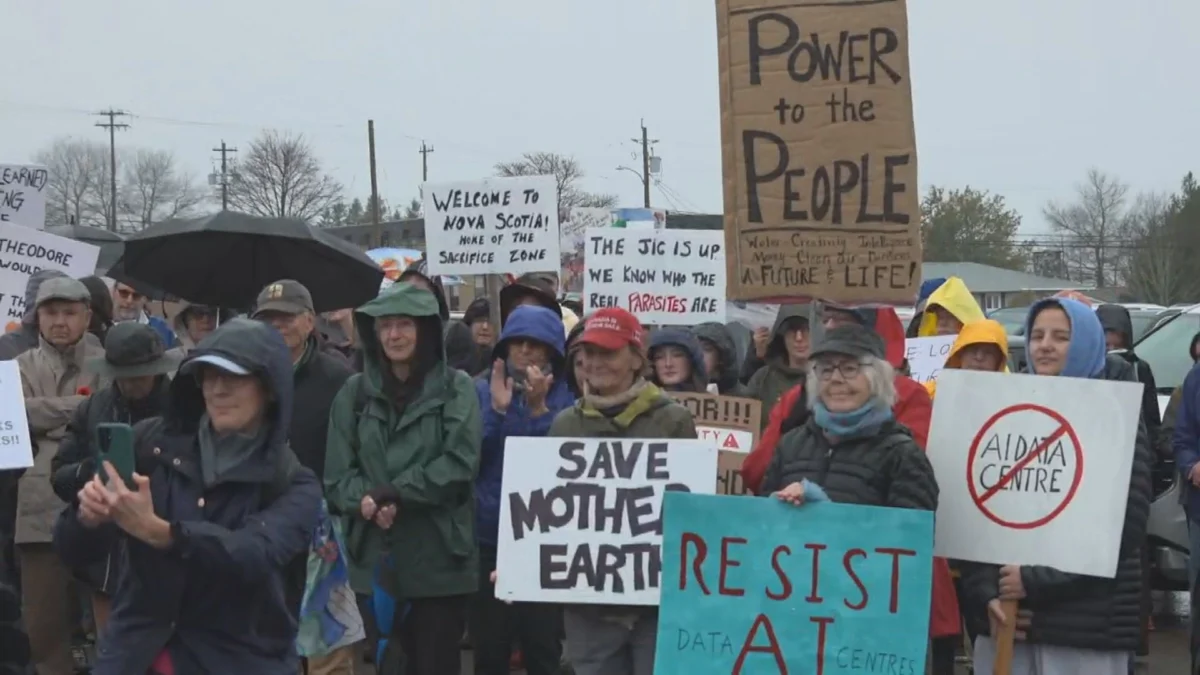
The Nova Scotia government has initiated a series of virtual information sessions this week, aiming to engage the public and address widespread questions and concerns regarding the development of artificial intelligence (AI) data centres within the province. This proactive measure comes in the wake of considerable public opposition and protests that erupted earlier this month, primarily targeting a proposed $10-billion AI data centre slated for southern Cape Breton. The first of these crucial sessions was livestreamed on Tuesday evening at 7 p.m., with subsequent sessions scheduled for Wednesday night and Thursday afternoon, all accessible to the public via YouTube and Facebook. Premier Tim Houston emphasized the sessions’ dual purpose: to provide Nova Scotians with an opportunity to pose direct questions to experts and to combat what he described as "misinformation" circulating about AI data centres and their implications. In an unconventional move to encourage participation, the government also confirmed it was randomly calling Nova Scotians to invite them to submit questions during the live broadcasts.
The Genesis of Controversy: A $10-Billion Vision for Point Tupper
The focal point of the provincial debate is a colossal $10-billion AI data centre project proposed by EverWind Fuels, a company primarily known for its green hydrogen initiatives, located in Point Tupper, Nova Scotia. The project garnered significant attention following an announcement on October 16, 2026, where Premier Tim Houston himself spoke, signaling provincial support for the ambitious venture. This facility is envisioned as a state-of-the-art hub designed to process vast amounts of data essential for advanced AI computations, machine learning, and various high-tech applications. Such data centres are foundational infrastructure for the digital economy, enabling everything from cloud computing services to complex scientific research and the rapid development of generative AI models.
However, the scale and nature of the proposed development have ignited a fierce public discourse, particularly concerning its potential environmental footprint and socio-economic impact on the region. While proponents highlight the promise of economic diversification, job creation, and positioning Nova Scotia at the forefront of the global AI economy, opponents express deep anxieties about resource strain, particularly on water and energy, and a perceived lack of transparency in the planning and approval processes.
A Wave of Opposition: Community and Environmental Concerns Mount
The government’s decision to host these information sessions directly responds to a palpable surge in public dissent. Throughout early November 2026, communities across Nova Scotia witnessed a series of protests, with residents gathering to voice their objections to the Cape Breton data centre project. These demonstrations, which spanned various locations beyond just the immediate vicinity of Point Tupper, underscored a province-wide apprehension.
The core concerns articulated by community groups, environmental advocates, and concerned citizens are multifaceted. A primary worry revolves around the immense energy consumption inherent to AI data centres. These facilities require continuous, substantial power to operate servers and cooling systems. Nova Scotia, while committed to transitioning to renewable energy, still relies on a grid that includes fossil fuels. Critics question how a $10-billion data centre, with its insatiable demand for electricity, would align with the province’s ambitious climate goals, including achieving 80% renewable electricity by 2030 and net-zero emissions by 2050. There are fears that such a large load could either strain the existing grid, necessitate new fossil fuel infrastructure, or divert renewable energy resources away from residential and other industrial needs.

Equally pressing are concerns regarding water usage. Data centres utilize significant quantities of water for cooling their servers, either through evaporative cooling towers or other closed-loop systems. Opponents fear that the project could place an undue burden on local freshwater supplies in Cape Breton, a region with delicate ecosystems and existing water management challenges. Questions have been raised about the source of this water, the volume required, and the potential impact on local aquifers, rivers, and lakes, particularly during periods of drought or increased demand from other sectors.
Beyond resource depletion, residents have also raised issues pertaining to land use, noise pollution from cooling systems, and the visual impact of a large industrial complex on the natural landscape of Cape Breton. Many protestors have also cited a lack of meaningful public consultation during the initial phases of the project, leading to feelings of being excluded from decisions that will profoundly affect their communities. This perceived lack of transparency has eroded public trust and fueled calls for a more robust and inclusive environmental assessment process.
Government’s Response: Engagement and Clarification Through Dialogue
In response to the escalating public outcry, the Nova Scotia government, led by Premier Houston, moved to establish these virtual information sessions. The format – livestreamed on popular platforms like YouTube and Facebook – is intended to maximize accessibility and allow for broad participation from across the province. The sessions are designed to be interactive, offering a direct channel for Nova Scotians to submit questions and receive answers from government officials and subject matter experts.
Premier Houston’s explicit mention of addressing "misinformation" suggests a recognition by the government that public discourse around complex technological projects can often be influenced by incomplete or inaccurate information. The sessions, therefore, serve as a platform for factual dissemination, aiming to clarify the technical aspects of AI data centres, explain the regulatory frameworks in place, and outline the government’s rationale for supporting such developments. By inviting experts, the province hopes to present a balanced view, distinguishing between legitimate concerns and unfounded fears.
The innovative approach of randomly calling Nova Scotians to solicit questions for the live sessions further underscores the government’s intent to demonstrate genuine public engagement. This method aims to ensure that a diverse range of voices and concerns are represented, rather than solely relying on questions from organized opposition groups or tech-savvy individuals. This strategy seeks to foster a sense of direct participation and accountability, potentially bridging the communication gap that has contributed to the current tensions.
The Technical Landscape: Energy and Water Demands Under Scrutiny
The technical requirements of modern AI data centres are indeed staggering, making resource consumption a central pillar of the public debate. Globally, data centres account for an estimated 1-3% of total electricity consumption, a figure projected to rise significantly with the proliferation of AI. A $10-billion facility would undoubtedly represent a substantial new load on Nova Scotia’s power grid.

Nova Scotia Power, the province’s primary electricity provider, is currently on a trajectory to meet stringent renewable energy targets. The province has set an ambitious goal of phasing out coal-fired electricity generation by 2030 and achieving 80% renewable electricity by the same year, with a broader target of net-zero emissions by 2050. The introduction of a massive data centre necessitates a clear plan for its energy supply. Proponents, including EverWind Fuels, often emphasize commitments to powering such facilities with renewable energy. Given EverWind’s core business in green hydrogen, there’s a plausible argument for the data centre to be directly integrated with new renewable energy projects, such as wind or solar farms, potentially mitigating its carbon footprint. However, the sheer scale of the energy demand still raises questions about grid stability, infrastructure upgrades, and whether these new renewable sources would be exclusive to the data centre or shared with the wider provincial grid.
Water consumption is another critical technical aspect. Cooling systems in data centres can consume millions of liters of water annually, equivalent to the usage of thousands of households. While advanced cooling technologies, including closed-loop systems or seawater cooling, can reduce freshwater reliance, their implementation and environmental impacts (e.g., thermal pollution from discharged water) still require careful assessment. Cape Breton, with its numerous freshwater bodies and coastal location, presents both opportunities and challenges for sourcing and managing water for such a facility. The province’s environmental regulations would need to rigorously evaluate these plans to ensure long-term sustainability and prevent adverse effects on local ecosystems and communities dependent on these resources.
Economic Promise Versus Environmental Stewardship: A Balancing Act
The debate surrounding the AI data centre in Nova Scotia epitomizes the global challenge of balancing economic development with environmental stewardship. From an economic perspective, a $10-billion investment represents a significant injection into the provincial economy. Such a project would generate substantial construction jobs over several years and, once operational, create high-tech employment opportunities for data scientists, engineers, IT professionals, and support staff. This could help diversify Nova Scotia’s economy, which has traditionally relied on resource industries, and position the province as a hub for advanced technology. Furthermore, the presence of a cutting-edge AI data centre could attract further investment in tech industries, fostering a vibrant innovation ecosystem.
However, these economic benefits must be weighed against potential environmental risks. Beyond the direct impacts of energy and water, large industrial developments can lead to habitat disruption during construction, increased localized heat from server operations (contributing to a "heat island" effect), and the long-term challenge of managing electronic waste. The concept of "greenwashing" – where a project is presented as environmentally friendly despite significant impacts – is also a concern for some activists, especially when companies involved in energy-intensive operations simultaneously promote green initiatives. The government’s role in this context is to ensure that robust environmental assessments are conducted, that mitigation strategies are credible and enforceable, and that the long-term sustainability of the project is genuinely prioritized.
Voices from the Community and Industry: Seeking Common Ground
The ongoing dialogue requires careful consideration of perspectives from all stakeholders. Community activists and local residents have been clear in their demands for a more comprehensive and independent environmental impact assessment. They advocate for stronger regulatory oversight, greater local control over development decisions, and mechanisms that ensure genuine community benefits rather than just potential provincial economic gains. Many are calling for a moratorium on the project until these concerns are adequately addressed and a transparent, participatory process is established. Their statements often highlight the intrinsic value of Cape Breton’s natural beauty and the desire to protect it for future generations, questioning whether the economic benefits outweigh potential irreversible environmental costs.
EverWind Fuels, as the proponent, is expected to articulate its commitment to sustainable practices, job creation, and integrating the data centre with its broader green energy vision. A company specializing in green hydrogen production would likely emphasize that the data centre would be powered by renewable energy, potentially from its own projects, thereby presenting it as a model for sustainable digital infrastructure. Their messaging would focus on technological advancement, economic opportunity, and their dedication to being a responsible corporate citizen, engaging with local communities and addressing concerns through dialogue and technical solutions.

Academic experts and industry analysts could offer valuable insights into the broader implications. They might discuss the global imperative for AI infrastructure, the competitive landscape for attracting such investments, and best practices for developing data centres sustainably. Some might highlight the potential for Nova Scotia to become a leader in "green AI" by pioneering data centres powered entirely by renewable energy, integrated with local smart grids, and designed with advanced water conservation techniques. Others might caution against rapid development without sufficient regulatory frameworks and long-term planning for resource management.
The Road Ahead: Implications for Nova Scotia’s Future
These virtual information sessions represent a crucial juncture for Nova Scotia. They serve not only as a mechanism for immediate public engagement but also as a test case for how the province will navigate the complexities of large-scale industrial projects in an era of heightened environmental awareness and rapid technological change. The outcome of these discussions and the government’s subsequent actions could set a significant precedent for future investments in green technology, AI, and other resource-intensive industries.
The challenge for provincial leadership is to strike a delicate balance: fostering economic growth and technological advancement while safeguarding the environment and maintaining public trust. The demand for greater transparency, robust environmental assessments, and genuine community consultation is unlikely to wane. A successful resolution might involve a revised project approval process that emphasizes early and comprehensive public involvement, independent scientific reviews, and clear mechanisms for addressing and mitigating community concerns.
Ultimately, the debate over the AI data centre in Cape Breton is about more than just a single project; it reflects a broader societal conversation about the kind of future Nova Scotians envision for their province. It highlights the tension between harnessing the opportunities of the digital age and preserving the natural heritage that defines the region. The virtual sessions are a step towards bridging this divide, but the path to a mutually agreeable solution will require continued dialogue, genuine compromise, and a steadfast commitment to sustainable development from all parties involved.