admin
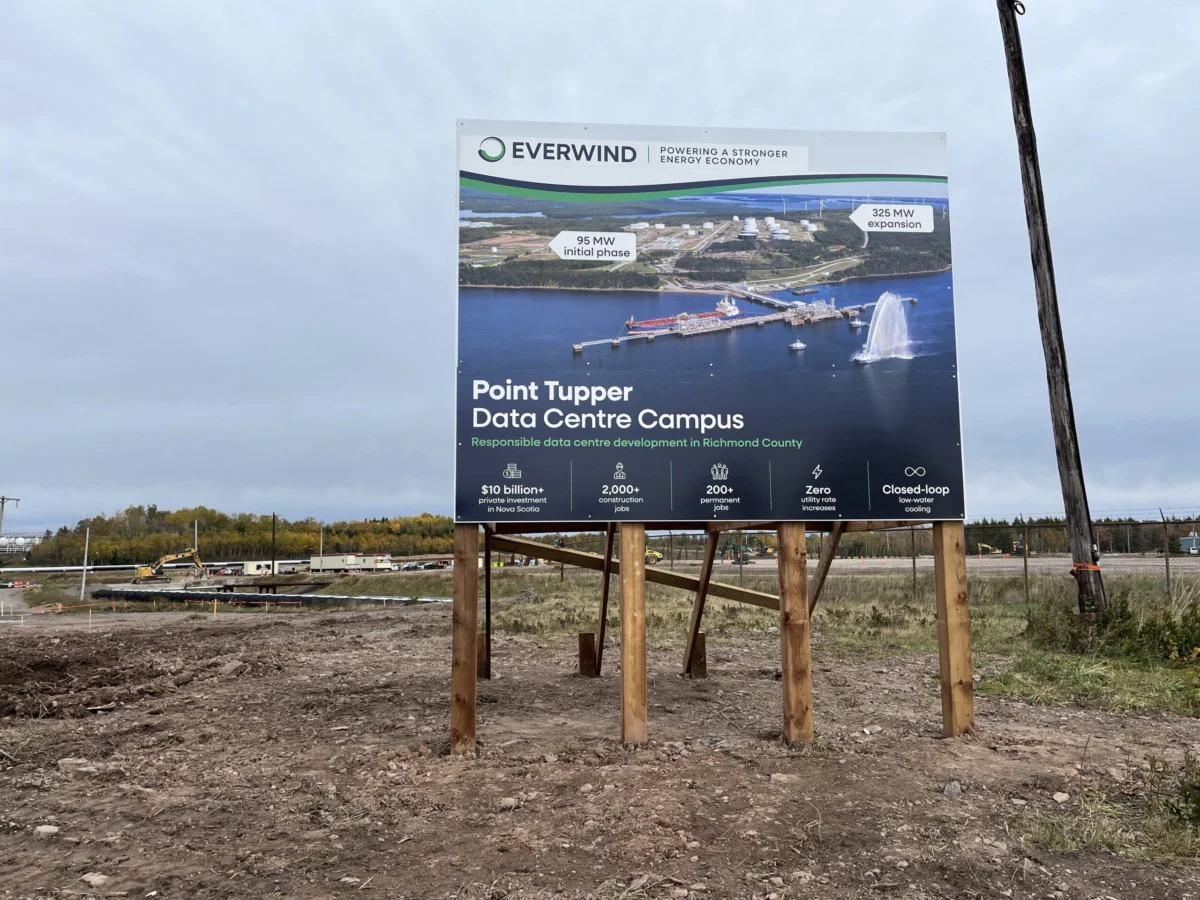
EverWind, a prominent renewable energy developer, has confirmed that its ambitious $10 billion artificial intelligence (AI) data centre project in Point Tupper, Cape Breton, is progressing according to its established timeline. This massive private investment, located near Port Hawkesbury, Nova Scotia, is poised to become a significant hub for advanced computing, with leading AI development company Anthropic having already secured a long-term lease for its utilization. The project’s advancement comes as the company navigates critical agreements with the provincial utility, Nova Scotia Power, and addresses growing public concerns regarding its energy and environmental footprint.
The undertaking represents a colossal commitment of capital into Nova Scotia’s economy, intending to position the region at the forefront of the burgeoning global AI infrastructure landscape. EverWind’s existing Point Tupper site, strategically located with deep-water access and industrial zoning, has been identified as an ideal location for such a large-scale development. The sheer magnitude of the investment underscores the accelerating demand for high-performance computing capabilities driven by the rapid evolution of artificial intelligence and machine learning technologies.
A New Frontier for Nova Scotia’s Economy
EverWind’s broader vision for Point Tupper extends beyond just the data centre, encompassing a significant green hydrogen and ammonia production facility, leveraging Nova Scotia’s abundant wind resources. The data centre project aligns with this overarching strategy, aiming to eventually be powered by dedicated renewable energy sources. The partnership with Anthropic, a key player in the competitive AI research and development sector known for its advanced AI models like Claude, signals the project’s strategic importance. Anthropic’s choice of Cape Breton for its infrastructure highlights the global competition for reliable and scalable data centre capacity.
Brendan Chard, EverWind’s vice-president of power, recently reiterated the company’s commitment to the project’s phased development, stating that all necessary steps are being meticulously taken to integrate the planned AI data centre into Nova Scotia Power’s electrical grid. This integration is crucial for the initial operational phases of the facility, which is slated to come online in 2027. The economic implications for Cape Breton are substantial, promising the creation of hundreds of direct and indirect jobs during construction and operation, along with boosting local supply chains and attracting further technological investment into the region. This infusion of capital and expertise could significantly diversify the local economy, traditionally reliant on resource-based industries.
Navigating the Energy Landscape: Agreements with Nova Scotia Power
Last week marked a pivotal moment for the project, with EverWind formalizing two critical agreements with Nova Scotia Power (NSP). These agreements lay the groundwork for connecting the AI data centre to the provincial utility’s electrical network, a prerequisite for its operational launch. A key aspect of these agreements, as highlighted by Chard, is a provision ensuring financial protection for existing NSP customers. "We have a separate agreement with Nova Scotia Power that covers some of those terms, including covering all of our incremental costs of service to ensure that none of the costs incurred to serve electricity to our facility will be borne by other customers," Chard explained. This commitment aims to assuage public fears that the new industrial load could lead to increased electricity rates for residential and commercial consumers.
The electric service contract specifically details the terms for the project’s initial 95-megawatt (MW) phase. A notable clause within this agreement specifies that electricity will be provided on an "interruptible basis." This means that EverWind’s data centre can be temporarily disconnected from the grid with as little as 10 minutes’ notice if the grid operator determines that system pressure or stability requires it. This provision is common for large industrial loads and serves as a critical mechanism for grid resilience, allowing NSP to manage peak demand or unforeseen outages without compromising the stability of the broader provincial network. Chard confirmed the company’s preparedness for such scenarios: "We’re prepared to cut service with 10 minutes’ notice from the grid operator if required at any point in time."
In the event of an interruption, the EverWind facility will pivot to its integrated backup power systems, which include both large-scale battery storage and conventional diesel generators. While these backups ensure continuous operation for Anthropic’s critical AI workloads, they also raise questions about the project’s immediate environmental footprint, especially given the company’s long-term commitment to renewable energy. EverWind’s ultimate plan is for the data centre to be predominantly powered by its proposed wind energy projects, which are currently in development. However, the first phase of these dedicated wind turbines is not expected to be operational until 2028. Consequently, the data centre will rely heavily on Nova Scotia Power’s grid for its inaugural year of operation in 2027. The company is actively working to secure all necessary permits to expedite construction and meet its ambitious timelines.
Public Opposition and Power Grid Concerns
Despite the economic promise, the EverWind data centre project has not been without its detractors. Since its announcement approximately a month ago, the initiative has sparked protests across the province, fueled by concerns over its potential impact on Nova Scotia’s power grid and natural resources. These protests reflect a broader skepticism among some community members about the true costs and benefits of such large-scale industrial developments.

A prominent voice among the critics is Nick Tsergas, a science and tech journalist who founded StopTheDataCentre.ca. Tsergas’s advocacy began in response to a similar mega data centre proposal near his home in Hamilton, Ontario, giving him a unique perspective on the patterns and challenges associated with these projects across Canada. "I’ve just been living and breathing this issue, digging into it as much as I can, and noticing a lot of patterns in these data centre conversations as they pop up, mushroom up around the country," he remarked.
Tsergas highlights a critical distinction between traditional data centres, historically used for tasks like bank transactions or website hosting, and the new generation of AI-focused facilities. He asserts that AI data centres are significantly more power-intensive. "They use 10 times the power, let’s say, 10 to 20 times the power that a traditional data centre of the same size would use," Tsergas explained. This dramatic increase in power consumption stems from the highly demanding computational processes involved in training and running complex AI models, which rely on powerful graphics processing units (GPUs) that consume vast amounts of electricity.
The heightened energy consumption inevitably leads to a substantial increase in heat generation. "And when more power is used, more heat is also produced. So you need to come up with some very creative ways to cool the data centre so that the graphics cards basically don’t melt," Tsergas added. Effective cooling is paramount to prevent hardware failure and ensure the continuous operation of the sensitive AI infrastructure.
EverWind’s plan for its Point Tupper facility addresses this challenge through a sophisticated closed-loop cooling system. This system will circulate a water-glycol mixture through a sealed loop, preventing routine discharge into the environment. The company stated in a release that "Heat will be removed primarily using air, with water-assisted cooling used during the hottest weather." Furthermore, they emphasized that "Nova Scotia’s cooler climate reduces cooling-water requirements for much of the year."
However, Tsergas challenges the "full picture" of these closed-loop systems, pointing out the substantial water requirements associated with them, especially when factoring in backup power generation. He notes that many data centres proposed across Canada integrate natural gas generating infrastructure or backup diesel generators. "Those things need water to cool them as well. So if you’re using more electricity to power the closed-loop cooling system, more and more of that water is going to be needed to cool the gas turbines attached to the data centre," Tsergas argued, suggesting a compounding effect on water demand that might not be immediately apparent. The reliance on diesel generators, even as backup, also raises concerns about localized air pollution and carbon emissions, particularly during grid interruptions.
The Global AI Infrastructure Boom and its Environmental Footprint

The debate surrounding EverWind’s project in Cape Breton is not an isolated incident but rather a microcosm of a global phenomenon. The exponential growth of AI technologies has triggered an unprecedented boom in data centre construction worldwide. Companies like Anthropic, OpenAI, Google, and Microsoft are locked in an arms race to build and deploy ever more powerful AI models, each requiring immense computational resources.
Training a single large language model can consume energy equivalent to hundreds of homes for a year, generating a carbon footprint comparable to several transatlantic flights. As AI becomes more integrated into daily life, the energy demand for inference (using trained models) will also skyrocket. This trend is putting immense pressure on electrical grids globally, prompting utilities and governments to grapple with how to accommodate this new, energy-intensive industrial load while simultaneously pursuing decarbonization goals. Regions like Ireland and the Netherlands have already faced significant challenges balancing data centre expansion with grid capacity and environmental targets, often leading to moratoriums or stricter regulations.
The water footprint of data centres is another critical environmental consideration. While EverWind proposes a closed-loop system, all cooling methods, whether air-based, liquid-based, or evaporative, ultimately require water either directly for the cooling process or indirectly for the electricity generation that powers them. As climate change exacerbates water scarcity in many regions, the water demands of data centres are coming under increasing scrutiny. The specific details of water sourcing and consumption for EverWind’s facility and its associated wind projects will be a key area of focus for environmental assessments and public oversight.
Economic and Regulatory Implications for Nova Scotia
For Nova Scotia Power, the EverWind project necessitates a re-evaluation of its existing tariff structures. The utility confirmed in a statement that EverWind will initially pay an interim large industrial tariff. However, a new, purpose-built fee will need to be developed because "existing tariff structures were not designed for a customer of this scale." This highlights the unprecedented nature of the energy demand presented by modern AI data centres. NSP’s statement reinforced its commitment to its customer base: "Our approach to data centres is consistent with what is becoming common across North America: ensuring existing customers do not bear the costs of serving new developments." This principle is crucial for maintaining public trust and ensuring equitable distribution of infrastructure costs.
The EverWind project also sets a significant precedent for future large-scale industrial developments in Nova Scotia. The province’s energy transition strategy, which aims to phase out coal-fired power plants and achieve 80% renewable electricity by 2030, presents both opportunities and challenges for integrating such substantial new loads. The successful, sustainable integration of the EverWind data centre could demonstrate Nova Scotia’s capacity to attract high-tech investment while advancing its green energy agenda. Conversely, any significant hiccups could undermine confidence in the province’s ability to manage this complex transition.

Looking ahead, EverWind has outlined plans for a second phase of the data centre, which could see the project expand its capacity to a formidable 420 megawatts. This expansion is currently projected for completion sometime in 2028, contingent upon receiving all necessary approvals and satisfying various conditions. Such a substantial increase in demand would further amplify the need for EverWind’s dedicated wind energy projects to be fully operational and reliably integrated into the grid, significantly reducing reliance on conventional power sources and fulfilling the long-term vision of a truly green AI data centre.
Balancing Growth with Sustainability: The Path Forward
As EverWind continues to work through the permitting process and aims to maintain its ambitious timeline for the data centre to be online in 2027, the project remains a focal point for discussions about economic development, energy infrastructure, and environmental stewardship in Nova Scotia. The successful execution of the project will hinge on EverWind’s ability to deliver on its commitments, particularly in developing its renewable wind projects to power the facility sustainably. The initial reliance on Nova Scotia Power’s grid, coupled with the use of diesel generators for backup, will necessitate transparent reporting and robust mitigation strategies to address short-term environmental impacts.
The ongoing dialogue between EverWind, Nova Scotia Power, the provincial government, and local communities will be crucial in navigating the complexities of this groundbreaking venture. Balancing the undeniable economic benefits and technological advancements offered by the AI data centre with the imperative to protect Nova Scotia’s environment and ensure grid stability represents a significant challenge and an opportunity for the province to demonstrate leadership in sustainable industrial development. The EverWind project in Cape Breton stands as a testament to the transformative power of AI, but also as a powerful reminder of the critical decisions that must be made to ensure that technological progress aligns with ecological responsibility.