admin
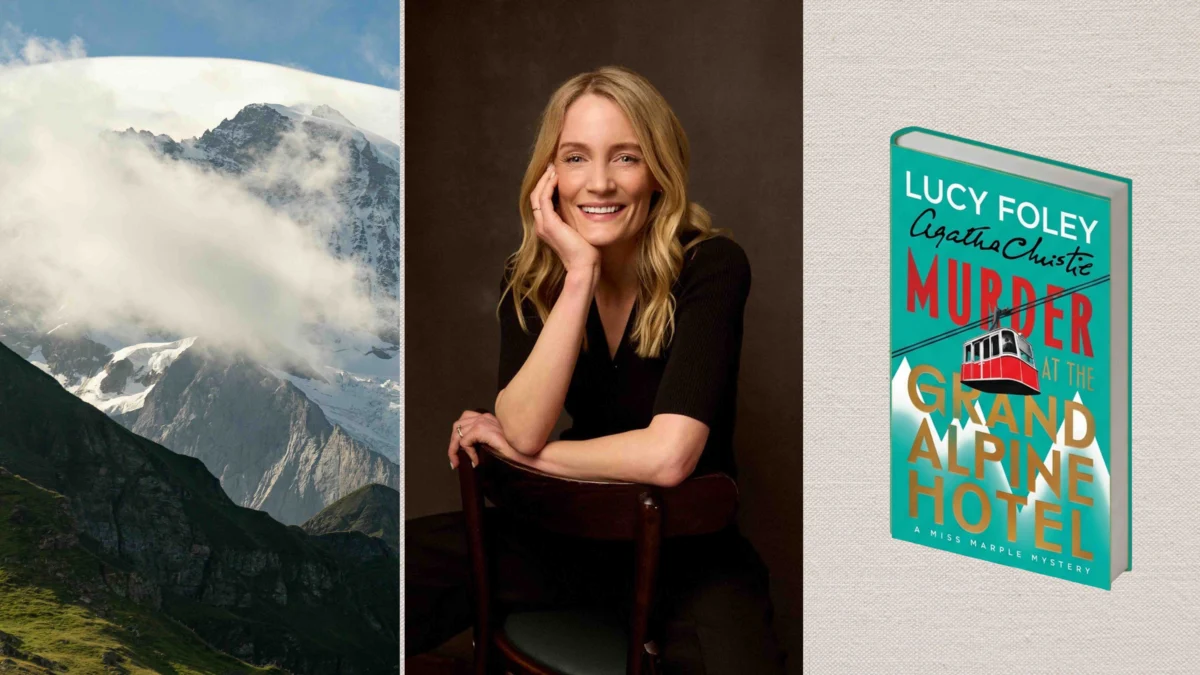
The venerable world of Agatha Christie’s Miss Marple is receiving a dramatic elevation, venturing far from the familiar English countryside of St. Mary Mead to the breathtaking, and potentially perilous, Swiss Alps. In a significant development for the enduring legacy of one of literature’s most beloved detectives, author Lucy Foley has penned "Murder at the Grand Alpine Hotel," the first Miss Marple novel in fifty years. This ambitious undertaking transports the unassuming spinster to an opulent, snow-dusted mountain resort, a stark contrast to the cozy village settings where her deductive prowess has typically been honed.
The decision to relocate Miss Marple to such an exotic locale marks a deliberate departure from her established narrative trajectory. While Hercule Poirot, Christie’s other iconic creation, has frequently been the subject of grand cinematic adaptations that highlight his globe-trotting adventures, Miss Marple’s stories have historically been rooted in the intimate, often claustrophobic, confines of her English surroundings. This new installment, however, places her squarely in the midst of a high-stakes whodunnit set against a backdrop of dramatic alpine vistas, hidden speakeasies, and the inherent dangers of a sophisticated ski resort.
A New Alpine Frontier for a Beloved Detective
Lucy Foley, known for her own bestselling thrillers such as "The Guest List," was tasked by the Agatha Christie estate with revitalizing the Miss Marple character for a contemporary audience. Her approach, as detailed in an interview with Condé Nast Traveler, was not to merely replicate Christie’s style but to engage in a "conversation with the original books while also doing something new." This ambition led her to envision Miss Marple not just as a detective, but as a traveler, a role she had sparingly undertaken in Christie’s original works, with "A Caribbean Mystery" being a notable exception.
Foley’s research for "Murder at the Grand Alpine Hotel" was extensive, involving firsthand exploration of various alpine regions. A significant portion of her investigation took place in Chamonix, in the French Alps, with excursions extending to Zermatt and St. Moritz in Switzerland, and even through the Mont Blanc tunnel into Italian resorts. This immersive approach was crucial for capturing the authentic "texture" of the alpine experience, from the grandeur of the mountains to the specific hospitality traditions of the era.
The Evolving Perception of the Alps: From Terror to Tranquility
Foley’s research also delved into the historical perception of the Alps. She noted a profound shift in how these mountains were viewed, particularly through the lens of the Romantic movement. Prior to this era, mountains were often considered terrifying, dangerous places, populated by mythical creatures and harboring only death and peril. The Romantics, however, reframed them as landscapes of immense beauty and wonder, a duality that Foley believes still resonates in our contemporary experience of alpine environments. This historical context provides a rich tapestry for the novel, allowing for the exploration of the psychological impact of such dramatic surroundings on both the characters and the unfolding mystery.
The choice of the 1950s as the novel’s setting is also significant. This post-war period in Europe, particularly in Switzerland, a historically neutral country, was a time of reconstruction and shifting social dynamics. Foley observed that hotels in the Alps served as unique melting pots, bringing together individuals from various nationalities and backgrounds, often with lingering tensions from the recent conflict. This geopolitical backdrop adds a layer of complexity to the character interactions and potential motives within the story.
The Hotel as a Crucible of Suspense
Agatha Christie herself famously articulated her formula for a successful mystery: "The whole point of a good detective story was that it must be somebody obvious but at the same time, for some reason, you would then find that it was not obvious, that he could not possibly have done it. Though really, of course, he had done it." Foley believes that hotels, with their inherent characteristics, are ideal settings for this type of suspense.
The geographical layout of a hotel, with its potential for hidden spaces and the anonymity it offers to guests, creates fertile ground for mystery. Foley highlights the inclusion of a secret bar, inspired by real establishments like the Kulm Hotel in St. Moritz, as an element that enhances the clandestine atmosphere. This sense of hiddenness and the ability for individuals to adopt new personas within the confines of a hotel contribute significantly to the illusion and misdirection crucial to a compelling whodunnit. Christie’s own "At Bertram’s Hotel" serves as a prime example of how a hotel can be both a democratizing and an anonymous space, where identities can be fluid and deceptive.
Miss Marple: The Enduring Traveler
The question of what makes Miss Marple such an effective traveler lies in her remarkable ability to observe and interpret human character. Foley posits that Miss Marple’s keen insights, honed through her microcosm of life in St. Mary Mead, are universally applicable, regardless of her geographical location. She possesses an innate understanding of human nature, often seeing through pretenses and recognizing underlying malice or deception with an acuity that can surpass even the more flamboyant methods of detectives like Poirot.
While Poirot might be swayed by appearances or misdirected by charm, Marple’s deductions are rooted in a deep, almost intuitive, understanding of the common threads that bind human behavior. Her ability to connect seemingly disparate events and observations to her extensive knowledge of village life allows her to unravel complex mysteries in any setting. This enduring trait makes her a compelling protagonist, capable of navigating diverse social landscapes and uncovering the truth, no matter how deeply it is buried.
Foley also touches upon the enigmatic nature of Miss Marple herself, noting moments of profound rage and a capacity for shapeshifting, as seen in "A Pocket Full of Rye" and "Nemesis." This suggests a depth to the character that allows her to adapt and embody different roles as required by the investigation, while always remaining fundamentally herself.
A Glimpse into the Future of Miss Marple’s Travels
When asked about potential future adventures for Miss Marple, Foley hinted at a possibility that draws from Christie’s own narrative. She revealed that Miss Marple lived in a different country for a period in her youth, a detail that has not been extensively explored in the original canon. This suggests a potential avenue for future stories, allowing readers to revisit Miss Marple’s formative years and explore a new, yet historically grounded, setting. This intriguing prospect promises to further enrich the lore of this iconic character, offering new insights into the experiences that shaped her unparalleled deductive abilities. The ongoing success of adapting classic literary figures into new narratives underscores the enduring appeal of well-crafted characters and compelling mysteries, ensuring that the legacies of authors like Agatha Christie continue to captivate new generations of readers. The journey of Miss Marple to the Swiss Alps is not merely a geographical shift, but a testament to her timeless relevance and adaptability in the ever-evolving landscape of crime fiction.