admin
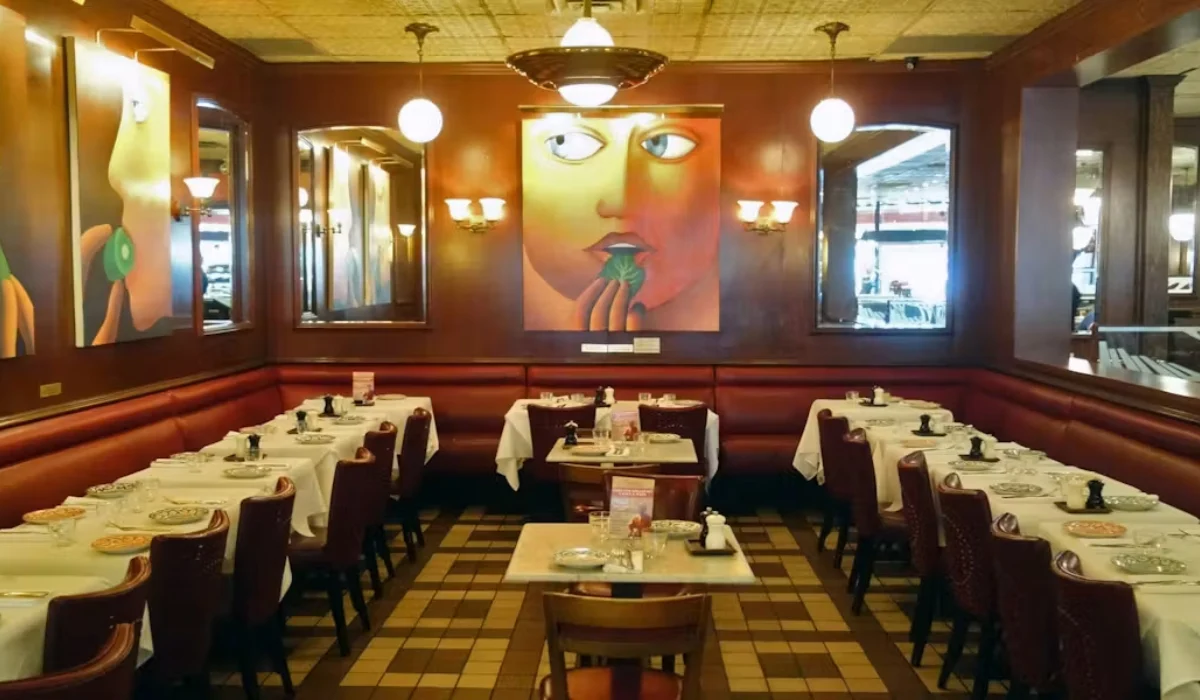
The landscape of Manhattan’s historic dining scene underwent a seismic shift this week as a federal bankruptcy court approved the $22.2 million sale of The Fireman Group’s most storied assets. The transaction, finalized on Thursday, marks the end of an era for one of New York City’s most prominent family-run hospitality empires and signals a new chapter for several institutions that have served as the culinary backdrop for Broadway theatergoers and Midtown executives for decades. Under the terms of the court-sanctioned deal, the portfolio will be split between Landry’s, the hospitality giant led by billionaire Tilman Fertitta, and TREW Capital Management, a firm specializing in the revitalization of distressed restaurant brands.
The sale comes after months of escalating financial instability for The Fireman Group, which was forced to seek Chapter 11 protection in August 2024. The acquisition includes a prestigious roster of establishments: Bond 45, Café Fiorello, Trattoria Dell’Arte, Brooklyn Diner, Paris Bar, Le Jardin, Café Paradiso, and Brooklyn Delicatessen. This transition of ownership effectively saves the businesses from potential liquidation, though it also marks the departure of the founding family from the operational helm.
The Strategic Division of Assets
The $22.2 million deal is structured as a collaborative acquisition between two major players in the American hospitality industry, each bringing a different strategic focus to the table. Landry’s, which operates an expansive global network of upscale and casual dining brands, will take ownership and management of three of the most high-volume locations: Bond 45, Café Fiorello, and Trattoria Dell’Arte. These three restaurants are strategically located near major cultural hubs, including the Theater District and Lincoln Center, fitting the profile of Landry’s existing high-profile New York assets like The Palm and Mastro’s Steakhouse.
TREW Capital Management will assume control of the remaining assets, including the iconic Brooklyn Diner brand, Paris Bar, Le Jardin, Café Paradiso, and Brooklyn Delicatessen. TREW Capital, led by experienced hospitality executive Jeff Crivello, has carved a niche in the market by acquiring brands in financial transition and implementing rigorous operational efficiencies to restore profitability. Their portfolio already includes notable names such as BurgerFi and Anthony’s Coal Fired Pizza & Wings. By taking over the Brooklyn Diner and the newer "Paris Bar" concepts, TREW is positioning itself to manage brands that offer a mix of nostalgic New York atmosphere and modern casual dining.
A Legacy of New York Dining: The Fireman Group History
The Fireman Group was more than just a collection of restaurants; it was a reflection of the vision of its founder, Sheldon “Shelly” Fireman. Fireman, who passed away in late 2023, was a legendary figure in the New York hospitality world, known for his artistic flair and his ability to create "theatrical" dining environments. His career in the industry began in 1963 with the opening of The Hip Bagel in Greenwich Village, a venue that became a symbol of the era’s bohemian culture.
Over the following sixty years, Fireman meticulously built an empire focused on prime real estate and high-quality Italian-American fare. Café Fiorello, situated directly across from Lincoln Center, has been a fixture of the Upper West Side for over 50 years, famous for its expansive antipasto bar and its role as a pre-and post-performance gathering spot. Trattoria Dell’Arte, located across from Carnegie Hall, has operated for nearly 40 years and is celebrated as much for its oversized anatomical sculptures as for its thin-crust pizzas. Bond 45, which moved from its original home to a massive space on 46th Street, became a cornerstone of the modern Broadway dining experience.
The death of Shelly Fireman in late 2023 left a leadership vacuum and accelerated the financial reckoning for a company already reeling from several years of compounding economic pressures. His successor and son-in-law, Benjamin Grossman, served as CEO during the final turbulent months, but the court-approved sale will see him exit the business entirely.
The Financial Downfall: Debt, Fire, and the Pandemic
The bankruptcy of The Fireman Group was not the result of a single event but rather a "perfect storm" of historical debt and modern economic shocks. Court documents reveal that the group’s financial foundations began to crack years ago due to significant debt incurred during ambitious construction and renovation projects. These issues were exacerbated by a major fire at one of the flagship locations, which resulted in substantial uninsured losses and operational downtime.
However, the most devastating blow was the COVID-19 pandemic. Unlike restaurants in residential neighborhoods that pivoted to delivery, The Fireman Group’s business model was inextricably linked to the "three pillars" of Midtown Manhattan: Broadway theater, international tourism, and office-worker foot traffic. When Broadway went dark for 18 months and international travel ceased, the group’s revenue plummeted. Even as the city reopened, the slow return of office workers and the shift toward hybrid work models meant that the lucrative lunch and after-work crowds never fully returned to pre-2020 levels.
In a desperate bid to maintain liquidity, the company turned to merchant cash advances (MCAs). These financial products, while providing quick infusions of capital, carry extremely high interest rates and require daily repayments taken directly from credit card sales. This created a "death spiral" where a significant portion of the restaurants’ daily revenue was diverted to debt service before payroll or food costs could be met. By the time the company filed for bankruptcy in August, it had less than $100,000 in available cash—a staggering figure for an enterprise with over 800 employees and millions in monthly overhead.
The Auction and Competitive Bidding Process
The path to the $22.2 million sale was marked by a competitive and sometimes contentious bidding process. Landry’s originally entered the fray as the "stalking horse" bidder with an initial offer of $9.5 million. This floor price was intended to ensure the assets would not be sold for an undervalued sum and provided a starting point for other interested parties.
A significant challenge to the Landry’s bid came from FHGRF LLC, a lender to the bankrupt company. This bid was particularly noteworthy because court filings indicated that CEO Benjamin Grossman held a 35.8 percent interest in the lending entity. The FHGRF proposal sought a reorganization that would have allowed Grossman to remain at the helm of the company. However, the court ultimately favored the joint bid from Landry’s and TREW Capital, which offered a higher cash value and a cleaner break from the previous management structure.
The final $22.2 million price tag represents a significant increase over the initial stalking horse bid, suggesting that despite the financial turmoil, the underlying real estate value and brand recognition of the Fireman Group restaurants remain highly attractive to institutional investors.
Employment Stability and Operational Outlook
One of the most critical aspects of the bankruptcy proceedings was the fate of the more than 800 employees who staff the various locations. In the weeks leading up to the sale, the company’s liquidity was so strained that there were serious concerns about the ability to meet payroll through the end of October.
The transition to Landry’s and TREW Capital provides a measure of stability for the workforce. Court documents indicate that the new owners intend to keep the restaurants operational, avoiding the mass closures that often accompany hospitality bankruptcies. While Benjamin Grossman is not expected to receive an offer to continue with the new entities, many of the group’s other officers and the vast majority of the front-of-house and back-of-house staff are expected to receive employment offers from the new owners.
For the dining public, the change in ownership is likely to be subtle at first. Both Landry’s and TREW Capital have a history of maintaining the core identity of the brands they acquire while implementing backend efficiencies. Patrons of Café Fiorello or Bond 45 can likely expect the same menus and atmosphere, though they may see updates to technology systems, loyalty programs, and supply chain management.
Market Implications and the Future of Manhattan Dining
The sale of The Fireman Group is emblematic of a broader trend of consolidation within the New York City restaurant industry. As independent groups and family-owned empires face rising labor costs, astronomical rents, and the lingering effects of the pandemic, many are being absorbed by larger conglomerates with deeper pockets and greater economies of scale.
Tilman Fertitta’s Landry’s, in particular, has become a "consolidator of choice" for iconic but distressed brands. By adding Bond 45 and Café Fiorello to a portfolio that already includes Bubba Gump Shrimp Co. and Joe’s Crab Shack, Fertitta is further cementing his influence over the American dining experience. Similarly, TREW Capital’s involvement highlights the growing role of private equity and specialized management firms in the "distressed hospitality" sector.
Industry analysts suggest that this deal may serve as a blueprint for other struggling legacy groups in Manhattan. The use of the Chapter 11 process to clear debt and transition to well-capitalized owners is becoming a preferred alternative to total closure, ensuring that New York’s "dining institutions" survive, even if the names on the stock certificates change. As Midtown continues its slow evolution toward a post-pandemic reality, the survival of these 40- and 50-year-old establishments provides a much-needed sense of continuity for a city that is constantly in flux.