admin
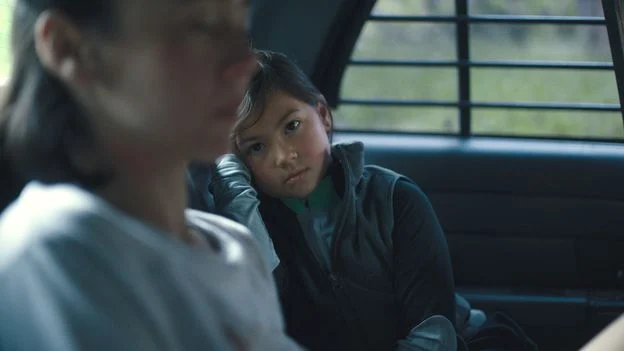
The landscape of independent American cinema in 2026 has been profoundly altered by the release of Josephine, a harrowing drama that confronts the harrowing reality of sexual violence and its collateral psychological damage. Directed by Brazilian-American filmmaker Beth de Araújo, the film centers on an eight-year-old girl, Josephine, who inadvertently witnesses a brutal sexual assault while playing in San Francisco’s Golden Gate Park. The narrative follows the immediate and long-term aftermath of this event, shifting the focus from the act itself to the fragmented, confusing process of childhood trauma. Starring Channing Tatum and Gemma Chan as the girl’s parents, and introducing newcomer Mason Reeves in the title role, the film has sparked a global conversation regarding the ethics of depicting sexual violence on screen and the necessity of breaking the silence surrounding such crimes.
Narrative Premise and the Burden of Witnessing
The opening sequence of Josephine is designed to be visceral and unflinching, yet it is framed through a specific, restricted perspective. While out for an early morning football session with her father, eight-year-old Josephine wanders into a secluded wooded area of Golden Gate Park. There, she witnesses a man raping a female runner. The camera remains at a distance, mimicking the child’s physical and psychological removal from the scene, yet the clarity of what she sees is undeniable. This moment serves as the catalyst for a narrative that avoids the tropes of a police procedural or a traditional legal drama, focusing instead on how a child, who lacks the vocabulary for sexual violence, attempts to categorize and survive such a memory.
The film explores the tension between the child’s innocence and the "brutal learning" that occurs when the word "rape" is finally introduced into her lexicon. Beth de Araújo’s direction emphasizes the domestic fallout, as Josephine’s parents struggle with their own guilt and the impossible task of explaining systemic male violence to a second-grader. The casting of Channing Tatum and Gemma Chan provides a grounded, empathetic core to the story, representing the confusion of parents who find their protective instincts rendered obsolete by a single, random moment of horror.

The Director’s Personal History and Professional Advocacy
The authenticity of Josephine is rooted in the lived experience of its creator. Beth de Araújo has publicly stated that the film is a fictionalized reflection of an event she witnessed as a young child in San Francisco. In the real-life incident, Araújo’s father interrupted an assault and chased the perpetrator away, leaving the young Araújo to process the aftermath. This childhood encounter informed not only her artistic output but also her professional trajectory. Before becoming a full-time filmmaker, Araújo served as a certified Witness Advocate for survivors of sexual assault and worked on a Rape Crisis hotline.
These professional experiences provided Araújo with a clinical understanding of trauma that she integrated into the script. By working with victims, she observed the recurring themes of shame, silence, and the inadequacy of language to describe the violation of the human body. Josephine is, in many ways, an extension of her advocacy work—a cinematic attempt to force audiences to confront the "global epidemic" of sexual violence without the comfort of sanitized storytelling. Araújo has noted that the film is intended to strip away the adult intellectualization of rape and return the viewer to a state of raw, uncomprehending shock, similar to what a child feels when first exposed to the darker aspects of human nature.
Ethical Production and Safeguarding the Minor Lead
One of the most significant challenges in the production of Josephine was the ethical treatment of its child star, Mason Reeves. Only eight years old at the time of filming, Reeves had no prior professional acting experience. To ensure her psychological well-being, Araújo and the production team implemented a rigorous set of safeguards. A child psychologist was present on set and available to Reeves and her family throughout the duration of the shoot.
In a departure from traditional filmmaking, Reeves was never given a full script. Instead, her mother would read her specific lines, which the child would then memorize. Furthermore, Reeves was not present on set during the filming of the sexual assault sequence. The "witnessing" scenes were shot using clever editing and stand-ins to ensure the young actor was never exposed to the graphic nature of the content she was ostensibly observing. Araújo has confirmed that Reeves has not seen the finished film and likely will not until she reaches the age of 18, leaving the decision to view the work entirely in her hands. This level of care reflects a growing trend in Hollywood toward "trauma-informed" production practices, particularly when involving minors in sensitive subject matter.

Data and Context: The Prevalence of Sexual Violence
The thematic urgency of Josephine is underscored by sobering statistics regarding sexual assault in the United States and globally. According to data from the Rape, Abuse & Incest National Network (RAINN), an American is sexually assaulted every 68 seconds. Furthermore, one out of every six American women has been the victim of an attempted or completed rape in her lifetime. The setting of the film, San Francisco’s Golden Gate Park, highlights the reality that these crimes often occur in public or semi-public spaces, shattering the perceived safety of community environments.
The film also addresses the "silence" that Araújo describes as a societal failure. Research from the World Health Organization (WHO) indicates that sexual violence is one of the most underreported crimes globally, often due to the stigma and victim-blaming that the film depicts through the lens of the parents’ reactions. By centering the story on a child witness, Josephine highlights how the cycle of silence begins early, as adults often reflexively hide the details of such crimes from children in a well-intentioned but ultimately futile attempt at protection.
Cinematic History and the Evolution of the Rape Scene
The release of Josephine has reignited a long-standing debate within film studies regarding the representation of sexual violence. Historically, cinema has often been accused of voyeurism or using rape as a mere plot device for "male revenge" fantasies. Dr. Tanya Horeck, a professor of Film and Feminist Media Studies at Anglia Ruskin University, notes that films like Gaspar Noé’s Irreversible (2002) and Jonathan Kaplan’s The Accused (1988) have faced criticism for how they frame the assault. Irreversible was notorious for a nine-minute, static-shot assault that many viewed as gratuitous, while The Accused was criticized for withholding the assault until the end of the film to serve as a dramatic climax.
In contrast, a new wave of female filmmakers has sought to deconstruct these tropes. Maria Schrader’s She Said (2022) and Kitty Green’s The Assistant (2020) both dealt with the systemic nature of sexual abuse without showing the acts on screen, focusing instead on the bureaucratic and social structures that enable predators. Josephine occupies a middle ground; it shows the assault in the first 15 minutes but does so from a distance and through the eyes of a child, prioritizing the emotional impact on the witness over the physical mechanics of the crime. This shift in perspective is seen by many critics as a necessary evolution in how the medium handles sensitive material in the post-#MeToo era.

Reactions from the Cast and the Industry
The stars of the film have been vocal about the project’s impact on their personal lives. Channing Tatum, who has a daughter of his own, told Variety that the script forced him to reevaluate how he communicates with his child about safety and bodily autonomy. He described the experience of filming as "transformative," noting that the story tackles a subject that is often whispered about but rarely confronted with such directness.
Gemma Chan echoed these sentiments, emphasizing that sexual violence is "normalized" yet "taboo." During an interview with the BBC, Chan argued that avoiding the conversation does not protect children, as they are likely to encounter the subject eventually through digital media or peer interactions. She stressed that the film is intended to be a "conversation for everyone," particularly men, who are often absent from discussions regarding the prevention of sexual violence.
The film’s critical reception has been overwhelmingly positive. Following its premiere at the Sundance Film Festival, Josephine received three Gotham Award nominations, including a nod for Mason Reeves as Breakthrough Performer. Critics have praised the film’s "sensitive" tone and its refusal to offer easy resolutions, noting that it captures the messy, non-linear nature of psychological recovery.
Broader Implications and the Path Forward
Josephine arrives at a time when high-profile cases of sexual violence continue to dominate international headlines, such as the recent sentencing of British comedian Russell Brand. These cases serve as a reminder that the themes explored in the film are not merely dramatic inventions but reflections of an ongoing social crisis. By challenging the audience to look through the eyes of an eight-year-old, Beth de Araújo asks a fundamental question: Why is the burden of safety placed on the potential victims rather than on society as a whole to prevent the violence?

The film suggests that the loss of innocence experienced by Josephine is a systemic failure. As the character navigates a world that has been irrevocably changed, the audience is forced to grapple with their own discomfort. Araújo’s work asserts that while the word "rape" may be difficult to say, the silence surrounding it is far more damaging. As Josephine prepares for its wide release in the US, UK, and Ireland on November 20, 2026, it stands as a testament to the power of cinema to act as both a mirror to society’s darkest corners and a catalyst for meaningful cultural change.