Jia Lissa
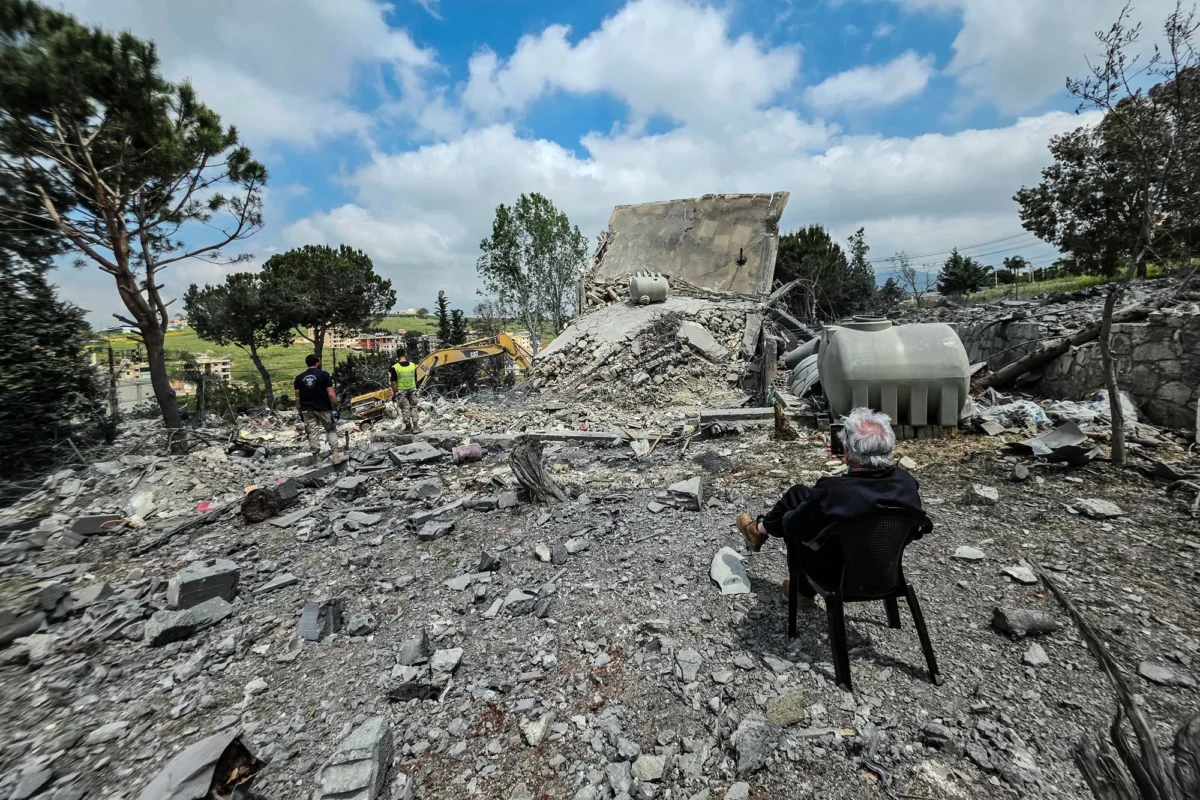
Southern Lebanon, a region scarred by successive conflicts, is once again facing a profound humanitarian crisis and an existential threat to its future. Following sustained Israeli strikes throughout 2025, the landscape is one of widespread devastation, but the true tragedy extends beyond shattered buildings. Locals, possessing the very bulldozers and excavators needed to clear the vast quantities of rubble, are paralyzed by fear, hesitant to deploy them lest their efforts be perceived as a provocation inviting further attacks. This pervasive fear, coupled with what human rights organizations are classifying as systematic targeting of reconstruction infrastructure, has created an intractable barrier to recovery, trapping hundreds of thousands in displacement and despair.
The Shadow of Fear: Obstruction of Recovery
The immediate aftermath of Israeli military operations in southern Lebanon in 2025 saw residents grappling with unimaginable destruction. Homes, businesses, and essential communal structures lay in ruins. While heavy machinery, vital for clearing debris and commencing rebuilding, was often present within the affected communities, its owners dared not bring it forth. The chilling apprehension that the mere presence of such equipment—tools of renewal—would attract another aerial strike forced individuals to resort to clearing debris by hand, a painstakingly slow and arduous process that offers little hope against the scale of devastation.
Ramzi Kaiss, a Human Rights Watch (HRW) researcher in Lebanon, articulated this chilling reality: "They felt that just the presence of this heavy machinery that was typically used in reconstruction was a threat." This sentiment underscores a profound psychological impact, where the very act of attempting to restore normalcy is deemed a risk to life and property. The implications are far-reaching, transforming a logistical challenge into a deeply entrenched security dilemma for the civilian population.
Reconstruction is an intricate process, far exceeding the mere replacement of lost buildings. It demands the clearance of roadways, the restoration of critical water networks, and the robust functioning of factories capable of supplying essential construction materials and equipment. However, a growing body of evidence, meticulously documented by HRW, aid workers, and United Nations peacekeepers, reveals a pattern of Israeli attacks that have systematically damaged these vital systems. Moreover, the omnipresent fear of subsequent strikes has effectively stifled any meaningful repair efforts, perpetuating a cycle of destruction and stagnation.
Kandice Ardiel, a spokesperson for the United Nations Interim Force in Lebanon (UNIFIL), lamented the impact of these strikes: "We did see incidents in which construction equipment was unfortunately targeted, which made it difficult. Not just for these repairs and the removal of rubble to happen, but again, for people to return to their lives." Her words highlight the direct link between the destruction of civilian infrastructure and the erosion of human dignity and the right to a normal existence.
Systematic Destruction of Reconstruction Capacity
The systematic nature of these attacks came under intense scrutiny in a December 2025 investigation by Human Rights Watch. The report meticulously detailed four specific Israeli strikes that occurred between August and October 2025, a period after a significant November 2024 ceasefire between Israel and Hezbollah. The targets were not military installations but rather heavy-machinery showrooms, maintenance facilities, and a factory producing cement and asphalt – the very sinews of any reconstruction effort.
HRW’s investigation revealed a staggering scale of destruction: over 360 pieces of construction equipment were obliterated in these attacks alone. Ramzi Kaiss, who personally visited four of these sites, described a scene of overwhelming devastation, emphasizing that "These are hundreds and hundreds of heavy machinery used in reconstruction-related processes." Based on its findings, Human Rights Watch classified these strikes as apparent war crimes, raising serious questions about adherence to international humanitarian law.
In response to these allegations, the Israeli military, via a statement on Telegram, asserted that the targeted equipment and materials were intended to support Hezbollah’s infrastructure reconstruction. However, HRW’s exhaustive investigation found no evidence whatsoever of military targets at or around the sites. While the organization acknowledged that it could not definitively establish the intended use of every single machine or store of materials, it found no credible evidence suggesting military application for these supplies. Conversely, HRW did verify numerous civilian uses for some of the destroyed equipment, undermining Israel’s justification.

This deliberate targeting of civilian construction capacity represents a significant escalation beyond direct conflict, impacting the long-term viability and recovery of an entire region. It not only destroys immediate assets but also instills a chilling deterrent against future rebuilding efforts, ensuring that the effects of conflict endure long after the fighting ostensibly ceases.
A Landscape of Ruin: Homes and Villages Erased
The cycle of destruction and stalled recovery has been particularly devastating for the civilian population. Many residents who had returned after the 2024 fighting and begun to rebuild their lives found their efforts tragically undone. "We’ve seen things just destroyed again," Ardiel recounted, illustrating the futility and despair facing those attempting to reclaim their homes.
The sheer scale of residential destruction is staggering. According to Israeli defense minister Israel Katz’s own count, as of October 2025, a harrowing 23,000 homes and more than 60 villages in southern Lebanon had been destroyed. Further corroborating this devastation, a New York Times analysis, published in October 2026, found that Israeli forces had largely leveled 48 of the approximately 60 villages and towns in the area they occupy. Crucially, a significant portion of this destruction occurred after a renewed ceasefire in April 2025, raising grave concerns about adherence to agreements and the deliberate targeting of civilian areas even in periods of supposed de-escalation.
The Israeli military, when queried by The New York Times, stated that it had received no directive to carry out widespread damage to structures or to demolish villages. However, the on-the-ground reality, corroborated by independent investigations and official counts, paints a starkly different picture. WIRED Middle East’s attempts to contact the Israel Defense Forces for comment on these specific allegations received no response at the time of publication, leaving the discrepancies between official statements and documented destruction unaddressed.
Crippling Critical Infrastructure: The Water Crisis
Beyond the physical structures of homes and businesses, the attacks have severely crippled critical infrastructure, particularly water sources, directly impeding the ability of displaced populations to return home. Doctors Without Borders (Médecins Sans Frontières – MSF) highlighted this dire situation in a September 2026 statement, noting that attacks on already weakened water systems persisted despite the April 2025 ceasefire.
During UN consultations, local officials in Jabal Amel reported that approximately 6,500 displaced families were unable to return to a dozen villages located within the "Yellow Line," an Israeli-declared military zone in southern Lebanon. Access restrictions within this militarized area have severely obstructed efforts to restore essential services, including water, power, and sanitation.
Charlene Silvin, an MSF project coordinator, led a team that surveyed around 20 towns in the Bint Jbeil area, meticulously documenting the damage to water supplies. Her stark observation was chilling: "There was not one village on the road that was not hit in some capacity." This pervasive destruction of vital water infrastructure underscores a concerted effort to render areas uninhabitable.
Silvin’s team traced the chain of destruction from water sources to people’s homes. In this region, boreholes—deep vertical shafts serving as wells—that supply villages with water are often located in valleys now held by Israeli troops. This geographical reality not only makes access inherently difficult but also exposes these critical components to direct attack. MSF documented widespread damage: storage tanks rendered useless, pump and filtration units taken offline, and nearly every solar panel meant to power these systems destroyed.
In the municipality of Yater, MSF was forced to install less ideal plastic tanks because the main water tank was deemed irreparable. In Froun, the organization adopted a different strategy, repairing the filtration unit and connecting it directly to the water source, bypassing the damaged main tank. These are merely temporary, stop-gap measures. MSF’s September 2026 statement documented extensive damage across southern Lebanon, affecting wells, pumps, generators, filtration units, and pipelines – a comprehensive assault on the region’s lifeblood.

The attacks on heavy machinery and water resources create a compounding crisis. Construction vehicles are often indispensable for even reaching and repairing broken pumps or clearing access routes. A 2026 account of repairs by UNIFIL described the challenges peacekeepers faced in surveying a 280-meter access route for a maintenance crane. Most of the route was damaged and blocked by berms – mounds of compacted dirt often used as military barriers. Peacekeepers had to clear these formidable obstacles before they could even bring in equipment to repair a well, illustrating the layered difficulties imposed by the ongoing military presence and destruction.
For many, the only recourse is reliance on trucked-in water, a desperate measure for communities like Zawtar Al-Gharbiyeh, which once housed 500 households and now sees only 90 families returning. This is not a sustainable solution but an expensive and severely limited substitute. "It’s not a system," Silvin emphasized. "It’s a drop."
The constant threat of renewed attacks fundamentally shapes reconstruction efforts. As Silvin explained, "Anyone that would be investing in repairing the infrastructure would be doing so with the fear that the intervention is damaged again in a very short while." This pervasive insecurity forces aid organizations to often opt for temporary fixes rather than the durable, lasting infrastructure residents desperately need for long-term recovery. An October 2026 UN report further highlighted the systemic challenges, including municipalities struggling to pay staff, fuel pumps, and maintain vehicles. Local water authorities and civil servants have also reported intimidation by Israeli forces when attempting to access damaged sites near the Yellow Line, adding another layer of obstruction to humanitarian efforts.
Humanitarian Toll and Displacement
The cumulative effect of this destruction and obstruction is a severe humanitarian crisis. Approximately 330,000 people remain internally displaced in Lebanon, according to UN estimates as of September 29, 2026. This massive displacement places an immense burden on host communities and overstretched aid agencies, exacerbating existing vulnerabilities in a country already facing profound economic and political instability. The inability to return home due to destroyed infrastructure, lack of essential services, and pervasive fear prolongs their suffering and fragments social cohesion.
The Vanishing Watch: UNIFIL’s Uncertain Future
Adding another layer of uncertainty to an already precarious situation is the impending end of UNIFIL’s mandate on December 31, 2026. UNIFIL, which plays a crucial role in monitoring and reporting violations in southern Lebanon, is approaching a critical juncture. An October 2026 statement from the organization confirmed ongoing discussions regarding the UN’s role in the region beyond this deadline.
Ardiel describes the peacekeepers as "the impartial record keepers of what’s happening on the ground." Their potential departure raises profound questions about how this vital documentation and oversight work will continue, alongside the immediate and overwhelming challenge of restoring homes and essential services to the beleaguered population. The absence of an impartial international presence could further destabilize the region, potentially emboldening actions that violate international law and making accountability even more elusive.
Resilience Amidst Rubble: The Unyielding Spirit
Despite the overwhelming destruction and the seemingly insurmountable obstacles, the spirit of resilience among the Lebanese people endures. For a 27-year-old woman from Rshaf in the Bint Jbeil district, who requested anonymity for safety, the destruction of her family home is a distant, yet profoundly real, horror. While in Spain, she received a satellite image showing her ancestral home reduced to rubble. "I don’t even know if the cemetery is still there," she laments, "We have no way to access it, and with satellite imagery I can’t tell, because everything is rubble and it’s very pixelated." This personal account encapsulates the profound loss of heritage and the severance of ties to ancestral lands.
Ardiel, who has witnessed the destruction firsthand from a UNIFIL base since March 2026, speaks of ancient olive trees, "hundreds or even thousands of years old," being destroyed. "There’s a legacy here that’s being wiped out," she stated, underscoring the irreversible cultural and environmental damage. "Even if the conflict were to end today, the recovery process is going to be intense."

Yet, the desire to return persists with an unyielding force. Displaced families repeatedly convey to Ramzi Kaiss a simple, powerful message: "We don’t need anything but for them to allow us to return. We’ll pitch tents on the rubble of our homes, and we’ll live there." This sentiment is not merely hypothetical; Silvin has already witnessed it in the most heavily damaged villages, where families are "restarting their lives on the rubble," a testament to their deep connection to their land and their refusal to be permanently dispossessed.
The woman from Rshaf, despite her profound skepticism – "I don’t believe this land will ever be ours again" – firmly states that if her family could return to their land, rebuilding would not even be a question. "It’s not even a question," she asserted, articulating the deep-seated resolve that transcends the immediate despair.
International Law and Accountability
The consistent targeting of civilian infrastructure and reconstruction assets, particularly after ceasefires, raises serious questions regarding violations of international humanitarian law. Human Rights Watch’s classification of the strikes on construction equipment as "apparent war crimes" demands thorough investigation and accountability. International law, specifically the Geneva Conventions and customary international humanitarian law, prohibits attacks on civilian objects and infrastructure unless they are being used for military purposes, and even then, proportionality must be maintained. The systematic destruction documented suggests a potential disregard for these fundamental principles, compounding the suffering of the civilian population and undermining the prospects for lasting peace.
Long-Term Implications and the Path Ahead
The ongoing destruction and obstruction of reconstruction efforts in southern Lebanon carry severe long-term implications. Economically, the region faces decimation, with businesses destroyed, agricultural lands rendered unusable, and essential services crippled. The psychological trauma inflicted on the population, particularly the displaced, will resonate for generations. Socially, the forced displacement and the erosion of communal ties threaten the fabric of society.
Geopolitically, the continued instability and humanitarian crisis in southern Lebanon pose a significant threat to regional peace. It exacerbates tensions between Israel and Lebanon, fuels grievances, and hinders any prospects for a sustainable resolution to the broader conflict. The international community, including the United Nations and various humanitarian organizations, faces immense challenges in providing aid and supporting recovery in an environment characterized by insecurity and deliberate obstruction.
For southern Lebanon, the path ahead is fraught with difficulty. True recovery will require not only massive financial investment and sustained humanitarian support but, crucially, a cessation of hostilities that is truly honored, allowing for unrestricted access for reconstruction efforts. Without an end to the cycle of destruction and the assurance that rebuilding will not invite further attacks, the resilience of its people, however strong, will continue to be tested to its absolute limit, leaving a legacy of rubble, despair, and unfulfilled promise.