admin
The automotive industry has long been defined by a rigid adherence to a specific palette of materials. For over a century, since the decline of wooden chassis and bodywork, manufacturers have relied on a core group of substances to balance the competing demands of safety, weight, cost, and mass producibility. Steel remains the backbone of the global fleet, while aluminum and fiberglass have historically offered lightweight alternatives for performance-oriented vehicles. In the modern era, carbon fiber has become the gold standard for supercars and hypercars due to its unparalleled strength-to-weight ratio. However, these choices are almost always dictated by the "balancing act" of the mass market—a necessity to cater to broad consumer bases and industrial scalability.
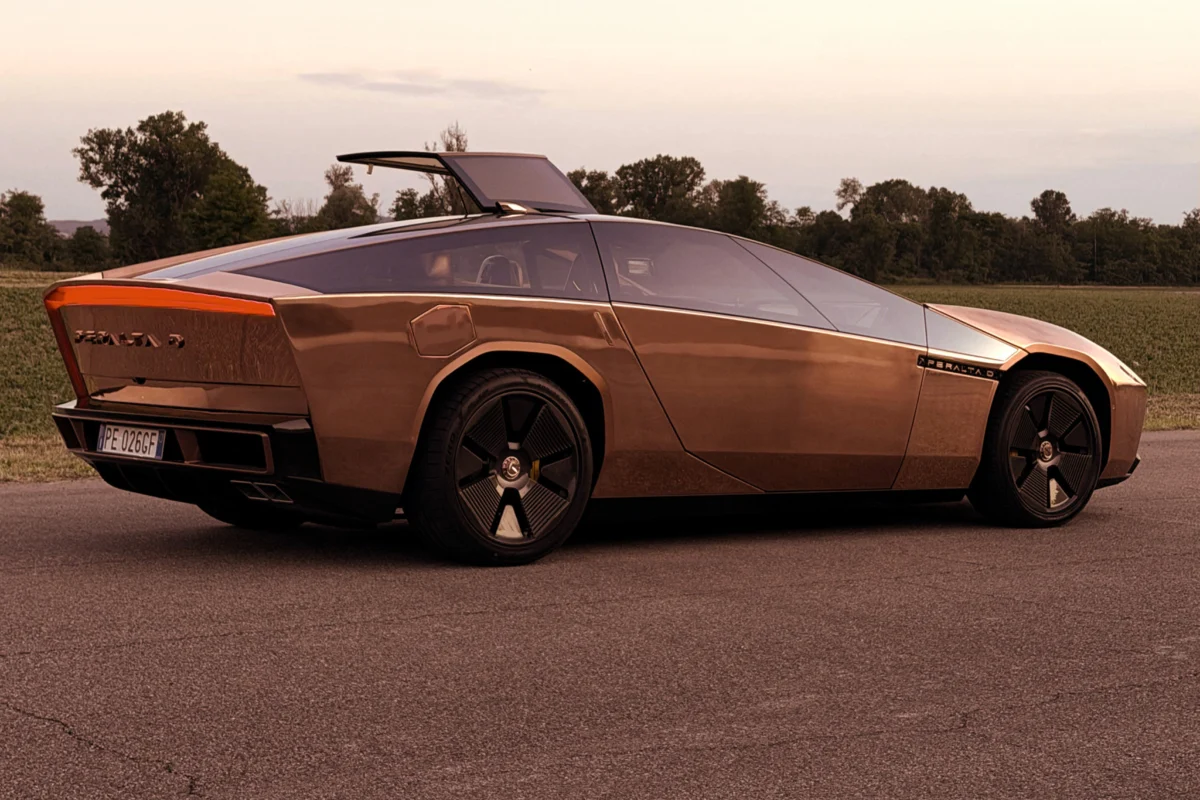
The Peralta D, the latest creation from the Italian design house GFG Style, represents a radical departure from these traditional constraints. Commissioned as a bespoke one-off for Mexican industrialist Carlos Peralta, the Peralta D is a gran turismo that challenges the conventional wisdom of automotive metallurgy. Its body is constructed entirely from hand-hammered copper, a material virtually unheard of in contemporary car body design. Directed by Fabrizio Giugiaro, the CEO and founder of GFG Style, the project demonstrates what is possible when the limitations of cost and mass-market practicality are removed in favor of personal expression and industrial heritage.
The Evolution of the Peralta Series and the Giugiaro Legacy
The creation of the Peralta D is not an isolated event but the second chapter in a unique collaboration between Fabrizio Giugiaro and Carlos Peralta. Their professional relationship began with the Peralta S, a one-off vehicle inspired by the sharp, wedge-shaped aesthetics of the 1980s. While the Peralta S focused on high-polish finishes and retro-futuristic lines, the Peralta D was intended to forge a more visceral connection to the owner’s professional identity. Carlos Peralta’s business interests are heavily involved in the copper industry, leading Giugiaro to suggest the metal as the primary medium for the vehicle’s exterior.

The Giugiaro name carries immense weight in the annals of automotive history. Fabrizio’s father, Giorgetto Giugiaro, was named the "Car Designer of the Century" in 1999. His portfolio includes some of the most iconic silhouettes ever to grace the road, including the DeLorean DMC-12, the BMW M1, the original Lotus Esprit, and the first-generation Volkswagen Golf. Throughout his career, the senior Giugiaro designed for the industry’s most prestigious marques, including Ferrari, Lamborghini, and Bugatti.
In 2015, the father-and-son duo founded GFG Style to leverage their decades of experience toward a new frontier: bespoke coachbuilding. While the elder Giugiaro spent much of his career designing cars intended for production in the hundreds of thousands, GFG Style has increasingly focused on creating "industrial art" for individual collectors. The Peralta D is the culmination of this shift, blending the precision of modern engineering with the ancient craft of hand-formed metalwork.

Material Science: The Unorthodox Use of Copper in Automotive Design
Choosing copper as a primary body material presented a unique set of engineering challenges and surprises. Historically, copper has been avoided in automotive bodywork due to its density. Copper is significantly heavier than both steel and aluminum, which typically poses a threat to vehicle performance and fuel efficiency. However, Fabrizio Giugiaro noted that the material offered unexpected advantages during the fabrication process.
"It really surprised us that copper proved to be much more malleable than the aluminum we had worked with previously," Giugiaro stated during the unveiling. "It is also considerably easier to weld and polish." This malleability allowed the craftsmen at GFG Style to achieve the Peralta D’s "brutalist" angularity—a design language characterized by sharp creases and flat planes that would be difficult to execute in stiffer alloys without specialized stamping equipment.

To mitigate the weight penalty of the copper skin, GFG Style utilized a sophisticated multi-material approach. The copper panels are not load-bearing; instead, they are mated to a high-strength, ultra-lightweight internal structure composed entirely of carbon fiber. This hybrid architecture allowed the design team to maintain the structural integrity and performance characteristics required of a modern gran turismo while showcasing the aesthetic warmth and unique patina of the copper exterior.
Technical Specifications and the Maserati Foundation
Beneath the artisanal copper bodywork, the Peralta D is built upon the chassis and mechanical heart of a 2025 Maserati GranTurismo Trofeo. By utilizing the Maserati platform, GFG Style ensured that the Peralta D would not merely be a static showpiece but a fully functional, high-performance grand tourer capable of modern road speeds and handling.

The Maserati GranTurismo Trofeo is powered by the "Nettuno" 3.0-liter twin-turbocharged V6 engine. This powerplant, which utilizes Formula 1-derived twin-combustion technology, produces approximately 542 horsepower and 479 lb-ft of torque in its standard configuration. This enables a 0-60 mph sprint in roughly 3.3 seconds and a top speed in excess of 190 mph. By retaining this powertrain, the Peralta D benefits from an advanced all-wheel-drive system and an eight-speed automatic transmission, ensuring that the vehicle’s performance matches its striking visual presence.
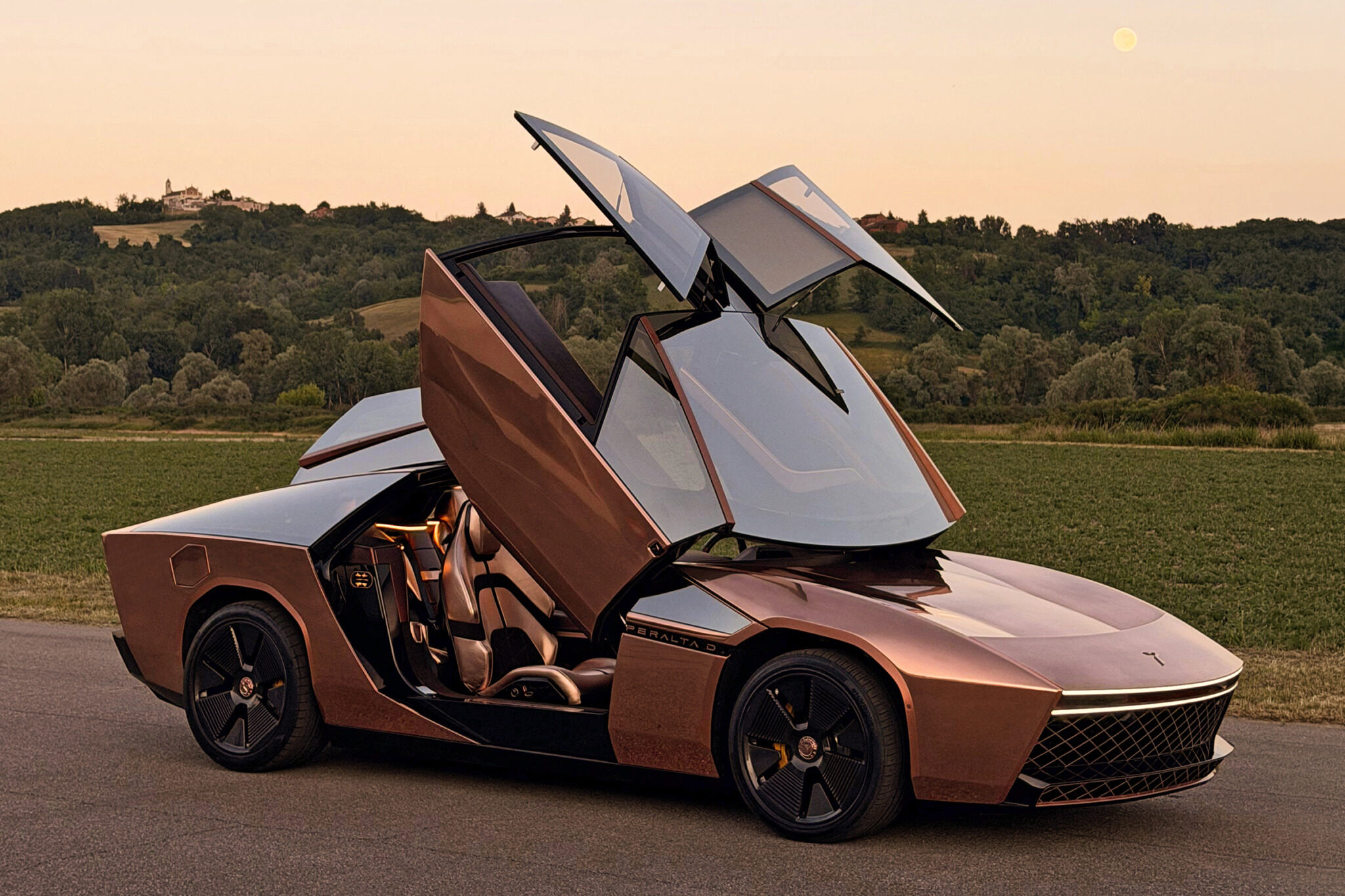
The design of the Peralta D, however, shares almost nothing with the curvaceous, fluid lines of the donor Maserati. The Peralta D features a low-profile, wedge-shaped silhouette that pays homage to the "folded paper" era of car design pioneered by the elder Giugiaro in the 1970s. One of the most distinctive features is the door mechanism. Moving away from traditional hinges, the car utilizes a complex opening system inspired by the Peralta S. This includes a single-motion dome and independently opening side windows, combined with gullwing-style rear openings to provide access to the passenger compartment.

Interior Craftsmanship and Bespoke Features
The interior of the Peralta D continues the copper theme, utilizing high-grade leather dyed to match the exterior’s metallic hue. The cabin is designed as a 2+2 gran turismo, though the rear seating is optimized for short journeys. The interior design reflects the client’s desire to create a vehicle that celebrates his family, specifically his daughters.
To this end, the Peralta D includes several highly personalized features that are rarely seen in standard performance vehicles:

- Passenger-Side Vanity Station: The dashboard in front of the passenger seat incorporates a dedicated makeup station, complete with an illuminated mirror and specialized storage for cosmetics.
- Integrated Refreshment Suite: Between the rear seats, a retractable refrigerator has been custom-engineered to hold a single bottle of champagne.
- Bespoke Glassware: The vehicle comes equipped with four hand-crafted copper glasses, ensuring that the material theme is consistent even in the vehicle’s accessories.
The digital architecture of the car—including the infotainment system and the digital instrument cluster—remains largely derived from the Maserati GranTurismo, providing the owner with modern connectivity, navigation, and vehicle diagnostics.
The Resurgence of Coachbuilding and Future Implications
The Peralta D arrives at a time when the ultra-luxury automotive market is experiencing a significant resurgence in bespoke coachbuilding. In an era where even the most expensive production supercars are produced in the thousands, the world’s wealthiest collectors are increasingly seeking "one-off" vehicles that offer total exclusivity. Major manufacturers like Rolls-Royce, with its Coachbuild division, and Ferrari, through its Special Projects program, have recognized this demand.

However, GFG Style’s approach differs by remaining an independent design house capable of working across different platforms and experimenting with non-traditional materials. The success of the Peralta D suggests that there is a niche for "industrial-themed" luxury—vehicles that utilize materials and forms derived from the owner’s personal history or business legacy rather than just traditional luxury cues like wood and chrome.
Fabrizio Giugiaro has already hinted that the Peralta D is not the end of his experimentation with unorthodox materials. "I have another alternative material in mind, one that has only ever been used once before," he teased, suggesting that the future of GFG Style will continue to push the boundaries of what constitutes an automobile’s skin.

Analysis of Impact
The Peralta D serves as a proof of concept for the viability of copper in high-end automotive applications. While the material is unlikely to see use in mass production due to its cost—copper prices are notoriously volatile and currently sit near historic highs—its use in the Peralta D highlights a shift toward "material-forward" design.
From a technical standpoint, the integration of a copper skin with a carbon fiber skeleton provides a blueprint for how heavy, decorative materials can be utilized without compromising the power-to-weight ratios essential for modern performance. Furthermore, the Peralta D reinforces the Giugiaro legacy, proving that the family remains at the forefront of automotive innovation, even as the industry transitions toward electric powertrains and autonomous technologies. By focusing on the "soul" of the machine through material and form, GFG Style ensures that the art of the automobile remains relevant in a changing technological landscape.