admin
admin
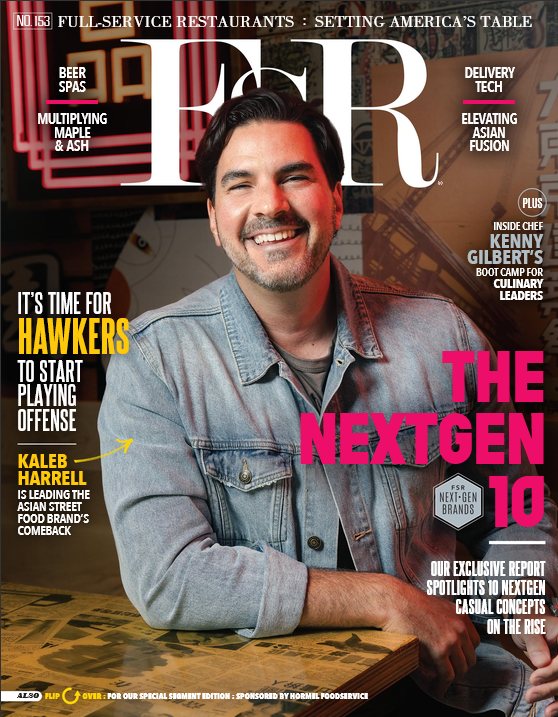
Following her recognition as a standout leader in the casual dining sector, Cai Palmiter has transitioned from shaping the narrative of a single breakout brand to overseeing a diverse multi-concept portfolio at JW Concepts. This move, coming less than a year after her appearance on the cover of FSR magazine, marks a significant evolution in her career and reflects a broader trend within the hospitality industry: the rise of the high-sophistication multi-unit franchise operator. As the newly appointed Head of Marketing for JW Concepts, Palmiter now manages a collection of brands that includes JINYA Ramen Bar, Paris Baguette, Kung Fu Tea, Koyo Hand Roll Bar, Angry Chickz, Gen Korean BBQ, and The Baked Bear. Her current focus represents a shift from "brand building" to "ecosystem building," a strategy aimed at leveraging operational efficiencies across disparate culinary concepts while maintaining the hyper-local authenticity required to drive modern foot traffic.
The Evolution of a Marketing Leader: From JINYA to JW Concepts
Palmiter’s professional trajectory reached a public peak in early 2024 when she was featured for her role in JINYA Ramen Bar’s rapid expansion. During her tenure at JINYA, she was credited with streamlining the brand’s identity and facilitating its "meteoric rise" in the competitive Japanese soul food space. However, the transition to JW Concepts necessitated a fundamental change in perspective. Rather than focusing on a singular brand voice, Palmiter is now tasked with managing a "brand ecosystem."
In the multi-unit franchise model, the challenge lies in the dual nature of the responsibility. Palmiter must simultaneously support the national marketing directives of franchisors while executing localized, unit-level strategies that resonate with specific demographics in markets like Houston and beyond. This "zoom-out" approach allows for a cross-pollination of ideas; strategies that succeed in the dessert-heavy environment of The Baked Bear can, when adjusted for context, inform the digital engagement tactics for a high-volume concept like Gen Korean BBQ.
Strategic Portfolio Management and Operational Efficiency
JW Concepts operates in a high-growth segment of the franchise world. By diversifying across ramen, Korean BBQ, bakeries, and boba tea, the group mitigates the risk associated with shifting consumer tastes. Palmiter’s role is to ensure that while these brands remain distinct in the eyes of the consumer, they are supported by a unified backend infrastructure.
The marketing strategy under Palmiter’s leadership prioritizes "invisible efficiencies." This includes the consolidation of vendor partnerships, the streamlining of digital ordering platforms, and the implementation of shared data analytics across the portfolio. By centralizing these functions, JW Concepts can scale more rapidly than operators who treat each unit as an isolated entity. Palmiter asserts that while the guest experience must remain authentic and "unmanufactured," the business logic behind that experience must be rigorous and standardized.
Case Study in Ground-Up Development: Koyo Hand Roll Bar
A pivotal element of Palmiter’s current portfolio is Koyo Hand Roll Bar, a concept developed internally by JW Concepts founder Jim Wang. Unlike scaling an existing franchise, building a brand from the ground up requires a different set of marketing muscles. The launch of Koyo provided a testing ground for a "suburb-first" expansion strategy.
In an industry where trendy concepts often prioritize high-traffic "foodie" districts in urban centers, JW Concepts opted to debut Koyo in a family-oriented suburban environment. The analytical reasoning behind this move is grounded in consumer behavior: if a concept can generate consistent demand in an area where dining out is a deliberate, planned event rather than a result of foot traffic, it proves the strength of the product. Palmiter notes that this formula relies on human intuition and historical performance data rather than speculative AI modeling. Success in the suburbs serves as a proof-of-concept, suggesting that the brand will "dominate" once it eventually moves into high-density urban markets.
The Shift from Impressions to Intentional Traffic
In an era of digital saturation, Palmiter has become a vocal advocate for moving beyond "vanity metrics." While many marketing departments prioritize impressions and reach, Palmiter’s strategy for JW Concepts focuses on conversion and physical foot traffic. This is achieved through a heavy emphasis on micro-influencer campaigns and localized marketing activations.
Data from the hospitality sector suggests that micro-influencers—those with smaller but more highly engaged and localized followings—often yield a higher Return on Investment (ROI) for restaurants than celebrity influencers. Palmiter’s approach involves identifying influencers who have a genuine affinity for the brand, ensuring that the resulting content feels like a recommendation rather than an advertisement. These campaigns are strictly tied to "real" reasons to visit, such as limited-time offers (LTOs) or unique in-store experiences, ensuring that digital engagement translates into occupied seats.
Human Capital and the "Emerging Leader" Initiative
Beyond marketing strategy, Palmiter is addressing one of the hospitality industry’s most persistent challenges: talent retention. The "Great Resignation" and subsequent labor shortages have highlighted the high cost of employee turnover. Industry estimates suggest that losing a single front-line employee can cost a restaurant upwards of $5,000 in recruiting and training, with that figure climbing significantly higher for management roles.
Palmiter advocates for a shift in how the industry views professional development. She proposes that companies should invest in "emerging leaders"—the junior analysts, line cooks, and marketing assistants who manage the daily "chaos" of operations—by providing them access to high-level industry conferences and networking opportunities usually reserved for the C-suite.
This philosophy is mirrored in the internal structure of JW Concepts. Founder Jim Wang has established a culture of promoting from within, with some employees remaining with the group for over two decades. By offering high-performing staff actual ownership stakes and pathways to becoming operating partners, the group transforms a job into a career. Palmiter argues that this level of empowerment is the most effective tool for retaining the talent necessary to sustain a multi-brand ecosystem.
Remote Leadership and the Rejection of Industry "FOMO"
A significant personal and professional shift for Palmiter over the last two years has been the move to a remote leadership model. This transition has allowed her to move away from the "always-on" culture of traditional corporate offices, which often prioritizes reactive management over proactive strategy.
By working remotely and traveling to Houston only for critical milestones—such as restaurant openings or executive briefings—Palmiter has adopted a "slower, more intentional pace." She posits that this "slow time" is essential for deep strategic thinking. It allows a leader to declutter the noise of daily operations and focus on long-term brand health.
Furthermore, Palmiter has addressed the psychological pressure prevalent in high-achieving circles: the Fear of Missing Out (FOMO). She argues that the drive to constantly prove one’s value through titles or constant presence can lead to burnout and diminished leadership quality. Her advice to other hospitality executives is to embrace the "sharper version" of themselves that emerges when they prioritize family and personal well-being over industry noise.
Implications for the Future of Hospitality Marketing
The career of Cai Palmiter serves as a bellwether for the future of the restaurant industry. Her move to JW Concepts highlights several key shifts:
- The Rise of the Mega-Franchisee: Multi-unit operators are becoming the dominant force in expansion, requiring leaders who can navigate the complexities of multiple brand identities simultaneously.
- Operational Marketing: The most effective marketing leaders are those with a background in operations (GMs). This ensures that marketing promises are actually deliverable at the unit level.
- Relationship-Based Growth: Palmiter’s appointment at JW Concepts was the direct result of a long-standing relationship with Jim Wang. In an increasingly automated world, personal trust and professional reputation remain the primary drivers of executive mobility.
- Authenticity as a Metric: As consumers become more skeptical of manufactured brand experiences, the ability to maintain "authentic" differences between brands in a portfolio will be the differentiator between success and failure.
As JW Concepts continues to expand its footprint with brands like Angry Chickz and Paris Baguette, Palmiter’s "ecosystem building" approach will likely serve as a model for other multi-unit operators. By focusing on people, intentionality, and the intersection of marketing and operations, she is helping to define a more sustainable and sophisticated era of hospitality leadership. The transition from the cover of a magazine to the helm of a multi-brand powerhouse underscores a central theme of her career: that true leadership is found not in the pursuit of the next title, but in the intentional building of lasting professional ecosystems.