admin
admin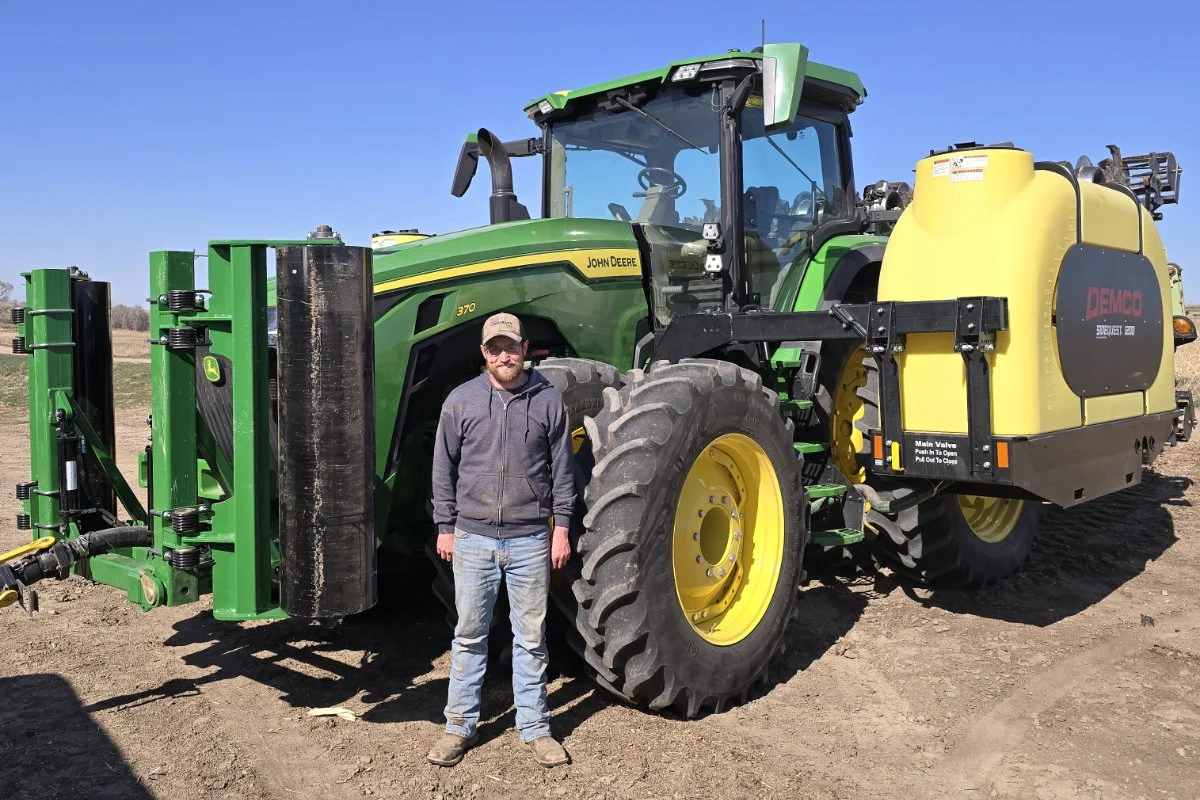
Across the American heartland, a quiet revolution is taking root as farmers, long the stewards of their land, now seek to reclaim stewardship over their digital footprint. Farmers are increasingly organizing against powerful equipment and seed companies, alleging these corporations are profiting from agricultural data collected from their fields and potentially using it against them. While similar legislative efforts in other states have faltered, Nebraska has emerged as a trailblazer, enacting the first U.S. law to establish data ownership rights for agricultural producers, sparking a broader national dialogue about the future of farming in the digital age.
The Digital Transformation of Agriculture: A Double-Edged Scythe
For generations, farming has been a blend of tradition, empirical observation, and hard-won experience. Today, it is increasingly a sophisticated science experiment, heavily reliant on data. Precision agriculture, a market valued at $9.35 billion in 2025 and projected to soar to $16.73 billion by 2030 with an annual growth rate of 12.2 percent, according to The Business Research Company, has transformed how crops are cultivated and livestock managed. This technological evolution brings undeniable efficiencies, enabling farmers to optimize yields, reduce waste, and manage resources with unprecedented accuracy. However, this advancement has also introduced a complex web of data collection, ownership, and control that pits individual farmers against the formidable might of multinational ag-tech conglomerates.
Guy Mills, who cultivates corn, soy, and alfalfa in central Nebraska, embodies this modern agricultural paradox. He meticulously collects data on soil types, pH levels, and nutrient uptake, augmenting handwritten notes and spreadsheets with advanced applications like AgLeader software to pinpoint planted seeds and track their performance. His reliance on digital tools extends to creating fertilizer and seed prescriptions through the Deere Operations Center portal, a common practice among contemporary farmers. Yet, even as he embraces data, Mills was startled by the sheer volume of information a single John Deere combine amassed during a recent harvest—an astonishing 36,000 data points.
This torrent of data, from yield metrics and input applications to oil pressure readings on a tractor, fuels a profound apprehension among farmers like Mills. "I don’t want people collecting that data, because they can use it against me," he asserts, articulating a fear that resonates deeply within the agricultural community. The concern is multifaceted: that proprietary data could be leveraged to influence commodity prices, dictate insurance premiums, inform lending decisions, or even create a competitive disadvantage for independent producers facing corporate monopolies in equipment, software, seeds, and inputs. The potential for such exploitation, Mills suggests, threatens to make farming unsustainable for future generations.
Nebraska’s Pioneering Legislation: A Landmark for Farmer Data Rights
Against this backdrop of mounting anxiety, Nebraska has stepped forward with groundbreaking legislation. The Nebraska Agricultural Data Privacy Act, passed unanimously in April 2026 and effective since July, marks a significant turning point. It is the first U.S. law to unequivocally establish data ownership rights for farmers, treating agricultural data as a "proprietary business asset" belonging to the producer. This law applies to data across six critical categories: agronomic, climate and weather, land, livestock, management, and sustainability.
State Senator Mike Jacobson, a Republican, introduced Nebraska Legislative Bill 525 in January 2025 at the request of Governor Jim Pillen, also a Republican. The bill garnered broad support from various farm groups, reflecting a consensus on the urgency of the issue. Although it stalled in 2025, it sailed through the legislature without opposition in 2026, a testament to the unified front presented by Nebraska’s agricultural stakeholders.
Crucially, the Act mandates that third parties handling or controlling farm data cannot sell it without the producer’s explicit prior written consent. This consent must be separate from any general terms of service or data-use agreements, ensuring farmers retain genuine control. Businesses operating within Nebraska are required to update their contracts to comply by January 1, 2027. Violations can result in the state attorney general seeking an injunction or recovering a $1,000 penalty per instance, with companies granted a 45-day curing period to address potential security breaches before fines are imposed.
For Guy Mills, the law represents a long-overdue rectification. "We’ve identified data as an asset, and farmers would no longer give that away for free," he states. "Now they can’t sell our data either. The law is finally catching up with the technology ag producers are using." This sentiment underscores a fundamental shift in perception: agricultural data is no longer merely a byproduct of advanced farming but a valuable commodity that farmers should control and from which they should benefit.

A National Movement Takes Root: Federal and State-Level Battles
Nebraska’s legislative success has ignited a broader national conversation. In September 2026, Nebraska Senator Pete Ricketts, a Republican, introduced a federal version of the state’s bill, the Agricultural Data Privacy Act, to protect farmers and ranchers nationwide. Simultaneously, a draft of separate federal legislation backed by Democrats is circulating, aiming to further advance data rights for agricultural producers. The proposed Democratic bill, as reviewed by Civil Eats, would encompass both raw and aggregated data and provide farmers with the right to sue suspected violators, signaling a bipartisan recognition of the issue’s gravity.
These legislative efforts emerge at a critical juncture for American agriculture. Farmers are grappling with inflationary pressures, tariffs, and diminishing support from U.S. Department of Agriculture (USDA) budget cuts. Concurrently, a populist wave of Big Tech legislation focused on consumer protection and privacy is sweeping across states, demonstrating a growing public demand for greater control over personal and business data. As attorney Reed Freeman, a partner at ArentFox Schiff specializing in data privacy, notes, "Big equipment in all industries is generating enormous amounts of machine data, and there is a fight over whose data that is, and this is just one manifestation." Unlike the heavily regulated health care and financial industries, agriculture has historically operated with minimal oversight regarding data handling, leaving farmers vulnerable.
Nebraska’s precedent has spurred renewed action in other states where similar efforts previously stalled. In April 2026, the Iowa House overwhelmingly voted to incorporate data-rights protections into an existing right-to-repair bill, HF2763. This proposed addition extended protections to data "processed, analyzed, aggregated, compiled, or otherwise transformed through the application of proprietary algorithms, analytical methods, creative arrangement, or other intellectual processes." The bill’s text explicitly highlighted a core grievance: "Seed companies, insurers, commodity traders, agricultural technology firms, financial institutions, government agencies, and others pay premium prices for agricultural data insights, while agricultural producers receive no portion of that value." However, despite strong support, the Iowa Agricultural Data Ownership and Market Competition Act did not come to a vote in the state Senate before adjournment.
Similarly, in Colorado, House Bill 26-1270, which sought to grant farmers rights to own and monetize both their raw and transformed data, was postponed in March 2026 after facing open opposition from industry giants like John Deere. Missouri’s House Bill 3409 also failed, despite its comprehensive scope encompassing aggregated data and proposing substantial penalties of up to $50,000 per violation, with farmers empowered to sue for $10,000 in statutory damages. The repeated failure of these more robust bills underscores the powerful lobbying efforts of ag-tech companies and the legislative hurdles faced by farmer advocacy groups, even as the "fight for survival" continues.
Industry Reactions and the Nuances of Compliance
The passage of Nebraska’s law, despite its unanimous support, elicited a measured response from the ag-tech industry. Deere & Company Assistant General Counsel April Price, listed as "neutral" during committee hearings, advocated for replacing the term "ownership" with "control" in the bill’s language. The final law, however, retained the stronger "ownership" terminology. Other major ag-tech players were notably absent from public opposition.
"It’s curious that this bill made it through without a big equipment or tech company saying, ‘Absolutely not now, not ever,’" observes attorney Reed Freeman. A Deere spokesperson informed Civil Eats that the company is "currently in the process of developing a full data policy that supports farmers" in light of the new law. AGCO also indicated it is reviewing the legislation’s impact on its offerings. Conversely, Climate FieldView software provider Bayer asserted that Nebraska’s law does not affect its existing practices. Corteva did not respond to requests for comment.
Some farm-data rights watchdogs, like diesel equipment engineer Kevin Kenney, who famously calls precision agriculture "the biggest transfer of wealth from traditional farm families to a few corporate entities that share this data among themselves," suggest that the industry’s muted public opposition might stem from the law’s perceived limitations. Kenney views Nebraska’s Act as incremental progress, noting that amendments "watered down" the original version. Initially, LB525 required third parties to obtain written consent before any analysis, sharing, or processing of data and banned companies from charging more for services to farmers who opted out of data sharing. These provisions were not retained in the final law.
A key limitation is that while the law prohibits third parties from selling farm data without consent, it does not explicitly prohibit them from sharing data for processing or authorized services. This distinction allows precision agriculture businesses to continue practices they characterize as benign and routine, such as outsourcing data storage to cloud providers like Amazon Web Services or Microsoft Azure. It also permits companies to transmit data on equipment performance or maintenance needs to tractor dealerships or to run data through proprietary algorithms and AI models—activities that generate significant value for the corporations. The law also requires "reasonable safeguards" for data protection but leaves the definition of "reasonable" open to interpretation, and critically, farmers lack a direct legal right to sue violators, leaving enforcement solely to the Nebraska attorney general’s office.
The Economic Battleground: Raw Data vs. Derived Insights

As farming becomes increasingly data-driven, with AI-enabled weed sprayers, GPS-guided autonomous tractors, and smartphone apps tracking field conditions, the question of who profits from the generated value looms larger. John Deere’s 2022 description of an "incremental addressable market opportunity" of $150 billion across its businesses, including precision farming, connectivity, and autonomous technologies, highlights the immense economic stakes. While Deere claims this value would be shared with customers, and estimates its technologies could deliver $72 per acre in value to a theoretical Iowa commodity farm, farmers and advocates remain skeptical.
"People see how big these companies are and the money they’re making, and they know they’re collecting all their data, and say, ‘I should be getting a piece of that; my data is clearly worth something,’" states Ben Craker, president of the nonprofit Agricultural Data Coalition. However, he adds, "on the flip side of that, the aggregated data set is what’s worth something." This distinction is crucial: Nebraska’s law does not protect "derived" data—information "modified, processed, analyzed, or compiled" to create "agronomic insights, reports, and predictive models." Nor does it protect aggregated data, which significantly increases in value when combined and analyzed across thousands of farms. This derived and aggregated data occupies a murky intellectual property middle ground, where proprietary corporate algorithms and emerging AI models generate immense profits.
Joshua Hjelmaas, a research specialist at the Iowa State University Center for Agricultural Law and Taxation, explains the economic reality: "The raw data is not worth really anything on an individual scale, but when it’s scaled up to thousands of farm operations, put into a model where they can derive analytical insights, that’s worth millions." This perspective underscores the power imbalance, where individual farmers produce the raw material, but corporations, through aggregation and algorithmic processing, extract the highest value.
However, agricultural rights advocate Willie Cade, a board member of the Repair Association, challenges the notion that only aggregated data holds significant value. "There’s a myth that only the large row-crop guys have data, that it’s only valuable data if you aggregate it in a large sum," he argues. Cade contends that data from even a single machine or field can yield lucrative insights for both farmers and software providers. Farmers can use their own data to benchmark crop performance, differentiate their products, and demonstrate sustainable practices, potentially unlocking new market value.
The Intersecting Fight for Right to Repair and AI’s Promise and Peril
The battle over farm data rights is inextricably linked to the growing "right to repair" movement. Right-to-repair bills, which seek to empower farmers to fix their own equipment rather than relying solely on manufacturers, have passed in 10 states, with dozens more considering similar legislation. Many of these bills address farm-equipment software, diagnostics, and, increasingly, data access. Farmers and right-to-repair advocates fear that restrictive data practices, combined with proprietary software and diagnostics, create a dependency on manufacturers that undermines farmer autonomy and increases operational costs.
Artificial intelligence, while holding immense promise for agriculture, also amplifies these concerns. AI-powered tools can offer farmers invaluable insights, optimizing everything from planting to harvesting. However, as engineer Kevin Kenney warns, "The assault versus the family farm is way more efficient when they have your playbook. They’ve got our playbook, and they’re playing it against us." He argues that allowing unchecked access to farmers’ data sets has already granted agribusinesses an unfair strategic advantage.
Mills, despite embracing technology, insists that farmers don’t necessarily need tech giants to analyze their data. "Anyone can learn," he states, drawing on his 52 seasons of experience. This sentiment reflects a desire for empowerment and control over their own operational intelligence, rather than passively ceding it to corporations.
Looking Ahead: The Evolving Landscape of Farm Autonomy
The Nebraska Agricultural Data Privacy Act represents a crucial first step in a long and complex struggle for farmer autonomy in the digital age. As Bruce Rieker, the Nebraska Farm Bureau’s senior director of state legislative affairs, notes, "We recognize that agricultural data policy will continue to evolve as technology advances." The rapid development of AI and ever more sophisticated precision agriculture tools ensures that the debate over data ownership, control, and monetization will only intensify.
For advocates like Willie Cade, agricultural data is more than just information; it’s "the second harvest." He explains, "It’s another way in which farmers produce value that can go to market and make money, if they aren’t excluded from it by corporate restraints." The ongoing legislative battles, both at state and federal levels, are not merely about routine business regulation; they are about defining the fundamental rights of producers in an increasingly digital and data-driven food system. The success of Nebraska’s law offers a glimmer of hope that the legal framework can indeed catch up with technological advancements, ensuring that the benefits of the data revolution are shared equitably and that the integrity and independence of the family farm are preserved. The fight for agricultural data ownership is a pivotal chapter in the broader narrative of rural America’s struggle for economic justice and self-determination.