admin
Timmy Souza is fresh off the overnight shift at a substance abuse treatment center when he pulls on his waders to go fishing for quahogs, a hard-shelled clam. It’s a sunny October morning in Falmouth, Massachusetts, and the crisp air carries the scent of salt and possibility. He grabs a rake and a basket, steps out into Bourne’s Pond, and begins scraping the silty bottom, the rhythmic sounds a familiar comfort. The rake’s metal tines produce a high-pitched ting when they collide with a rock, but when he hits the quahogs, their hard shells find a lower register: tunk. It’s a friendly, familiar sound for Souza, a sound that has defined much of his life and even inspired the names of his cats, Tunka Tunka.
For generations, the estuaries of Falmouth, a picturesque town on Cape Cod, were a vibrant source of livelihood and sustenance. Souza, now 65, began harvesting shellfish as a child, recalling a time when blue crabs, oysters, soft-shell clams, and quahogs were so plentiful that the waters teemed with life. Scallops, in particular, were once so abundant in the sprawling eelgrass meadows that it took longer to shuck them than to gather them. As an adult, Falmouth’s rich estuaries continued to offer Souza a vital lifeline, providing a means to make ends meet in a community with historically limited economic alternatives. However, the abundance he remembered from his youth gradually became a distant memory, replaced by a stark reality of declining catches and environmental degradation.
The Vanishing Harvest: A Historical Perspective
The decline of Falmouth’s once-thriving shellfishing industry can be traced back decades, a gradual erosion of natural wealth driven primarily by unchecked nitrogen pollution. This insidious problem, rooted in rapid coastal development and a heavy reliance on outdated septic systems for wastewater management, began to bombard the estuaries with excess nitrogen until their natural buffering capacities were overwhelmed. The ecological consequences were profound and widespread, leading to a precipitous crash in shellfish populations. A town that once boasted hundreds of commercial diggers now caps licenses at a mere 50, with most, like Souza, working part-time to supplement other incomes. The economic ripple effect was devastating for local families and the community at large. "Poverty," Souza states bluntly, reflecting the harsh reality faced by many who depended on the sea. "That’s all I can tell you."
The scale of the problem is significant. The state has officially designated nearly all of Falmouth’s 15 shallow tidal estuaries as impaired, signaling severe ecological distress. This mirrors a broader national trend; roughly two-thirds of the nation’s estuaries face moderate to high levels of eutrophication, according to the U.S. Environmental Protection Agency. While agricultural runoff is a major culprit in many regions, in coastal communities like Falmouth, particularly those in New England, Long Island, and the South, the primary driver is liquid effluent from septic systems that seeps into groundwater and eventually contaminates waterways. The consequence: a staggering 85 percent reduction in U.S. commercial shellfish landings between 1980 and 2010, underscoring the urgency of remediation efforts.
Nitrogen’s Silent Scourge: Understanding Eutrophication
The mechanism behind this ecological collapse is a process known as eutrophication, fueled by excess nitrogen pollution. In Falmouth’s estuaries, this surge of nutrients triggered massive algal blooms. These abundant algae, often appearing as murky green or brown mats, blot out sunlight, effectively starving and killing off crucial aquatic plants like eelgrass. Eelgrass meadows are not merely underwater vegetation; they are vital foundational habitats, stabilizing the seafloor, providing shelter and nurseries for countless marine species, and acting as natural filters. Their demise initiates a vicious cycle: as bacteria decompose the dying plants, they consume vast amounts of dissolved oxygen, creating anoxic or hypoxic (low-oxygen) "dead zones." These conditions make the environment inhospitable for most marine life, including shellfish, which require oxygen to survive.
Souza describes the grim reality in Falmouth’s tidal ponds where eutrophication has created a thick layer of muck, "like black mayonnaise or molasses," too dense and polluted for shellfish to filter feed effectively. This suffocating sludge spreads, further decimating harvests and compounding the ecological damage. The historical abundance of scallops, once thriving in these now-vanished eelgrass beds, serves as a poignant reminder of what has been lost.
Falmouth’s Multi-Front War: A Comprehensive Remediation Strategy

After decades of decline, Falmouth is finally witnessing a turning tide. The town has embarked on an ambitious and multifaceted remediation strategy, a testament to its commitment to restoring its precious marine ecosystems and the livelihoods they support. This comprehensive response includes three primary tactics: the strategic expansion of municipal sewer systems, the innovative deployment of underground water treatment barriers, and the revitalization of oyster aquaculture. Each method plays a crucial role, either preventing nitrogen from ever reaching the water or actively removing it once it has infiltrated the estuaries.
The initial results are promising. After more than 20 years of closure, 33 acres in Falmouth Harbor have reopened for seasonal harvest. Nearby Little Pond is set to follow suit, with another 28 acres slated for reopening soon. Shellfish harvests are making a remarkable comeback; since 2019, oyster production alone has tripled, reaching more than 3 million pieces annually. Falmouth’s proactive efforts have not only restored hope for a healthier future for its estuaries but also for the resilient harvesters who depend on them. Moreover, this integrated approach could offer invaluable lessons and a potential blueprint for countless other coastal communities across the country grappling with similar challenges of polluted waters and plummeting shellfish populations.
Sewer Expansion: Tackling the Source
Recognizing that prevention is paramount, Falmouth has made significant investments in upgrading its wastewater infrastructure. The town, with its 33,000 year-round residents swelling to around 100,000 during the summer, has long relied on individual septic systems. These systems, while effective for basic wastewater treatment, are notoriously inefficient at removing nitrogen, allowing nutrient-rich effluent to seep into the groundwater and eventually into the surrounding estuaries.
In 2016, Falmouth took a monumental step, investing $44 million to construct a modern sewer system connecting approximately 1,400 homes and businesses within the Little Pond watershed. The impact was swift and dramatic. In less than a decade, the pond has already met its stringent nitrogen reduction targets, demonstrating the immediate and profound benefits of removing septic effluent from the equation. Building on this success, Falmouth is now allocating another $53 million to link roughly 800 households around Great Pond to the sewer network.
However, the path to full sewering is long and costly. Currently, only about 10 percent of the town’s parcels are connected to sewers. The estimated cost of fully connecting Falmouth would run well into the hundreds of millions, if not billions, of dollars, making it an economically prohibitive solution on its own. This fiscal reality underscores the critical need for a diverse range of lower-cost, complementary nitrogen reduction methods to achieve the town’s ambitious water quality goals.
Permeable Reactive Barriers: An Underground Defense
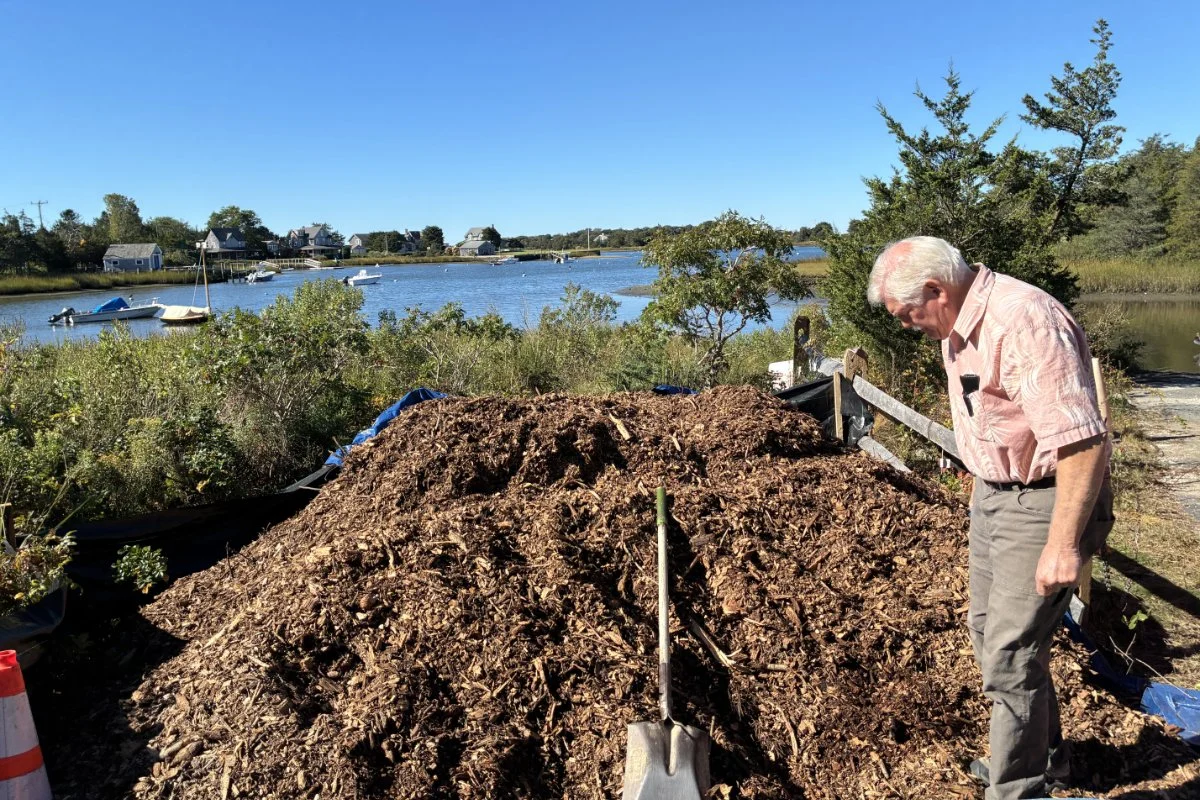
One such innovative and cost-effective solution being deployed in Falmouth is the permeable reactive barrier (PRB). In early October, Ken Foreman, a distinguished research scholar at the Marine Biological Laboratory in nearby Woods Hole, oversaw the installation of a PRB at the edge of West Falmouth Harbor. This technology acts as an underground wall, strategically placed to intercept polluted groundwater and denitrify it before it can reach the estuary. While sewering removes nitrogen before it enters the groundwater, the PRB is a shoreside solution that removes it after it has entered but before it hits the sensitive estuarine waters.
The specific barrier being installed, costing approximately $300,000, targets a significant nitrogen plume originating from a municipal wastewater treatment plant located uphill of the harbor. This facility, particularly in the 1990s, was a major contributor to the severe eutrophication that devastated eelgrass beds and shellfish populations in the area. The construction involved drilling a nearly 100-foot span of holes, each about 25 feet deep, which were then filled with woodchips. As bacteria naturally decompose the carbon in the woodchips, they consume all available oxygen. This forces other bacteria to utilize nitrate in the groundwater as an oxygen source, effectively converting it into harmless nitrogen gas, which then dissipates into the atmosphere.
Permeable reactive barriers represent a relatively new but rapidly evolving technology. First deployed in Sunnyvale, California, in the mid-1990s, they have since been implemented in over 200 locations worldwide, demonstrating their versatility in removing various nutrients, including phosphorus, which causes eutrophication in freshwater systems. The lifespan of these barriers can be substantial; Foreman notes that a barrier he installed 20 years ago at the head of nearby Waquoit Bay is still effectively removing nitrogen. Should a barrier cease to function, it can be rejuvenated with fresh woodchips. Further inland, Foreman’s project will install another barrier using emulsified vegetable oil as a carbon source, providing an additional layer of nitrogen removal before the groundwater reaches the harbor.

The concept holds significant promise beyond coastal communities, extending to agricultural settings where fertilizer runoff is a major concern. In the Midwest, woodchip bioreactors used to denitrify farm drainage have shown effectiveness for over a decade. For densely populated coastal areas like Falmouth, which developed extensively before comprehensive sewer systems were in place, PRBs offer a valuable, scalable, and environmentally sound tool. Foreman emphasizes their role: "It’s one part of the solution to how we control nutrient inputs to nutrient-sensitive systems."
Oyster Aquaculture: Nature’s Filter and Economic Catalyst
As the sun rises, Pete Chase pulls his skiff up to a boat ramp, returning from his oyster farm in the Eel River, just east of Bourne’s Pond. He’s back with 1,200 oysters, destined for a local fish market and raw bar. Chase, a full-time fisheries biologist and part-time farmer, brings 15 years of aquaculture experience from Buzzards Bay to Falmouth. He established his farm in these protected waters in 2019, as an integral component of the town’s nitrogen reduction program. Open ocean farming, he explains, presents greater challenges in terms of gear, labor, time, and volatile conditions. The opportunity to participate in Falmouth’s estuarine program was a clear choice.
Chase’s farm is one of three half-acre pilot sites established to combat eutrophication and bolster the redevelopment of Falmouth’s fisheries. The town facilitates this by leasing essential farming gear—bags, floats, storage, and upwellers for growing seed oysters—to farmers. In return, the town receives 7 cents on each of the first 280,000 oysters sold annually, capping at $19,600, with farmers retaining the rest. This arrangement, Chase declares, is "a win for everyone." Farmers gain access to sites and equipment, the town deploys an "army of oysters" in its fight against eutrophication, and residents benefit from locally sourced shellfish and cleaner recreational waters.
The ecological benefit of oysters is remarkable: they are natural filter feeders, each capable of filtering up to 50 gallons of water a day. As they filter, they accumulate nitrogen in their shells and tissue. When these oysters are harvested, that nitrogen is permanently removed from the ecosystem, making them an environmentally friendly, and perfectly safe, meal. This process, known as "bioextraction" or "nutrient removal through shellfish cultivation," has been proposed as a significant solution to eutrophication in both the U.S. and Europe. Studies, such as one from NOAA and the U.S. Geological Survey, suggest that at a large enough scale, oyster aquaculture could potentially remove all the nitrogen polluting major estuaries like the Potomac River. Another study highlighted that current oyster production in Long Island Sound already removes over 1 percent of nitrogen, generating millions of dollars in ecosystem value. For impacted coastal communities, oysters offer a living, biological remedy to a man-made problem.
Chase has observed tangible improvements around his farm, noting increased water clarity. His oyster farm has also enhanced local biodiversity, providing shelter among the oyster bags for various marine animals, including blue crabs. "We can tell that it’s having benefits locally," he affirms. In 2025, the aquaculture program surpassed its target, removing 180 kilograms of nitrogen—the equivalent of connecting 37 single-family homes to a sewer system, according to Eric Karplus, a scientific consultant on the project.
Signs of Revival: Tangible Improvements and Renewed Hope
The combined efforts are yielding palpable results. The reopening of 33 acres in Falmouth Harbor and the impending reopening of another 28 acres in Little Pond are significant milestones, demonstrating the direct impact of reduced nitrogen loads. The tripling of oyster production since 2019 speaks to both the improved water quality and the success of the aquaculture initiatives. These successes are fostering a renewed sense of optimism among those who have witnessed the decline firsthand.
Community engagement is a cornerstone of this revival. Timmy Souza is one of several hundred volunteers who actively support the aquaculture program, contributing by building and maintaining farming gear and planting millions of oyster, quahog, and scallop seeds. He regularly navigates the shoreline, akin to a modern-day Johnny Appleseed, spreading handfuls of fingernail-sized quahogs in areas where he believes they will thrive. Often, when he dons his waders to fish, he is harvesting quahogs he himself planted two or three years prior, a direct and satisfying connection to the restoration process.
Falmouth also operates five of its own aquaculture sites, distributing the harvested shellfish town-wide for residents to enjoy, further embedding the program within the community. Last spring, the town approved $450,000 in additional funding to expand the aquaculture program, signaling a strong commitment to its continued growth. Chuck Martinsen, the shellfish constable who spearheaded the program, anticipates adding dozens more farms to the town’s portfolio within the next couple of years, which would greatly amplify its positive effects. A lengthy waitlist of interested applicants already underscores the popularity and perceived value of these initiatives.

Challenges Ahead: The Scale of Restoration
Despite the encouraging progress, Chuck Martinsen emphasizes that much work remains. On a boat ride through the town’s estuaries, he points out ongoing evidence of nitrogen pollution. Even near the mouth of Waquoit Bay, where ocean water rushes in to mix with freshwater, the surface remains murky and dotted with macroalgae. Farther into the ponds, the conditions visibly worsen. Navigating around a 22-acre aquaculture lease held by Cape Cod Oyster Company, a business with roots stretching back to the 19th century, Martinsen provides a critical perspective on oyster farming. "Everyone wants to think that oysters are the magic bullet, and they’re not," he states candidly.
To meet established water quality standards, Falmouth faces the daunting task of reducing its excess nitrogen by more than 42,000 kilograms annually. This figure represents more than a 200-fold expansion of its current aquaculture program, highlighting the immense scale of the challenge. However, Martinsen quickly adds, "But, you can use [oysters] in areas where sewering alone will not work. You need other options." This pragmatic view underscores the necessity of Falmouth’s multi-pronged approach, where each solution complements the others.
The town is also implementing upstream solutions to prevent nitrogen from entering the estuaries in the first place, such as a 2025 ordinance banning fertilizer application within 75 feet of a water body and within 20 feet of a storm drain. As these preventative measures take hold, aquaculture acts as a vital restorative force, reversing some of the existing harm and creating a positive feedback loop. The revenue generated from leasing aquaculture gear is reinvested by Falmouth into purchasing millions of bivalve seeds, which are then planted across town. This increases the shellfish available to commercial diggers and local families, simultaneously enhancing the town’s ecosystem benefits as the shellfish proliferate and continue their natural filtration.
A Blueprint for Coastal Resilience
Oyster farming, Martinsen stresses, is not merely an asset in nitrogen reduction; it is a profound step toward restoring the fisheries that have sustained these lands for generations, dating back to the Wampanoag people who inhabited Cape Cod long before English settlers arrived. Martinsen poetically refers to the aquaculture project as "nitrogen laundering"—a form of ecological alchemy that transforms a persistent source of pollution into the revitalization of a functional food system.
The journey to Falmouth’s current water quality nadir took decades, and the war on nitrogen will likely take decades more to fully win. Those who remember Falmouth’s past recall Waquoit Bay once producing thousands of bushels of scallops. When its crucial eelgrass disappeared, so did its abundant shellfish. "We really lost a lot," Martinsen laments. "We lost entire areas closed down to shellfishing."
Martinsen has a young son, and his greatest hope is to one day take him out to gather a bushel of scallops, a seemingly impossible dream for much of his career. Now, watching the tangible revival of Falmouth’s estuaries, he is ecstatic. "We are seeing the transformation," Martinsen says, his voice filled with a mixture of relief and pride. "We messed it up so bad, but we’re coming out of it now. It’s nice to have been part of that swing." Falmouth’s comprehensive, adaptive, and community-driven approach offers a compelling model of coastal resilience, demonstrating that with sustained effort, scientific innovation, and local commitment, even severely degraded ecosystems can be brought back from the brink, securing a healthier future for both nature and the communities that depend on it.