admin
Timmy Souza is fresh off the overnight shift at a substance abuse treatment center when he pulls on his waders, grabs a rake and a basket, and steps into Bourne’s Pond on a sunny October morning in Falmouth, Massachusetts. The rhythmic tunk of his rake hitting hard-shelled quahogs against the silty bottom is a familiar, comforting sound, a tribute he even bestowed upon his cats, Tunka Tunka. But this familiar rhythm of harvesting, a generational tradition for Souza, belies a stark reality: Falmouth’s once-bountiful estuaries have been battling a decades-long environmental crisis, pushing both the ecosystem and the livelihoods dependent on it to the brink. Now, a comprehensive and innovative remediation strategy, combining advanced infrastructure, novel scientific barriers, and living aquaculture solutions, is beginning to turn the tide, offering a blueprint for other coastal communities grappling with similar ecological degradation.
The Silent Crisis: Nitrogen Pollution and Ecological Collapse
For Souza, 65, the memories of plentiful shellfish harvests are vivid. As a child, blue crabs, oysters, soft-shell clams, and quahogs were abundant. Scallops were so prolific in the eelgrass meadows that gathering them was quicker than shucking. This natural bounty offered more than just food; it was an economic lifeline in a community where opportunities were often limited. However, over the past several decades, the vibrant aquatic ecosystems of Falmouth’s 15 shallow tidal estuaries have suffered a catastrophic decline. The culprit: excessive nitrogen pollution.
The process, known as eutrophication, begins innocuously. Nitrogen, primarily from liquid effluent seeping from residential septic systems, enters the groundwater and eventually flows into the estuaries. This excess nutrient acts as a fertilizer for marine algae, leading to explosive algal blooms. These dense blooms, in turn, block sunlight, suffocating vital aquatic plants like eelgrass. Eelgrass meadows are not merely underwater vegetation; they are foundational ecosystems, stabilizing the seafloor, providing crucial habitat for juvenile fish and shellfish, and acting as a natural filter.
As the abundant algae and dying eelgrass decompose, bacteria consume vast amounts of dissolved oxygen in the water. This creates hypoxic (low oxygen) or even anoxic (no oxygen) conditions, turning once-thriving habitats into inhospitable environments. Souza vividly describes the resulting layer of muck as "like black mayonnaise or molasses," a thick, silty blanket too dense for shellfish to filter feed effectively. This vicious cycle has decimated shellfish populations, leading to a profound ecological and economic collapse. The state of Massachusetts has officially designated nearly all of Falmouth’s estuaries as impaired, a grim testament to the widespread damage.
Nationally, the problem is pervasive. According to the U.S. Environmental Protection Agency (EPA), roughly two-thirds of the nation’s estuaries face moderate to high levels of eutrophication. While agricultural runoff is a significant contributor in many regions, for densely populated coastal communities like Falmouth, and others across Long Island, New England, and the South, the primary driver is wastewater from septic systems. The consequences have been severe: commercial shellfish landings in the U.S. experienced an alarming 85 percent reduction between 1980 and 2010, directly linked to degraded water quality. In Falmouth, a town that once supported hundreds of commercial diggers, licenses are now capped at a mere 50, most held by part-timers like Souza, struggling to make ends meet. "Poverty," Souza succinctly states, describing the profound economic and social impact of the decline on local families and the community’s heritage.

Falmouth’s Multi-Faceted Response: A Blueprint for Recovery
Recognizing the escalating crisis, Falmouth embarked on an ambitious, multi-pronged remediation strategy designed to tackle nitrogen pollution at every stage: preventing it from entering the water, removing it once it does, and actively restoring ecological function. This integrated approach combines traditional infrastructure upgrades with cutting-edge environmental engineering and innovative biological solutions, providing a model for sustainable coastal management.
Sewering: The Foundational Investment in Infrastructure
One of the most direct methods of preventing nitrogen pollution is to upgrade wastewater infrastructure. Falmouth has committed significant financial resources to expand its municipal sewer system, moving away from reliance on aging, often inadequate, septic systems. In 2016, the town invested $44 million to construct a sewer system connecting approximately 1,400 homes and businesses within the Little Pond watershed. The results have been remarkable: in less than a decade, with septic effluent no longer seeping into its waters, Little Pond has already met its stringent nitrogen reduction targets. Building on this success, Falmouth is now allocating another $53 million to connect about 800 households around Great Pond to the sewer system, aiming to replicate the positive environmental outcomes.
While demonstrably effective, sewering is an incredibly expensive undertaking. With 33,000 year-round residents and a summer population soaring to around 100,000, only about 10 percent of Falmouth’s parcels are currently sewered. The estimated cost of fully connecting the entire town would run into the hundreds of millions, potentially billions, of dollars, presenting a significant municipal challenge. This financial reality underscores the critical need for lower-cost, complementary methods of nitrogen reduction to achieve the town’s comprehensive environmental goals within a realistic budget.
Permeable Reactive Barriers: An Innovative Subsurface Defense
To address nitrogen pollution where sewering is impractical or cost-prohibitive, Falmouth has turned to innovative engineering solutions like permeable reactive barriers (PRBs). In early October, Ken Foreman, a distinguished research scholar at the Marine Biological Laboratory in nearby Woods Hole, oversaw the installation of one such barrier at the edge of West Falmouth Harbor. This project exemplifies Falmouth’s commitment to exploring diverse solutions.
A PRB is essentially an underground wall, strategically placed to intercept polluted groundwater before it reaches the estuary. Unlike sewers, which remove nitrogen from the system at the source, PRBs are a shore-side solution that actively denitrifies the water as it passes through. The barrier installed near West Falmouth Harbor, costing approximately $300,000, targets a significant nitrogen plume originating from a municipal wastewater treatment plant uphill. In the 1990s, this facility had been identified as a major contributor to severe eutrophication, which devastated eelgrass beds and shellfish populations in the harbor.
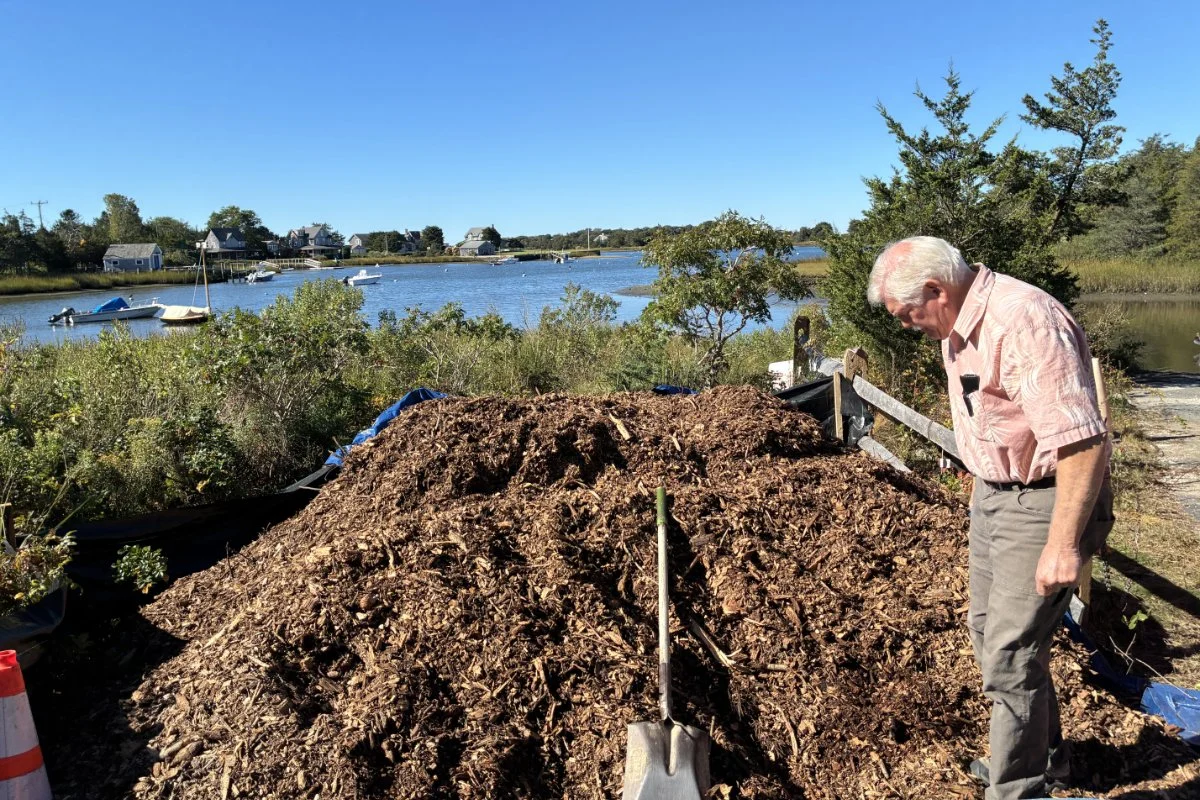
The construction involves drilling a series of deep holes—roughly 25 feet deep over a nearly 100-foot span—and filling them with organic material, typically woodchips. As groundwater flows through this permeable wall, bacteria naturally decompose the carbon in the wood. This process consumes all available oxygen, forcing the bacteria to utilize nitrate in the groundwater as an oxygen source, thereby converting it into harmless nitrogen gas. This ingenious bio-chemical reaction effectively strips the nitrogen from the water before it can harm the estuary.

Permeable reactive barriers represent a relatively new but rapidly expanding technology. First installed in Sunnyvale, California, in the mid-1990s, they have since been deployed in over 200 locations worldwide, demonstrating their versatility in removing various nutrients, including phosphorus in freshwater systems. Their lifespan is a key concern for long-term planning, but Foreman notes that a barrier he installed 20 years ago at Waquoit Bay remains effective. Furthermore, the Falmouth barrier is designed for longevity, with the potential to be refreshed with new woodchips if its efficacy wanes. Another barrier is planned 200 feet inland, using emulsified vegetable oil as the carbon source, showcasing the adaptability of this technology. Foreman emphasizes that PRBs are "one part of the solution" in controlling nutrient inputs, holding promise even in agricultural settings for mitigating fertilizer runoff, as demonstrated by their success in Iowa with woodchip bioreactors that remained effective for over a decade.
Oyster Aquaculture: A Living Solution for Bioextraction
Perhaps the most biologically elegant solution in Falmouth’s arsenal is the strategic deployment of oyster aquaculture. At sunrise, Pete Chase, a full-time fisheries biologist and part-time oyster farmer, unloads 1,200 oysters from his skiff after planting seed at his farm in the Eel River. His operation, Sippewissett Oysters, is part of Falmouth’s pilot program, initiated in 2019, to combat eutrophication and support the revival of the town’s fisheries. Chase, with 15 years of aquaculture experience in Buzzards Bay, recognized the potential of Falmouth’s protected estuaries for controlled farming.
The concept is simple yet powerful: oysters are natural filter feeders, capable of filtering up to 50 gallons of water per day. As they feed, they efficiently accumulate nitrogen in their shells and tissues. When these oysters are harvested, that nitrogen is permanently removed from the ecosystem. This process, known as bioextraction, turns a pollutant into a valuable resource, making oysters from eutrophic waters an environmentally friendly and perfectly safe meal.
Falmouth’s program is structured as a "win for everyone," as Chase describes it. The town leases essential farming gear—bags, floats, storage, and upwellers for growing seed oysters—to farmers at three half-acre sites. In return, the town receives 7 cents on each of the first 280,000 oysters sold annually, capping at $19,600, with farmers retaining the rest. This model incentivizes local farmers while simultaneously recruiting an "army of oysters" to aid the town’s environmental battle.
The impact has been significant. Since 2019, Falmouth’s oyster production has tripled, now exceeding 3 million pieces annually. In 2025, the aquaculture program surpassed its target, removing 180 kilograms of nitrogen—an amount equivalent to connecting 37 single-family homes to a sewer system, according to scientific consultant Eric Karplus. These local successes echo broader research: studies by the National Oceanic and Atmospheric Administration (NOAA) and the U.S. Geological Survey (USGS) suggest that nutrient removal through shellfish cultivation could, at a large enough scale, remove all nitrogen polluting the Potomac River estuary. Another study found that existing oyster production already removes over 1 percent of nitrogen from Long Island Sound, generating millions of dollars in ecosystem value.
Beyond nitrogen removal, Chase observes improved water clarity around his farm and a noticeable increase in biodiversity, with blue crabs finding shelter among the oyster bags. The program has been instrumental in the reopening of 33 acres in Falmouth Harbor for seasonal harvest after more than two decades of closure, with another 28 acres in Little Pond soon to follow.

The Road Ahead: Challenges, Expansion, and Enduring Hope
Despite the remarkable progress and visible improvements, the journey to full ecological restoration in Falmouth is far from over. Chuck Martinsen, Falmouth’s shellfish constable and a driving force behind the aquaculture program, remains pragmatic. On a boat ride through the estuaries, he points out persistent signs of nitrogen pollution, even near the mouth of Waquoit Bay, where ocean water mixes with freshwater. "Everyone wants to think that oysters are the magic bullet, and they’re not," Martinsen concedes. To meet its stringent water quality standards, Falmouth needs to reduce excess nitrogen by more than 42,000 kilograms annually—a target that would require a staggering 200-fold expansion of its current aquaculture program.
However, Martinsen quickly adds, "you can use [oysters] in areas where sewering alone will not work. You need other options." This underscores the critical necessity of Falmouth’s multi-pronged strategy, where each solution complements the others, creating a robust defense against pollution. Alongside infrastructure and bioextraction, the town is also implementing upstream solutions, such as a 2025 ordinance banning fertilizer application within 75 feet of a water body and 20 feet of a storm drain, aimed at preventing nitrogen from entering the estuaries in the first place.
The aquaculture program fosters a powerful positive feedback loop. With the revenue generated from leasing gear, Falmouth invests in millions of bivalve seeds, which are then planted across the town’s waters. These growing shellfish not only further clean the water but also become available for commercial diggers and residents feeding their families. Timmy Souza is one of several hundred dedicated volunteers who support the program, building and maintaining gear, and acting as a modern-day Johnny Appleseed, spreading handfuls of fingernail-sized quahogs along the shoreline. Often, when he pulls on his waders, he’s harvesting quahogs he himself planted years earlier, a tangible connection to the restoration efforts.
Falmouth also operates five of its own aquaculture sites, distributing the harvests town-wide for residents. Recognizing the program’s success and immense potential, the town approved $450,000 in funding last spring to expand its aquaculture efforts significantly. Martinsen anticipates adding dozens more farms to the town’s portfolio in the coming years, with a lengthy waitlist of interested applicants already in place, signaling strong community support and economic viability.
Martinsen views the aquaculture project as "nitrogen laundering," a form of alchemy that transforms a persistent pollutant into the restoration of a functional food system. This restoration extends beyond ecological balance; it’s about reclaiming a cultural heritage. The fisheries that existed for generations, dating back to the Wampanoag people who lived on Cape Cod long before English settlers arrived, are slowly being revived. The decline took decades, and the full recovery will likely take decades more. Martinsen recalls a time when Waquoit Bay produced thousands of bushels of scallops, a bounty lost when the eelgrass disappeared. "We really lost a lot," he laments, "We lost entire areas closed down to shellfishing." Yet, watching the revival unfold, he is filled with optimism. He has a young son, and for much of his career, the thought of taking him out to gather a bushel of scallops seemed an impossible dream. Now, he sees a different future. "We are seeing the transformation," Martinsen proudly states. "We messed it up so bad, but we’re coming out of it now. It’s nice to have been part of that swing." Falmouth’s journey serves as a powerful testament to community resilience, scientific innovation, and the enduring hope for ecological recovery, offering invaluable lessons for coastal communities worldwide.