admin
admin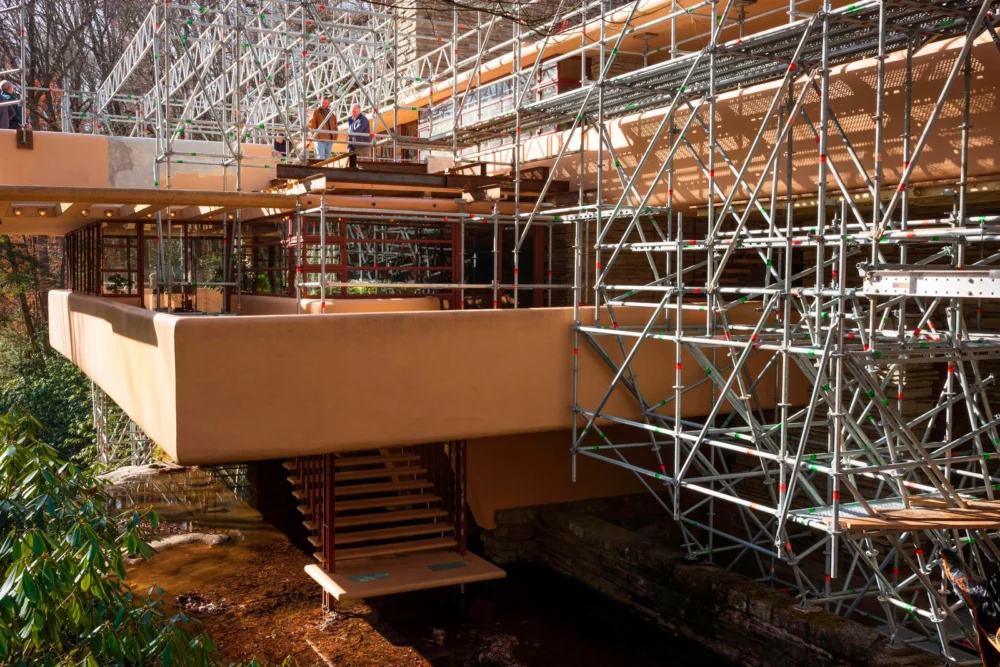
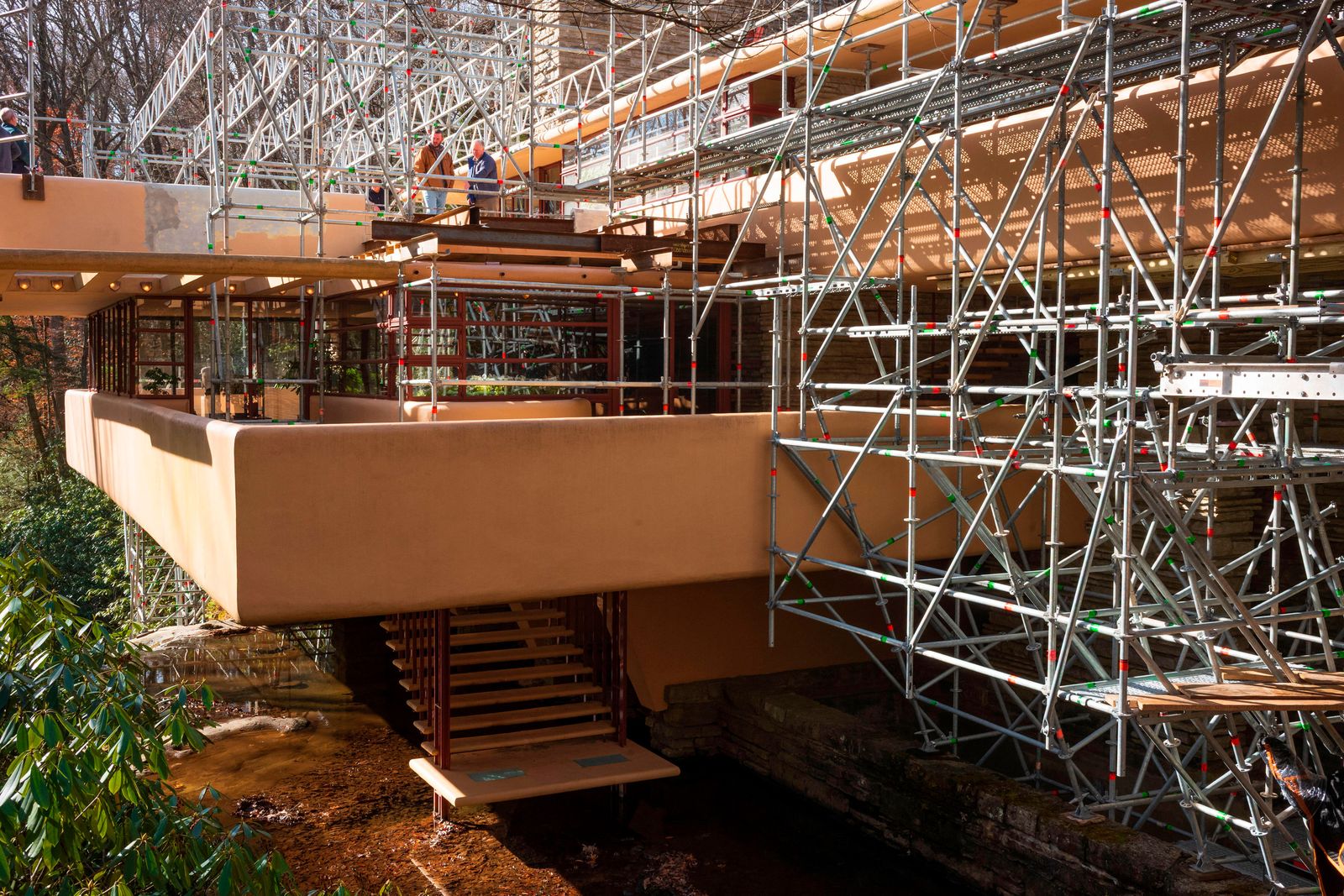
The iconic Fallingwater, Frank Lloyd Wright’s masterpiece seamlessly integrated with nature, is nearing the completion of an extensive three-year, $7.5 million restoration project. This monumental effort, which saw scaffolding envelop the entire structure for the first time in two decades, addresses decades of water intrusion and structural challenges inherent in the home’s groundbreaking design. Lead restoration architect Pamela Jerome, president of New York-based Architectural Preservation Studio, has spearheaded the meticulous work to safeguard one of the world’s most famous and beloved architectural sites, a UNESCO World Heritage site since 2019, ensuring its survival for future generations.
A Symphony of Nature and Architecture: Fallingwater’s Genesis
Frank Lloyd Wright’s vision for Fallingwater, expressed in his 1935 letter to the Kaufmann family—"I want you to live with the waterfall, not just to look at it, but for it to become an integral part of your lives"—set the stage for an architectural marvel. Completed in 1937, the residence famously cantilevers over a cascading stretch of the Bear Run stream in rural southwestern Pennsylvania. Wright’s philosophy of "organic architecture," which sought to harmonize human habitation with the natural world, found its purest expression here. He meticulously blended the structure with its environment, famously utilizing local sandstone and even incorporating river pebbles from Bear Run into the building’s concrete mix, further rooting the house in its specific landscape. This ingenious fusion elevated Fallingwater beyond a mere dwelling, transforming it into a living extension of the natural topography, a testament to modern architectural innovation and a bold redefinition of the relationship between man and environment.
The Paradox of Water: Creation and Degradation
While water was central to Wright’s design philosophy for Fallingwater, its constant presence has also been the building’s most persistent adversary. Over the decades since its completion, this very element, celebrated as an integral part of the living experience, has conspired to degrade the structure. Water intrusion, manifesting as leaks, seeping walls, and even occasional floods, has been a recurring issue.
A particularly dramatic incident occurred in 1956. A severe storm caused Bear Run to swell dramatically, sending a roaring torrent directly into the living room while owner Edgar Kaufmann and his family were inside. Miraculously, everyone escaped unharmed, but precious artwork suffered significant damage. This event underscored the vulnerability inherent in the design, where the boundary between built environment and natural force was deliberately blurred.
Beyond the immediate threat of the stream, Wright’s architectural insistence on certain materials and design choices across his entire body of work has notoriously created maintenance challenges. His pioneering use of reinforced concrete cantilevers, for example, while revolutionary, often lacked the robust waterproofing and structural detailing common in later construction practices. This often resulted in chronic water intrusion issues for owners, a challenge that Fallingwater, in its unique and exposed setting, has faced perhaps more acutely than any other.
A History of Preservation: Cyclical Battles Against the Elements
Since its completion, Fallingwater has been under continuous stewardship, transitioning from private ownership to public trust. In 1963, Edgar Kaufmann Jr. generously entrusted Fallingwater and its surrounding 5,100-acre Bear Run Nature Reserve to the Western Pennsylvania Conservancy (WPC), ensuring its preservation and public access. The WPC has since undertaken a cyclical, proactive maintenance strategy, recognizing that a structure so intimately tied to its environment requires constant vigilance.
Early preservation efforts primarily focused on mitigating the visible effects of water damage and addressing structural concerns as they arose. The most significant structural intervention prior to the current project took place between 2001 and 2004, a $11.5 million endeavor primarily focused on stabilizing the iconic cantilevered terraces. Over time, the reinforced concrete slabs, particularly the main living room cantilever, showed signs of deflection due to creep and the original underestimation of loads. This project involved an innovative post-tensioning system, drilling high-strength steel cables through the concrete slabs and anchoring them into the bedrock, effectively reinforcing the cantilevers and restoring their structural integrity. This complex operation, which temporarily rendered the house structurally "in tension," was a testament to the commitment to preserving Wright’s vision while ensuring the building’s long-term stability.
The Current Restoration: A Deep Dive into Water Management
The latest $7.5 million, three-year restoration, now nearing completion, represents a comprehensive approach to tackling the persistent issue of water intrusion. Pamela Jerome describes the house as being "in great condition for a modern house of its age," largely thanks to the WPC’s "cyclical maintenance and ongoing careful stewardship." However, specific areas required critical attention. The most significant concern was chronic leaks on the third floor of the main house. Additionally, existing roofing warranties had lapsed, necessitating the replacement of all roofing and terrace waterproofing. Visible areas of water damage were addressed, with extensive grouting and waterproofing replacement designed to resolve these longstanding problems.
Unpacking the Sources of Water Damage
Jerome elaborates on the primary mechanisms of water ingress. Historically, Fallingwater’s stone walls, like many ancient constructions, were built with an inboard and outboard wythe (layers of masonry) filled with stone and mortar. Periodic through-wall tie stones connect these wythes. However, the absence of original flashing—thin, impervious material installed to prevent water penetration—where exterior walls meet roofs or terraces has been a major contributor to degradation.
Wright, it is speculated, may have omitted flashing for aesthetic reasons, as visible metal counterflashing (typically installed at least eight inches above the finished roof) might have detracted from his desired seamless aesthetic. Without it, moisture entering the stone walls can penetrate directly into the interiors. This problem is exacerbated by Fallingwater’s numerous projecting ledges, which accumulate snow and rain, allowing moisture to seep through hairline separations in the mortar joints. Consequently, most of the chronic leaks were found to be associated with water infiltrating through these vulnerable stone walls.
It’s crucial to differentiate between damage from precipitation and damage from Bear Run itself. While the 1956 flood highlighted the river’s potential for dramatic events—bringing water into the living room and even dislodging parts of the stream-side stairs—Jerome confirms that "the main damage within the buildings comes from precipitation entering through the ledges projecting from the stone walls, whether that be rain or melting snow."
Wright’s Legacy: Design Without a Maintenance Manual
A significant challenge for the WPC and its preservation teams has been the absence of specific maintenance instructions from Frank Lloyd Wright himself. "No, Wright left no advice that the Western Pennsylvania Conservancy is aware of," Jerome states, adding that Wright "reassured the Kaufmanns that the house was sound." This lack of guidance placed the onus of developing maintenance protocols entirely on the owners and, later, the Conservancy. Considering that Fallingwater today requires a team of 110 staff, including 11 dedicated maintenance personnel, it’s clear that caring for such a complex and integrated structure, even when newly built, would have been a formidable task for the Kaufmanns’ single caretaker.
Leveraging Modern Technology for Historical Preservation
The current restoration benefited significantly from advancements in diagnostic technology. "Laser-scanning has been a game changer," Jerome notes, enabling the creation of highly accurate AutoCAD plans, elevations, and sections, a marked improvement over the hand-measurements used in earlier restorations. This precision is vital for understanding the building’s exact geometry and identifying subtle structural shifts.
Further enhancing the diagnostic capabilities, the team employed surface-penetrating radar and videoscopes to locate and quantify voids within the stone walls and assess their continuity. Smartphone applications capable of laser-scanning were also utilized for rapid assessment of stone wall thicknesses. These technologies provided an unprecedented level of insight into the building’s hidden conditions, allowing for more targeted and effective interventions.
Surprises and Discoveries During the Renovation
Even for experienced preservationists like Pamela Jerome, who had worked on previous Fallingwater renovations, the house continued to reveal surprises. "One of the biggest was just how hollow the stone walls actually were (which could fill with water)," she recounts. This discovery underscored the extent of the infill settlement and washout due to long-term water penetration.
Another unexpected finding was an unwaterproofed slab between the guest house and boiler room, topped by a stone parapet. This was unique, as in most other areas, the stone walls extended continuously through the roof and into the interior spaces. The discovery of large hollow chases within two other stone walls, possibly intended for mechanical or electrical systems, also presented an unforeseen challenge that required grouting.
A significant structural revelation concerned the stone pier at the north end of the enclosed bridge. The team gained a new appreciation for the substantial structural work this pier was performing, a factor not fully considered during the 2001-2004 restoration, which had primarily focused on the cantilever beams. These discoveries highlight the dynamic nature of historical preservation, where each intervention offers new insights into the building’s construction and performance.
The Cost of Craftsmanship: A Breakdown of the $7.5 Million Budget
The $7.5 million budget for this restoration is predominantly allocated to "skilled labor," a testament to the specialized expertise required for such a unique and historically significant project. The WPC engaged specialty contractors, many of whom possess prior experience with Fallingwater’s unique conditions, having performed maintenance projects or mock-ups.
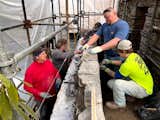
For instance, scaffolding companies needed specific familiarity with the powerful currents of the waterfall and the challenges posed by a frozen stream during winter work. The roofing contractor required manufacturer certification to apply specialized products, ensuring optimal performance and warranty validity. Masons had to be adept at working with the original concrete and stone, matching historical materials and techniques. The majority of these highly skilled contractors, many with deep local knowledge of Fallingwater, were sourced from the Pittsburgh region, underscoring the importance of regional craftsmanship in preserving national treasures.
Unique Challenges of Preserving a World Heritage Site
Working on Fallingwater presents a host of difficulties far beyond those encountered in a typical family home. Its designation as a UNESCO World Heritage site and its location within the 5,100-acre Bear Run Nature Reserve impose stringent regulations and operational complexities.
The site remained open to public visitation throughout the restoration, meaning the bulk of the intensive work had to be scheduled during the winter months when the site is closed to tours. This presented logistical challenges due to severe weather conditions, which are unsuitable for curing temperature-sensitive materials. Furthermore, Fallingwater’s remote location made sourcing specialized local labor a challenge.
Strict environmental protocols were also in place. Bear Run is an "Exceptional Value"-designated stream, signifying the highest grade of clean-water quality in Pennsylvania. Consequently, absolutely no construction debris was permitted to enter the stream, necessitating rigorous containment and monitoring of every operation. General site policies regarding noise, contractor attire, food, drink, and smoking were also strictly enforced to maintain the integrity of the visitor experience and the natural environment. These combined factors elevate the complexity and cost of preservation work to an extraordinary degree.
The Ongoing Battle: A Future of Vigilant Stewardship
Despite the extensive efforts, the goal of making Fallingwater entirely "leakproof" remains an elusive ideal, largely due to some of Wright’s original material choices. Pamela Jerome explains that Wright’s use of large river pebbles in the concrete mix has led to two significant issues:
- Poor Bonding: Cement matrices do not adhere as effectively to rounded river pebbles as they do to broken, angular aggregate, leading to debonding within the concrete.
- Alkali-Silica Reaction (ASR): River pebbles often contain higher levels of chert than typically permitted for concrete aggregate. This can lead to Alkali-Silica Reaction, a deleterious chemical reaction where alkaline hydroxides in the cement react with reactive silica in the aggregate, causing the concrete to swell, crack, and degrade over time.
While some concrete recasting was performed during this project, and base-flashing details for roof-roll edges were improved to cover the complete half-round with waterproofing, ASR will continue to cause cracking in the original concrete. Grouting the stone walls aims to impede liquid water entry, but grout is not entirely waterproof, meaning "damp spots may still manifest at the interior stonework because of the lack of through-wall flashing."
Nonetheless, Jerome is optimistic about the outcome: "Between the various architectural and structural interventions executed this time, we expect the buildings to perform much better than they have been." The ultimate measure of success, she asserts, is "eliminating leaks, protecting the interiors and art collections from water intrusion, conserving original steel windows and doors, and ensuring that Fallingwater is structurally sound for future generations to enjoy."
The restoration of Fallingwater is more than just a repair job; it is a continuous dialogue between human ingenuity and natural forces, a testament to the enduring power of Wright’s vision, and a profound commitment to preserving a global architectural treasure. The challenges inherent in its design underscore the complex and often paradoxical nature of modern heritage conservation, where the very elements that make a building unique also demand its constant, vigilant care.