admin
admin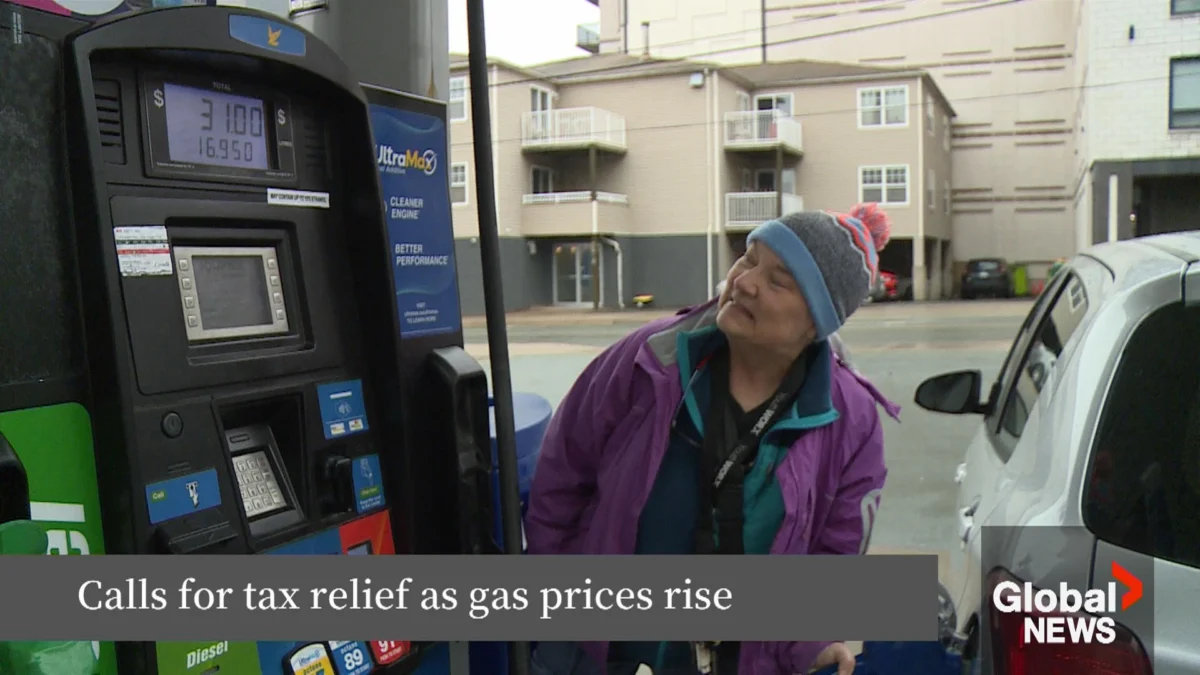
Despite a welcome reduction in gas prices across most Atlantic provinces on Friday, a New Brunswick-based economist has cautioned consumers that this respite is likely to be short-lived. The ongoing geopolitical tensions surrounding the conflict involving Iran, the United States, and Israel are projected to maintain significant pressure on global oil supply chains, inevitably leading to renewed price escalations at the pump. Constantine Passaris, a distinguished economics professor at the University of New Brunswick, expressed profound skepticism regarding the efficacy and longevity of current peace talks between the United States and Iran, emphasizing the persistent instability in the region.
"Missiles are still flying all over the place, so it’s not a permanent deal or ceasefire that will last very long," Passaris stated, underscoring the fragile nature of the reported diplomatic efforts. His apprehension stems from the belief that this temporary easing of prices is merely a "lull" before another upward trajectory. "And that’s what is causing me concern and anxiety that oil prices will continue with their upward peak after this lull of the next few days," he elaborated, advising Atlantic Canadians to capitalize on the current lower prices.
The Geopolitical Undercurrent: The Iran Conflict and Global Oil Volatility
The current surge in global oil prices, which peaked significantly higher than pre-conflict levels, is directly attributable to the escalating tensions in the Middle East. Since late February, when the conflict involving Iran, the U.S., and Israel intensified, the critical Strait of Hormuz – a narrow waterway connecting the Persian Gulf to the Gulf of Oman – has experienced substantial disruptions. This maritime chokepoint is arguably the most strategically important oil transit point in the world, with approximately 20% of the world’s total petroleum liquids consumption and a third of the world’s liquefied natural gas (LNG) passing through it daily. Any threat to this vital artery immediately sends ripples through international energy markets, leading to heightened volatility and price increases. The stalling of shipping through the Strait has created a significant bottleneck, restricting the flow of crude oil and refined products to global markets, thereby driving up prices based on supply concerns.
Before the escalation of hostilities, Brent crude oil, the international benchmark, hovered around $70 per barrel. Following the onset of the conflict, prices soared, at times surpassing $119 per barrel. While Brent crude saw a slight dip to $95.47 on Friday, a modest 0.5 percent fall, this reduction is viewed by experts like Passaris as potentially temporary, largely influenced by news of a potential two-week ceasefire deal between Washington and Tehran. However, the economist’s cautious stance highlights the inherent instability of such agreements in a region fraught with deep-seated geopolitical complexities. Western Canadian Select, a benchmark for Canadian heavy crude, also remained robust, trading above $84 per barrel late Friday afternoon, continuing to provide a significant boost to Alberta’s oil-dependent economy, even as other regions grapple with high consumer costs.
Atlantic Canada’s Unique Regulatory Framework for Fuel Prices

Unlike most other regions in Canada, the four Atlantic provinces operate under a distinctive regulatory system for gasoline prices. Independent provincial boards, varying by province, determine either the price floor, the ceiling, or both, for gas prices on a weekly basis. This system, established over two decades ago, aims to mitigate the impact of wild swings in gas prices and restore consumer confidence. The Atlantica Centre for Energy, a non-profit organization advocating for energy sector interests, describes these boards as crucial for providing stability, particularly for rural gas stations which are more vulnerable to market fluctuations due to lower volume and greater logistical challenges.
These regulatory bodies utilize specific formulas that consider a multitude of factors, including global market trends, supply and demand dynamics, and various taxation levels. A key characteristic of these regulators is their typical lag in reacting to immediate market shifts. This lag was evident in the recent round of price adjustments: the provincial boards began implementing cuts approximately three days after benchmark global prices eased on Wednesday, following initial reports of the two-week ceasefire deal between Washington and Tehran.
The Recent Price Adjustments: A Fleeting Respite for Consumers
On Friday, several Atlantic provinces announced significant reductions in gas prices, offering a brief period of relief to consumers burdened by weeks of elevated costs. Newfoundland and Labrador’s public utility regulator led the charge, enacting a substantial 13.5-cent per litre cut for regular gasoline. This adjustment brought prices at many stations across the province below the $2 per litre mark, a psychological threshold for many drivers.
In New Brunswick, the maximum price for regular self-serve gasoline saw a decrease of five cents per litre, setting the new cap at 189.5 cents. Nova Scotia’s Halifax region experienced a more modest 1.7-cent decrease in its weekly update, with the minimum price established at 185.4 cents per litre. Across Nova Scotia, all six of its petroleum price zones reported prices below 190 cents, indicating a widespread, albeit slight, reduction.
Prince Edward Island, however, stood as an outlier in this round of adjustments, maintaining its minimum self-serve gasoline price at 198.3 cents per litre, unchanged from the previous week. Despite the reductions in other provinces, the Maritimes’ gas prices on Friday remained considerably higher than the national average recorded by CAA Canada, which stood at 178.4 cents per litre. This disparity underscores the unique challenges and cost structures inherent to the region’s fuel market.
The regulatory framework also mandates transparent cost breakdowns, a feature lauded by proponents for shedding light on the profit margins earned by wholesalers and station owners. This transparency aims to foster greater public trust and accountability within the fuel supply chain. However, the system’s inherent delay in reflecting rapid global market shifts, particularly during periods of extreme volatility, can sometimes lead to consumer frustration, as prices might not drop as quickly as global crude prices, or conversely, might not rise as sharply.

Expert Outlook: A "Bumpy Ride Ahead" and Call for Preparedness
Economist Constantine Passaris’s stark warning to eastern Canadians about the impermanence of the current lower prices resonates with the broader analysis of the unstable geopolitical landscape. His advice to "Not only fill up your car but fill up any empty cans that you have" is a direct call for proactive measures, reflecting a deep concern for future price hikes. "Because we’re in for a bumpy ride over the next couple of months and the worst, in my opinion, is not over," Passaris concluded, signaling that the current market dynamics are far from stabilizing.
This outlook is reinforced by the ongoing diplomatic and market developments. Analysts worldwide are closely monitoring high-level negotiations between the U.S. and Iran, scheduled to take place in Pakistan on Saturday. The outcome of these talks, or any breakdown thereof, could significantly influence market sentiment. Simultaneously, markets remained on edge Friday, largely due to the continued near-standstill of traffic through the Strait of Hormuz, a persistent physical manifestation of the supply disruption.
Broader Economic Implications and Consumer Burden
The volatility in fuel prices has far-reaching implications beyond the individual consumer’s wallet. For businesses, particularly those reliant on transportation and logistics, fluctuating and high gas prices translate directly into increased operating costs. This burden can be passed on to consumers through higher prices for goods and services, contributing to broader inflationary pressures. Supply chains, already fragile from recent global disruptions, face renewed stress, potentially leading to delays and increased costs for everything from food to manufactured goods.
For Atlantic Canada, where many communities are rural and public transportation options are limited, high fuel prices disproportionately affect households, particularly those with lower incomes. The cost of commuting to work, accessing essential services, or even engaging in recreational activities becomes a significant financial strain. Provincial governments, while having regulatory bodies, often face calls for intervention or relief measures during such periods of heightened prices, reflecting the deep public concern over affordability.
The contrast between Alberta’s booming oil-dependent economy, benefiting from high crude prices, and Atlantic Canada’s struggle with elevated pump prices, highlights the divergent economic impacts of global energy market dynamics within Canada itself. This regional disparity can fuel political debates about energy policy, taxation, and inter-provincial support mechanisms.

The Enduring Significance of the Strait of Hormuz
The Strait of Hormuz’s role as a critical chokepoint cannot be overstated. Its strategic importance lies in its geography: it is the only sea passage from the Persian Gulf to the open ocean, providing access to the global market for major oil producers such as Saudi Arabia, Iran, the UAE, Kuwait, and Iraq. Any military or political action that threatens to close or impede passage through the Strait immediately triggers fears of a global oil supply crisis, regardless of the actual volume of oil disrupted. The mere threat of disruption is often enough to drive up futures prices and create market panic.
Historically, tensions in the Middle East have frequently manifested in threats or actual disruptions in this waterway, demonstrating its vulnerability. The current conflict involving Iran amplifies these concerns, as Iran has previously threatened to close the Strait in response to sanctions or military provocations. This inherent geopolitical risk factor is a constant premium built into global oil prices, and any perceived increase in this risk directly translates to higher costs for consumers worldwide, including those in Atlantic Canada.
Long-Term Considerations for Energy Security
The recurring cycles of price volatility, driven by geopolitical events, underscore the broader imperative for long-term energy security strategies. For importing nations and regions like Atlantic Canada, this involves exploring diversification of energy sources, investing in renewable energy infrastructure, and improving energy efficiency to reduce reliance on fossil fuels. Strategic petroleum reserves, maintained by various countries, also play a role in mitigating the immediate shock of supply disruptions, but they are not a permanent solution to persistent geopolitical instability.
Ultimately, while the recent drop in gas prices offers temporary relief, the underlying dynamics of global oil markets, particularly the fragile situation in the Middle East and the critical role of the Strait of Hormuz, suggest that consumers should brace for continued volatility. The expert advice to prepare for a "bumpy ride" serves as a prudent reminder of the interconnectedness of global politics and local economies, and the enduring impact of international conflicts on daily living expenses.
— With files from The Associated Press