admin
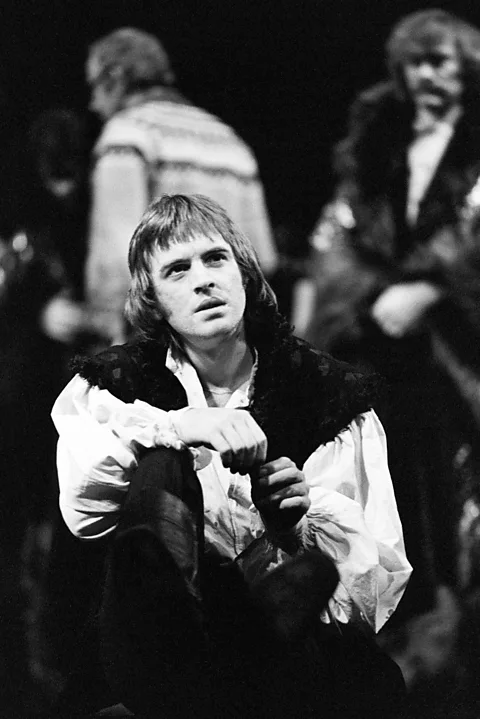
The role of Hamlet, the Prince of Denmark, is widely regarded by scholars and practitioners alike as the pinnacle of English-language theater. Spanning more than 4,000 lines in its uncut form, it is William Shakespeare’s longest play, requiring a level of stamina, psychological depth, and linguistic precision that few actors can maintain over a sustained run. Throughout history, the part has been inhabited by the greatest luminaries of the stage, from Richard Burbage to Laurence Olivier. However, few performances in the history of the Royal National Theatre carry the emotional and historical weight of Ian Charleson’s 1989 portrayal. Performed while the actor was in the final stages of AIDS-related complications, Charleson’s Hamlet was not merely a theatrical triumph but an act of profound human resilience.
This extraordinary chapter of British cultural history is now the subject of the biographical film Elsinore. Starring Andrew Scott as Charleson and Olivia Colman as his physician, the film has reignited interest in a man whose death in 1990 marked a turning point in the public perception of the HIV/AIDS epidemic in the United Kingdom. As the film approaches its international release, it serves as a reminder of the intersection between high art and the harsh realities of the 1980s health crisis.
The Path to the Olivier Stage
Ian Charleson was a Scottish actor of immense range, born in Edinburgh in 1949 and trained at the London Academy of Music and Dramatic Art (LAMDA). He rose to international prominence in 1981, portraying the Olympic sprinter and missionary Eric Liddell in the Academy Award-winning film Chariots of Fire. His performance as the devout Christian who refused to run on the Sabbath earned him critical acclaim for his ability to project quiet, steely conviction. He followed this success with a role in another Oscar winner, Gandhi (1982), playing the Anglican priest Charlie Andrews.
Despite his cinematic success, Charleson’s heart remained in the theater. By the late 1980s, however, his career was overshadowed by his declining health. Diagnosed with HIV in 1986, Charleson faced a terminal prognosis in an era before highly active antiretroviral therapy (HAART) was available. By 1989, the infection had progressed to AIDS.

The opportunity to play Hamlet at the National Theatre’s Olivier stage—the most prestigious platform in British theater—arrived under tumultuous circumstances. The production, directed by Richard Eyre, had originally opened with Daniel Day-Lewis in the lead role. On the night of September 5, 1989, during Act 1, Scene 5, Day-Lewis famously exited the stage after claiming to have seen the ghost of his own father, the poet Cecil Day-Lewis, rather than the actor playing the Ghost of Hamlet’s Father. Day-Lewis withdrew from the production, leaving a vacuum at the heart of the National Theatre’s flagship show.
A Defiant Succession
Richard Eyre turned to Charleson, who had previously worked with him on the 1982 production of Guys and Dolls. Charleson had played Hamlet twice before in his career—once in 1974 and once in a production of Tom Stoppard’s Rosencrantz and Guildenstern Are Dead—but he had remained dissatisfied with his previous interpretations of the Prince. Despite his physical frailty, Charleson saw the vacancy as a final opportunity to master the role.
The decision was met with concern from those closest to him. Sean Mathias, a director and close friend of Charleson, expressed significant reservations about the physical and mental toll the production would take. Hamlet is a four-hour ordeal that requires intense physical movement, including a demanding sword fight in the final act. Mathias noted that the role requires an actor to navigate the darkest corridors of the human psyche, exploring the relationship between existence and mortality—themes that were no longer theoretical for Charleson.
To the public and the press, Charleson’s health issues were initially obscured. When he began rehearsals, the official narrative was that he was recovering from a sinus operation, an explanation intended to account for the visible swelling of his facial features caused by his illness. However, as the production progressed, Charleson chose to disclose his diagnosis to his fellow cast members. This moment, recreated with significant emotional weight in the film Elsinore, fostered a protective and supportive environment within the company.
Medical Supervision and the Reality of 1989
In the film, Olivia Colman portrays a version of Dr. Margaret Johnson, the respiratory physician who treated Charleson at the Royal Free Hospital. While the film dramatizes the tension between medical advice and artistic ambition, the real Professor Margaret Johnson recalls a relationship defined by mutual respect and a commitment to the patient’s quality of life.

During the late 1980s, medical professionals treating AIDS patients often operated in a landscape of uncertainty and intense social stigma. Dr. Johnson’s approach was to encourage her patients to continue living their lives as fully as possible. She noted that Charleson was financially stable due to his participation in the profits of Chariots of Fire, which allowed him to focus entirely on his craft without the burden of financial distress.
The physical reality of Charleson’s performance was harrowing. Paul Jesson, who played Horatio, recalls that Charleson was often so weak that he had to be physically supported during scenes. By the final act of each performance, Charleson barely possessed the strength to lift the prop sword for the duel with Laertes. Yet, critics observed that this physical vulnerability added an unprecedented layer of realism to the character. Hamlet’s obsession with death and the "undiscovered country" resonated with a clarity that few healthy actors could replicate.
Critical Reception and Final Performances
Charleson’s debut as Hamlet took place on October 9, 1989. The reception was nothing short of legendary. John Peter, writing for The Sunday Times, delivered a rave review that has since become a staple of theatrical history. Peter described Charleson’s Hamlet as "virile and forceful," noting that the actor "oozes intelligence from every pore."
The production ran for 24 performances, concluding on November 13, 1989. For those in attendance, the performance was a testament to the power of the human spirit. Richard Eyre recorded in his diaries that Charleson did not merely play the part; he became it, inhabiting the character with a level of insight born from his own proximity to death. On the night of his final performance, the audience delivered a standing ovation that many described as one of the most moving moments in the history of the National Theatre.
The following evening, at the Evening Standard Theatre Awards, Ian McKellen was named Best Actor. In an act of professional humility, McKellen used his acceptance speech to state that Ian Charleson was the true Best Actor of the year, acknowledging the sheer bravery of his performance at the Olivier.

Death and Public Impact
Ian Charleson died on January 6, 1990, at the age of 40. At his request, his agent, Michael Whitehall, released a statement confirming that the cause of death was AIDS. This was a landmark moment in British society. Charleson was the first high-profile show business figure in the United Kingdom to have his death openly attributed to the disease.
In 1990, the stigma surrounding HIV/AIDS was pervasive, fueled by misinformation and fear. Charleson’s decision to be open about his illness in death was a final act of advocacy. It humanized the epidemic for a public that had largely viewed the disease through the lens of tabloid sensationalism. By associating the illness with a respected classical actor and an "Olympic hero" like Eric Liddell, the announcement challenged prevailing prejudices and encouraged a more compassionate public discourse.
The Legacy of Ian Charleson
The impact of Charleson’s life and death continues to be felt in both the medical and theatrical worlds. In 1992, the Royal Free Hospital opened the Ian Charleson Day Centre, a specialist clinic dedicated to the care of people with HIV. Professor Margaret Johnson, who went on to become a leading figure in HIV research and was awarded an OBE, helped establish the center as a model for patient-centered care.
In the arts, the Ian Charleson Awards were established in 1990 by The Sunday Times and the National Theatre. These awards recognize the best classical stage performances by actors under the age of 30. The list of past winners—including Jack Lowden, Cush Jumbo, Rory Kinnear, and Paapa Essiedu—underscores the lasting influence Charleson has had on the next generations of British acting talent.
Analysis of ‘Elsinore’ and Contemporary Relevance
The release of Elsinore, featuring a transformative performance by Andrew Scott, serves as more than a biopic; it is a historical correction and a tribute. Scott, who himself received universal acclaim for his own 2017 performance as Hamlet at the Almeida Theatre, brings a unique understanding to the role of an actor grappling with the Prince of Denmark.

The film arrives at a time when the history of the HIV/AIDS crisis is being revisited by a new generation of artists and historians. Like the television series It’s a Sin, Elsinore seeks to document the human cost of the epidemic while celebrating the resilience of those who lived through it. By focusing on the production of Hamlet, the film highlights how art can provide a vessel for processing personal tragedy.
Ian Charleson is buried in Portobello Cemetery in Edinburgh. His headstone bears the words of Horatio’s final farewell to Hamlet: "Good night sweet prince, And flights of angels sing thee to thy rest." It is a fitting epitaph for an actor whose final performance proved that even in the face of inevitable mortality, the pursuit of artistic excellence can offer a form of immortality. Elsinore ensures that this extraordinary feat of courage remains part of the public consciousness, reminding audiences that Charleson’s Hamlet was not just a play, but a profound statement on the value of a life lived with purpose.