admin
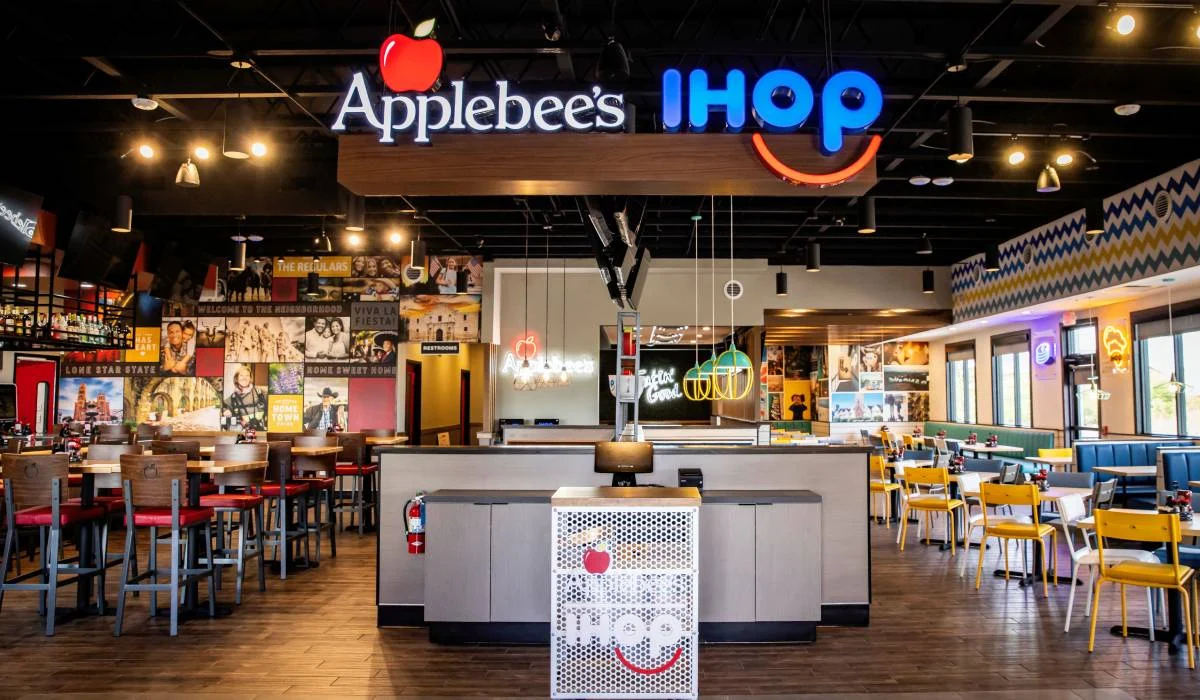
The casual dining sector is currently witnessing a significant shift in operational strategy as Dine Brands Global, Inc. moves to integrate its two flagship brands, Applebee’s Grill + Bar and IHOP, under a single physical roof. This initiative, spearheaded by CEO John Peyton, represents a departure from traditional restaurant management by leveraging the distinct strengths of each brand to optimize real estate, labor, and consumer demand. While the concept of "co-branding" is not entirely new to the fast-food industry, the application of this model to full-service restaurants (FSR) presents unique challenges and opportunities that are reshaping how the industry views growth in an era of rising operational costs.
According to recent data shared by Peyton, the experiment is yielding results that exceed initial expectations. In existing dual-brand locations, approximately two-thirds of guest checks include items from both the Applebee’s and IHOP menus. This cross-brand consumption suggests that the integration provides a solution to a consumer need that focus groups might not have identified: the desire for ultimate menu flexibility regardless of the time of day.
The Genesis of the Dual-Brand Concept
The journey toward a combined Applebee’s and IHOP experience did not begin in a corporate boardroom in the United States, but rather through international experimentation. Dine Brands, which was formed in 2007 following IHOP’s $2.1 billion acquisition of Applebee’s, had long operated the two entities as distinct silos. However, international franchisees in markets such as Mexico, Canada, and the United Arab Emirates began experimenting with shared kitchen spaces and dining rooms to mitigate the high costs of international real estate.
By the time John Peyton assumed the role of CEO in early 2021, the international pilot programs provided a viable proof-of-concept. Peyton, who brought extensive experience from the hospitality sector following a long tenure at Marriott International, recognized that the domestic market was ripe for a similar evolution. The strategy was not born out of a specific customer request but rather out of a necessity to maximize the utility of every square foot of a restaurant’s footprint.
The timeline for the domestic rollout accelerated as Dine Brands identified "development-oriented risk-takers" among its franchisee base. These early adopters agreed to open locations even as the operational details were being refined. Currently, with 60 dual-brand locations operational globally and a pipeline suggesting the potential for up to 900 such units in the U.S. over the next decade, the company has transitioned from a phase of "wait and see" to aggressive expansion.
Strategic Synergy: The Daypart Advantage
The primary economic driver behind the dual-brand model is the "daypart" synergy. Historically, IHOP has been a powerhouse in the breakfast and brunch segments, often seeing a significant drop-off in traffic during the evening hours. Conversely, Applebee’s thrives during lunch, dinner, and the "late-night" window, but has struggled to capture the early morning consumer.
By merging the two, Dine Brands effectively creates a 24-hour revenue engine. For a franchisee, this means that the fixed costs of a building—such as rent, property taxes, insurance, and basic utilities—are spread across a much larger volume of sales. Peyton notes that the incremental revenue generated by adding a second brand flows at a significantly higher margin because the foundational overhead remains static.
This model is particularly attractive in the current economic climate, where inflation has driven up the cost of goods and labor. By maximizing the sales per square foot, operators can maintain profitability even when facing external margin pressures. The strategy also addresses the "veto vote" in dining groups; if one person wants pancakes and another wants a burger, the dual-brand location eliminates the need for compromise.
Operational Innovation and the Shared Kitchen
One of the most significant hurdles in combining two major restaurant brands is the potential for overwhelming kitchen complexity. To prevent this, Dine Brands established a dedicated innovation team of approximately 12 full-time employees. This team was given the "permission to break things," according to Peyton, ensuring that the integration was not a secondary responsibility for staff already burdened with existing duties.
The team focused on streamlining the back-of-house operations. Rather than simply stacking two full menus together, they curated a combined offering that kept the total item count manageable. This involved a rigorous comparison of overlapping products. For instance, instead of carrying two different types of burger patties and buns, the team developed a standardized burger that utilizes an Applebee’s patty paired with an IHOP bun.
However, the integration extends beyond shared ingredients. The "mashup" menu items have become a hallmark of the dual-brand experience. Exclusive items like the Buffalo Chicken Omelet—which combines Applebee’s signature boneless wings with IHOP’s breakfast expertise—serve as a marketing draw that distinguishes these locations from standalone units.
Despite the efficiencies, the learning curve for staff remains steep. Applebee’s teams must adapt to the high-velocity, high-customization demands of a weekend breakfast rush at IHOP, where "no one orders their eggs the same way." Conversely, IHOP-centric operators must learn the nuances of managing a full-service bar, which Peyton describes as the "heartbeat" of the Applebee’s experience.
Preserving Brand Identity: The "Purple Brand" Trap
A critical component of Peyton’s strategy is the preservation of each brand’s individual identity. He is adamant that Dine Brands has not created a "purple brand" by mixing Applebee’s red and IHOP’s blue. The company goes to great lengths to ensure that while the kitchen and dining room are shared, the guest experience remains grounded in the familiar branding of the two icons.
This distinction is maintained through careful architectural design and marketing. In many dual-brand locations, the exterior signage gives equal weight to both brands, and the interior decor is balanced to reflect both atmospheres. Interestingly, consumer research conducted after the initial U.S. openings revealed that guests are largely indifferent to which "side" of the restaurant they are seated on, provided they have access to the full combined menu.
From a corporate and financial reporting perspective, the brands remain separate. Dine Brands tracks revenue individually for each entity, even within the dual-brand checks. This allows the company to report comparable sales for Applebee’s and IHOP to Wall Street without the data being muddied by the integration. Peyton emphasizes that the dual-brand format is a delivery mechanism, not a replacement for the brands themselves. The success of the combined units is ultimately dependent on the individual health and marketing relevance of Applebee’s and IHOP.
Industry Implications and Future Outlook
The move by Dine Brands is being closely watched by competitors in the casual dining space. As real estate costs continue to climb and prime locations become harder to secure, the "two-in-one" model offers a blueprint for sustainable growth. It reflects a broader trend in the hospitality industry where efficiency and multi-functionality are becoming the keys to survival.
Industry analysts suggest that this strategy could lead to a consolidation of footprints. Instead of having two underperforming standalone buildings in a specific trade area, a franchisee can consolidate into one high-performing dual-brand unit. This not only improves the bottom line but also reduces the labor requirement compared to running two separate establishments.
However, the success of this model is not guaranteed. It requires a high level of operational discipline and a franchisee base willing to invest in significant conversions. The "60 locations" currently open represent a small fraction of the thousands of units in the Dine Brands portfolio, meaning the long-term impact on the company’s total valuation is still being determined.
John Peyton’s philosophy of innovation—giving consumers something they didn’t know they wanted—will be put to the test as Dine Brands aims for that 900-unit goal. If the trend of two-thirds of customers ordering across menus continues, it may signal a permanent change in consumer expectations for casual dining. In a world where convenience and variety are paramount, the wall between breakfast and dinner may finally be coming down for good.
As the program expands, the broader restaurant industry may see more "unconventional" pairings. The lessons learned from Applebee’s and IHOP—specifically regarding the importance of a dedicated innovation team, the necessity of maintaining brand separation, and the value of spreading fixed costs—will likely serve as a case study for the next generation of restaurant development. For now, Dine Brands is betting that the future of casual dining is not just about what is on the plate, but how many different plates can be served at the same table.