admin
admin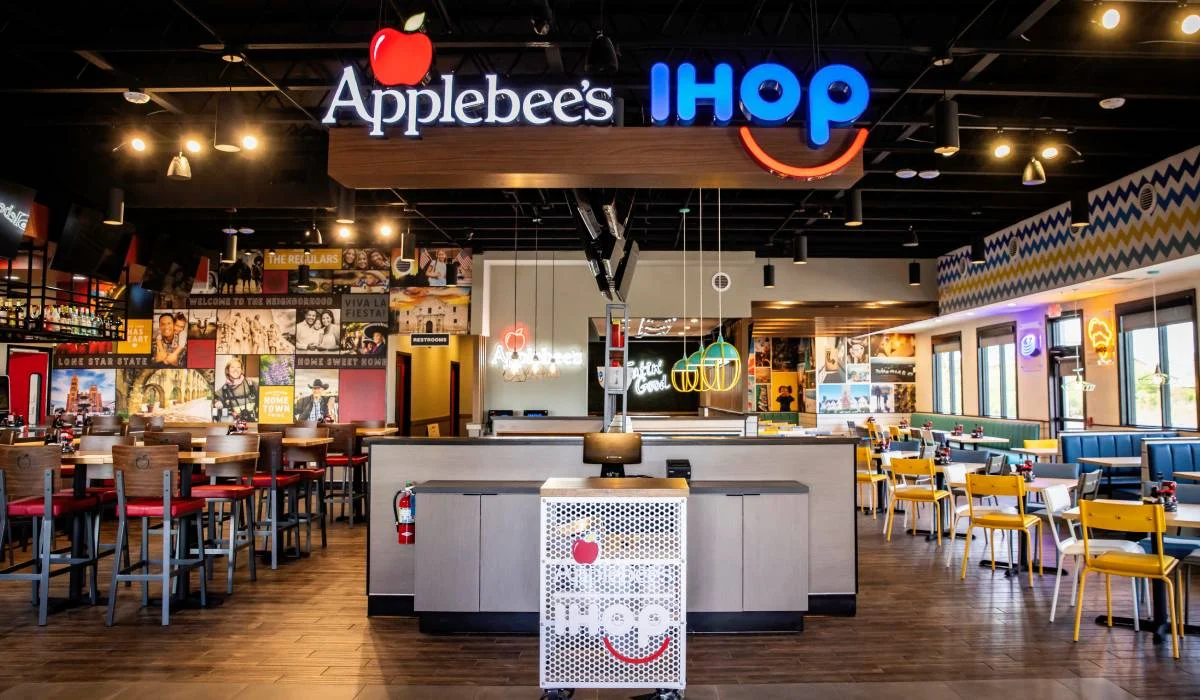
Dine Brands Global, Inc., the parent organization overseeing the operations of Applebee’s Neighborhood Grill + Bar and IHOP, has officially announced the opening of its latest dual-branded restaurant in San Antonio, Texas. This new establishment, situated at 2607 W. Loop 1604 S., represents a significant milestone in the company’s aggressive strategy to merge its two most iconic brands into a single, cohesive dining experience. The opening comes less than two years after the company debuted its first standalone domestic dual-branded prototype in Seguin, Texas, signaling a rapid acceleration of a business model that seeks to maximize real estate efficiency and consumer convenience.
The San Antonio location is the eighth of its kind in the metropolitan area, illustrating the region’s pivotal role as a testing ground and primary growth engine for the dual-branded concept. Managed and owned by The Hakim Group—a prominent franchisee with a long-standing history with both Applebee’s and IHOP—the new site integrates the distinct identities of a classic American grill and a premier breakfast house. To mark the grand opening, the Hakim Group hosted a community-centric ribbon-cutting ceremony that featured a high-profile promotion: the first 100 guests in attendance were awarded "Free Pancakes for a Year," a marketing tactic designed to drive immediate foot traffic and foster brand loyalty in the competitive San Antonio dining landscape.
Beyond the commercial festivities, the event underscored a commitment to local corporate social responsibility. The Hakim Group presented a $1,000 donation to the Stay Strong Foundation, a San Antonio-based nonprofit organization dedicated to providing support and resources to individuals and families facing life-altering challenges. This gesture reflects a broader industry trend where franchise operators seek to embed their businesses within the social fabric of the communities they serve, particularly during the critical launch phase of a new location.
The Evolution of the Dual-Branded Strategy: A Two-Year Chronology
The journey toward the current milestone of nearly 50 dual-branded locations nationwide began in earnest in late 2022. While Dine Brands had experimented with international dual-branded concepts in markets like Mexico and the Middle East, the domestic rollout was a calculated response to shifting post-pandemic consumer behaviors and rising operational costs.
In early 2023, the opening of the Seguin, Texas, location served as the domestic proof-of-concept. The success of this pilot program was measured by its ability to capture multiple "dayparts"—the industry term for specific times of day such as breakfast, lunch, dinner, and late-night. By combining IHOP’s dominance in the morning hours with Applebee’s strength in the evening and late-night segments, Dine Brands discovered they could maintain high occupancy and revenue generation throughout a 24-hour cycle.
Following the Seguin success, the company began a systematic conversion and new-build strategy. By the end of 2023, the number of dual-branded units began to climb steadily, particularly in suburban markets where real estate costs were rising but demand for "one-stop" dining remained high. The San Antonio opening serves as a testament to the speed of this rollout, as the company has moved from a single pilot to nearly 50 operational units in approximately 24 months.
Operational Synergies and the "One Roof" Advantage
The core appeal of the dual-branded model lies in its operational efficiency. From a real estate perspective, a dual-branded Applebee’s | IHOP typically occupies a smaller total footprint than two individual restaurants would require. This reduction in square footage leads to lower construction costs, decreased property taxes, and reduced utility expenditures.
Inside the restaurant, the "back-of-house" operations—the kitchen and storage areas—are the primary drivers of cost savings. A shared kitchen allows for a streamlined supply chain, where common ingredients can be sourced in larger quantities, providing better leverage with suppliers. Furthermore, the labor model is significantly optimized. Staffing a restaurant that transitions seamlessly from a breakfast-focused IHOP menu in the morning to a bar-and-grill Applebee’s menu in the evening allows for more flexible scheduling and cross-training of employees.
John Peyton, CEO of Dine Brands Global, has frequently highlighted the flexibility this model offers to franchisees. "What began as a bold idea has evolved into a meaningful complement to our development and growth strategies," Peyton stated during the San Antonio launch. He noted that the model provides a "more flexible operating model," which is essential in an era of fluctuating labor markets and food inflation. By giving guests "more reasons to visit," the dual-branded concept mitigates the risk of downtime during off-peak hours.
Menu Innovation and the Guest Experience
To ensure the dual-branded concept does not dilute the individual identities of Applebee’s or IHOP, Dine Brands has implemented a "best of both worlds" menu strategy. Guests are not forced to choose one brand over the other; instead, they are presented with a unified menu that allows for cross-brand ordering. This means a single table could theoretically order IHOP’s world-famous buttermilk pancakes alongside Applebee’s signature Boneless Wings.
To further incentivize visits to these specific locations, Dine Brands has introduced exclusive menu innovations that are only available at dual-branded sites. Two notable examples include:
- The Loaded Buffalo Chicken Omelette: A fusion dish that takes the spicy, savory profile of Applebee’s buffalo chicken and integrates it into IHOP’s signature omelette format.
- The Ultimate Breakfast Burger: A cross-category item that combines the hearty appeal of an Applebee’s burger with traditional IHOP breakfast staples like fried eggs and hickory-smoked bacon.
The physical design of the San Antonio location also reflects this hybrid approach. The interior architecture utilizes "shared spaces" that feel cohesive yet allow for distinct branded "zones." The presence of a full-service bar—a staple of Applebee’s—complements the IHOP breakfast experience by offering specialty cocktails, such as mimosas and bloody marys, which have become increasingly popular during the "brunch" daypart.
Market Analysis: Why San Antonio?
The decision to focus heavily on San Antonio and the broader Texas market is backed by robust demographic and economic data. San Antonio remains one of the fastest-growing cities in the United States, with a population that values family-oriented dining and value-driven menu options—traits that align perfectly with the brand identities of both Applebee’s and IHOP.
According to recent census data and economic reports, the San Antonio metropolitan area has seen a steady influx of young families and professionals. This demographic shift creates a high demand for versatile dining options that can accommodate varied schedules. Furthermore, the "Texas Triangle" (the region between San Antonio, Houston, and Dallas-Fort Worth) has become a hub for restaurant innovation due to its favorable business climate and relatively lower operating costs compared to coastal markets like New York or San Francisco.
For The Hakim Group, the expansion in San Antonio is a strategic bet on the city’s continued suburban sprawl. By placing these dual-branded units in high-traffic corridors like W. Loop 1604, they are positioning themselves to capture both local residential traffic and the commuting workforce.
Broader Industry Implications and Future Outlook
The success of Dine Brands’ dual-branded initiative is being closely watched by the broader casual dining and Quick Service Restaurant (QSR) industries. While co-branding is not a new concept—Yum! Brands has long utilized the Taco Bell/Pizza Hut/KFC combinations—the application of this strategy to full-service, sit-down dining is a more complex undertaking.
Industry analysts suggest that the dual-branded model is a defensive move against the rise of "fast-casual" competitors like Chipotle or Panera Bread, which have traditionally dominated the lunch hour. By integrating IHOP, Applebee’s gains a foothold in the breakfast market, a segment that has remained resilient even during economic downturns. Conversely, IHOP benefits from Applebee’s "late-night" appeal, which draws in a younger demographic that might not otherwise visit a traditional pancake house after 9:00 PM.
Dine Brands has set ambitious targets for the coming years. The company remains on track to open approximately 80 domestic dual-branded restaurants by the end of 2026. This trajectory suggests that the dual-branded model is no longer a "niche experiment" but is instead a cornerstone of the company’s long-term portfolio management.
As the San Antonio location begins its full-scale operations, the feedback from local diners will likely influence the design and menu of the next 30 units planned for the 2026 deadline. For now, the integration of "pancakes and pick-up sticks" (a playful industry nod to the brands’ diverse offerings) seems to be the recipe Dine Brands is counting on to navigate the evolving landscape of American dining. The Hakim Group’s investment in the San Antonio community, coupled with Dine Brands’ corporate vision, sets a new benchmark for how legacy brands can reinvent themselves for a modern audience without losing the nostalgic appeal that made them household names.