admin
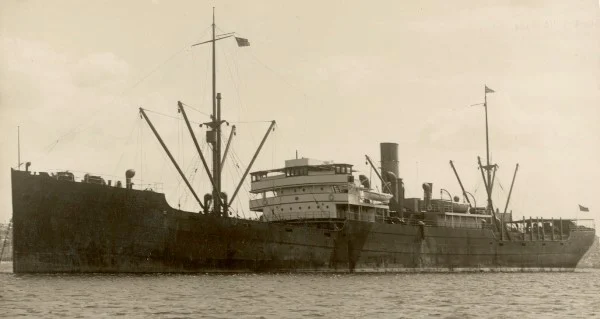
After more than 80 years shrouded in the depths of the Atlantic, the final resting place of the S.S. Cornwallis, a Canadian-operated merchant steamboat torpedoed during the Second World War, has been definitively located. An American team of volunteer divers, the Nomad Exploration Team, recently announced their monumental discovery in the Gulf of Maine, offering a profound sense of closure to the families of the 43 crew members lost at sea. The identification of the wreck marks a significant moment for maritime history and serves as a poignant reminder of the sacrifices made by merchant mariners during one of humanity’s darkest conflicts.
The Tragic Loss of the S.S. Cornwallis
The S.S. Cornwallis was a vital cog in the Allied supply chain, tasked with transporting essential goods across perilous wartime waters. In December 1944, the steamboat was en route from Barbados to New Brunswick, laden with cargo crucial for the war effort. Her journey, however, was abruptly and tragically cut short. On December 3, 1944, the vessel fell victim to a brutal attack by a German U-boat, U-1232, off the coast of Maine. The U-boat had, chillingly, just completed a clandestine mission, dropping off two Nazi spies as part of "Operation Elster" near Bar Harbor, Maine, before encountering the unsuspecting Cornwallis.
The attack was swift and devastating. Of the 48 crew members aboard, only five managed to survive the harrowing ordeal. The vast majority, 43 men, perished in the cold Atlantic waters, adding to the grim tally of over 1,600 merchant mariners who lost their lives while tirelessly moving much-needed supplies for the Allied war effort. These brave individuals, often unsung heroes, played an indispensable role in sustaining the war, facing constant threats from submarines, mines, and air attacks, yet their sacrifices frequently remained in the shadows compared to those in the naval or land forces. The sinking of the S.S. Cornwallis was one of the last successful U-boat attacks on Allied shipping off the North American coast, occurring mere months before the war’s end, underscoring the relentless danger present even in the conflict’s waning stages.
A Legacy of Loss and Lingering Grief
For generations, the families of those lost on the S.S. Cornwallis lived with an unresolved grief, a void compounded by the unknown whereabouts of their loved ones’ final resting place. The announcement of the wreck’s discovery has brought forth a flood of emotions, transforming an abstract historical tragedy into a tangible point of remembrance.

Donald Stewart, grandson of David H. Stewart, one of the lost crew members, articulated this sentiment poignantly: "It was almost as if our grandfather had spoken, ‘Hey, don’t forget about me.’" His words capture the enduring hope and quiet yearning for recognition that many families of the missing carried for decades. David H. Stewart’s son, Robert Stewart, who was just 15 years old when he received the devastating telegram informing him of his father’s death, recalled the profound impact on his family. "Devastating, to say the least," he recounted, adding, "My mother had a tremendously good singing voice, but I don’t think I ever heard her sing that much after that." This poignant detail illustrates the deep, lasting sorrow that permeated homes and altered lives, silencing joy and leaving an indelible mark on those left behind. The absence of a physical grave meant there was no focal point for remembrance, no place to mourn, leaving an open wound that only now, with the discovery, can begin to heal.
Another family deeply affected was that of James Roy, a 34-year-old Nova Scotia native who served aboard the S.S. Cornwallis. His nephew, Glenn Roy, shared how his own father, James’s brother, never forgot him. "My dad used to speak of him a lot. My dad wasn’t very emotional about it, but he spoke of him. He’d say, ‘Oh, I wish you had met Jimmy, my brother.’" This familial longing for connection to a lost relative spurred Glenn Roy’s interest in genealogy and his family’s history. Among his treasured possessions are the original telegram sent to his grandmother informing her of James’s death and documentation of the pension she later received. These artifacts, once painful reminders of loss, now gain a new layer of significance, serving as tangible links to a past that has finally been given a definitive location. Glenn Roy’s dedication to preserving his uncle’s memory, especially given that James left no direct descendants, underscores the vital role family plays in maintaining the legacy of those who made the ultimate sacrifice. "He didn’t leave anything, you know what I mean. It was only this stuff that I have — a little bit of memories, a few pieces of paper. No family, no kids or anything. So I keep it going."
The Genesis of the Discovery: The Nomad Exploration Team
The quest to locate the S.S. Cornwallis began with the dedicated efforts of the Nomad Exploration Team, a group of volunteer divers driven by a passion for maritime history and a commitment to bringing closure to historical mysteries. For more than eight decades, the exact coordinates of the Cornwallis’s watery grave remained unknown, a silent testament to the vastness and unforgiving nature of the ocean. The team, however, was determined to change this.
Their mission was not undertaken lightly. It involved years of meticulous historical research, poring over archives, wartime logs, and survivor accounts to narrow down potential search areas. The team then embarked on a painstaking five-day grid search in the challenging waters of the Gulf of Maine. This systematic approach, utilizing advanced sonar technology, is a testament to the blend of historical detective work and modern underwater exploration techniques required for such discoveries.
The breakthrough occurred this past July. Just as the team was contemplating moving to a new search location, their sonar equipment registered an anomaly. Approximately 16 kilometers from a small island off the coast of Maine, submerged 122 meters (about 400 feet) below the surface, lay the distinct outline of a large vessel. Danny Allan, a member of the Nomad Exploration Team, vividly recalled the moment of discovery: "It was very evident from that you could see the superstructure of the wreck – the structure over where the engines were."

The visual evidence from the sonar was compelling, but definitive identification required further verification. Divers were deployed to the site, meticulously documenting the wreck. "And we were able to put divers on the numbers that we had found and we are able to verify with 100 per cent certainty that this was indeed the Cornwallis," Allan confirmed. Identifying the ship involved cross-referencing blueprints from the original builders in British Columbia with the unique characteristics of the wreck. While the ideal scenario would be to find a ship’s bell inscribed with "S.S. Cornwallis," the extensive damage from the torpedo strike made this unlikely. Allan noted, "In a perfect world, you would find the ship’s bell that says, S.S. Cornwallis. In this case, I don’t think the bell is on the ship because it was torpedoed and the front end is broken off, so I’d be shocked if the bell was still there." However, the sheer size of the vessel—a 400-foot wreck with a 50-foot beam—provided unmistakable clues. "This one is easy simply because it’s a 400-foot wreck with a 50-foot beam. There’s not many ships of that size." This unique footprint, combined with historical data and the location of the sinking, allowed for an irrefutable identification, bringing an end to the decades-long mystery.
Broader Historical Context: U-Boat Warfare and Merchant Marine Sacrifice
The sinking of the S.S. Cornwallis is not an isolated incident but a grim chapter within the broader narrative of the Battle of the Atlantic, one of the longest and most critical campaigns of WWII. From 1939 to 1945, Allied and Axis forces engaged in a relentless struggle for control of the Atlantic shipping lanes. German U-boats, under the command of Admiral Karl Dönitz, sought to cripple Britain’s war effort by cutting off vital supplies of food, raw materials, and military equipment. While the peak of U-boat activity in the Western Atlantic occurred earlier in the war, particularly during the "Second Happy Time" in 1942, sporadic attacks continued throughout the conflict, reaching as far as the coastlines of the United States and Canada.
U-1232, the submarine responsible for the Cornwallis’s demise, was part of the "Type IXC/40" class, a long-range U-boat capable of extended patrols in distant waters. Its presence off the coast of Maine in late 1944, particularly its mission to land spies, highlights the daring and often desperate measures employed by the Axis powers. Operation Elster (German for "Magpie") was a failed German intelligence mission in November 1944. Two German agents, Erich Gimpel and William Colepaugh, were landed by U-1232 at Frenchman Bay, Maine, with orders to gather intelligence on the Manhattan Project and sabotage American infrastructure. Their mission was quickly compromised, and they were apprehended, but the U-boat’s subsequent attack on the Cornwallis underscores the real and immediate danger that persisted even as Allied victory seemed assured.
The role of merchant mariners during WWII cannot be overstated. They were the lifeline of the Allied war effort, transporting everything from tanks and ammunition to food and fuel. Without their unwavering courage and resilience, Britain would have starved, and the Allied forces would have lacked the materiel necessary to fight on distant fronts. These civilians, often conscripted or volunteers, faced the same dangers as uniformed naval personnel, yet frequently received less recognition and fewer benefits. The casualty rates for merchant mariners were exceptionally high; in some nations, they surpassed those of military branches. The discovery of the S.S. Cornwallis provides a tangible memorial to these forgotten heroes, reminding us of their immense contribution and the ultimate price many paid. The Canadian Merchant Navy, in particular, played a crucial role, enduring significant losses while ensuring vital convoys reached their destinations. The S.S. Cornwallis, though a British-built vessel, was operating under Canadian control at the time of its sinking, further cementing its connection to the Canadian wartime effort.
Implications and Future Preservation
The discovery of the S.S. Cornwallis carries significant implications beyond providing closure to grieving families. It enriches the historical record, offering new insights into the precise details of a specific wartime tragedy. For maritime archaeologists, the wreck represents a preserved snapshot of 1944 wartime technology and maritime life, even in its damaged state. The site is now a de facto war grave, deserving of respect and protection. International conventions and national laws typically designate such sites as protected heritage, prohibiting unauthorized disturbance or salvage. The Nomad Exploration Team has confirmed that no artifacts were removed from the site, adhering to ethical archaeological practices.

Official responses from relevant governmental bodies in Canada and the United States, including departments of veterans affairs, maritime history organizations, and naval heritage commands, are anticipated to acknowledge this significant discovery. It is plausible that commemorative events or educational initiatives will follow, further solidifying the S.S. Cornwallis’s place in the public memory and honoring the merchant mariners. The wreck serves as a powerful underwater memorial, a silent testament to the human cost of war and the enduring spirit of those who faced its perils.
The continued dedication of volunteer groups like the Nomad Exploration Team highlights the ongoing importance of citizen science and historical exploration in uncovering hidden chapters of our past. Their efforts, driven by curiosity and a deep respect for history, ensure that the sacrifices of individuals like David H. Stewart and James Roy are never truly forgotten, transforming decades of uncertainty into a definitive point of remembrance. The S.S. Cornwallis now rests as a permanent tribute, a tangible link to a pivotal era, ensuring that future generations can learn from and honor the legacy of those who served.