admin
admin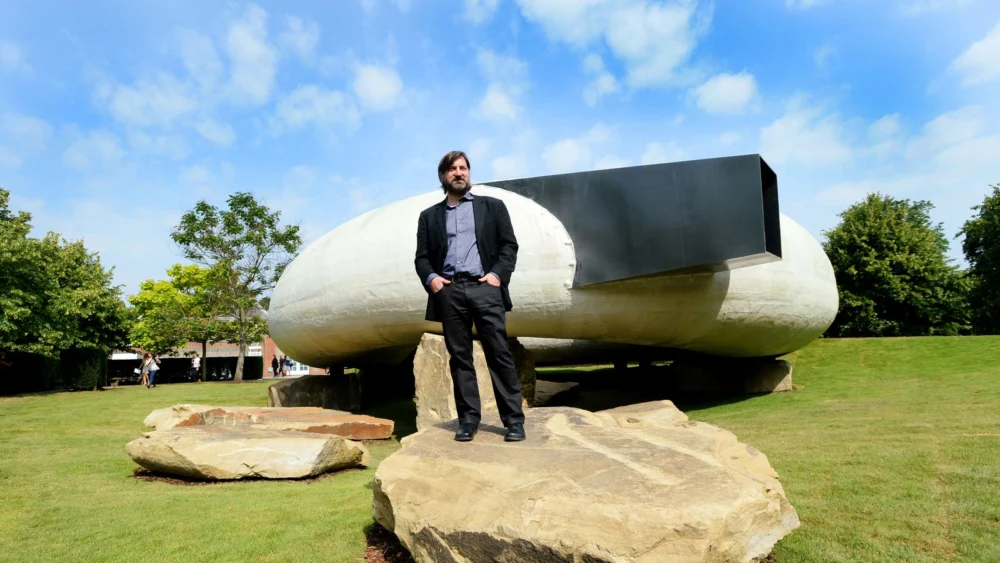
The architectural world recently turned its attention to the Pritzker Prize announcement, an event traditionally held in the first week of March, but this year marked by an unusual delay and heightened scrutiny. The postponement followed a significant revelation concerning Tom Pritzker, now the former executive chairman of Hyatt Hotels Corporation, the primary sponsor of the esteemed award. His long-standing association with the convicted sex offender Jeffrey Epstein cast a shadow over the prize, prompting a period of reflection and an eventual recalibration of the announcement schedule. While the delay itself stirred conversations about the prize’s integrity and its association with its patrons, it also inadvertently fueled a broader discourse on the award’s evolving relevance in contemporary architecture. As Edwin Heathcote critically observed for Dezeen, the Pritzker Prize’s historical affirmation of the "lone male genius" has increasingly felt anachronistic, diminishing its impact compared to a quarter-century ago. This sentiment resonates with a growing fatigue within the architectural community regarding the perennial celebration of the "starchitect" mythology, leading many to approach each year’s announcement with a mix of genuine interest and a degree of skepticism.
Despite these underlying tensions, the honors proceeded, culminating in the announcement on Thursday that Chilean architect Smiljan Radić is the 2025 recipient of architecture’s most prestigious award. He now joins a distinguished pantheon of laureates that includes luminaries such as Frank Gehry, Robert Venturi, and Zaha Hadid. Radić’s selection represents a notable departure from recent trends in Pritzker recognition, focusing on a body of work characterized by its profound material exploration and philosophical depth rather than an explicit social agenda.
The Pritzker Prize: A Legacy and Its Recent Challenges
Established in 1979 by Jay A. Pritzker and his wife, Cindy, through the Hyatt Foundation, the Pritzker Architecture Prize quickly ascended to become the most coveted international award in architecture, often dubbed "architecture’s Nobel." Its intent was to honor a living architect or architects whose built work demonstrates a combination of talent, vision, and commitment, producing consistent and significant contributions to humanity and the built environment. For decades, the prize maintained an almost unblemished reputation, its annual announcement a highlight in the global cultural calendar, shaping careers and architectural discourse.
However, the recent controversy surrounding Tom Pritzker introduced an unprecedented challenge to the award’s long-standing prestige. The revelation of his association with Jeffrey Epstein led to widespread concern and calls for transparency and accountability within the architectural community. While Tom Pritzker subsequently stepped down from the Hyatt board, stating deep regret for the association, the incident underscored the intricate relationship between philanthropic patronage and public perception. The delay in the announcement, typically a highly anticipated event, became a quiet acknowledgment of the need to address these ethical considerations, even if implicitly. Critics pondered whether the prize’s inherent value could be separated from its funding source, sparking debates about corporate responsibility and the moral compass of institutions that confer such significant honors. The episode served as a stark reminder that even the most venerable institutions are not immune to external pressures and the imperative for ethical scrutiny.
Furthermore, the prize has faced increasing internal critiques regarding its selection criteria and the demographics of its laureates. The historical dominance of male, often Western, architects and the perceived emphasis on monumental, iconic structures have fueled arguments that the prize has been slow to adapt to the profession’s evolving priorities, which now often emphasize sustainability, community engagement, and social equity. Radić’s win, while not overtly addressing these criticisms through a "social practice" lens, nonetheless challenges the "starchitect" paradigm by honoring a figure known for his more introspective, materially-driven approach.
Smiljan Radić: A Profile in Architectural Innovation
Born in Santiago, Chile, Radić is a descendant of Croatian immigrants, a heritage that perhaps subtly informs his unique perspective, grounding his work in a specific cultural and geographical context while allowing for universal architectural expression. After studying architecture at the Pontifical Catholic University of Chile, from which he graduated in 1989, Radić further honed his craft through travel and engagement with diverse architectural ideas before establishing his independent practice in 1995. His career has unfolded largely within South America, where he has cultivated a diverse portfolio spanning private residences, cultural institutions, and commercial buildings. Unlike many of his Pritzker predecessors, Radić has deliberately eschewed the globalized, celebrity-driven trajectory of the "starchitect," preferring a more localized and experimental approach. His name, while highly respected within architectural circles, is not a household one, a characteristic he might well prefer, given his practice’s resistance to easy categorization and its emphasis on process over spectacle.
Radić’s architectural language is characterized by a compelling interplay of contrasts. He frequently employs materials of significant heft—raw stone, weighty timber, and various metals—juxtaposing them with the ethereal transparency of glass, the softness of fabric, or the industrial resilience of fiberglass. This material dialogue results in structures that feel both ancient and contemporary, rooted in the earth yet aspiring to lightness and ephemeral presence. His buildings have been described as possessing the energetic dynamism of a Kandinsky painting or the serene, sculptural quality of a Torkwase Dyson piece, appearing contradictory yet harmoniously resolved. They are anchored to their sites with palpable gravity, yet often seem to stand on tiptoes, defying their own mass and hinting at a delicate balance. This recognition of Radić’s quietly monumental and deeply philosophical body of work signals a significant shift for the Pritzker Prize, moving away from its recent streak of laureates primarily recognized for their strong social practice and community-oriented projects.
Chronology of Key Projects and the Philosophy of "Fragility"
Radić’s distinctive approach to architecture began to materialize almost immediately after he founded his practice. In 1995, his Casa Chica exemplified an early experimental sensibility. This compact 300-square-foot home was ingeniously crafted from simple wood, upcycled doors, and plate glass, perched delicately on granite slabs within a secluded wooded area. It was an exercise in minimalist intervention and material honesty, demonstrating his capacity to create impactful architecture from humble elements.
His exploration of material weight and contrast continued with the 2004 Copper House. Here, a family home was clad in heavy, weathered copper tiles, which visually appeared to pull the sloped roof downward, creating a sense of grounding and permanence. This was dramatically offset by expansive, floor-to-ceiling glass windows that provided breathtaking views and introduced a contrasting lightness, dissolving the boundary between interior and the surrounding undulating plain. The copper, allowed to naturally patina, integrated the structure further into its landscape over time, evolving with its environment.
Radić’s progression to larger commercial projects did not dilute his material-driven philosophy. The Mestizo restaurant in Santiago stands as a testament to his innovative structural thinking. Similar to Casa Chica, monumental natural elements—specifically large, sculptural boulders—were ingeniously integrated into the building’s structural engineering. These massive stones, a collaboration with his wife, sculptor Marcela Correa, support a delicate steel trellis roof draped with a fabric canopy, creating a space that feels both robustly grounded and remarkably open. The restaurant became a landmark, celebrated for its unique aesthetic and its seamless blend of natural and constructed forms.
Through these earlier explorations, Radić meticulously developed his seminal philosophy of "fragility." As he articulated to architect Jose Castillo in a seminal 2009 BOMB interview, "fragility" in his work is not merely about the inherent weakness or impermanence of his chosen materials. Instead, it speaks to the construction and assemblage of these materials—the deliberate hand-built quality evident in Casa Chica, or the seemingly precarious yet fundamentally stable support provided by the large boulders at Mestizo. It is a fragility of perception, challenging conventional notions of stability and permanence by highlighting the delicate balance and precise engineering required to achieve such evocative forms.
This philosophy gained international prominence in 2014 when Radić was invited to design the prestigious Serpentine Pavilion in London’s Kensington Gardens. The pavilion, a temporary structure that annually commissions a leading architect to create a space that responds to its context, thrust Radić onto the global stage. His design created an organic, ovular space encased within a semi-translucent, glass-reinforced plastic eggshell. The structure appeared to almost slump, succumbing gracefully to gravity’s pull, as it rested atop his signature boulders. A water feature beneath the pavilion passively cooled the interior, enhancing its sensory experience. Radić himself famously described the building as a "folly," a "fake ruin" perched on rocks that, while appearing to be part of the surrounding park, ingeniously served as the pavilion’s foundation, embodying his concept of deliberate, constructed precariousness.
In 2024, Radić formalized his commitment to architectural discourse and heritage by launching the Fundación de Arquitectura Frágil (Foundation for Fragile Architecture). This foundation serves not only as a home for his practice but also as an extensive archive of his collected books and ephemera from 20th-century radical architecture movements. While Radić has often stated that "art and architecture have nothing to do with each other," there are undeniable and fascinating linkages between his assemblages of architectural and natural materials and movements like Arte Povera. This 1970s Italian art movement famously deployed "poor" or readily available materials—such as earth, recycled objects, and stone—alongside natural processes like gravity, balance, and decay, to produce artwork that critically refuted the commercialization and capital-driven nature of the art market. In a similar vein, Radić’s buildings often perform an analogous function. By deeply integrating the surrounding landscape and expertly playing on contrasting materials—heavy stone against delicate glass, or the intriguing metallic-looking inflatables seen in his pillow-like 2023 Central Pavilion at Chile’s Biennial of Architecture and Urbanism—he appears to defy conventional notions of ownership and stylistic pigeonholing. Who, indeed, owns the rocks, the sunlight, or the force of gravity that are so integral to his compositions? Can such fundamental elements truly define a specific architectural style? These are not questions with easy answers, and consequently, Radić’s work itself resists simple classification, existing as an ongoing interdisciplinary intellectual endeavor rooted in poetry, philosophy, and fine arts.
Jury’s Acclaim and Broader Implications
Alejandro Aravena, Chair of the Jury and himself a 2016 Pritzker Prize Laureate, eloquently captured the essence of Radić’s contribution in his statement: "In every work, he is able to answer with radical originality, making the unobvious obvious. Developed in a context of unforgiving circumstances, from the edge of the world, with a practice of just a few collaborators, he is capable of bringing us to the innermost core of the built environment and the human condition." Aravena’s praise is particularly significant, coming from an architect celebrated for his groundbreaking work in affordable housing and social engagement. It underscores the Pritzker jury’s capacity to recognize diverse forms of architectural excellence, even when they diverge from their own celebrated trajectories.
Radić’s selection marks a distinct shift from the Pritzker’s recent focus on architects with a pronounced social practice. For instance, Aravena’s own 2016 prize celebrated his innovative work in affordable housing. The 2024 laureate, Riken Yamamoto, was recognized for his focus on building dense, affordable apartments designed around common, shared spaces that foster community. Similarly, the 2021 recognition of Anne Lacaton and Jean-Philippe Vassal highlighted their pioneering work in adaptive reuse, directly addressing urgent global challenges like embodied carbon and climate change. These recent laureates epitomized a growing trend towards acknowledging architecture’s direct role in addressing societal and environmental crises.
In contrast, Radić’s recognition, while bold in its theoretical underpinnings and presentation, does not overtly engage with current global political conditions or crises. He once remarked to BOMB magazine that "The political interests me only in regard to the popular vote," suggesting a detachment from explicit political messaging in his architectural output. However, one could argue that his profound engagement with materials, site, and the human condition, his resistance to consumerism and stylistic pigeonholing, implicitly gestures towards a deeper, more enduring form of political statement – one about authenticity, resourcefulness, and the intrinsic value of thoughtful creation.
This decision serves as a powerful reminder that the Pritzker Prize, despite its evolving context and the profession’s shifting winds towards social and environmental responsibility, was not solely conceived to celebrate those who design exclusively within the social and political realms. While issues of climate, housing, energy, and affordability rightly dominate much of contemporary architectural discourse, the prize also retains its foundational purpose: to acknowledge a lifetime of practice that demonstrates exceptional talent, vision, and consistent contribution to the art of architecture itself. Radić’s win reaffirms the Pritzker’s commitment to recognizing a broader spectrum of architectural excellence, acknowledging that profound impact can also arise from a deeply personal, materially-focused, and philosophically rigorous engagement with the built environment. It offers a counter-narrative to the prevailing emphasis on immediate social utility, reminding the world that architecture, at its core, is also an art form capable of expressing profound truths about existence through form, space, and material.
Top photo of Smiljan Radić and his Serpentine Pavilion by rune hellestad/Corbis via Getty Images