admin
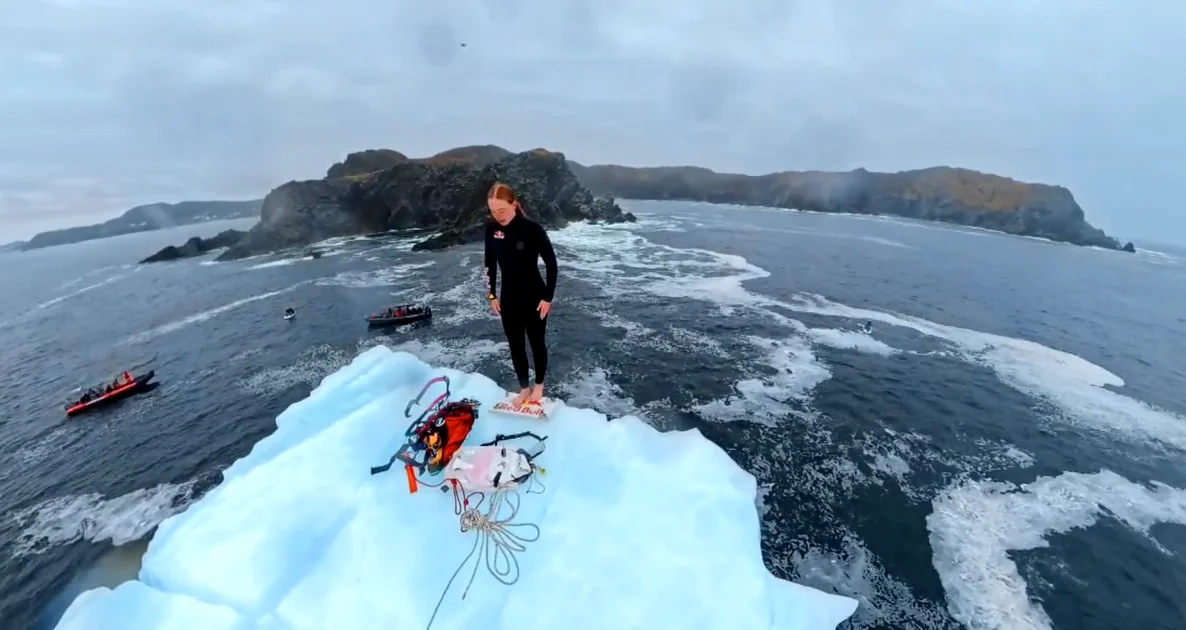
Canadian cliff diving sensation Molly Carlson has etched her name into the annals of extreme sports, becoming the first known woman globally to execute a high dive from a towering iceberg. This unprecedented feat, executed in the frigid waters off Twillingate, Newfoundland, in June, transcends mere athletic achievement, serving as a powerful metaphor for her personal journey with anxiety and a call for women to embrace their fears. The Montreal-based athlete’s dive, a perilous 15-metre (50-foot) plunge into the North Atlantic Ocean, was the culmination of months of meticulous preparation, rigorous training, and an unwavering commitment to both pushing boundaries and championing mental health awareness.
Carlson, a prominent figure in the Red Bull Cliff Diving World Series, has consistently demonstrated an exceptional blend of skill, courage, and a unique ability to connect with a global audience. Her latest endeavor, however, elevates her profile beyond competitive sport, positioning her as an icon of resilience. The decision to dive from an iceberg was not merely an athletic challenge but a deeply personal statement. As she revealed in an interview with Global News on Monday, October 26, 2026, the project was meticulously designed to mirror her internal struggles, using the iceberg as a powerful symbol. "Everyone kind of sits 10 per cent above the surface, the highlight reels, the perfect everything, but deep down we are all human. We’re all scared. We all have emotions. We all have fear," Carlson articulated, drawing a direct parallel between the visible tip of an iceberg and the often-hidden aspects of mental health.
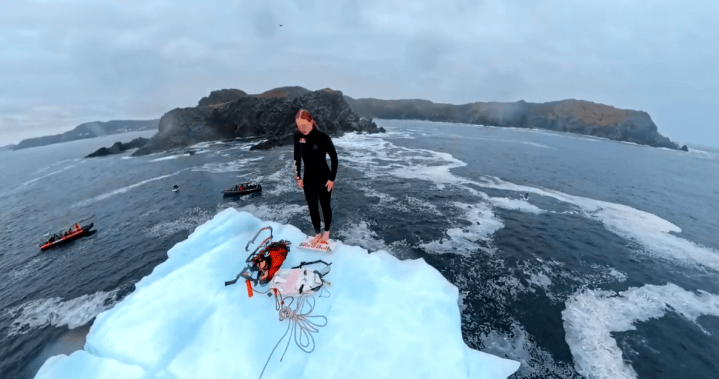
The treacherous nature of the dive cannot be overstated. Icebergs, majestic yet inherently unstable, present a dynamic and unpredictable platform. Unlike static cliffs, these colossal ice formations are constantly shifting, calving, and prone to rolling, making any attempt to climb or dive from them fraught with extreme danger. Carlson’s preparation involved not only honing her diving technique but also acquiring entirely new skill sets. She underwent extensive training in ice climbing, a discipline crucial for safely ascending the slippery, uneven surfaces of the iceberg. This preparatory phase was critical, not just for physical readiness but for developing an acute understanding of ice dynamics and safety protocols. The search for a suitable iceberg was equally challenging, requiring careful assessment of its stability, size, and the surrounding water conditions. Safety experts, marine biologists, and experienced guides were integral to the expedition, ensuring that every possible risk was mitigated.
The location itself, Twillingate, Newfoundland, is renowned for its position along "Iceberg Alley," a corridor where massive icebergs, calved from Greenland’s glaciers, drift southwards each spring and early summer. While picturesque, the region’s waters are notoriously cold, often hovering just above freezing. For a diver, cold water immersion presents immediate physiological challenges, including cold shock response, rapid loss of dexterity, and the onset of hypothermia. A dedicated medical team, equipped with specialized cold-water rescue gear, was on standby throughout the operation, highlighting the severe risks involved.
The dive, which took place in June, was captured by a specialized film crew, with footage released by project lead Red Bull Canada just last week, captivating audiences worldwide. The timing of the dive was a critical element, underscoring the precariousness of the undertaking. Carlson recounted the chilling proximity to disaster: "After I jumped off, it started breaking on the backside. So the timing was insane. If we were on there for five more minutes, who knows what this story could have been like." This firsthand account emphasizes the minute-by-minute risks involved and the precise coordination required to ensure her safety. The incident serves as a stark reminder of the inherent volatility of natural environments and the thin margin for error in extreme sports.

The decision to embark on such a perilous journey was deeply rooted in Carlson’s desire to use her platform for a cause greater than sport itself. Her advocacy for mental health is a recurring theme in her public life, and this dive provided an unparalleled opportunity to amplify her message. She openly discusses her struggles with extreme anxiety, a condition that, for many, remains an invisible battle. By metaphorically equating her internal battles with the submerged, unseen majority of an iceberg, she creates a powerful visual representation of the human experience. Her message is one of empowerment, particularly for women, encouraging them to confront their fears and pursue ambitious goals, regardless of how daunting they may seem. "I truly want women to know that they could go out and do brave things too, no matter how insane they might sound," she passionately declared.
The global response to Carlson’s dive has been overwhelmingly positive, catapulting her social media presence to new heights. Since the release of the footage, she has gained over one million followers on Instagram, demonstrating the resonance of her story with a diverse audience. Red Bull Canada, a brand synonymous with extreme sports and boundary-pushing athletes, played a pivotal role in bringing this project to fruition. Their involvement provided the logistical, financial, and media support necessary for such an ambitious undertaking, further solidifying their reputation as champions of unconventional athletic achievements. The viral spread of the video across various platforms has not only showcased Carlson’s extraordinary courage but also ignited conversations about mental health, female empowerment, and the awe-inspiring beauty of Canada’s natural landscapes.
Beyond the immediate thrill of the dive, the event carries several broader implications. For the sport of cliff diving, it represents a new frontier, pushing the boundaries beyond conventional cliffs and platforms. It challenges athletes to consider the natural world as a canvas for their art, albeit with significantly heightened risks. For women in extreme sports, Carlson’s achievement is an inspiring testament to strength, skill, and determination, dismantling stereotypes and paving the way for future generations of female adventurers. Her vocal advocacy for mental health also contributes significantly to destigmatizing anxiety and other mental health conditions, encouraging open dialogue and seeking support. In an era where athletes increasingly leverage their platforms for social causes, Carlson stands out as a powerful voice for vulnerability and resilience.

The environmental context of the dive also warrants consideration. While the dive itself had minimal direct environmental impact, it drew attention to the transient beauty and delicate nature of icebergs, which are increasingly affected by climate change. As global temperatures rise, the rate of glacial melt and iceberg calving is accelerating, altering marine ecosystems and coastal environments. This subtle backdrop adds another layer of significance to Carlson’s interaction with these ephemeral giants. The event also indirectly promotes Canadian tourism, particularly for regions like Twillingate, which offers unique opportunities for iceberg viewing and experiencing the rugged beauty of the Atlantic coast.
Looking ahead, Molly Carlson is already contemplating her next "iceberg," albeit one of a more personal nature. Earlier this month, she announced her engagement to fellow renowned cliff diver Aidan Heslop. The couple, both stalwarts in the extreme diving community, are now embarking on the exciting journey of planning their wedding. This personal milestone provides a delightful counterpoint to her high-stakes professional life, showcasing a balanced existence where extreme athletic endeavors coexist with deeply personal joys. The partnership with Heslop, another athlete who understands the unique pressures and exhilarations of their shared sport, promises a future filled with mutual support and perhaps, more shared adventures.
In conclusion, Molly Carlson’s historic dive from an iceberg is far more than a spectacular stunt. It is a meticulously planned expedition into uncharted athletic territory, a profound personal statement about overcoming anxiety, and a beacon of inspiration for women globally. Through her extraordinary courage and candid vulnerability, Carlson has not only made a world record but also fostered a crucial dialogue about mental health, proving that the greatest leaps often come from within. Her story serves as a powerful reminder that fear, much like an iceberg, holds immense power, but with preparation, courage, and a strong purpose, its true depths can be navigated and even conquered.