Jia Lissa
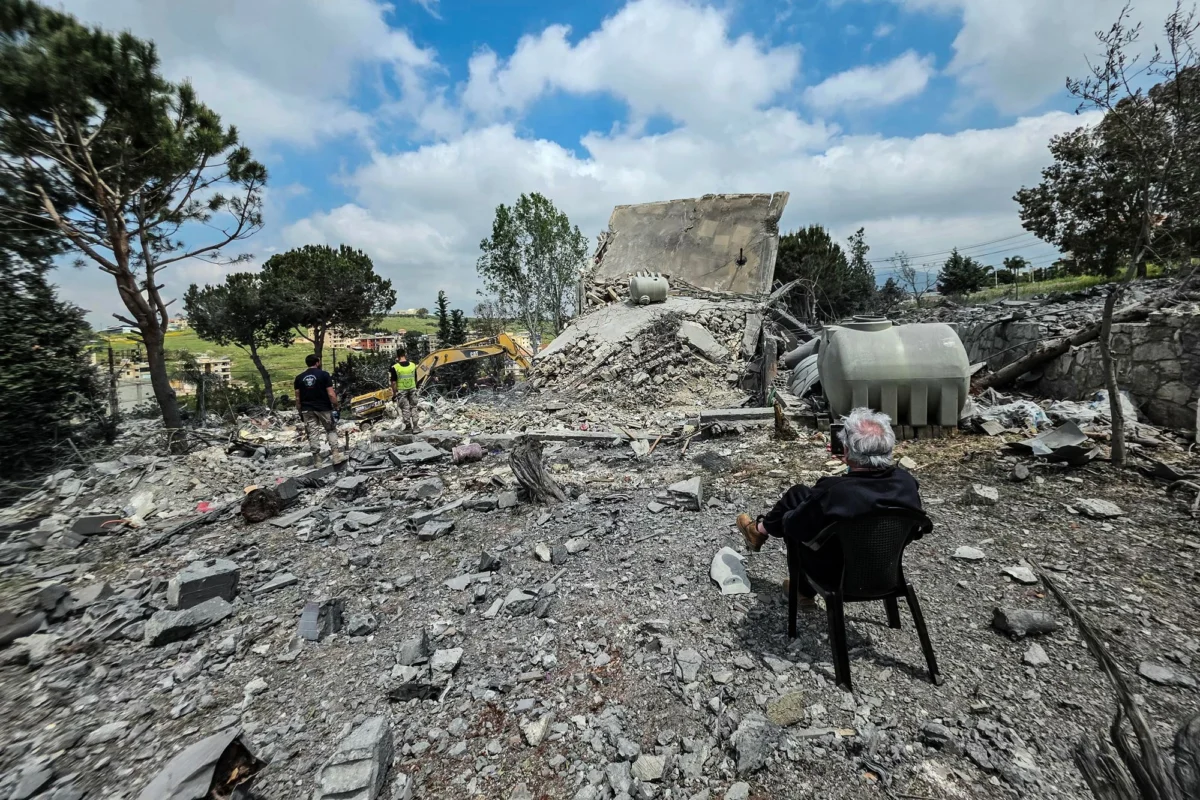
The machines sat idle, formidable bulldozers and excavators designed to clear the devastation of war, yet their owners in southern Lebanon dared not deploy them. A profound fear gripped communities throughout 2025 as Israeli strikes repeatedly targeted the region, not only demolishing homes and businesses but also, critically, the very equipment needed for recovery. Locals, instead, resorted to painstakingly clearing debris by hand, a testament to a pervasive apprehension that even the presence of reconstruction machinery could invite another attack. Ramzi Kaiss, a Human Rights Watch (HRW) researcher in Lebanon, articulated this chilling reality: "They felt that just the presence of this heavy machinery that was typically used in reconstruction was a threat."
A Pattern of Preemptive Destruction
The narrative emerging from southern Lebanon paints a stark picture of systematic targeting that extends far beyond direct conflict. Reconstruction, as UN and aid organizations emphasize, encompasses more than just rebuilding structures; it requires the restoration of vital roadways, operational water networks, and functioning factories to supply essential construction materials. However, a troubling pattern of Israeli attacks, documented by HRW, aid workers, and UN peacekeepers, has consistently damaged these fundamental systems, with the looming threat of further strikes actively obstructing any attempts at repair. Kandice Ardiel, a spokesperson for the United Nations Interim Force in Lebanon (UNIFIL), underscored the profound impact: "We did see incidents in which construction equipment was unfortunately targeted, which made it difficult. Not just for these repairs and the removal of rubble to happen, but again, for people to return to their lives."
Many residents who bravely returned and rebuilt after the 2024 hostilities found their efforts tragically undone. "We’ve seen things just destroyed again," Ardiel lamented, highlighting a cycle of destruction that renders recovery almost impossible. This sentiment was tragically captured in images, such as that of Mohammed Rizk holding his mobile phone, displaying before-and-after photos of his destroyed home in Houla, a stark visual of shattered lives and repeated loss.
HRW Investigation Uncovers Apparent War Crimes
A December 2025 investigation by Human Rights Watch brought into sharp focus the deliberate nature of these attacks, documenting four specific Israeli strikes between August and October 2025. These incidents, occurring after the November 2024 ceasefire between Israel and Hezbollah, targeted heavy-machinery showrooms, maintenance facilities, and a factory crucial for producing cement and asphalt. The scale of destruction was immense: HRW reported that these attacks obliterated over 360 pieces of construction equipment, leading the organization to classify the strikes as apparent war crimes.

Kaiss, who personally visited four of these devastated sites, described a "massive scale of destruction" involving "hundreds and hundreds of heavy machinery used in reconstruction-related processes." The Israeli military, in statements posted on Telegram, asserted that the targeted equipment and materials were intended to support Hezbollah’s infrastructure reconstruction. However, HRW’s rigorous investigation found no evidence of military targets at or around the sites. While acknowledging that the intended use of every single machine or store of materials could not be definitively established, the organization found no indication that these supplies were earmarked for military purposes, and indeed, verified civilian uses for some of the equipment. This discrepancy between Israeli claims and independent investigative findings raises serious questions about the targeting rationale and adherence to international humanitarian law, which prohibits attacks on civilian objects unless they are being used for military purposes.
Escalating Devastation and the "Yellow Line"
The destruction has not abated. By October 2026, Israeli defense minister Israel Katz publicly stated that 23,000 homes and over 60 villages had been destroyed. A comprehensive analysis by The New York Times, also published in October 2026, corroborated this widespread devastation, revealing that Israeli forces had largely leveled 48 of the approximately 60 villages and towns in the occupied area of southern Lebanon. A significant portion of this destruction occurred after a renewed ceasefire in April 2025, suggesting a continued, systematic campaign even during periods of supposed de-escalation. The Israeli military, when contacted by the Times, denied receiving any directive to carry out widespread damage to structures or to demolish villages, a claim that stands in stark contrast to the documented evidence on the ground. WIRED Middle East’s attempts to solicit comments from the Israel Defense Forces prior to publication also went unanswered, further underscoring the challenge of obtaining official explanations for the extensive damage.
Beyond the physical structures, the conflict has critically damaged essential infrastructure, severely impeding people’s ability to return home. Doctors Without Borders (Médecins Sans Frontières, MSF) reported in September 2026 that attacks on already fragile water systems persisted despite the April ceasefire, compounding the humanitarian crisis.
The Israeli-declared "Yellow Line," a military zone in southern Lebanon, further exacerbates the crisis. UN consultations with local officials in Jabal Amel revealed that approximately 6,500 displaced families were unable to return to a dozen villages located within this zone. Restrictions within this area have demonstrably obstructed efforts to restore essential services, effectively creating uninhabitable zones and preventing the return of displaced populations.
Water Lifelines Severed
Charlene Silvin, a Doctors Without Borders project coordinator, led a team documenting damage to water supplies across roughly 20 towns in the Bint Jbeil area. Her findings were dire: "There was not one village on the road that was not hit in some capacity." Silvin meticulously traced the chain of destruction from water sources to residential homes. In this region, the boreholes – deep vertical shafts serving as wells – that supply villages with water are often located in valleys now held by Israeli troops. Accessing these vital sources has become exceedingly difficult, and the infrastructure itself has been severely compromised. Storage tanks can no longer hold water, and pump and filtration units are offline. Even solar energy panels, intended to power these systems, were almost universally damaged in the areas surveyed by Silvin’s team.

The humanitarian response, while critical, often constitutes temporary fixes. In the municipality of Yater, MSF installed less ideal plastic tanks because the main water tank was deemed beyond repair. In Froun, the organization adopted a different strategy, repairing the filtration unit and directly connecting it to the water source, thereby bypassing the damaged main tank. These interventions, while necessary, are merely a fraction of the repairs required. MSF’s September 2026 statement documented widespread damage to wells, pumps, generators, filtration units, and pipelines across southern Lebanon, painting a grim picture of a region deprived of its most fundamental resource.
The interconnectedness of the destruction is also evident: attacks on heavy machinery directly impede efforts to repair damaged water infrastructure, as construction vehicles are often indispensable for reaching and fixing broken pumps. A 2026 UNIFIL account of repair efforts highlighted this challenge, describing the survey of a 280-meter access route for a maintenance crane. Much of the route was damaged and blocked by berms – compacted dirt mounds often used as military barriers – which peacekeepers had to clear before essential equipment could be brought in to repair a well.
For many, trucked-in water has become the only option, as seen in Zawtar Al-Gharbiyeh, where 90 returning families now rely on this expensive and limited substitute, a stark contrast to the 500 households that once thrived there. Silvin candidly described this as "not a system. It’s a drop," underscoring its unsustainability as a long-term solution.
The pervasive threat of renewed attacks also dictates the nature of repairs. "Anyone that would be investing in repairing the infrastructure would be doing so with the fear that the intervention is damaged again in a very short while," Silvin explained. This forces aid organizations to prioritize temporary solutions over the lasting infrastructure residents desperately need. An October 2026 UN report further detailed the struggles of municipalities to pay staff, fuel pumps, and maintain vehicles. Local water authorities and civil servants have also reported intimidation by Israeli forces when attempting to access damaged sites near the "Yellow Line," further stifling recovery efforts.
A Looming Gap in Oversight: UNIFIL’s Withdrawal
The humanitarian and reconstruction crisis in southern Lebanon is unfolding amidst a significant shift in international oversight. As of September 29, 2026, UN estimates indicate approximately 330,000 people remain internally displaced in Lebanon. However, the vital role of documenting and reporting violations in southern Lebanon, largely carried out by UNIFIL, is set to conclude with the end of its mandate on December 31, 2026. An October 2026 statement from the organization confirmed ongoing discussions about the UN’s role beyond this deadline, raising profound questions about the future of monitoring and accountability in the region.
Kandice Ardiel described UNIFIL peacekeepers as "the impartial record keepers of what’s happening on the ground." Their potential departure creates an alarming vacuum, not only for the immediate challenge of restoring homes and services but also for the critical task of maintaining an independent record of events, a cornerstone for future accountability and peacebuilding efforts.

Beyond Rubble: Erasing a Legacy
The destruction in southern Lebanon extends beyond physical structures and infrastructure; it strikes at the heart of identity and heritage. For a 27-year-old woman from Rshaf in the Bint Jbeil district, who requested anonymity for safety, the devastation is a distant horror. While in Spain, she received a satellite image showing her family home reduced to rubble. Her anguish was palpable: "I don’t even know if the cemetery is still there. We have no way to access it, and with satellite imagery I can’t tell, because everything is rubble and it’s very pixelated." This personal tragedy mirrors a larger, collective loss.
Ardiel, observing from a UNIFIL base since March, has witnessed the destruction of "hundreds or even thousands of years old" olive trees. "There’s a legacy here that’s being wiped out," she stated, underscoring the irreversible damage to cultural heritage and the environment. She cautioned that "even if the conflict were to end today, the recovery process is going to be intense," highlighting the long-term, multi-generational challenge ahead.
Yet, amidst the despair, the human spirit of resilience endures. Displaced families consistently convey a powerful message to Kaiss: "We don’t need anything but for them to allow us to return. We’ll pitch tents on the rubble of our homes, and we’ll live there." Silvin has already witnessed this fierce determination in the most damaged villages, with families "restarting their lives on the rubble." The woman from Rshaf, despite her profound skepticism – "I don’t believe this land will ever be ours again" – affirmed that if her family could return to their land, rebuilding would be an unquestionable act of defiance and hope.
The systematic destruction of civilian infrastructure and reconstruction capabilities in southern Lebanon represents a critical humanitarian crisis with profound long-term implications. It not only exacerbates suffering and displacement but also undermines the very foundations of future stability and recovery, leaving communities in a perilous state of perpetual rebuilding amidst lingering threats. The international community faces an urgent imperative to address these alleged violations of international law, support robust reconstruction efforts, and ensure continued oversight to prevent further escalation and protect civilian lives and livelihoods.