admin
admin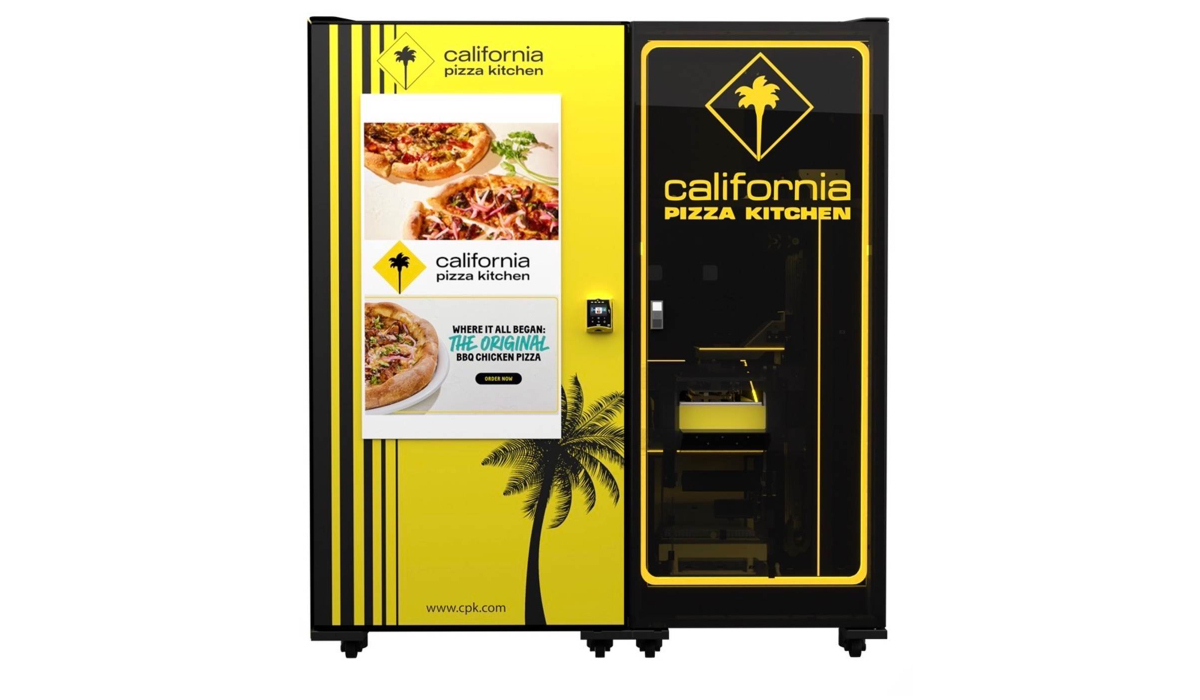
California Pizza Kitchen (CPK), the pioneer of California-style pizza, has announced a significant strategic shift in its distribution model through a massive expansion of its automated retail footprint. In a landmark partnership with T-ROC Global, a leader in retail technology and logistics, the casual-dining chain aims to deploy as many as 1,000 automated retail machines across the United States over the next three years. This initiative represents a sophisticated evolution for the brand, transitioning it from a traditional brick-and-mortar restaurant operator into a diversified food technology player capable of reaching consumers in high-traffic environments where traditional restaurant formats are geographically or operationally unfeasible.
The partnership is designed to capitalize on the growing consumer demand for high-quality, convenient food options that bypass the wait times and labor requirements of standard dining. By leveraging T-ROC Global’s extensive infrastructure, CPK intends to place its signature pizzas and an expanded menu of hot entrees into airports, universities, hospitals, hotels, office complexes, residential communities, electric vehicle (EV) charging stations, and sports venues. This move effectively turns automation into a primary distribution channel, allowing the brand to scale with a level of capital efficiency that traditional site development cannot match.
Technological Infrastructure and the 90-Second Dining Experience
The core of this automated expansion lies in the integration of advanced cooking technology and data-driven logistics. Each kiosk utilizes TurboChef cooking technology, which is renowned in the commercial kitchen industry for its ability to provide rapid-cook solutions without compromising food texture or flavor. Through a combination of high-velocity convection and targeted microwave energy, these machines can deliver a hot, fresh CPK pizza to a customer in as little as 90 seconds.
The user interface is centered around high-definition touch screens that provide a seamless ordering experience. Behind the scenes, the machines are equipped with data intelligence systems that monitor inventory levels in real-time, track consumer preferences by location, and provide diagnostic data to ensure maximum uptime. This "smart" vending approach allows CPK to maintain the quality standards of its traditional kitchens while operating in a footprint of only a few dozen square feet.
The menu for these machines has been carefully curated to reflect CPK’s most popular offerings while ensuring compatibility with the automated cooking process. Beyond the brand’s iconic pizzas, the kiosks will serve a variety of pasta dishes, including Kung Pao Spaghetti and Bolognese Spaghetti. Furthermore, the company is introducing its Mac ‘N’ Cheese in three distinct varieties: classic, BBQ Chicken, and Burnt Ends. To complete the meal, CPK’s signature Butter Cake—a long-standing favorite among restaurant patrons—will also be available through the automated units, marking a rare instance of a premium restaurant dessert being offered via an unmanned retail format.
A Strategic Partnership with T-ROC Global
The scale of this rollout is made possible by the logistical capabilities of T-ROC Global. Unlike smaller-scale pilot programs, this 1,000-unit expansion is backed by a national infrastructure that includes 32 regional warehouses and a dedicated fleet of service vans. T-ROC Global will deploy thousands of technicians to manage the replenishment, maintenance, and technical support of the network.
The deployment strategy is structured around regional density. Rather than a fragmented national launch, the companies plan to focus on clusters of at least 20 machines across 30 major U.S. markets. This "cluster" approach ensures operational efficiency, as technicians and replenishment teams can service multiple units within a small geographic radius, reducing downtime and logistics costs.
Beyond its role as a partner in the 1,000-unit rollout, T-ROC Global has been designated as the national service provider for CPK’s other automated retail operating partners. This comprehensive mandate covers everything from warehousing and logistics to training and the identification of high-potential venues for future placement. By centralizing these operations under T-ROC, CPK ensures a consistent brand experience across all automated touchpoints, regardless of the specific venue partner.
Chronology of CPK’s Automated Evolution
The decision to scale to 1,000 units is the result of a deliberate testing phase that began in 2023. CPK initially piloted the concept in several high-traffic transit hubs to gauge consumer appetite for premium automated food.
- 2023 – Early 2024: CPK launched pilot kiosks at major travel hubs, including Boston Logan International Airport, Hartsfield-Jackson Atlanta International Airport, Dallas Love Field, and Dayton International Airport. These locations served as a proof-of-concept, demonstrating that travelers were willing to pay for a premium branded meal delivered quickly via automation.
- Late 2024: Following the success of the airport pilots, CPK announced the partnership with T-ROC Global to accelerate the program.
- 2025 – 2026: The rollout will expand into the education sector, with 15 kiosks expected to be active at major universities by the end of 2026. This phase targets Gen Z consumers who prioritize speed and technological integration in their dining habits.
- 2027: The program is slated to reach its target of 1,000 units, establishing a nationwide network of automated "micro-restaurants."
This timeline coincides with a period of corporate transition for California Pizza Kitchen. In early 2024, the company was acquired by an ownership group comprising Consortium Brand Partners, Eldridge Industries, Aurify Brands, and Convive Brands. This new ownership has expressed a clear mandate to modernize the brand’s delivery systems and expand its reach beyond its approximately 120 traditional U.S. restaurant locations.
Industry Context and Economic Implications
The shift toward automated retail is a response to several converging trends in the hospitality and food service industries. Labor shortages and rising minimum wages have made the traditional full-service restaurant model increasingly expensive to operate. Furthermore, the "on-the-go" lifestyle of modern consumers, accelerated by the post-pandemic return to travel and office work, has created a gap in the market for high-quality food available outside of standard meal times.
By moving into the automated space, CPK is entering a market often referred to as "Vending 2.0." According to industry data, the global automated retail market is projected to grow significantly over the next decade, driven by improvements in robotics and thermal cooking technology. For CPK, this strategy offers several economic advantages:
- Lower Overhead: Automated kiosks require no on-site staff and occupy a fraction of the real estate of a traditional restaurant.
- Extended Operating Hours: Unlike restaurants that may close in the mid-evening, kiosks can operate 24/7 in locations like hospitals, hotels, and airports.
- Brand Awareness: With 1,000 units in high-visibility areas, the kiosks act as "mini-billboards," reinforcing brand recognition and driving sales to both CPK restaurants and their grocery store products, which are currently available in over 10,000 retail locations.
- Data Collection: Every transaction provides precise data on consumer behavior, allowing the company to adjust menus and pricing with a level of granularity that is difficult to achieve in traditional dining.
Official Perspectives on the Expansion
The leadership at both CPK and T-ROC Global views this partnership as a transformative moment for the industry. Michael Beacham, President of CPK Global, emphasized that the move is an extension of the brand’s long-standing mission to be accessible to consumers.
“For decades, CPK has been dedicated to meeting consumers wherever they are, whether through our global restaurant network, airport and non-traditional locations, off-site events, or the local grocery store,” Beacham stated. He noted that the partnership with T-ROC introduces the brand to "entirely new occasions and venues where consumers desire quality food on the go."
Brett Beveridge, CEO and founder of T-ROC Global, highlighted the synergy between CPK’s brand equity and T-ROC’s technical prowess. “Consumers increasingly expect their favorite brands to meet them where they are, and technology is making that possible in entirely new ways,” Beveridge said. He added that the combination of CPK’s loyal following and T-ROC’s infrastructure provides a unique opportunity to build a "new national distribution channel at a meaningful scale."
Broader Impact on the Casual Dining Sector
CPK’s aggressive move into automation is likely to be closely watched by other players in the casual-dining sector. While many brands have experimented with "ghost kitchens" or enhanced delivery apps, few have committed to a hardware-based automated retail strategy of this magnitude.
If successful, the CPK-T-ROC model could provide a blueprint for how legacy restaurant brands can remain relevant in an era of shrinking labor pools and rising real estate costs. It shifts the definition of a "restaurant" from a physical place of assembly to a distributed service of branded culinary experiences. As the rollout progresses over the next three years, the presence of California Pizza Kitchen at EV charging stations and university dorms may become as common as its presence in suburban shopping malls, signaling a new chapter in the intersection of food service and automation technology.