admin
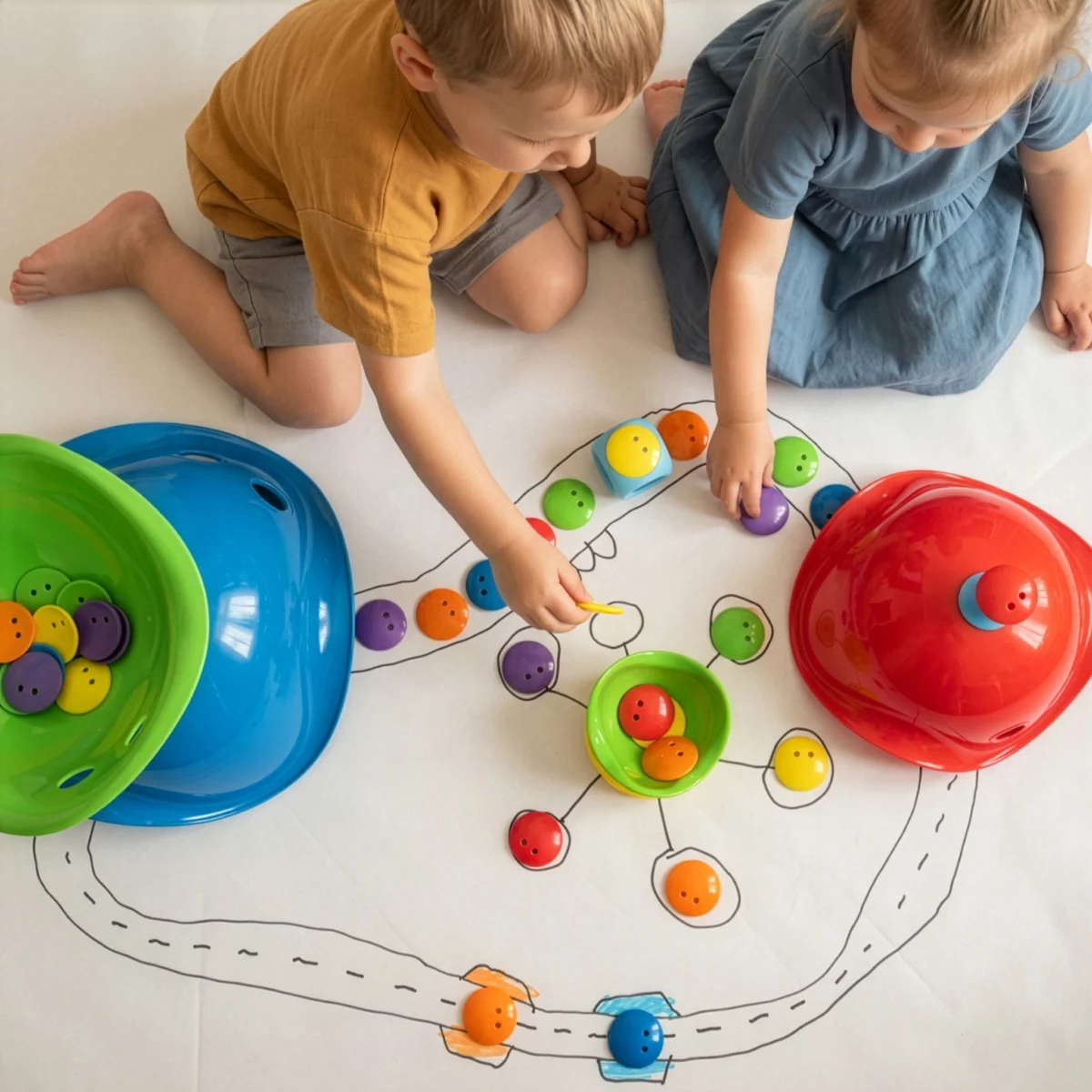
The global toy industry, often characterized by rapid obsolescence and the fleeting popularity of licensed franchises, has seen few constants over the last quarter-century. However, the Bilibo—a simple, brightly colored plastic shell with two holes and a wide rim—has defied these trends. Designed in 2001 by Swiss designer Alex Hochstrasser, the toy is marking its 25th anniversary as a staple of early childhood education and modern industrial design. To commemorate this milestone, the Zurich-based company Moluk, founded by Hochstrasser and his sister, architect Doris Hochstrasser, has announced the release of the Bilibo Midi and Bilibo Dots, alongside a series of special-edition anniversary colors. The expansion of the product line signals a continued commitment to "open-ended play," a pedagogical philosophy that prioritizes a child’s imagination over pre-defined rules or digital interfaces.

The Genesis of an Icon: A Reaction Against Rigidity
The Bilibo was born out of a specific frustration with the toy market at the turn of the millennium. In the late 1990s, the industry was dominated by highly specific, gender-segregated toys and products tied to major film franchises. According to Alex Hochstrasser, these toys often came with a "pre-written story," leaving little room for children to invent their own narratives. He observed that many toys had a built-in expiration date, not because they broke, but because they no longer challenged the child’s developing cognitive abilities or interests.
Hochstrasser’s objective was to create a "universal" object—something that did not immediately identify as a car, a doll, or a house. Through extensive observation of how children interact with everyday objects like cardboard boxes and kitchen bowls, he identified that the most engaging play often occurs when the object’s function is ambiguous. The resulting design was a hollow, three-fold symmetrical hemisphere. When resting on its rim, it serves as a stable stepping stone or a tunnel; when flipped onto its rounded base, it becomes a dynamic vessel for rocking, spinning, and balancing.

The "eyes" of the Bilibo, which give the object a friendly, anthropomorphic quality, were a deliberate addition to foster emotional connection. However, true to the design’s utilitarian roots, these openings also serve as peepholes, anchor points for ropes, and spouts for pouring sand or water. This dual-purpose design philosophy—where every aesthetic choice must also serve a functional play value—has become the hallmark of the Moluk brand.
Chronology of Recognition: From Playrooms to Museums
The Bilibo’s impact was recognized almost immediately by the design community. In 2002, just one year after its debut, it received a Design Distinction in I.D. Magazine’s Annual Design Review. Notably, it shared this honor with the first-generation Apple iPod, highlighting the toy’s status as a masterpiece of industrial minimalism.

Over the following two decades, the Bilibo transitioned from a commercial success to a cultural artifact. Its inclusion in the Museum of Modern Art’s (MoMA) 2012 exhibition, "Century of the Child: Growing by Design, 1900–2000," solidified its place in the history of design. Today, the Bilibo is part of the permanent collections of the Museum für Gestaltung Zürich, the Design Museum Brussels, and the Centre Pompidou in Paris.
Industry analysts point to several factors for this longevity. Unlike electronic toys that require software updates or batteries, the Bilibo is physically durable and technologically silent. In 2021, Moluk underwent a subtle retooling of the manufacturing process to make the shell lighter and structurally stronger without altering its iconic silhouette, ensuring the product met modern safety and sustainability standards while maintaining its original charm.

Technical Expansion: The Bilibo Midi and Bilibo Dots
The 25th-anniversary launch introduces the Bilibo Midi, a medium-sized version of the original shell. While the classic Bilibo is large enough for older children to sit in and spin, the Midi is scaled specifically for toddlers aged two to three. This size adjustment is more than aesthetic; it addresses a developmental need for autonomy. A smaller, lighter shell allows younger children to carry, stack, and manipulate the object without adult assistance, fostering a sense of independence and mastery over their environment.
Complementing the shells is the introduction of Bilibo Dots. This set of 36 colorful counters features the same curved profile and signature "eyes" as the original shell but in a miniature format. These pieces are designed to integrate with the larger shells, serving as tokens for sorting games, projectiles for tossing, or components for sensory play in water or sand.

"I see all Moluk toys as a family of building blocks for play," Hochstrasser stated regarding the new releases. The modular nature of these products reflects a broader trend in the toy industry toward "ecosystem play," where individual components can be combined in various ways to extend the life of the product. By adding the Midi and Dots, Moluk is providing new "vocabulary" for the imaginative language children have been building with the original Bilibo for 25 years.
Supporting Data: The Value of Physical Play in a Digital Age
The continued relevance of the Bilibo is supported by a growing body of research in child development. Pediatricians and educators have increasingly raised concerns about the "play deficit" caused by excessive screen time and the decline of unstructured physical activity. Objects like the Bilibo encourage "active play," which is essential for the development of the vestibular system (balance) and proprioception (awareness of one’s body in space).

Market data suggests a resurgence in "analog" play categories. While the global toy market is valued at approximately $100 billion, the "classic toy" segment—including blocks, puzzles, and open-ended equipment—has shown resilient growth, particularly among parents in the "Millennial" and "Gen Z" demographics who are seeking screen-free alternatives for their children. The Bilibo’s success in schools and occupational therapy clinics further emphasizes its utility beyond mere entertainment; it is frequently used to help children with sensory processing disorders develop motor coordination in a non-threatening, playful manner.
Anniversary Aesthetics and Sustainability
For the 2026–2027 anniversary season, Moluk is releasing the Classic Bilibo in four special-edition colors: Amber, Emerald, Graphite, and Coral. These sophisticated tones are intended to appeal to modern interior design sensibilities, acknowledging that toys are often prominent fixtures in shared family living spaces.

From a sustainability perspective, the Bilibo represents a departure from the "disposable" nature of modern consumerism. Made from high-density polyethylene (HDPE), the toy is 100% recyclable, though its primary environmental benefit lies in its durability. Because the toy is not tied to a specific age range or media trend, it is frequently passed down between siblings or through generations, reducing the overall environmental footprint compared to toys with shorter lifespans.
Broader Implications and the Future of Design
The 25-year history of the Bilibo serves as a case study for the power of "subtractive design." By removing features—sounds, lights, and specific instructions—Hochstrasser created a product that is more versatile than its more complex competitors. This philosophy has influenced a new generation of designers who prioritize "affordance"—the qualities of an object that suggest how it might be used—over explicit functionality.

As Moluk looks toward the next quarter-century, the company remains a family-run operation, a rarity in an industry increasingly dominated by large conglomerates. This independence has allowed the brand to resist market pressures to over-complicate its products. The expansion into the Midi and Dots lines suggests a strategy of careful, iterative growth rather than radical reinvention.
The enduring appeal of the Bilibo suggests that despite the rapid advancement of digital technology, the fundamental nature of childhood curiosity remains unchanged. Children still seek to hide, to spin, to build, and to imagine. By providing a simple shell that can be a boat one minute and a helmet the next, Moluk has ensured that the Bilibo remains not just a toy, but a catalyst for the infinite possibilities of the human mind. As the first generation of "Bilibo kids" now enters adulthood and begins to purchase the toy for their own children, the "curving grin" of the Swiss shell continues to be a symbol of a design that trusts the child to be the protagonist of their own story.