admin
admin
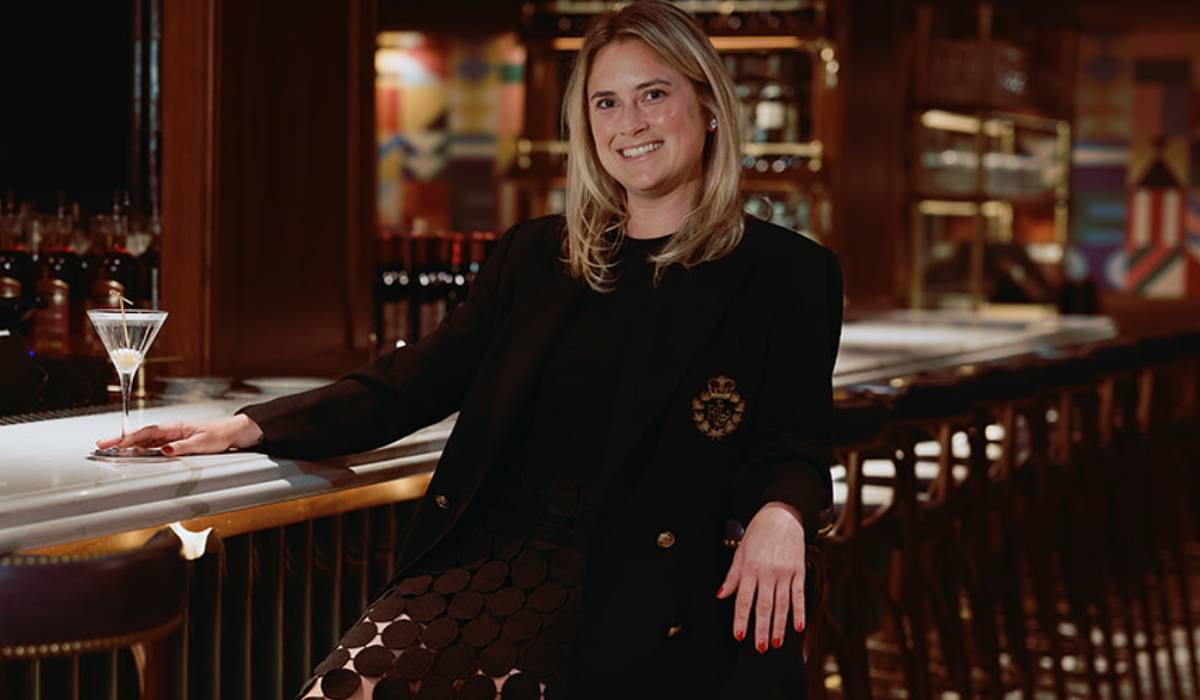
The transition of leadership within a family-owned business is a complex maneuver that often determines the long-term viability of a legacy brand. For Sydney Grims, the current General Partner of Fearless Restaurants, inheriting a seat at the table of an $80 million hospitality group was not merely a matter of lineage, but a rigorous exercise in unlearning traditional management styles and implementing a tech-forward infrastructure. Fearless Restaurants, a cornerstone of the Philadelphia and tri-state dining scene, encompasses 14 distinct locations and employs approximately 1,500 people. As Grims navigates the challenges of a male-dominated industry, her journey reflects a broader shift in the hospitality sector: the transition from "grit-and-grind" operational models to data-driven, empathetic leadership.
A Century of Hospitality: The Grims Family Chronology
The foundation of the Fearless Restaurants empire was laid not in corporate boardrooms, but in the immigrant experience of the early 20th century. To understand the current scale of the organization, one must look at the four-generation timeline that shaped its trajectory:
- Early 1900s: Seeking economic opportunity, Sydney Grims’ great-grandparents emigrated from Poland and Italy, eventually settling in the suburbs of Philadelphia.
- The Mid-20th Century: The family established Central Tavern, a local bar that served as the primary training ground for both Sydney’s grandfather and her father, Marty Grims.
- The 1980s and 1990s: Marty Grims expanded the family’s reach significantly, opening high-profile establishments including The Fountain Restaurant at the Four Seasons Hotel, La Fourchette, Taquet, and Passerelle. This era marked the transition from local taverns to fine dining and upscale hospitality.
- 2015: After building a career in New York City’s competitive restaurant market, Sydney Grims returned to Philadelphia at age 26 to join the family business as a general partner.
- 2020–Present: Under Sydney’s leadership, the group has focused on system consolidation, technological integration, and the creation of "Fearless Femmes," a professional development platform for women in the industry.
The Challenge of the "Succession Gap"
In the United States, family-owned businesses contribute approximately 57% of the GDP, yet succession remains a precarious hurdle. Statistics from the Family Business Institute indicate that only about 30% of family-owned businesses survive into the second generation, 12% into the third, and a mere 3% into the fourth. Sydney Grims represents the fourth generation of her family’s hospitality lineage, placing her in a statistical minority of successful successors.
Her entry into the family business was preceded by a deliberate effort to establish her own professional identity. She spent her early career in New York City within the Hillstone Restaurant Group’s management training program—a curriculum widely regarded as one of the most rigorous in the industry. She later served as the Director of Hospitality for MacAndrews & Forbes. This external experience provided her with a perspective independent of her father’s influence, yet the return to the family fold brought immediate interpersonal and professional challenges.
Upon her return, Grims faced the "boss’s daughter" stigma, a common hurdle in family-business transitions where younger leaders must prove their merit to long-tenured staff. Industry analysts note that this is particularly difficult for women in hospitality; while women make up more than 50% of the restaurant workforce, they hold fewer than 20% of executive leadership roles.
From "The Hammer" to "The Wrench": A Leadership Paradigm Shift
One of the most significant hurdles Grims encountered was the need to evolve her management philosophy. Having trained in high-pressure environments where a "grin and bear it" attitude was the standard, she initially adopted a hard-headed approach to leadership. She describes this early phase as trying to be the "strongest person in the room," often relying on discipline rather than development.
"To me, a good leader is someone who isn’t going to use a hammer on their employees; they’ll use a wrench—tools to get the job done rather than just disciplining people," Grims noted during an evaluation of her tenure. This shift from "the hammer" (punitive management) to "the wrench" (facilitative management) is reflective of a larger trend in human resources within the hospitality sector. Following the "Great Reshuffle" of the post-pandemic era, restaurant groups have been forced to prioritize employee retention and psychological safety to combat high turnover rates, which can exceed 70% annually in the food service industry.
Technological Integration and Operational Efficiency
While the emotional labor of leadership was a primary focus, Grims also spearheaded a massive overhaul of the group’s technical infrastructure. Managing 1,500 employees across 14 diverse brands—including the historic Moshulu ship on the waterfront, White Dog Cafe, and the French-inspired Louie Louie—required a level of data synchronization that the previous generation’s paper-and-intuition model could not support.
Grims is currently overseeing a 14-location Point of Sale (POS) migration. In the restaurant industry, a POS system is no longer just a cash register; it is the central nervous system of the business, integrating inventory management, labor cost tracking, and customer relationship management (CRM) data. By consolidating these systems, Grims has moved the company toward a "master plan for growth" based on efficiency rather than just expansion.
Furthermore, the implementation of Artificial Intelligence (AI) has become a cornerstone of her strategy. By utilizing AI for scheduling and automated follow-ups, she has reduced the administrative burden on floor managers. This technological shift is designed to provide "work-life balance," a concept that was historically non-existent in the hospitality world. Industry data suggests that restaurants utilizing AI-driven scheduling see a 10-15% reduction in labor costs while simultaneously increasing employee satisfaction by providing more predictable shifts.
Fearless Femmes: Addressing Gender Disparity
Recognizing the isolation often felt by women in leadership roles, Grims founded "Fearless Femmes." What began as a networking group for entrepreneurial women has evolved into a structured platform for career and personal development within the Fearless Restaurants ecosystem.
The initiative addresses several key areas:
- Mentorship: Connecting entry-level employees with senior female executives.
- Education: Providing resources for financial literacy and operational management.
- Community Engagement: Partnering with local Philadelphia organizations to expand the reach of the hospitality group beyond the dining room.
This focus on female empowerment serves as a strategic move to build a more resilient and diverse leadership pipeline, ensuring that the next generation of managers is better equipped than those who had to "wear armor" to survive.
Redefining Success: The Move Toward Sustainable Growth
At 35, Grims’ perspective on success has undergone a radical transformation. At age 26, her ambition was defined by volume—aiming for 100 restaurant locations. By 30, that number had been adjusted to 25. Today, her focus has shifted from rapid horizontal expansion to vertical stability and personal fulfillment.
This "deceleration of ambition" is increasingly common among modern executives who prioritize "longevity over legacy." For Grims, success is now measured by the health and happiness of her family and the efficiency of her current operations rather than the sheer number of storefronts. This shift is supported by market trends; the "mega-group" model is often more vulnerable to economic downturns than the "mid-sized, highly efficient" model, which can pivot more quickly to changes in consumer behavior.
Industry Implications and Analysis
The story of Sydney Grims and Fearless Restaurants serves as a case study for the modernization of the American hospitality industry. Her tenure highlights several critical takeaways for the sector:
- The Necessity of "Unlearning": Legacy knowledge is valuable, but it can also be a hindrance. Successors must be willing to discard outdated management styles that no longer resonate with a modern workforce.
- Data as a Buffer for Freedom: By investing in high-end POS systems and AI, leaders can buy back their time. Efficiency is not just about profit margins; it is about creating the flexibility required for a sustainable career.
- Soft Skills as Hard Assets: Compassion and listening are no longer "soft" traits; they are essential tools for maintaining a stable workforce in a labor-strapped market.
- Institutionalizing Diversity: Platforms like Fearless Femmes demonstrate that diversity initiatives must be baked into the corporate structure rather than treated as an afterthought.
As Fearless Restaurants moves into its next chapter, the focus remains on the "balancing act." By leveraging the "shoulders of giants"—the hard work of the three generations before her—Sydney Grims has managed to build a framework that allows for both professional excellence and personal freedom. Her advice to the next generation of leaders remains rooted in the reality of the business: "Don’t feel like you have to wear armor to be successful… the best leaders aren’t hardened or tough; they are compassionate."
In an industry that has long celebrated the "exhausted chef" and the "hard-nosed owner," Grims is proving that the most profitable and sustainable way forward may involve putting down the hammer and picking up the wrench. The evolution of Fearless Restaurants from a suburban tavern to a tech-integrated, $80 million empire suggests that while the menu may change, the core of hospitality remains the same: the cultivation of genuine relationships, both with the guests at the table and the employees in the kitchen.