admin
admin
In an era defined by the rapid integration of artificial intelligence and the systematic reduction of human-to-human touchpoints in the hospitality sector, bartaco has initiated a radical counter-movement centered on executive accessibility. While the broader restaurant industry increasingly funnels guest inquiries through automated chatbots and algorithmic support systems, Anthony Valletta, the CEO of bartaco, has taken the unconventional step of providing his personal cellular phone number and email address to every customer. This initiative, known internally and publicly as the "CEO Hotline," represents a significant departure from standard corporate communication protocols, placing a high-ranking executive in direct, daily contact with the brand’s consumer base across its 31 national locations.
The strategy is a response to a growing friction point in the modern service economy: the "automated barrier." As drive-thrus experiment with AI-voice ordering and full-service establishments lean into QR-code-only menus, a segment of the dining public has expressed a vocal desire for authentic human interaction. Valletta’s decision to bypass the traditional corporate hierarchy and middle-management filters serves as a strategic pivot toward what he terms "radical transparency," aiming to reclaim the human element of hospitality that many industry analysts argue is being lost to technological efficiency.
The Genesis and Implementation of the CEO Hotline
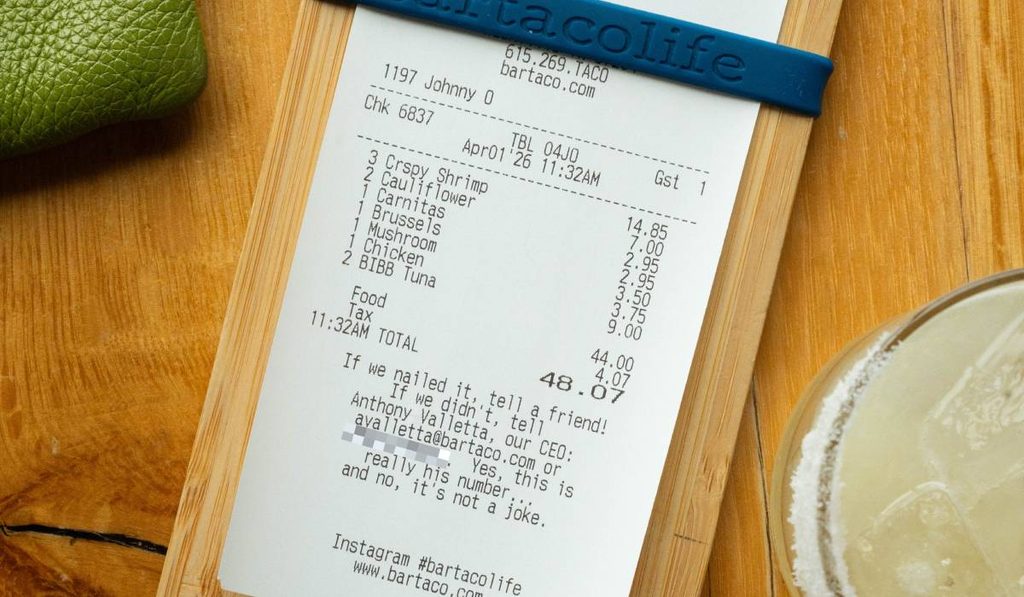
The initiative began as a quiet pilot program. Without a formal internal announcement to his entire staff, Valletta instructed the company’s information technology department to modify the footer of every guest receipt. The instructions printed on the slips were blunt and direct: “If you had a great time, tell a friend. If you didn’t, contact our CEO.” Accompanying this call to action was Valletta’s personal cell phone number and his direct email address, followed by a clarifying postscript: “No, this is not a joke.”
Initially, the volume of outreach was manageable, allowing Valletta to integrate guest feedback into his daily workflow. However, the program’s visibility shifted dramatically following the release of a podcast clip detailing the initiative. The video went viral across social media platforms, including Instagram and TikTok, amassing more than 1.6 million views. This digital exposure transformed the hotline from a niche feedback tool into a high-volume communication hub.
Currently, Valletta reports dedicating between 45 minutes and two hours each day specifically to fielding guest calls, text messages, and emails. The demand surges during peak dining periods; on a typical Friday or Saturday, the CEO may receive between 50 and 100 individual contacts. Contrary to the common corporate fear that such an open channel would invite a deluge of negativity, Valletta estimates that approximately 80 percent of the communications are positive, consisting of compliments for specific staff members or stories of memorable family experiences at the restaurants.
Operational Evolution and the "Blue Phone" Activation
To further cement this commitment to human connectivity, bartaco expanded the concept into a physical, live event on June 2. The company selected its Port Chester, New York, location—one of the brand’s longest-standing and highest-volume restaurants—to host a "live guest experience." The team installed a blue analog rotary phone, intentionally chosen to evoke a sense of "retro nostalgia."
During the activation, diners could pick up the landline and be connected instantly to Valletta. The event was designed to emphasize that the brand’s communication is "not AI-enabled" and "not a bot replying." The phone remained active throughout the day, facilitating conversations that ranged from casual greetings to detailed inquiries about the brand’s future. One notable interaction involved a young child discussing his favorite menu items, such as quesadillas and cheese sticks, while his mother provided feedback on the brand’s kid-friendly environment. For Valletta, these live interactions provided real-time validation of the company’s "guest-first" philosophy, offering insights that traditional data analytics often fail to capture.
Data-Driven Changes and Strategic Rebranding
The primary value of the CEO Hotline, according to Valletta, lies in the "raw and organic" nature of the feedback. Traditional guest surveys and third-party review sites like Yelp often suffer from a "participation bias," where only the most disgruntled or most satisfied customers speak up. In contrast, the direct-to-CEO channel has revealed subtle gaps in the brand’s storytelling and marketing clarity that might have otherwise gone unnoticed.
A significant outcome of this direct feedback loop was the rebranding of "High Tide Hour." Bartaco had originally utilized this name for its late-afternoon beverage and snack specials to align with its coastal, surf-inspired brand identity. However, multiple callers expressed confusion, asking if the restaurant offered a "Happy Hour." Realizing that the creative branding was obstructing consumer understanding, Valletta moved to simplify the messaging. The name was officially changed to "Happy Hour" to ensure immediate clarity for the guest.
Furthermore, the hotline revealed a lack of consumer awareness regarding bartaco’s culinary standards. Many guests called to ask about modifying menu items, unaware that the brand operates "scratch kitchens" where marinades, salsas, and proteins are prepared fresh daily. Because some items are made in large batches—such as complex house marinades—they cannot be modified at the table. Valletta recognized that the company was not effectively communicating its commitment to fresh ingredients. In response, the brand is currently reevaluating its "table spiel" (the initial greeting and explanation provided by servers) and its social media content to better highlight its from-scratch cooking processes.
Internal Accountability and Cultural Impact
The implementation of the hotline has had a profound impact on the internal culture of bartaco. By forwarding guest feedback—both positive and negative—directly to Regional Directors and General Managers (GMs), Valletta has created a transparent layer of accountability.
In the restaurant industry, information often becomes diluted as it travels up the chain of command. By receiving the feedback first and then disseminating it downward, the CEO ensures that local leadership is seeing the same unfiltered reality as the executive suite. One General Manager noted that the hotline adds a "healthy pressure" to the floor, as staff are aware that any lapse in service could result in a direct text to the company’s highest officer.
Conversely, the initiative has also served as a morale booster. In one instance at a Nashville location, a server reportedly dialed the number on a receipt to verify its authenticity. Upon seeing Valletta’s phone ring and realizing the CEO was indeed accessible, the employee expressed a sense of pride in working for an organization where leadership was not sequestered behind corporate barriers. Valletta maintains that this "guest-first" approach is not a marketing slogan but a functional operational standard that requires executive action to remain credible.
The Broader Context: AI vs. Human-Centric Hospitality
The bartaco "CEO Hotline" arrives at a crossroads for the global hospitality industry. According to data from the National Restaurant Association’s 2024 State of the Restaurant Industry report, approximately 16% of operators plan to invest in AI-based technology for their businesses this year. While technology can streamline labor costs and inventory management, consumer sentiment remains divided. A 2023 survey by Publicis Sapient found that while diners appreciate tech that speeds up the payment process, a majority still value the human element of full-service dining.
Valletta’s perspective is that technology’s rightful place is in the "Back of House" (BOH) to support operations, rather than the "Front of House" (FOH) where it risks alienating guests. He argues that as society becomes more digital, the value of a physical restaurant as a space for genuine connection increases. By positioning the CEO as a reachable human being, bartaco is betting that brand loyalty is built through accessibility and empathy rather than algorithmic efficiency.
Analysis of Implications and Future Outlook
The long-term implications of Valletta’s strategy suggest a potential shift in how executive leadership is defined in the service sector. By prioritizing direct guest interaction over traditional administrative tasks, Valletta is challenging the notion that a CEO’s time is "too valuable" for frontline customer service. He contends that listening to guests is, in fact, the most critical component of his job description, as it informs growth, marketing, and operational strategy.
As bartaco continues to expand, maintaining this level of accessibility will present logistical challenges. However, the brand intends to continue exploring creative, interactive ways to engage its audience. Future "CEO Hotline" activations and physical events are likely, as the company seeks to build "memories that resonate."
In his closing reflections on the initiative, Valletta warned that leaders who fail to make time for their customers may find themselves struggling for relevance. "I would argue they’re going to have a hard time in the coming years to keep their business going," Valletta stated. For bartaco, the path forward is clear: utilizing the most "old-school" technology available—a direct conversation—to navigate the complexities of a high-tech future. The success of the hotline suggests that in an age of automation, the most disruptive thing a company can do is simply listen.